
 Blog PDF for offline reading
Quick answer: Zigpac's advice on embroidered vs woven patches for a clothing brand is to order embroidered for raised, bold logos and short text, and woven for fine detail, small text and a flat, thin patch or label. As a working rule, stitched letters need to be about 1/4 in (6 mm) tall to stay readable, while woven construction resolves text at about 1/8 in (3 mm). Zigpac's Custom Embroidered Patches carry per-piece price tiers listed on zigpac.com in November 2026 of US$0.85 (50+ pcs), US$0.65 (100+), US$0.45 (300+) and US$0.30 (1,000+), with price tiers from 50 pcs, final MOQ on your quote, and the final price confirmed on your quote. Many brands use both constructions: an embroidered patch on the outside and a damask woven label inside the garment.
Why the Wrong Patch Construction Costs a Clothing Brand Twice
A typical first order looks like this. The brand has a logo mark, a wordmark and a small tagline underneath. It orders embroidered patches because that is the look it pictures. The mark comes out raised and sharp, but the tagline fills in, because each letter is narrower than the satin stitches used to draw it. The reverse failure also happens: a brand orders a flat woven badge for a heavy denim jacket and finds it reads as a label, not a patch.
Either way, the cost is not the patch itself. It is the second setup, the second proof round and the missed drop date. At first-run quantities of a few hundred pieces, setup and sampling are a large share of the total, so a reorder in a different construction can cost almost as much as the first order.
The fix is to decide construction before you ask for a quote, using three measurable inputs: the smallest text height at finished size, the surface you want the customer to feel, and the garment the patch goes on. The rest of this guide turns those inputs into a decision.
What Is the Difference Between Embroidered and Woven Construction?
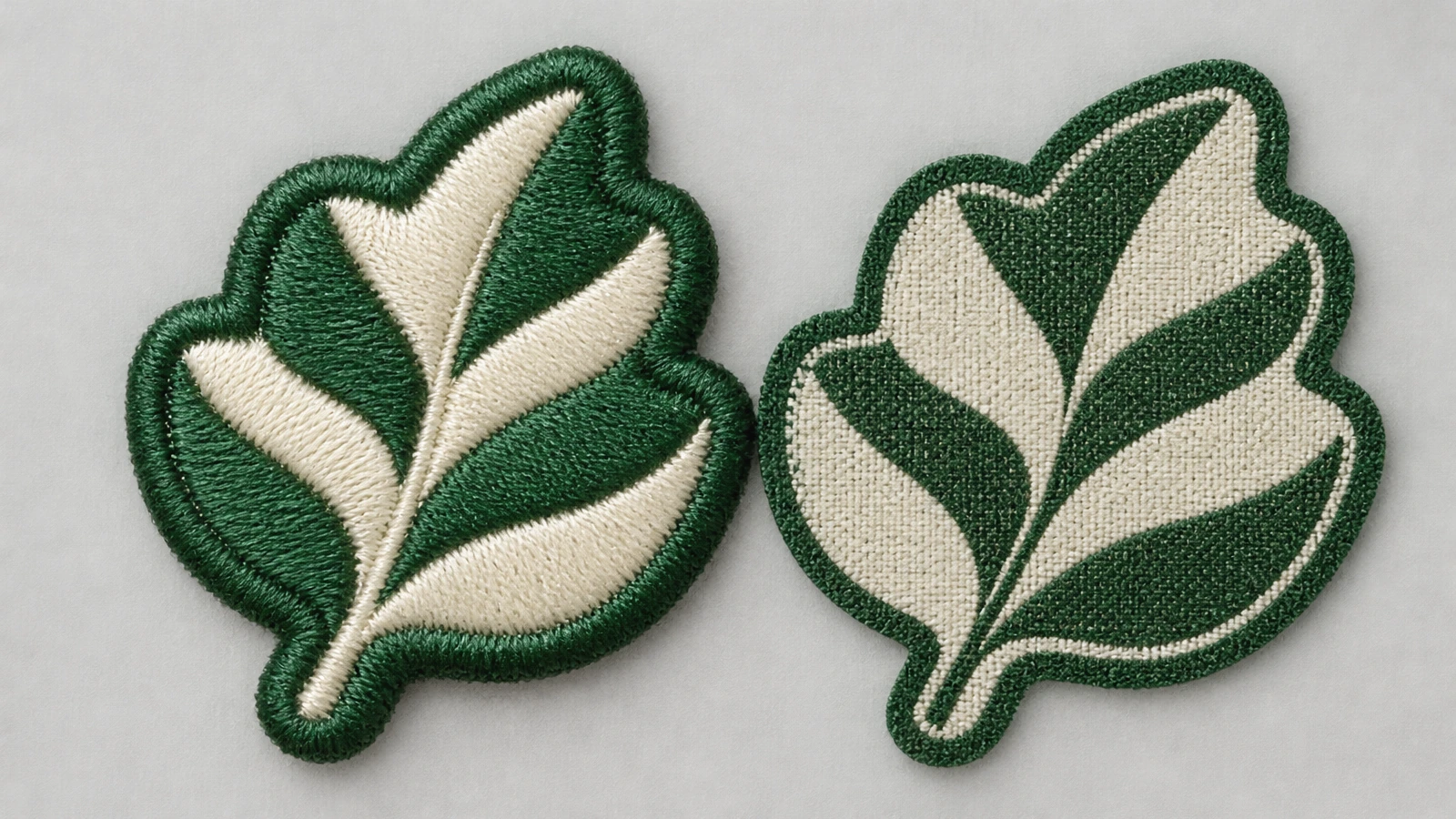
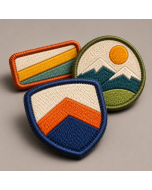
An embroidered patch is stitched on top of a base fabric; a woven patch or label is the fabric. In embroidery, needles lay thread over a twill or felt backing in three main stitch types: running stitches for outlines, satin columns for letters and borders, and fill stitches for solid areas. Thread sits above the base, which is why embroidery has visible relief and a slight sheen.
In woven construction, a jacquard loom lifts individual warp yarns so the weft yarns form the design as the cloth is made. The yarns are much finer than embroidery thread and there is no separate base layer, so the result is flat, thin and dense. Damask brand labels are made the same way, which is why woven badges and woven labels look like close relatives.
For the full specification of a stitched patch (base fabric, stitch coverage, borders and backings), see our custom embroidered patches page. This guide stays on the head-to-head choice.
How to Choose Between Embroidered and Woven in Five Steps
Step 1: Measure your smallest text at finished size
Print the logo at the real patch size, not the screen size, and measure the cap height of the smallest letters. If the smallest text is at least about 1/4 in (6 mm), embroidery will hold it. If it falls between about 1/8 in and 1/4 in, woven is the safer construction. Below about 1/8 in, neither will be reliably legible, so enlarge the patch or cut the text. Thin hairlines, serif fonts and outlined letters push the limit up for embroidery, because each stroke must be wider than a satin column.
Step 2: Decide what the customer should feel
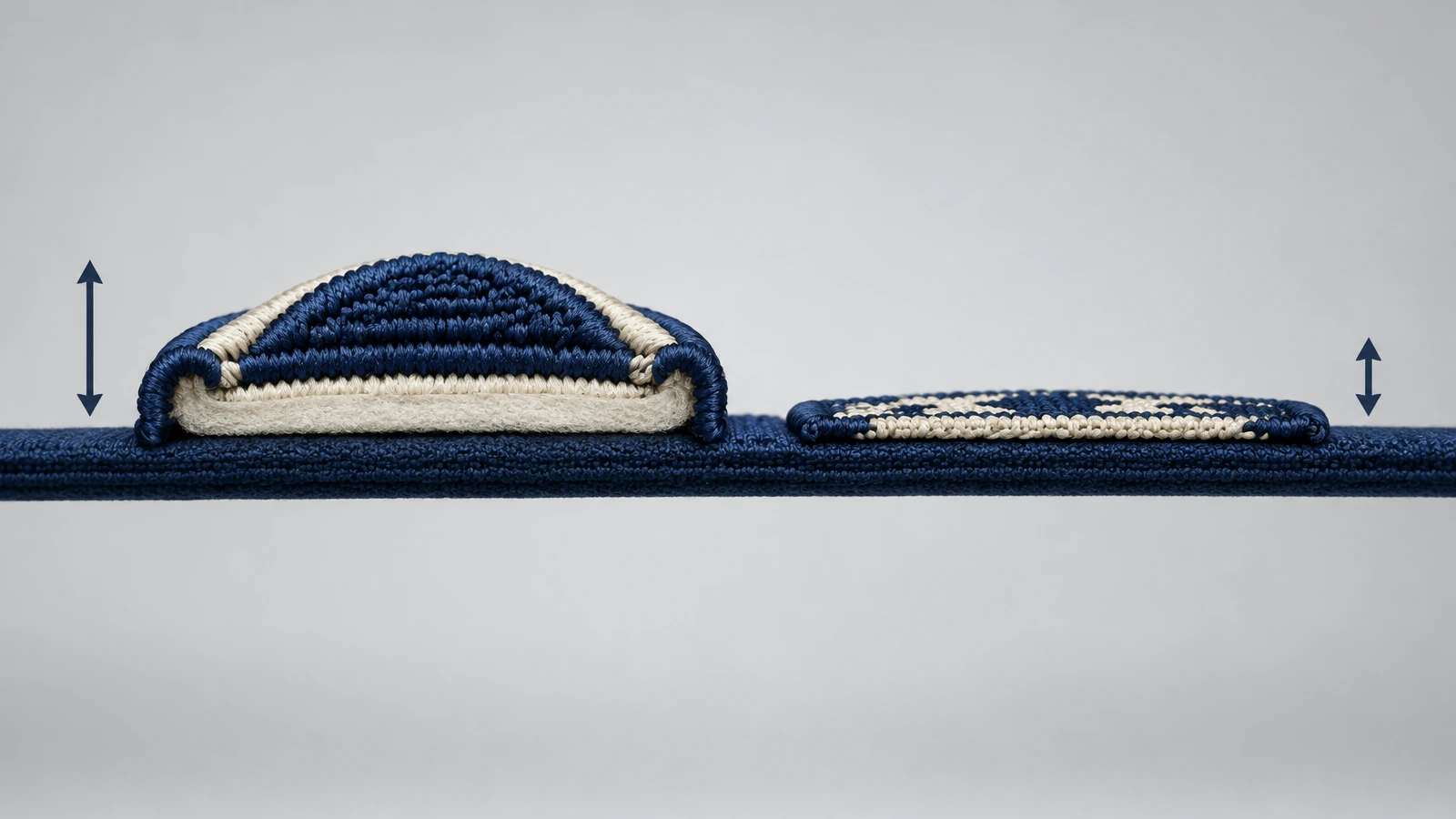
Embroidery reads as a premium, tactile badge: raised, slightly stiff, with light catching on the thread. Woven reads as refined and flat: it lies smooth under a finger and almost disappears into the garment's surface. Pick the feel first; it is the part customers notice before they read the logo.
Step 3: Match the construction to the garment
| Garment | Usually the better fit | Why |
|---|---|---|
| Caps and hats | Embroidered, bold mark | A raised patch holds its shape on a structured crown; keep text short because cap patches are small. |
| Denim and workwear jackets | Embroidered with a merrow border | Heavy fabric supports a thicker patch, and a wrapped edge resists abrasion. |
| Uniforms and polos | Embroidered, sewn on | Stitched patches survive frequent laundering when sewn rather than glued. |
| Knitwear and sweatshirts | Woven, or light-coverage embroidery | Stiff, dense patches can pucker a knit that stretches; a thin woven piece flexes with it. |
| Tees and activewear | Woven | Low weight and a flat profile avoid a stiff spot on thin fabric. |
| Logos with fine text or detail | Woven | Finer yarns resolve roughly half the text height embroidery needs. |
Step 4: Check run size against the price tiers
Count pieces per design, not per order. Each design carries its own setup, so three logos of 50 pieces are three small runs, not one run of 150. The MOQ and cost section below shows how tiers work.
Step 5: Approve a proof, then a physical sample
A digital proof confirms layout, size and colors; only a stitched or woven sample shows thickness, stiffness and whether small text survives. Zigpac recommends approving a physical sample before bulk production, especially for a first run or any logo near the text-height limits above.
Embroidered vs Woven Patches Side by Side
| Factor | Embroidered | Woven |
|---|---|---|
| Smallest legible text (rule of thumb) | About 1/4 in (6 mm) | About 1/8 in (3 mm) |
| Fine lines and detail | Lost below the width of a satin column | Resolves thin lines and small shapes |
| Surface | Raised, textured, light-catching | Flat, smooth, matte to low sheen |
| Thickness and flexibility | Thicker; stiffer as stitch coverage rises | Thin and flexible |
| Colors and gradients | Solid thread colors; no true gradients | Limited yarn colors per design; tones can be blended by weave pattern, but not photographic |
| Edges | Merrow (wrapped), satin/laser or hot-cut | Usually heat- or laser-cut; wrapped edges also used |
| Backing | Sew-on, iron-on, hook-and-loop | Commonly the same options |
| Wash behaviour | Raised thread can snag or fuzz over time | Tight flat weave resists snagging; unsealed cut edges can fray |
| Typical uses | Caps, jackets, uniforms, team and club badges | Fine-text logos, tees, knitwear, labels |
| Main cost drivers | Stitch count (size × coverage), color changes, border type, backing | Loom setup per design, yarn colors, size, cut or fold finish |
| Zigpac option | Custom Embroidered Patches: price tiers from 50 pcs, final MOQ on your quote | No woven patch listed; Custom Woven Tags (damask labels): price tiers from 100 pcs, final MOQ on your quote |
The text heights are industry rules of thumb, not a standard; font, stitch direction and base color all shift the real limit, which is why the sample in Step 5 matters. At Zigpac, Custom Embroidered Patches are polyester thread embroidery on a twill or felt base, finished with a merrow, laser/satin or hot-cut border and a sew-on, iron-on (heat seal) or hook-and-loop backing. Zigpac's woven product is Custom Woven Tags, jacquard-woven damask from dyed yarn; a brand that needs a woven-look badge can describe it in the quote request so the options can be confirmed.
Edge names cause confusion in quotes. A "merrow" border is a trade name for an overedge stitch, which the stitch classification in ISO 4915[1] places in the 500 class (overedge chainstitch). ASTM D6193[2] uses the same families for sewn products. Neither standard sets embroidery density or edge width, so write the border type and its approximate width on the order rather than relying on "merrow" alone. Backings get only a mention here; our separate iron-on patch guide covers heat-seal backing and fabric fit in detail.
MOQ and Cost: What Drives Each Price
Embroidery price is mostly time on the machine. A larger patch, higher stitch coverage and more color changes all add stitches and minutes; a wrapped merrow edge and hook-and-loop backing add finishing steps. Woven price is mostly loom setup per design, then yarn colors and size. Because setup is spread across the run, woven unit prices tend to fall steeply as quantity rises, while embroidery falls more gradually because every piece still needs its stitches.
At Zigpac, the per-piece price tiers listed on zigpac.com in November 2026 are:
| Product | Tier 1 | Tier 2 | Tier 3 | Tier 4 | MOQ |
|---|---|---|---|---|---|
| Custom Embroidered Patches | 50+ pcs: US$0.85 | 100+: US$0.65 | 300+: US$0.45 | 1,000+: US$0.30 | Price tiers from 50 pcs, final MOQ on your quote |
| Custom Woven Tags (damask labels) | 100+ pcs: US$0.35 | 500+: US$0.15 | 1,000+: US$0.09 | 3,000+: US$0.05 | Price tiers from 100 pcs, final MOQ on your quote |
Read the two rows separately. A woven tag and an embroidered patch differ in size and function, so the table does not show which construction is cheaper for your logo. Zigpac's embroidered tiers are not tied to a fixed size: the final price depends on size, stitch coverage, colors, border and backing, and is confirmed on your quote. Standard production for both products is 7–10 days, with the final schedule on your quote. Every order includes a free eProof, and physical samples ship for US$5–30.
If you import, budget for duty as well. Embroidery is a heavily imported category in the US: OEC trade data[3] shows US$118M of imports against US$8.78M of exports in 2024, with China the largest source at US$35.9M. Embroidered motifs and badges fall under HTS heading 5810[4], and the listed schedule rates exclude Section 301 duties. As a broad indicator, Fitch estimated in July 2026[5] the US effective tariff rate at 7.4% overall and about 22.3% on goods from China. Woven badges and labels are usually classified separately, so confirm the code for each construction with your customs broker.
The Common Pairing: Embroidered Patch Outside, Woven Label Inside
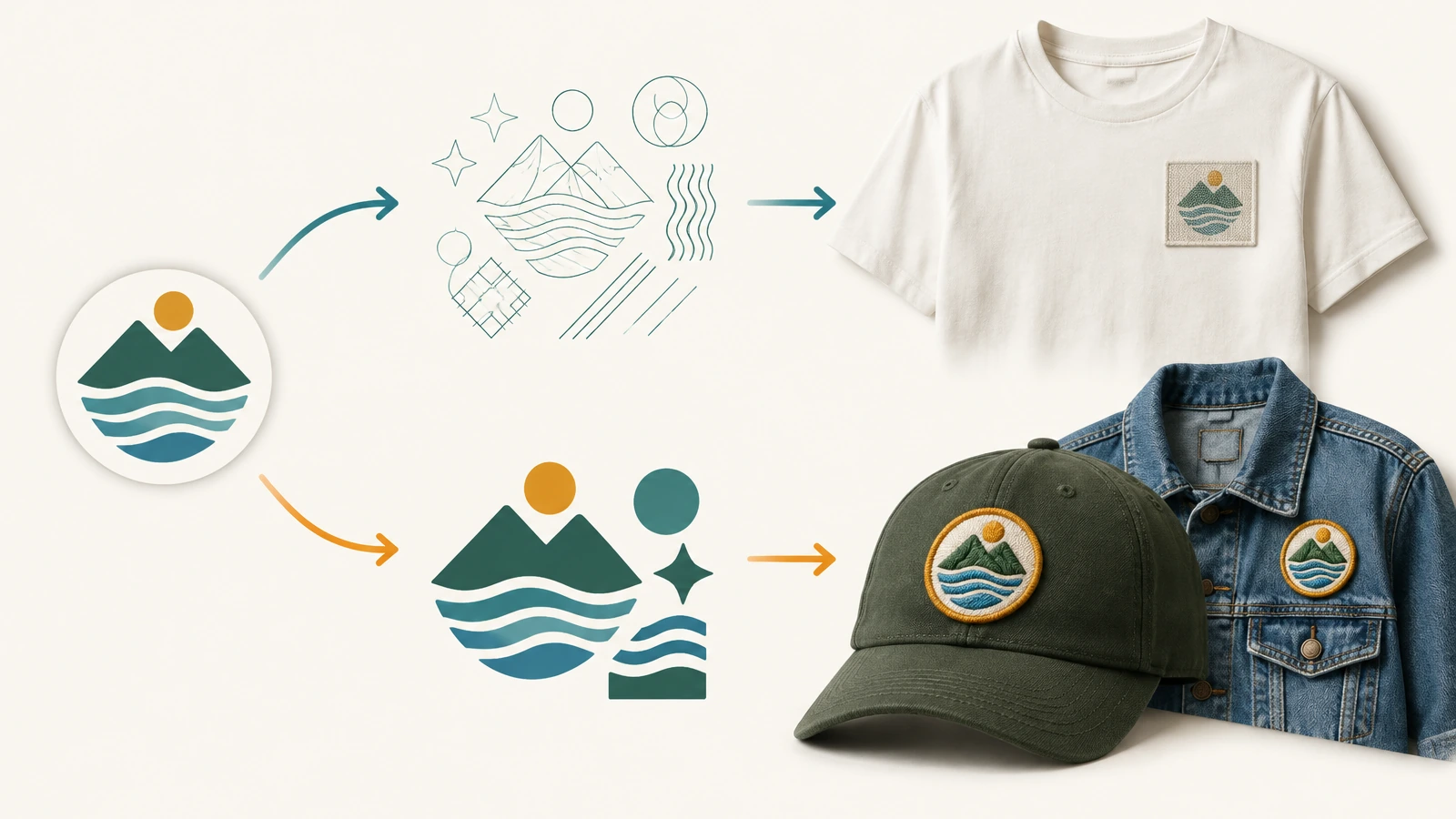
Many clothing brands do not choose one construction; they assign each to the job it does best. The embroidered patch goes on the outside (chest, sleeve, cap front or back yoke), where texture and visibility sell the piece. A damask woven label goes inside at the neck, hem or side seam, where it must be thin, soft against skin and able to carry small text such as the brand name, size or care symbol reference.
This pairing also lets each run use its own tier. With Zigpac, the outer patch would be Custom Embroidered Patches (price tiers from 50 pcs, final MOQ on your quote) and the inner label would be Custom Woven Tags (price tiers from 100 pcs, final MOQ on your quote). Thread and yarn palettes are not identical, so give both orders the same Pantone references and compare the physical samples side by side before approving. Label placement, folds and sewing are covered in our separate guide on where to put a woven label.
Quote Checklist: What to Send
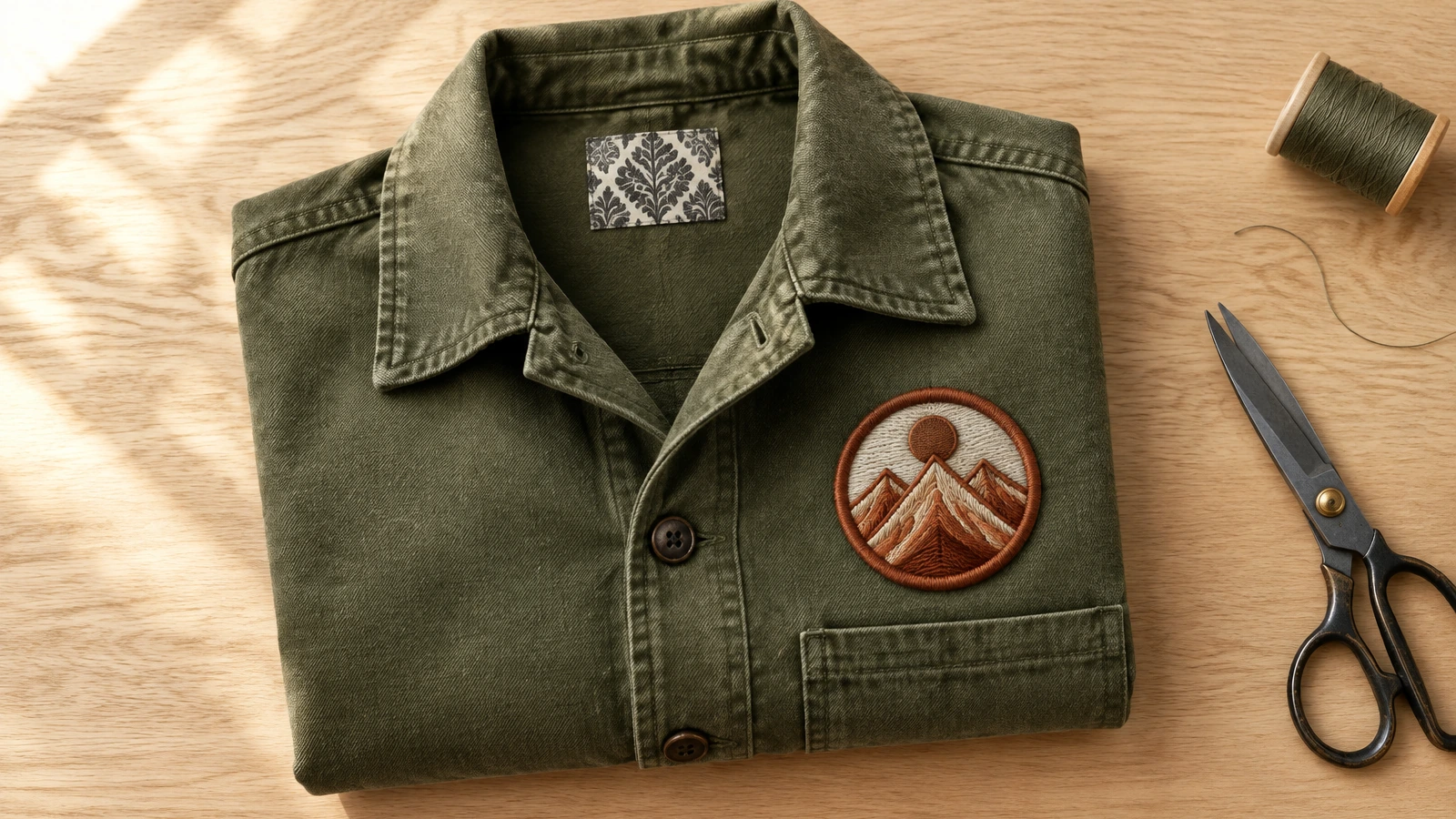
A complete brief gets an accurate proof on the first round. Send:
- Logo as a vector file (AI, EPS, PDF or SVG).
- Finished size in inches or millimetres, including the border.
- Smallest text height at finished size, measured as in Step 1.
- Thread or Pantone colors, and how many.
- Garment fabric and where the patch or label sits.
- Border and backing preference (or ask for a recommendation).
- Quantity per design and your in-hand date.
Two compliance points belong in the same email. If the garment is a children's product (primarily for ages 12 and under), the CPSC total lead rule[6] treats a children's product with more than 100 ppm lead in any accessible component as a banned hazardous substance; 16 CFR 1500.87[7] defines which parts count as accessible. Ask for test documentation rather than a verbal assurance. For adult apparel, 16 CFR Part 1610[8] governs the flammability of clothing textiles; it applies to the garment, not to a patch on its own. And if you plan to call the thread or yarn "recycled," OEKO-TEX STANDARD 100 Edition 01.2026[9] does not allow that label below 20% recycled content and excludes pre-consumer PET bottles as a source, so request the supplier's certificate number before printing the claim.
FAQ
FAQ: Are woven patches cheaper than embroidered patches?
Not automatically; it depends on size, color count and quantity. Woven cost is front-loaded in loom setup, so it usually drops faster as the run grows, while embroidery cost scales with stitch count on every piece. The only fair comparison is two quotes at the same finished size, colors, border and quantity.
FAQ: Can I order low MOQ embroidered patches from Zigpac?
Yes: Zigpac's Custom Embroidered Patches have price tiers from 50 pcs, final MOQ on your quote. The 50+ tier listed on zigpac.com in November 2026 is US$0.85 per piece, with the final price confirmed on your quote. On a small first run, a physical sample (US$5–30) is a low-cost way to confirm the patch before bulk production.
FAQ: Does Zigpac make woven patches?
No, Zigpac does not list a woven patch product. Its woven product is Custom Woven Tags, jacquard-woven damask brand labels for the neck, hem or side seam, with price tiers from 100 pcs, final MOQ on your quote. If you need a woven-look badge, describe it in your quote request so the available options can be confirmed.
FAQ: Which construction holds up better in the wash?
Both hold up well when sewn on; the attachment usually fails before the thread or yarn does. Embroidery's raised surface can snag or fuzz over years of wear, while woven's flat weave resists snagging but needs sealed edges. If colorfastness matters, agree a wash test method with your supplier rather than accepting a "won't fade" promise.
FAQ: Can either construction reproduce a photo or gradient?
No, not faithfully. Embroidery works in solid thread colors, and woven can only suggest tone by varying the weave pattern with a limited yarn palette. Simplify photographic artwork into flat color areas, or consider a printed patch from a supplier that offers one.
FAQ: How long does production take?
Standard production is 7–10 days for both Zigpac's Custom Embroidered Patches and Custom Woven Tags, with the final schedule on your quote. Proof revisions and sample approval come before that window, so build them into your launch date.
Key Takeaways
- Choose by smallest text height first. — about 1/4 in for embroidery vs about 1/8 in for woven (Source)
- Zigpac's embroidered patches start low. — price tiers from 50 pcs, final MOQ on your quote; US$0.85 at 50+ pcs, listed November 2026 (Source)
- Write the edge stitch, not just a trade name. — merrow is an overedge stitch in ISO 4915's 500 class (Source)
- Embroidery is mostly imported into the US, so plan duty. — US$118M imported vs US$8.78M exported in 2024 (Source)
- Children's garments need lead documentation. — 100 ppm total lead limit per accessible component (Source)
- "Recycled" claims need certified content. — not allowed below 20% recycled content under OEKO-TEX STANDARD 100 Edition 01.2026 (Source)
Conclusion
The choice between embroidered and woven comes down to three measurements: text height, surface feel and garment weight. Bold marks on caps, jackets and uniforms suit embroidery; fine text, knitwear and lightweight tees suit woven; and many brands use an embroidered patch outside with a damask label inside. When your logo is ready, send the vector file, finished size, smallest text height, colors, garment fabric, backing and quantity through our embroidered patch quote page. Zigpac will return a free eProof and confirm the unit price and final MOQ on your quote.
Footnotes
- International Organization for Standardization. ISO 4915:1991, Textiles: Stitch types, classification and terminology. iso.org ↩
- ASTM International. ASTM D6193, Standard Practice for Stitches and Seams. astm.org ↩
- Observatory of Economic Complexity. Embroidery trade profile, United States (2024–2025 data). oec.world ↩
- Textile School. HTS heading 5810, Embroidery in the piece, in strips or in motifs (HTS 2026 Basic Edition), accessed October 2026. textileschool.com ↩
- Fibre2Fashion. Fitch cuts US effective tariff rate estimate to 7.4%, 31 July 2026. fibre2fashion.com ↩
- U.S. Consumer Product Safety Commission. Total Lead Content, business guidance, updated October 2026. cpsc.gov ↩
- Electronic Code of Federal Regulations. 16 CFR 1500.87, Children's products containing lead: inaccessible component parts. ecfr.gov ↩
- Legal Information Institute, Cornell Law School. 16 CFR Part 1610, Standard for the Flammability of Clothing Textiles. law.cornell.edu ↩
- OEKO-TEX. STANDARD 100, Edition 01.2026, version dated 3 March 2026. oeko-tex.com ↩




The information below is required for social login
Sign In
Create New Account