We use cookies to enable our websites to remember information, to help some website functionalities to work properly, to understand how you interact with and use our websites and to display you content and ads that are relevant and engaging for you.
By clicking Accept All you consent to the use of these cookie.
The store will not work correctly when cookies are disabled.
Quick answer: Tote bags are made from eight main materials: cotton, cotton canvas, jute, non-woven polypropylene (PP), laminated PP, nylon, polyester and recycled polyester (rPET). Cotton and canvas feel the most natural and take screen inks well. Polyester and rPET are lighter, resist water better and are the only fabrics that accept dye sublimation. Non-woven PP has the lowest cost per bag but also the shortest service life.
If your team is asking what are tote bags made of, it is usually because a quote arrived with a short code such as "600D", "80 gsm" or "10 oz" and nobody on the buying side can say what it means for the finished bag. That gap is costly. Promotional products are a large channel: U.S. distributor sales reached $27.1 billion in 2025, up 1.3%[1], and a large share of that spend goes to items that only work if people keep using them. Bags are one of those items.
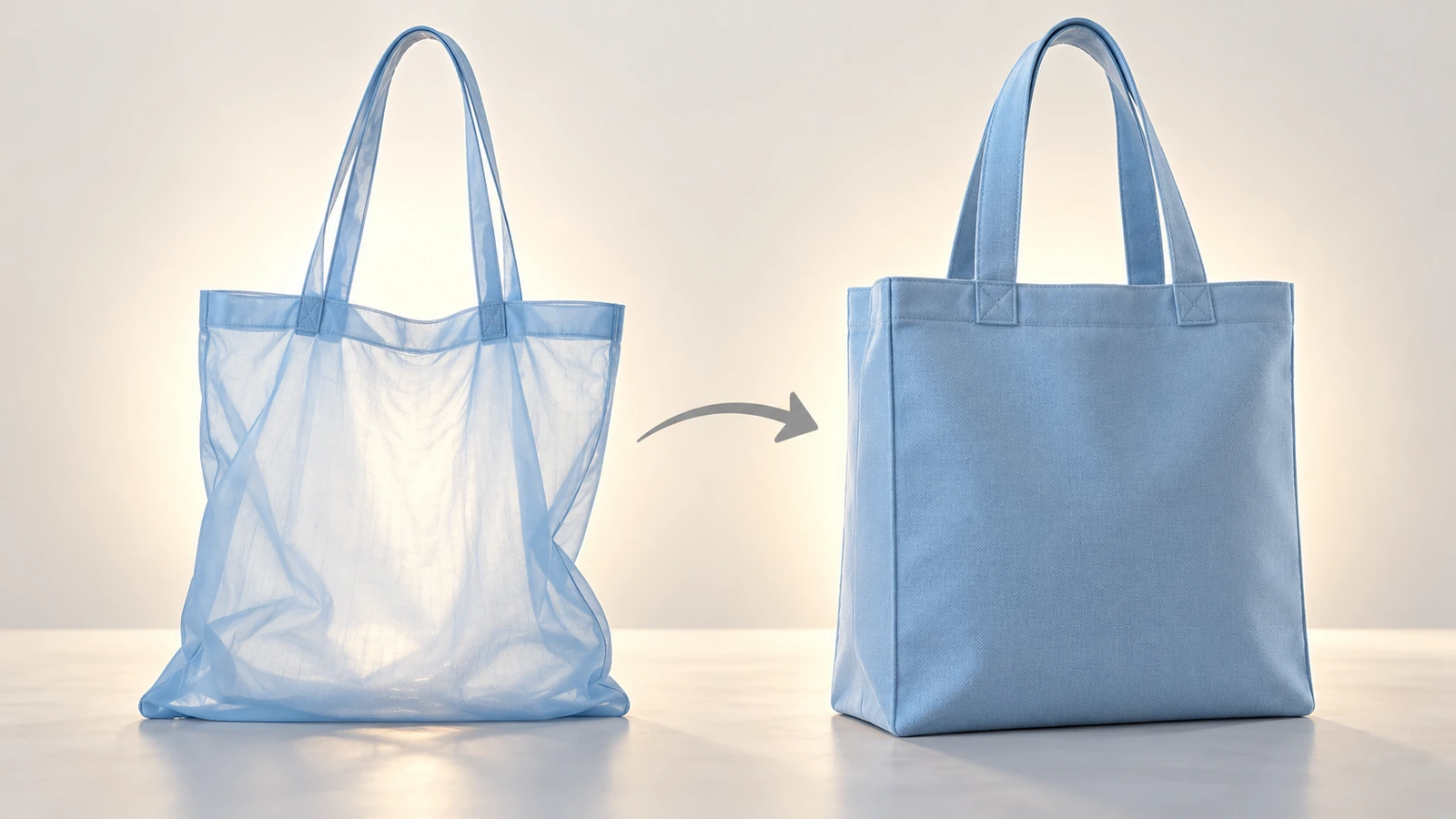
The failures in public buyer reviews follow a consistent pattern. A buyer approves a render that looks like heavy canvas, then receives a thin, see-through synthetic. One fan described a merch tote as "see through and a hard cheap material", and another reported a strap that "just snapped" after a month. Other buyers say prints cracked along fold lines, dark fabrics bled onto clothing, or an "eco" claim could not be backed up when a retailer asked for documents. In most of these cases the fabric was not the real problem. The problem was that nobody chose the fabric on purpose.
This guide works through each material in turn. For each one it covers the unit the fabric is specified in, how it handles printing, how it holds up in use, where it sits on cost and weight, and which sustainability claims it can honestly support. It ends with a comparison table and a short set of checks you can run before you sign off on a quote.
What are tote bags made of? The eight materials explained
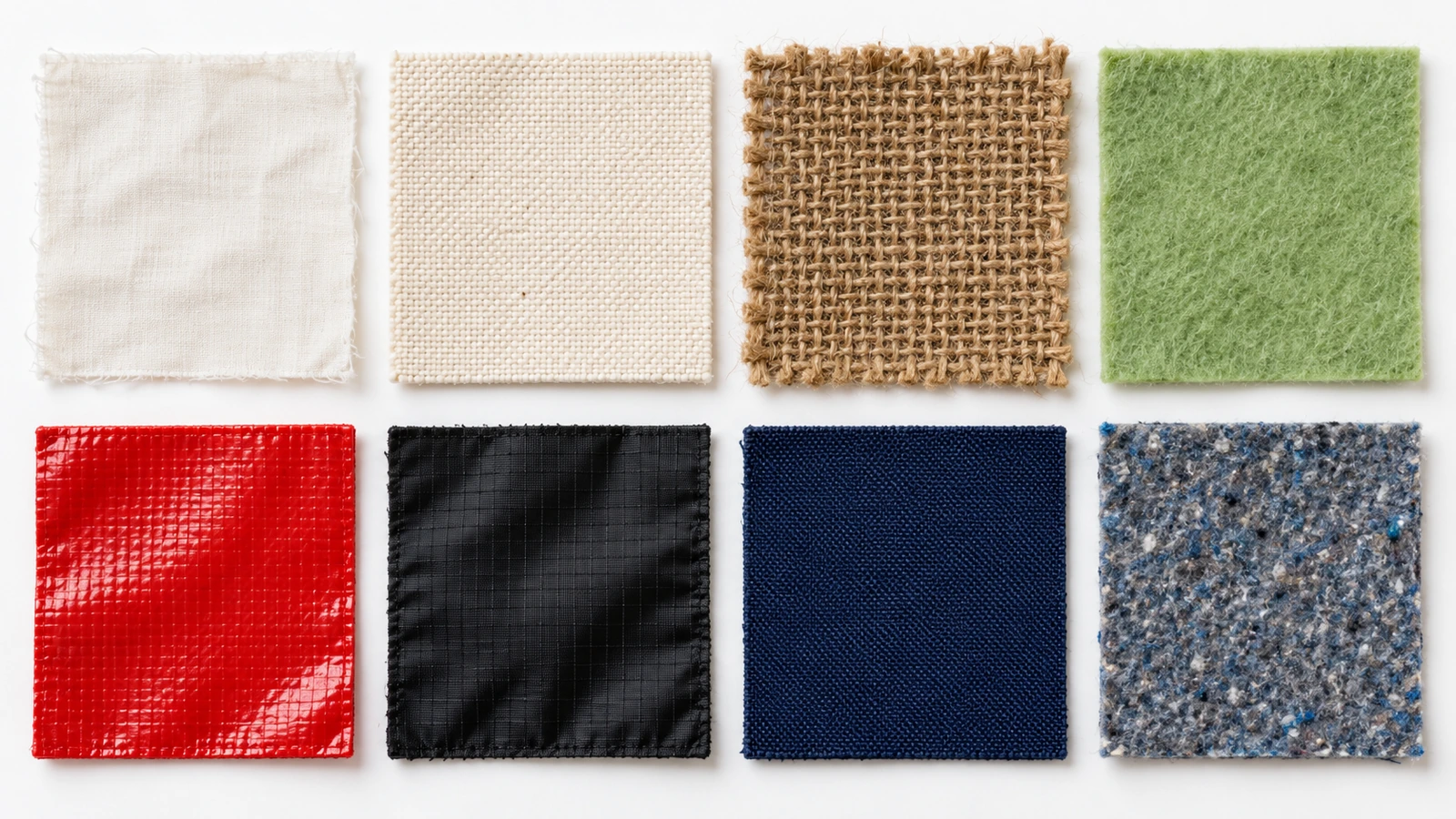
A tote is simply an open-top bag with two parallel handles, so it can be made from almost any sheet material. In corporate and promotional sourcing, eight materials account for nearly all orders. They divide into natural fibers (cotton, canvas, jute) and synthetics (PP, nylon, polyester, rPET). That split predicts most of a bag's behaviour: how it absorbs ink, how it reacts to water, how heavy it is to ship and what can happen to it at end of life.
1. Cotton (lightweight)
Light cotton totes are made from plain-woven cotton, usually around 4–6 oz per square yard, which is roughly 136–203 g/m². The fabric is soft and inexpensive among natural options, and it accepts water-based and plastisol screen inks and direct-to-garment printing. Its weaknesses come from the same thinness. Ink can show through to the inside, the bag loses its shape under load, and it gets heavy when wet. Light cotton suits event handouts and short campaigns better than daily grocery use.
2. Cotton canvas
Canvas is a tightly woven, heavier cotton. For totes it is commonly 10–12 oz per square yard (about 339–407 g/m²), and heavier grades are used for retail merchandise. Canvas holds its shape, carries real weight, can be machine washed, and is the most dependable base for screen printing and embroidery. A large U.S. decorator's published guidance puts screen-printed canvas at 50+ washes, against 30–40 for screen prints on 600D polyester canvas. That figure assumes good inks and correct curing, so treat it as an estimate rather than a lab result. The trade-offs are that canvas absorbs water, dries slowly, wrinkles, and weighs more than a polyester bag of the same size, which raises freight cost.
One terminology point catches many buyers: "canvas" describes a weave, not a fiber. "Poly canvas" or "600D polyester canvas" is a synthetic. If the quote does not state the fiber, ask for it.
3. Jute
Jute is a bast fiber from the stem of the jute plant, sold as hessian or burlap. It gives a rough, natural look that buyers associate with food, wine and farm-to-table brands. The coarse, open weave limits print detail: bold one- or two-color logos work well, while fine lines and small text do not. Most jute totes are also laminated with a thin PP film on the inside so they stay stiff and resist moisture. That makes jute a fiber-and-plastic composite rather than a purely natural product, so describe it accurately. Jute is also bulky and heavy to ship, which typically places it in the middle-to-upper part of the cost range.
4. Non-woven polypropylene (PP)
Non-woven PP is not woven at all. Polypropylene filaments are spun and thermally bonded into a felt-like sheet, specified by weight, most often around 80 gsm for giveaway bags. It is the cheapest material per unit, folds flat and is naturally water-repellent. The downsides are just as clear. It cannot be machine washed, screen printing needs low-cure inks, fine lines tend to skip on the uneven surface, and supplier guides typically describe its working life in months rather than years. It is a resin code #5 plastic: recyclable where collection exists, but not biodegradable.
5. Laminated PP
Laminated PP is a woven or non-woven polypropylene base with a glossy plastic film bonded to the surface. The artwork is usually printed on that film, which allows full-color, photo-style designs at a low price, along with a wipe-clean surface and a stiffer body. Two drawbacks follow from the construction. The film can crease or delaminate with repeated folding, and a bonded multi-layer material is harder to recycle than a single-polymer bag. Choose it when visual impact matters more than how long the bag lasts.
6. Nylon
Nylon (polyamide) is smoother and generally more abrasion-resistant than polyester at the same weight. Ripstop nylon is the usual material for totes that fold into a small pouch. It is normally priced above polyester. It also cannot be decorated by standard dye sublimation, which bonds to polyester, so nylon totes are usually screen printed or decorated with transfers. Nylon is a good fit for premium travel and outdoor gifts where hand-feel and packability justify the cost.
7. Polyester
Polyester (PET) is the world's dominant fiber. According to Textile Exchange's 2026 Materials Market Report[2], it made up 59% of global fiber output in 2025, at 82.5 million tonnes. That scale explains why it is the default for promotional totes. It is light, resists wrinkling, sheds light rain, and is the substrate for dye sublimation, which can print edge-to-edge photographic designs on light-colored fabric with no raised feel.
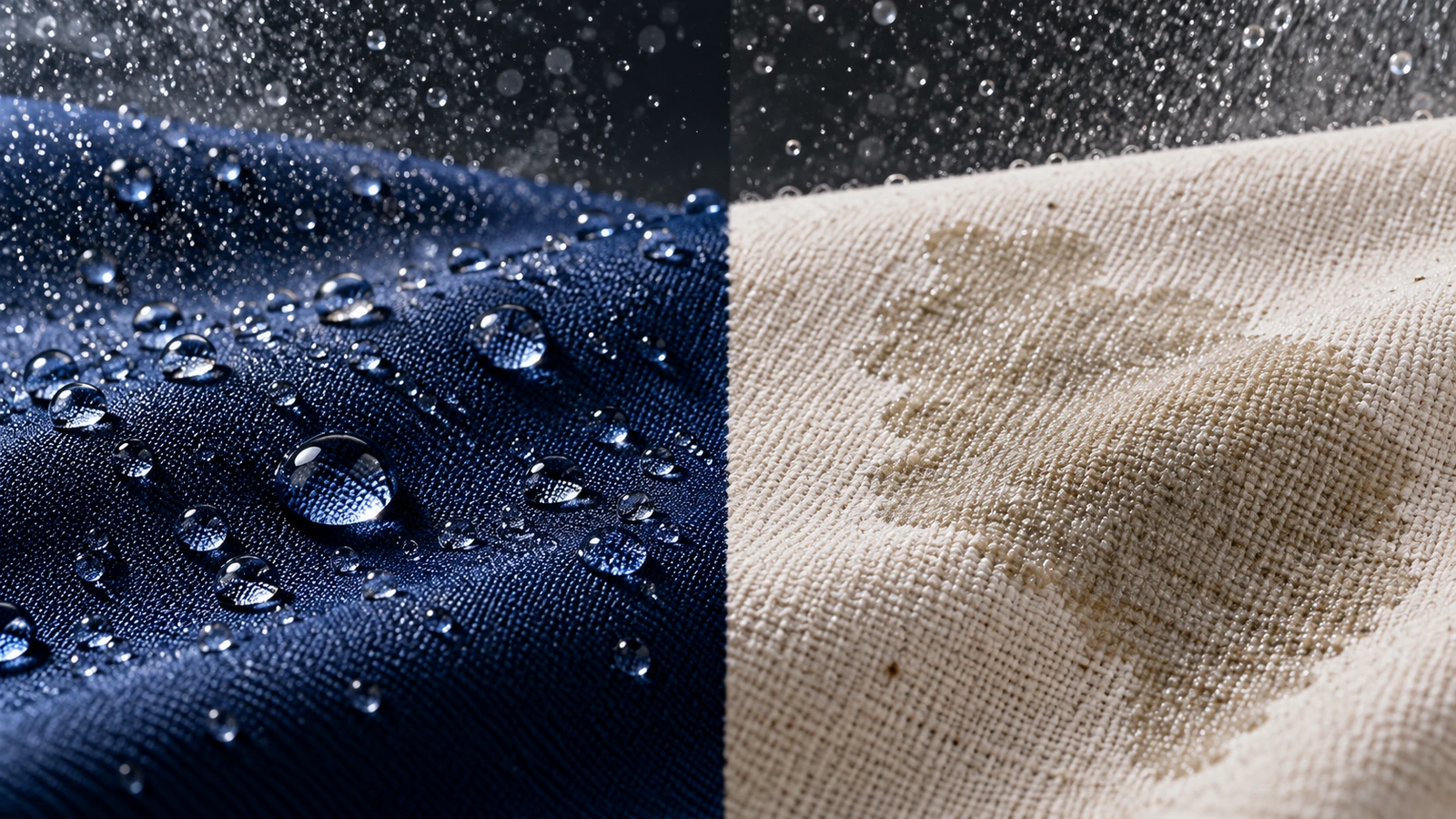
Polyester also has known limits. Uncoated polyester is water-resistant, not waterproof. PU or PVC coatings add protection but also stiffness and weight. Some buyers also find the surface rough. An independent review from Wirecutter[3] praised a fine-weave recycled-polyester tote as "durable and water-resistant" but noted that the shell "may make some sweaters and blouses pill." Polyester is also mostly fossil-based. In the 2025 edition[4], Textile Exchange put the fossil-based share of polyester at 88% and recycled polyester's share at 12% for 2024.
8. Recycled polyester (rPET)
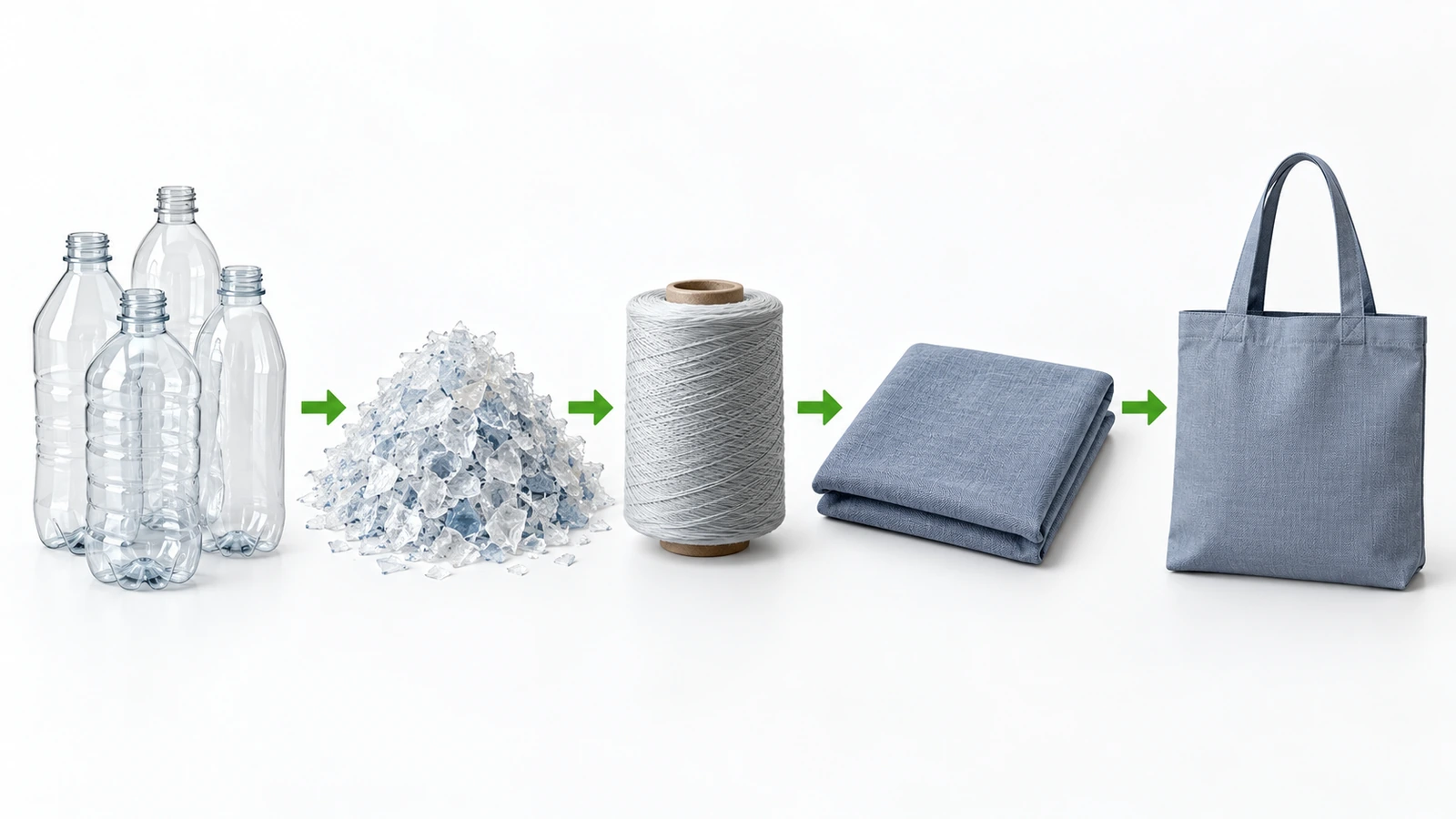
rPET is the same polymer, spun from recovered PET rather than virgin resin. In practice almost all of it comes from bottles: Textile Exchange reports about 9.7 million tonnes of recycled polyester in 2025, 97% of it bottle-derived. On the bag itself, rPET looks, prints and performs much like virgin polyester of the same denier and weave. The meaningful difference is the paperwork. A recycled claim is only as strong as the chain-of-custody evidence behind that specific order, and a statement like "made from recycled clothing" needs separate proof, because textile-to-textile recycling is still a very small share of the market.
If you have already settled on polyester and need to compare 210D, 600D, rPET and coated grades for an actual order, our page on custom polyester tote bags sets those tiers out side by side. This article stays at the material level.
How tote fabric is measured: oz, gsm and denier
Each material family has its own unit, and quotes often mix them up. Cotton and canvas are sold by ounces per square yard. Multiply by about 33.9 to get grams per square meter. Non-woven and laminated PP are sold by gsm (grams per square meter). Polyester and nylon are sold by denier (D), which is the mass in grams of 9,000 meters of yarn. Denier measures how thick the yarn is. It does not measure the finished fabric, and it is not a load rating.
That last distinction matters in practice. A tightly woven 420D cloth can be heavier and more abrasion-resistant than a loosely woven 600D. Fabric mills' published ranges help with calibration: roughly 110–180 gsm for 210D and 280–360 gsm for 600D polyester. These are supplier figures, so ask for the gsm of your actual fabric alongside the denier. If two quotes give only denier, you cannot yet compare them.
How to choose a tote material in five steps
The steps below go from the intended use to the evidence you should request. They decide the material. Detailed order specs such as print method, inspection and labels are covered on the product page.
Define the bag's working life. If it is handed out once at an event and might be reused a few times, non-woven PP, laminated PP or light cotton is enough. If you expect daily carrying for a year or more, look at canvas, 600D-class polyester, rPET or nylon. Matching material to expected life is the single biggest factor in cost per impression.
Match the artwork to the surface. One- to three-color logos screen print well on canvas and cotton. Photo-real, full-coverage art needs light-colored polyester for sublimation, or laminated PP for film printing. Coarse jute and textured non-woven both lose fine detail.
Weigh the freight, not just the unit price. Heavy canvas and jute can cost more to ship than the bag itself costs to make. A light polyester tote can fold into a fraction of the carton space a canvas tote needs, which matters for large shipments to many event locations.
Ask for test methods, not adjectives. "Water-repellent" and "tear-resistant" have no legal threshold. Ask instead for a spray rating under AATCC TM22[5], hydrostatic head in millimeters for coated fabrics, grab tensile strength under ASTM D5034, and wash colorfastness under ISO 105-C06 or AATCC 61, with a grade of at least 4 for color change. A report number is evidence. A word on a spec sheet is not.
Decide your claim before you decide your fiber. If the bag will carry a sustainability message, choose the material whose claim you can document. Under the FTC Green Guides, 16 CFR 260.13[6] requires a partially recycled product to state the recycled percentage by weight. "100% recycled" on an rPET body with virgin webbing handles is a problem. For cotton, "biodegradable" only holds if the inks, threads and any lamination allow it.
What U.S. rules say about tote materials
Some compliance questions come up as soon as a material is chosen. The Textile Fiber Products Identification Act's coverage list in 16 CFR 303.45[7] names apparel, towels, bedding and similar goods but not tote bags, and products outside the list are excluded. Even so, any fiber content you do advertise must be accurate. The FTC Care Labeling Rule[8] also applies to wearing apparel rather than bags. Calling a tote "machine washable" without wash data is therefore an advertising-truth issue, not a label-format issue. For which wording is safe in the U.S. and EU, see the labels section of our polyester tote product page.
Retail checkout is a different regulatory area. Since 1 January 2026, CalRecycle's bag requirements[9] limit covered California stores to recycled paper carryout bags at a minimum of $0.10 each, while customers may bring their own. According to Packaging Dive[10], the law followed a 47% rise in discarded grocery and merchandise bag tonnage in California between 2014 and 2022. A branded giveaway tote is not automatically a compliant checkout bag. If a retail client plans to use one at the register, check that use separately.
Tote bag materials compared side by side
The table puts the eight materials on the same axes. Cost and weight are relative rankings from published industry ranges, not quotes. Actual pricing depends on size, decoration and quantity, so request a quote for your own spec.
Material
Spec unit (typical)
Best print fit
Washable
Water behavior
Relative cost per bag
Relative weight
Honest claim
Light cotton
4–6 oz/yd² (≈136–203 g/m²)
Screen print, DTG
Yes, gently
Absorbs
Low–mid
Light–mid
Natural fiber; biodegradable only if trims allow
Cotton canvas
10–12 oz/yd² (≈339–407 g/m²)
Screen print, embroidery
Yes
Absorbs, dries slowly
Mid–high
Heavy
Long reuse life; durable natural fiber
Jute
Coarse weave, often PP-laminated
Bold 1–2 color screen print
Not recommended
Resists if laminated
Mid–high
Heavy, bulky
Plant fiber; disclose the laminate
Non-woven PP
~80 gsm
Low-cure screen print
No
Repels
Lowest
Very light
Plastic #5; recyclable where collected
Laminated PP
PP base + gloss film
Full-color printed film
Wipe clean
Repels
Low
Light
Multi-layer; harder to recycle
Nylon
Denier (ripstop common)
Screen print, transfer
Usually
Resists
High
Very light
Synthetic; packable and long-lived
Polyester
Denier + gsm (210D–600D)
Sublimation, screen, DTF
Spot clean typical
Resists; coat for more
Low–mid
Light
Synthetic; mostly fossil-based
rPET
Denier + gsm
Sublimation, screen, DTF
Spot clean typical
Resists; coat for more
Mid
Light
Recycled content, with % and order-level certificate
Two patterns stand out. First, no material wins on every axis. Canvas leads for perceived value and wash life, polyester for weight and full-color printing, and non-woven PP for unit price. Second, the "honest claim" column usually decides corporate orders in 2026, because procurement and legal teams now ask for evidence before they approve the artwork.
FAQ
FAQ: Are canvas tote bags always cotton?
No. Canvas is a heavy plain weave, and it can be cotton or polyester. "600D poly canvas" is a synthetic, while "10 oz canvas" usually means cotton. Ask the supplier to state the fiber and the weight in its proper unit: oz per square yard for cotton, denier plus gsm for polyester.
FAQ: What does 600D mean on a tote bag?
600D means the yarn weighs 600 grams per 9,000 meters. It describes yarn thickness, not fabric weight or carrying capacity. Weave density and coating also determine strength, so ask for the fabric gsm and a grab tensile result (ASTM D5034) as well.
FAQ: Is polyester or cotton better for a promotional tote?
It depends on how the bag will be used. Cotton canvas offers a natural feel, embroidery and long wash life. Polyester is lighter, handles rain better and is the only option for sublimated full-color art. For outdoor events and large shipments polyester usually fits better; for retail merchandise and premium gifts canvas often does.
FAQ: Are non-woven tote bags plastic?
Yes. Non-woven totes are made from bonded polypropylene, a #5 plastic. They are reusable, but they cannot be machine washed and they are not biodegradable, so avoid describing them as cloth or as compostable.
FAQ: Can I call an rPET tote "100% recycled"?
Only if essentially the whole bag is recycled material. FTC guidance in 16 CFR 260.13 requires the recycled percentage by weight when only part of the product is recycled, for example virgin handles or coatings. Keep the order-level certificate on file to support the claim.
FAQ: Can tote bags go in the washing machine?
Cotton and canvas generally can. Most polyester and rPET promotional totes are labeled spot clean and air dry, and non-woven and laminated PP should not be machine washed. Only advertise "machine washable" if you have multi-cycle wash test results.
Key takeaways
Polyester is the default synthetic because of its scale. — 59% of global fiber, 82.5 million tonnes in 2025 (Source)
rPET in a tote almost always started as a bottle. — 97% of the 9.7 million tonnes of recycled polyester produced in 2025 (Source)
Partially recycled bags must state a percentage. — recycled content by weight required under 16 CFR 260.13 (Source)
Tote bags fall outside the Textile Act's covered-product list. — not named among the categories in 16 CFR 303.45(a) (Source)
California checkout is now paper-only for covered stores. — recycled paper bags at a minimum of $0.10 each since 1 January 2026 (Source)
Water repellency should come with a test result, not just a description. — AATCC TM22 spray rating rather than the word "waterproof" (Source)
Conclusion
Knowing what tote bags are made of is useful mainly because it lets you predict the result before you pay for it. Cotton and canvas trade weight for feel and wash life. Jute offers a natural look but usually includes a plastic liner. Non-woven and laminated PP minimize cost per bag at the expense of lifespan. Nylon is the premium packable option. Polyester and rPET give the best weight-to-durability ratio and the only route to sublimated full-color art. Choose the material based on the bag's working life, the artwork and the claim you can document, then confirm it with test methods rather than marketing adjectives.
Promotional Products Association International (PPAI), "PPAI Sales Volume Estimate: Promo Reaches New Height but Hampered by External Volatility," January 2026. ppai.org↩
Textile Exchange, Materials Market Report 2026 (2025 data), published 22 September 2026. textileexchange.org↩
Wirecutter (The New York Times), "The Best Laptop Tote Bags." nytimes.com↩
Textile Exchange, Materials Market Report 2025 (2024 data), published 18 September 2025. textileexchange.org↩
AATCC, "The Art of Testing Water Repellency" (TM22 spray test). aatcc.org↩
U.S. eCFR, 16 CFR 260.13, Recycled content claims (FTC Green Guides). ecfr.gov↩
U.S. eCFR, 16 CFR 303.45, Coverage and exemptions under the Textile Fiber Products Identification Act. ecfr.gov↩
U.S. eCFR, 16 CFR Part 423, Care Labeling of Textile Wearing Apparel and Certain Piece Goods. ecfr.gov↩
CalRecycle, "Bag Requirements" (SB 1053, effective 1 January 2026). calrecycle.ca.gov↩
Packaging Dive, "State packaging laws taking effect in 2026: bags, foam, PFAS and hotels," 5 January 2026. packagingdive.com↩
Hi there! I'm Bruce, proud dad to my amazing son. I'm the founder of Zigpac, a printing and packaging company empowering small and medium-sized businesses with custom solutions. Let's create something great together!



 Blog PDF for offline reading













The information below is required for social login
Sign In
Create New Account