
 Blog PDF for offline reading
Quick answer: Zigpac makes both custom hard enamel pins and custom soft enamel pins, and the hard enamel vs soft enamel pins decision for brand merchandise comes down to how the pin will be used. Hard enamel is filled and polished until the color sits about level with the metal, which gives a smooth, jewelry-like face that suits retail, collectible and recognition pins worn often. Soft enamel keeps raised metal lines over recessed color. At Zigpac's November 2026 tiers it costs less per piece (US$0.62 vs US$1.30 at 500 pcs) and ships on a shorter standard schedule (7–10 vs 10–15 days), so it suits event giveaways, promo runs and texture-led art. Final price and schedule are confirmed on your quote.
Why Picking a Pin Style From a Photo Goes Wrong
Most merchandise buyers meet the hard-versus-soft question on a supplier page that shows two attractive photos and a price gap. The usual reaction is to choose hard enamel because it "looks premium," or soft enamel because it is cheaper. Neither shortcut considers the artwork, the audience or the date the pins have to be in hand.
The cost of a wrong guess appears late. A logo with hairline strokes can lose those strokes when a hard enamel pin is polished. A trade-show order can miss its ship date because the polished construction runs on a longer standard schedule. A retail collector line made in soft enamel to save money can be dismissed by buyers who expect a level, glossy face. In collector forums, some members say plainly that they see hard enamel as more luxurious[1]. Pins are a long-standing category in the promotional products trade represented by PPAI[2], and in that trade a pin that misses the brief is a direct marketing loss.
The fix is to compare both constructions on the same basis: surface, detail limits, the epoxy option, wear, unit price at real quantities and standard lead time. Then match the result to the job the pin has to do. That is how this guide is organized.
What Hard and Soft Enamel Actually Mean
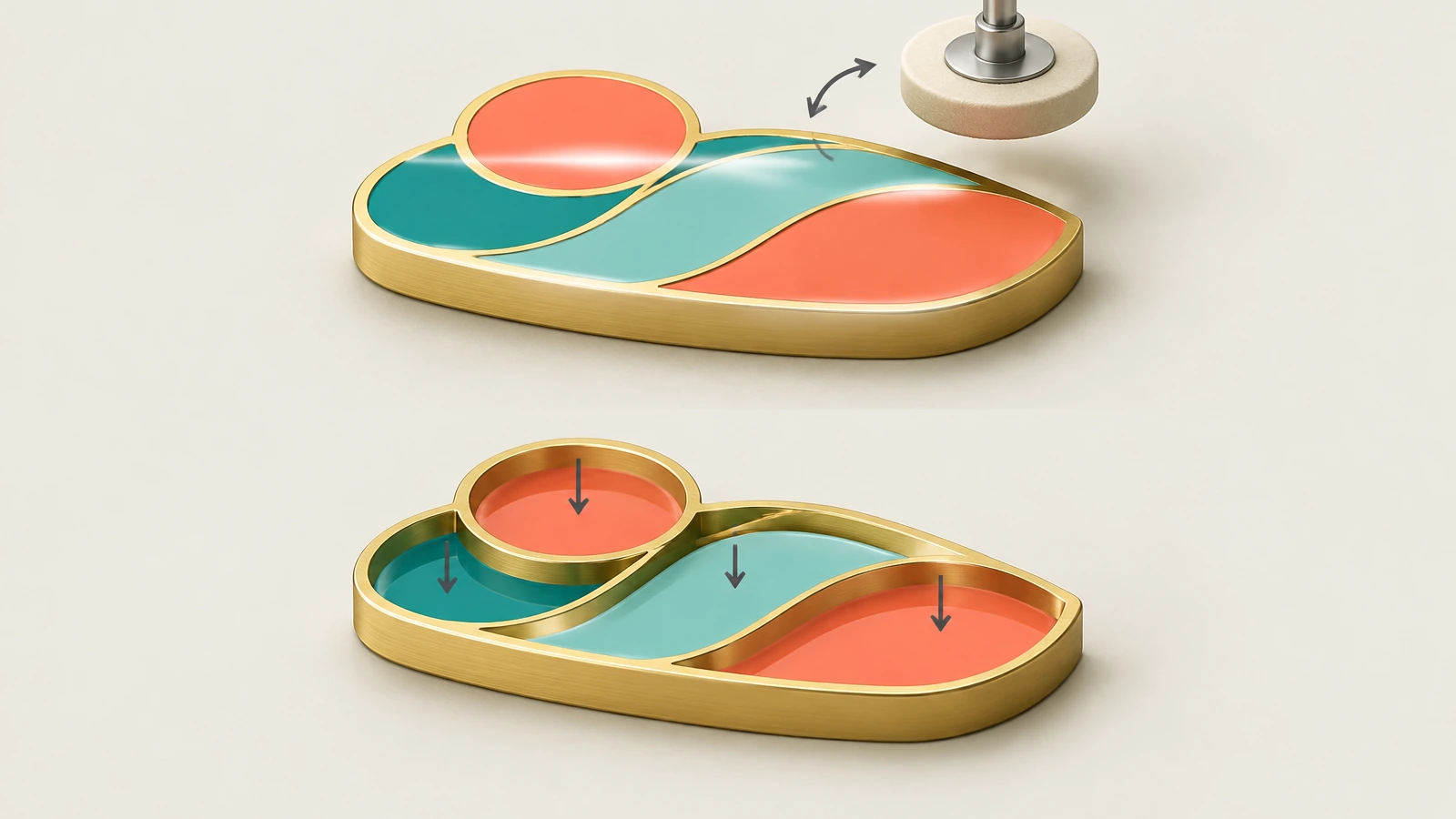
Both pins start the same way. A metal blank (iron, brass, copper or zinc alloy) is struck or cast so the design's outlines stand up as raised metal lines, with recessed cells between them. The difference is how far the color fills those cells and what happens afterward.
Hard enamel: filled, then polished flat
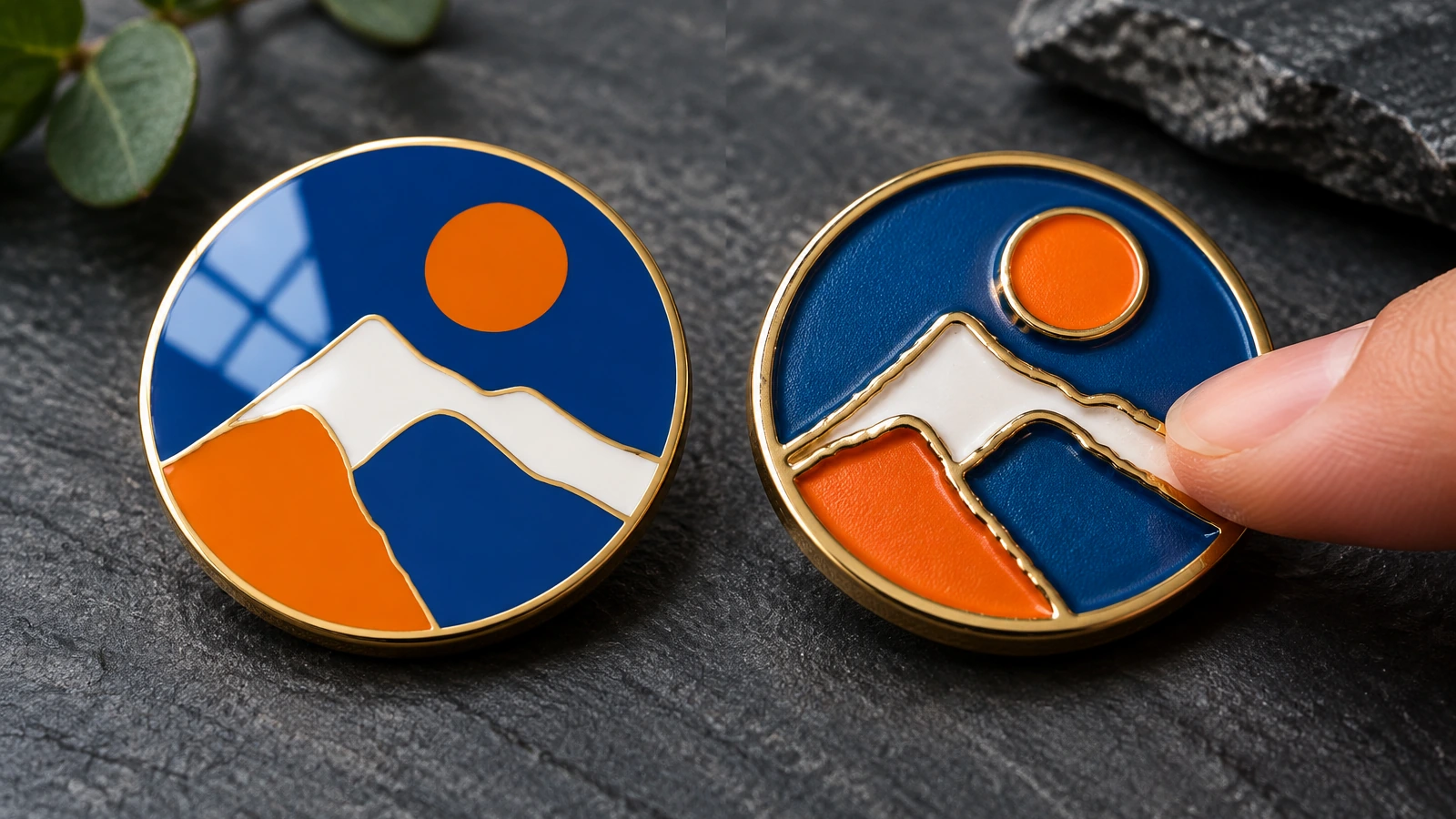
On a hard enamel pin the color is built up in the cells and then polished until it sits about level with the metal lines. The result is a smooth, reflective face. When you run a fingertip across it, you feel almost no step between metal and color. Polishing removes material from the metal and the enamel together, so the tops of the metal lines are ground down as well. This is why delicate lines or very small details can thin out or disappear. There is no universal minimum line width or gap for hard enamel. At Zigpac, the supplier marks any line or gap at risk on the eProof before production instead of quoting a generic rule.
The word "hard" describes the construction and the feel. It is not a hardness rating or a lifespan specification. Much commercial "hard enamel" is not traditional glass cloisonné, so if the material matters for your program, ask what is actually used.
Soft enamel: color sits below the metal
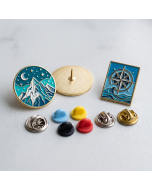
On a soft enamel pin the color fills the cells only partway, so the metal lines stand above the color. You see and feel a ridged, dimensional surface, and the plated metal catches light as distinct outlines. Because nothing is polished flat, thin metal lines keep their full height. One forum member summed it up this way: soft enamel can hold thinner lines because hard enamel is sanded smooth[3]. The same thread warns that a hard enamel pin can "look like a sticker" if the design doesn't suit it.
How to Check Your Artwork Against Each Construction
Judge the art before you judge the price. These five checks take about fifteen minutes and catch most problems before the eProof stage.
- View the art at the actual finished size. Print it or zoom your screen to 100% of the size you plan to order. Detail that reads well on a large monitor often merges into a blur at pin scale.
- Confirm every color sits in a closed cell. Each color area must be fully enclosed by a metal line. Open shapes, soft edges and overlapping transparencies do not translate to enamel in either construction.
- Flag gradients, photo shading and hairlines. Standard enamel fills one flat color per cell. Gradients usually need a printed or UV pin. Some creators combine hard enamel with screen printing to carry fine detail on a polished face[4]. Ask whether that option fits your design and quantity.
- Compare against the line and gap references. For soft enamel, Zigpac's Custom Soft Enamel Pins page gives supplier references of about 0.2–0.3 mm metal lines, about 0.3 mm color areas and text of at least 6 pt. These are references, not guarantees. For hard enamel, expect the proof to flag lines that polishing may weaken, because no single minimum applies.
- Approve the eProof, then decide on a physical sample. Every order includes a free eProof. When a brand color, a skin tone or very fine metal work matters, Zigpac recommends approving a physical sample before bulk production. Physical samples ship for US$5–30.
If the art depends on relief, hairlines or gradients, choosing hard enamel only because it looks premium can weaken the design. In that case the honest answer is soft enamel or a printed pin.
The Epoxy Dome on Soft Enamel
Soft enamel pins can take an optional clear epoxy layer on top. It is not the enamel itself. It is a transparent coating poured over the face that leaves a smoother, slightly domed surface. Buyers usually add it to protect the recessed color, make the pin easier to wipe clean, or get closer to a glossy look without paying for hard enamel.
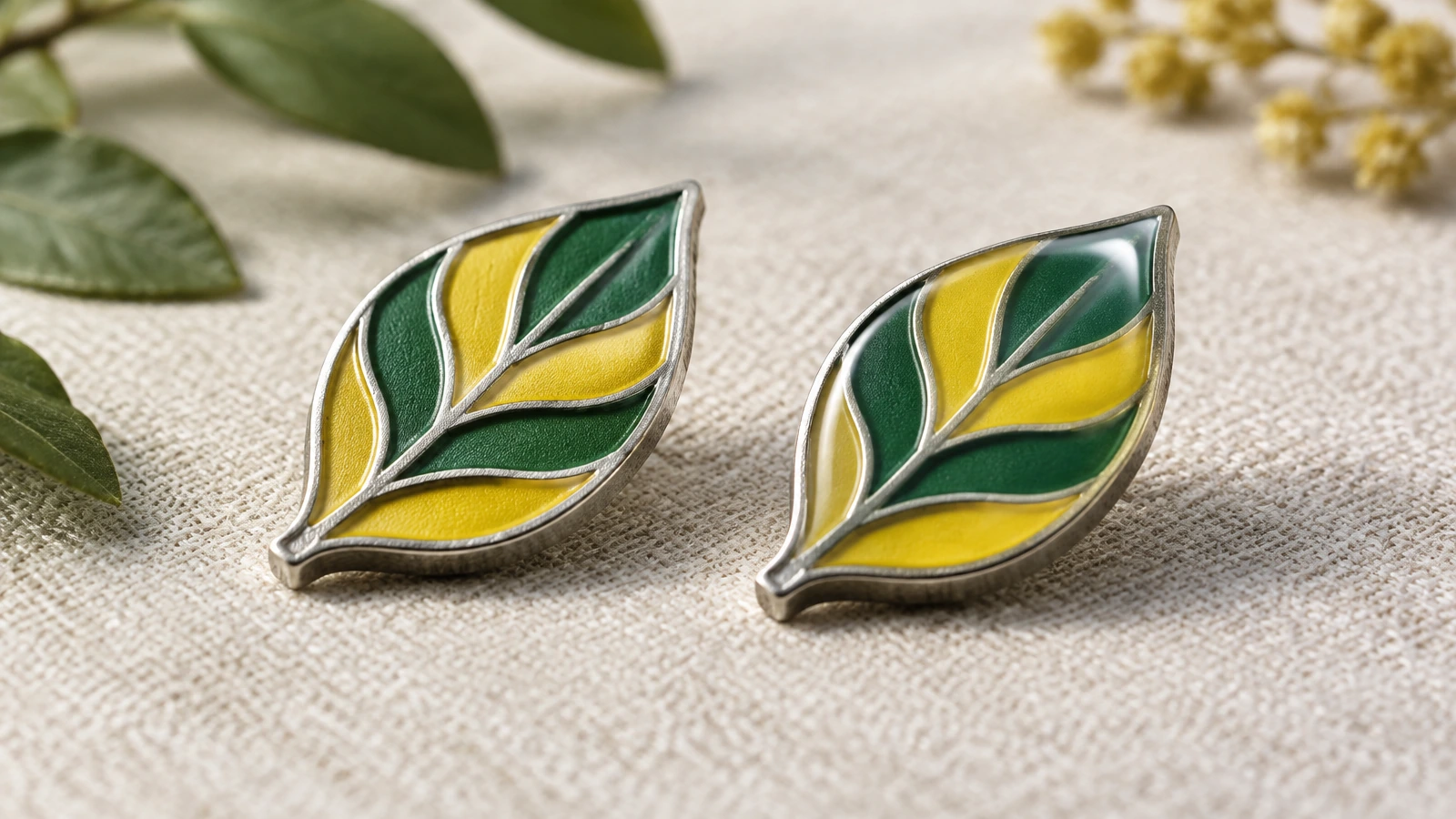
The trade-off is real. Epoxy removes the tactile contrast that makes soft enamel distinctive, and over time it may yellow, crack or age. It also does not turn soft enamel into hard enamel. The surface is domed rather than level and polished, and collectors can tell the difference. One forum ranking puts it bluntly: hard enamel first, soft enamel with epoxy second, plain soft enamel third (source [3]). For a giveaway pin that will be handled and kept loosely, epoxy can be sensible. For texture-led art, leave it off.
Hard Enamel vs Soft Enamel Pins Side by Side
The table compares both constructions on one basis. At Zigpac, both styles use price tiers from 50 pcs, final MOQ on your quote. Every order starts with a free eProof, and the figures below come from Zigpac's live tier tables dated November 2026.
| Factor | Hard enamel | Soft enamel |
|---|---|---|
| Surface and feel | Smooth, level, reflective; little step between metal and color | Raised metal lines, recessed color; ridged texture you can feel |
| Polishing | Polished until color is about level with metal | Not polished flat; metal keeps full height |
| Fine lines and small text | Polishing may reduce delicate lines; no universal minimum, flagged on the proof | Supplier references about 0.2–0.3 mm lines, about 0.3 mm color areas, at least 6 pt text (not guarantees) |
| Color limits | Solid colors in closed cells; gradients need printing | Solid color blocks and bold outlines; gradients may need a printed pin |
| Epoxy dome | Not needed; face is already level | Optional clear layer; smoother but less tactile, may yellow or age |
| Wear and scratch behavior | Often chosen when a flatter look and greater scratch resistance matter | Raised metal takes contact first; recessed color can collect dirt |
| Plating look | Metal shows as thin flush outlines | Raised plated lines stand out, especially with antique or black nickel |
| Unit price, 100 pcs (50+ tier) | US$3.20 | US$1.50 |
| Unit price, 500 pcs (500+ tier) | US$1.30 | US$0.62 |
| Standard lead time | Standard 10–15 days | Standard 7–10 days |
| MOQ | Price tiers from 50 pcs, final MOQ on your quote | Price tiers from 50 pcs, final MOQ on your quote |
| Best merchandise uses | Retail and collectible lines, recognition and uniform pins | Event giveaways, trade shows, promo runs, texture-led art |
Plating choices such as polished gold, silver, black nickel, copper and antique apply to both, and they change the look more on soft enamel because more metal is visible. For a full specification walkthrough on the polished style, see our page on custom hard enamel pins for brands, events and retail collections.
Wear and scratch behavior in practice
A level face spreads contact across metal and enamel, which is why hard enamel is the usual choice for pins worn daily on lanyards, jackets or uniforms. On soft enamel the raised lines take the first scuffs, and the recessed color is partly sheltered but collects grime in the corners. Neither label guarantees durability. Base metal, plating, enamel material and quality control matter more than the name. No independent standard rates enamel pin scratch resistance by construction type, so treat any "lasts X years" claim with caution. Quality also varies by batch. One buyer reported that 3 of 5 pins in a small order had slight filling issues[5]. That is a single anecdote, but it is a good reason to agree on acceptance criteria in writing. The product page covers how to turn quality into an inspection standard.
Worked Price Example at 100 and 500 Pieces
Here are the listed tiers applied to two common merchandise quantities. Prices are from Zigpac's live tier tables, dated November 2026. At 100 pcs the 50+ tier applies, because the next break starts at 200.
| Quantity | Hard enamel unit / total | Soft enamel unit / total | Difference |
|---|---|---|---|
| 100 pcs | US$3.20 / about US$320 | US$1.50 / about US$150 | about US$170 |
| 500 pcs | US$1.30 / about US$650 | US$0.62 / about US$310 | about US$340 |
Two patterns stand out. First, per-piece cost falls sharply with volume for both styles: hard enamel drops from US$3.20 to US$1.30 between 100 and 500 pcs. That is why a 500-piece hard enamel run can cost less per pin than a 100-piece soft enamel run. Second, soft enamel stays at roughly half the hard enamel unit price at both quantities on these tiers.
Zigpac's factory pricing is quoted per order, and the tier figures are not the whole bill. Mold or setup, plating, backing cards, packaging and freight are confirmed on the quote. Size, color count, plating and backing all move the number, so the final price is on your quote. Zigpac's soft enamel page also notes that small quantities, complex outlines, many colors, special plating, packaging, rush and shipping can narrow or even reverse the gap. One forum member called the hard-soft price difference "negligible" for their order (source [4]). That can happen on a specific spec, which is the reason to quote both side by side.
Small-batch buyers often want fewer than 50 per design. A recurring thread asks for 15 or 20 pins per design[6]. If your quantity is below the first tier, ask on the quote rather than assuming either style is unavailable.
Lead Time and Event Planning
Zigpac lists a standard 10–15 days for hard enamel and a standard 7–10 days for soft enamel, with the final schedule on your quote. Count from proof approval, not from your first inquiry, and treat freight as a separate block of time.
For a dated event, work backward from the in-hand date. Subtract transit time, then a buffer for proof revisions and unexpected delays, then the production window. If that math leaves only the soft enamel window, the date has made the choice for you. Ask for an earlier proof or a confirmed rush option rather than squeezing a polished order into a gap it doesn't fit. Late artwork changes after proof approval can force new tooling and restart the clock, so lock the design first.
Which Construction Fits Your Merchandise Use
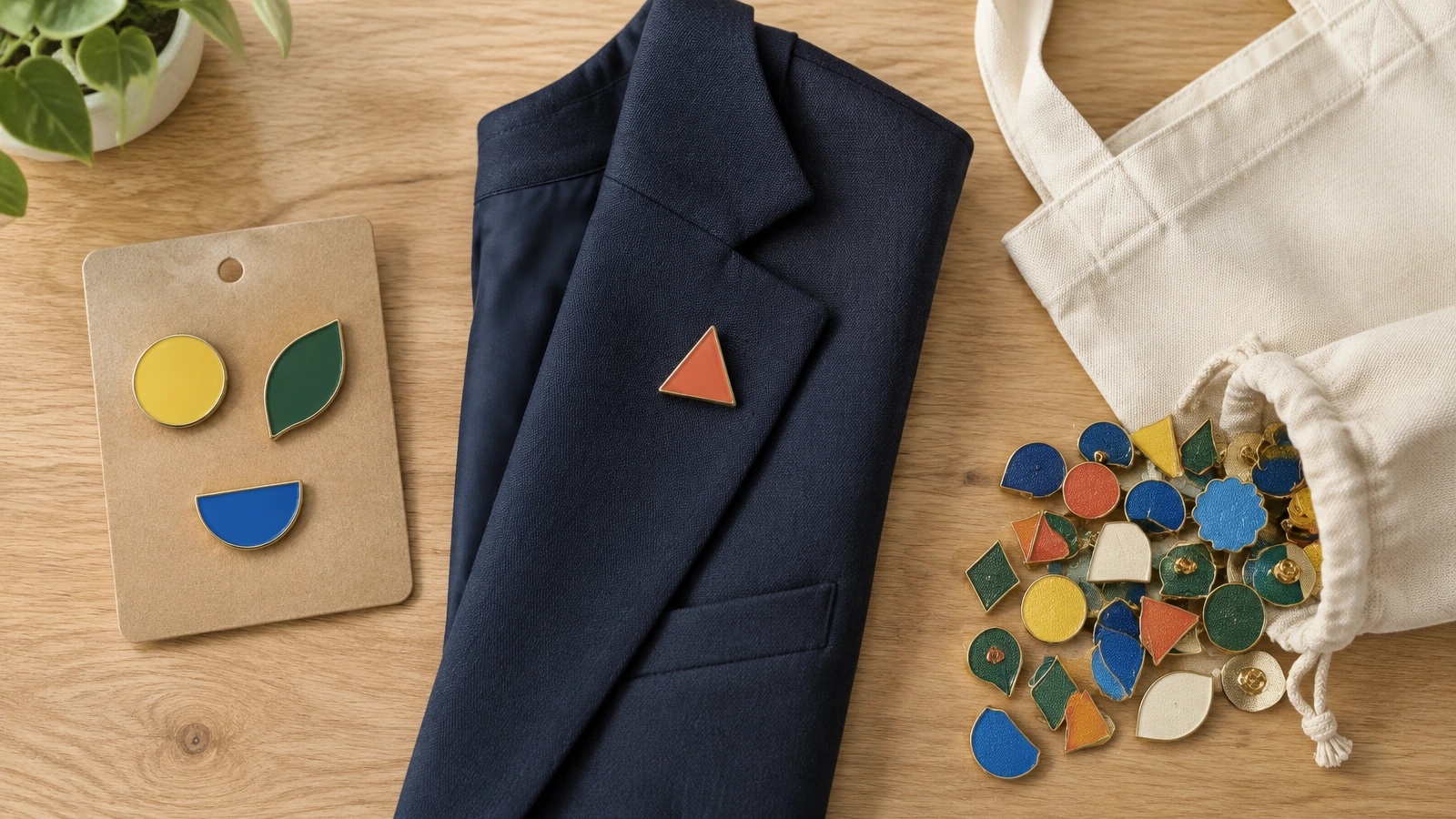
Use this rule: if the pin is sold, collected or worn every day, start with hard enamel; if it is given away in volume or on a tight date, start with soft enamel; if the art depends on hairlines, gradients or relief, let the art decide.
| Merchandise use | Start with | Why |
|---|---|---|
| Retail line or collectible series | Hard enamel | Collectors often prefer the level, glossy face; it supports a higher shelf price |
| Employee recognition and uniforms | Hard enamel | Worn often; flatter face and better scratch behavior matter |
| Event giveaways and trade shows | Soft enamel | Lower unit price and shorter standard schedule protect budget and date |
| High-volume promo runs | Soft enamel | Cost per piece drives the program |
| Art with fine detail or relief | Soft enamel or printed | Polishing may weaken hairlines; gradients need printing |
Promo programs are usually judged against a broader promotional products budget, which the PPAI annual sales volume report[7] tracks across the industry. That budget context is why soft enamel dominates giveaway runs.
If pins will go to children at school, family or sports events, check whether they count as children's products. The U.S. Consumer Product Safety Commission's toy safety guidance[8] and its rules on total lead content[9] apply separately to substrates and surface coatings. Raise this on the quote before choosing materials.
What to send for a side-by-side quote
- Vector artwork (AI, EPS or PDF)
- Finished size and number of colors, with Pantone references for brand colors
- Plating and attachment (rubber or PVC clutch, butterfly, locking clutch, magnet, two posts)
- Backing card or packaging needs
- Quantity and the date pins must be in hand
Ask for hard and soft enamel quoted together on the same spec. The product page explains how to build a full quote-ready brief.
FAQ
FAQ: Is hard enamel better than soft enamel for brand merchandise?
Hard enamel is better for pins that are sold, collected or worn daily, and soft enamel is better for giveaways, promo runs and texture-led art. The polished, level face reads as premium, while soft enamel saves money and time and keeps fine metal lines at full height. Neither is better in every case.
FAQ: How much more do hard enamel pins cost than soft enamel pins?
At Zigpac's November 2026 tiers, hard enamel costs roughly twice as much per piece: US$3.20 vs US$1.50 at 100 pcs and US$1.30 vs US$0.62 at 500 pcs. Mold or setup, plating, backing, packaging and freight are confirmed separately, and the final price is on your quote.
FAQ: Does "hard enamel" mean the pin won't scratch?
No. "Hard" describes the filled-and-polished construction, not a hardness rating or lifespan. Hard enamel is often chosen when greater scratch resistance matters, but base metal, plating and quality control still determine how a pin wears.
FAQ: Can epoxy make a soft enamel pin look like hard enamel?
Partly. Clear epoxy gives soft enamel a smoother, domed surface, but it is not level and polished like hard enamel. It removes the tactile ridges and may yellow, crack or age over time.
FAQ: Which is faster to produce?
Soft enamel is faster: Zigpac lists a standard 7–10 days, against a standard 10–15 days for hard enamel, counted from proof approval. The final schedule is on your quote, and freight is additional.
FAQ: Can I see both options before committing?
Yes. Zigpac can quote hard and soft enamel side by side on the same artwork, includes a free eProof with every order, and ships physical samples for US$5–30. Both styles use price tiers from 50 pcs, final MOQ on your quote.
Key Takeaways
- Soft enamel costs about half as much at small runs — US$1.50 vs US$3.20 per piece at 100 pcs, November 2026 tiers (Source)
- Volume narrows per-piece cost faster than switching styles — hard enamel falls from US$3.20 to US$1.30 between 100 and 500 pcs (Source)
- Soft enamel protects tight event dates — standard 7–10 days vs standard 10–15 days for hard enamel, from proof approval (Source)
- A physical sample is cheap insurance on color-critical work — US$5–30 per sample, with a free eProof on every order (Source)
- Agree on acceptance criteria before bulk production — one buyer found filling issues on 3 of 5 pins in a small order (Source)
Conclusion
The hard enamel vs soft enamel pins choice is less about which is "premium" and more about fit. Hard enamel earns its higher unit price on retail, collectible and recognition pins that are handled and judged up close. Soft enamel wins on giveaways and promo runs where budget and dates rule, and on art whose fine lines or relief would suffer under polishing. Check the artwork at actual size, price both at your real quantity, and work backward from the in-hand date. Then send Zigpac your vector art, size, colors, plating, backing and quantity, and ask for both constructions quoted side by side. Final MOQ, price and schedule are confirmed on the quote.
Sources
- Reddit r/EnamelPins — "What is everyone's preference/perceived value of hard vs soft enamel", community discussion, January 2025. ↩
- PPAI — Promotional Products Association International, industry association, accessed November 2026. ↩
- Reddit r/EnamelPins — "Do you prefer hard or soft enamel?", community discussion, August 2024. ↩
- Reddit r/EnamelPins — "Soft or hard enamel for details", community discussion, August 2025. ↩
- Reddit r/EnamelPins — buyer discussion on ordering experiences and quality, August 2025. ↩
- Reddit r/EnamelPins — "Less than 50 MOQ for enamel pins", community discussion. ↩
- PPAI — 2024 Sales Volume Report, published February 2025. ↩
- U.S. Consumer Product Safety Commission — Toy Safety business guidance, accessed November 2026. ↩
- U.S. Consumer Product Safety Commission — Total Lead Content, accessed November 2026. ↩




The information below is required for social login
Sign In
Create New Account