
 Blog PDF for offline reading
Quick answer: Zigpac supplies canvas totes wholesale, and the safest way to choose any wholesale canvas tote bag supplier is on evidence, not catalog photos. Insist on a written spec with fabric weight in oz/yd² and GSM, handle construction and print method, a numbered physical sample, and a pre-shipment inspection against agreed AQL limits. Zigpac quotes cotton or cotton-blend canvas (6–8 oz or 10–12 oz and up) with screen print, DTF, DTG or embroidery, price tiers from 100 pcs, final MOQ on your quote, standard 10–15 days, free eProof, physical samples US$5–30.
Stock decoration or OEM: what can this supplier actually change?
Most tote orders go wrong before the first sample. The buyer asks for 12 oz canvas and longer handles, and the supplier quietly decorates whatever blank it has in stock. Recipients then judge the result in daily use. In a 2026 survey of more than 1,000 corporate end-buyers[1], 67% said they measure success by whether recipients voluntarily use the item. PPAI research[2] found that 70.4% of respondents see durability as the strongest signal of value.
So start with the supplier model. A stock decorator prints or embroiders ready-made blanks. It can change the logo, ink color and print position, but not the fabric weight, size or handles. An OEM maker cuts and sews to your spec, which requires pattern work and at least one sampling round. A "no minimum" offer usually comes from a stock decorator. Ask which model you are buying and get the answer in writing. Buyer use cases and order scoping are covered on our custom canvas tote bags page.
The wholesale canvas tote bag supplier checklist
Use this canvas tote bag supplier checklist on every quote. Each row pairs a claim with the evidence that proves it.
| Check | Ask | Evidence | Verify | Red flag |
|---|---|---|---|---|
| Fabric weight | oz/yd² and GSM | Mill spec, swatch | Cut and weigh | "Heavy canvas," no number |
| Pre-shrink | Pre-washed or pre-shrunk? | Yes/no on quote | Wash a sample, re-measure | "Canvas doesn't shrink" |
| Handles | Length, width, attachment | Close-up photos | Hang test | Attachment method unknown |
| Stitching | Stitches per inch, hems | Number on spec | Count on sample | "Standard stitching" |
| Print and artwork | Method, colors, files | eProof at final size | Proof vs artwork | Accepts low-res JPEGs |
| Sample | Bulk fabric? Numbered? | Numbered physical sample | Signed golden sample | Bulk payment before sample |
| Inspection/AQL | AQL, defect classes | Report with photos | ISO 2859-1 plan in PO | "We check everything" |
| Packaging and moisture | Pack count, cartons | Carton photos | Smell, feel, count | Cartons sealed damp |
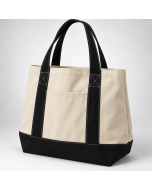
At Zigpac, finished size and packaging are confirmed on your quote, and the canvas is cotton or cotton-blend in 6–8 oz or 10–12 oz and up. Zigpac recommends approving a numbered physical sample and inspecting the order against written criteria before you release bulk.
How to verify fabric oz and GSM before you pay
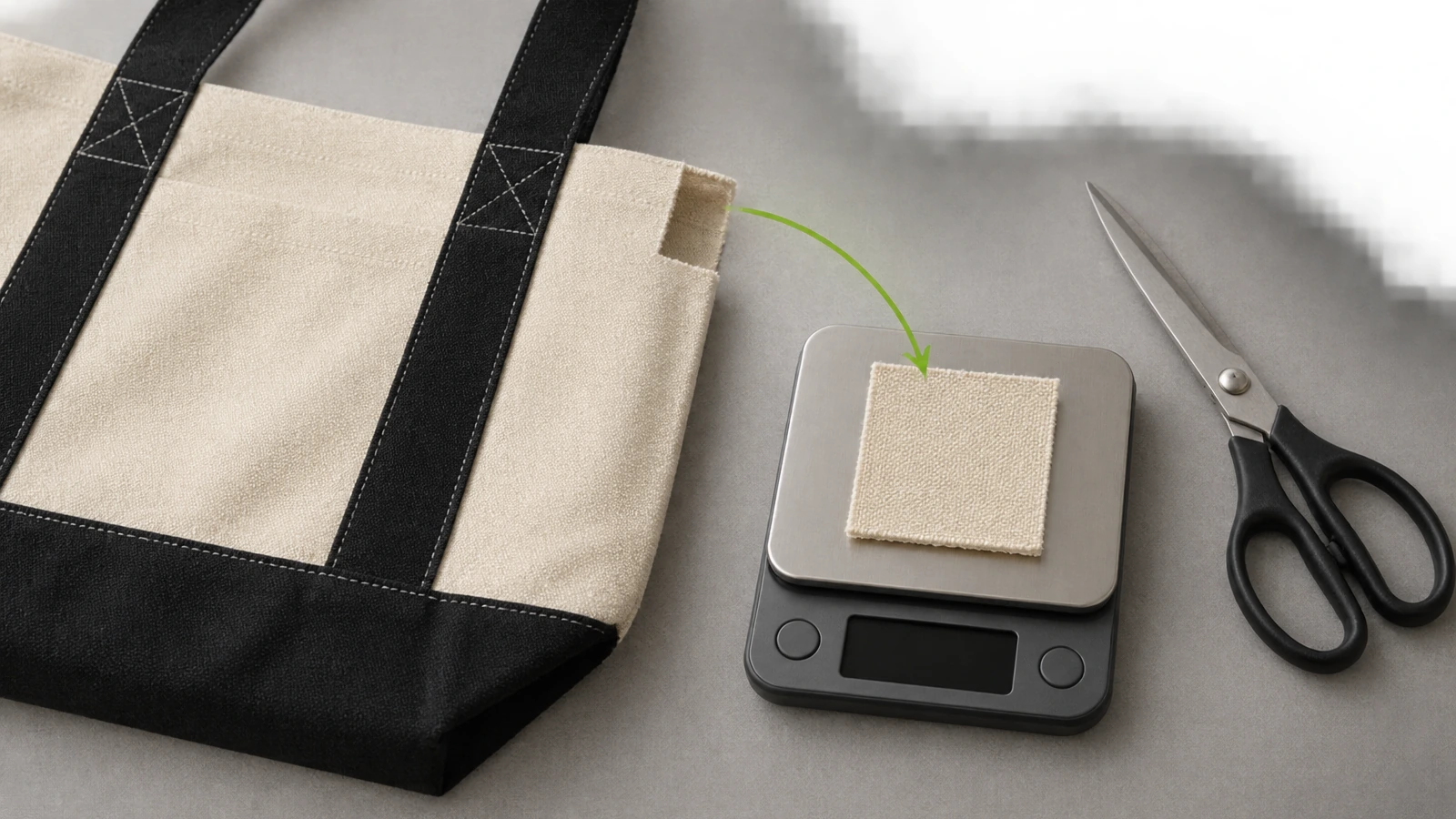
Canvas is a denser, heavier weave of cotton or cotton blend, and its weight is quoted in ounces per square yard. 1 oz/yd² is roughly 33.9 GSM. That makes 6 oz about 203 GSM, 8 oz about 271 GSM, 10 oz about 339 GSM and 12 oz about 407 GSM. Ask for both units on the quote.
The rating describes the cloth, not the finished bag. Handles, hems and ink add weight, so a bag's total weight cannot confirm the fabric claim on its own. You have two practical checks:
- Cut and weigh. This follows the logic of ASTM D3776, the standard test for fabric mass per unit area. Cut a 10 × 10 cm swatch (0.01 m²) from the sample or a bulk-fabric offcut. Weigh it on a scale that reads to 0.01 g, then multiply the grams by 100 to get GSM. A 3.39 g swatch is about 339 GSM, or 10 oz. Average three swatches taken from different spots, because density varies across a roll.
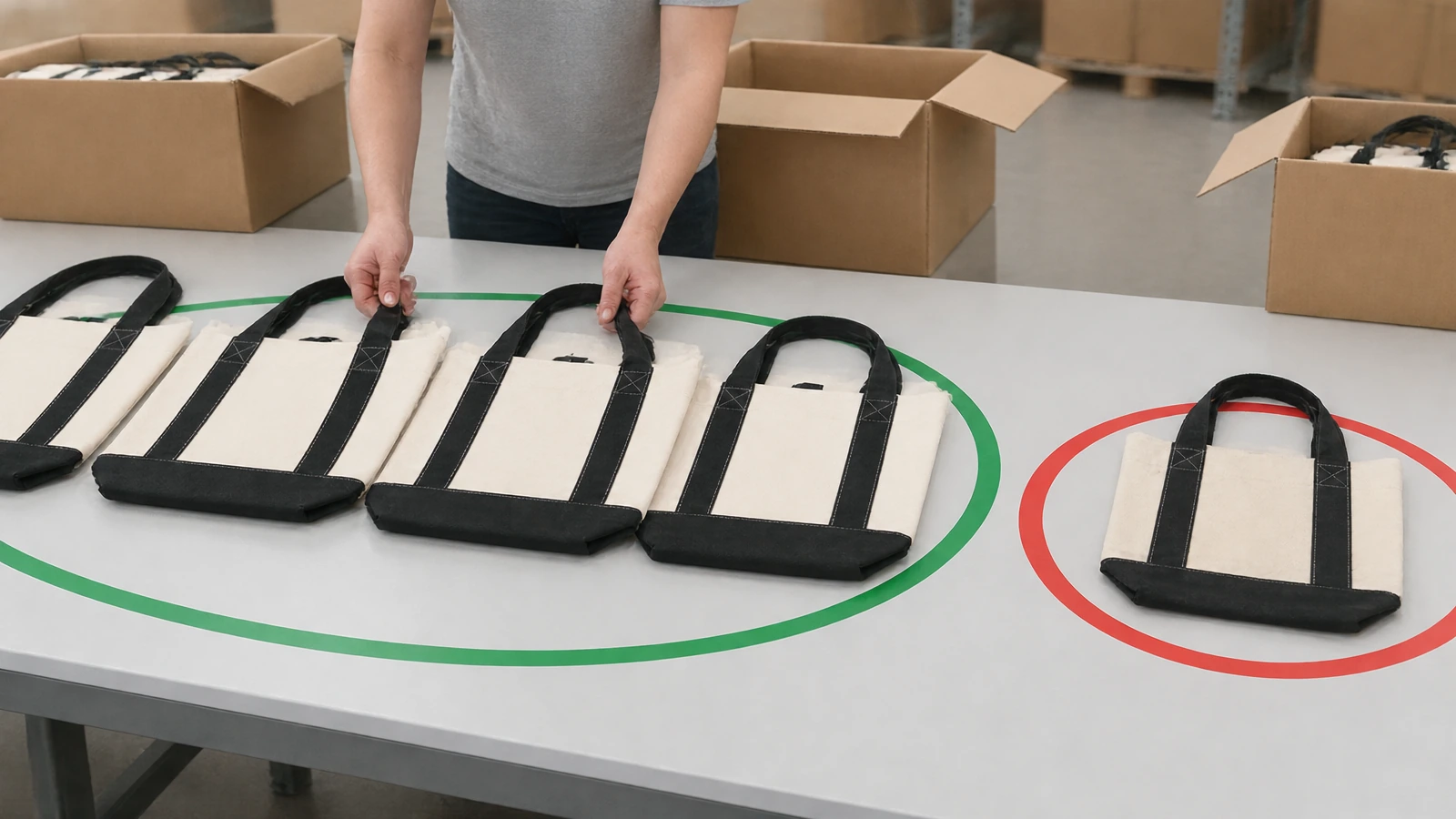
- Weigh finished bags. If you cannot cut, weigh ten bulk bags against the approved sample and write the allowed tolerance into the PO.
Untreated cotton canvas shrinks in the first wash, and the print area and handle length shrink with it. If the bags will be laundered, specify pre-washed or pre-shrunk fabric on the PO and confirm it on the sample.
Match weight to use. 6–8 oz suits one-day giveaways, while 10–12 oz or heavier suits bags people carry every week. Check fiber claims too. Under FTC textile labeling guidance[3], tote bags are exempt from mandatory fiber labels. Any fiber claim a seller does make, such as "100% cotton," must still be truthful.
Stitching and handle reinforcement: what to specify and test
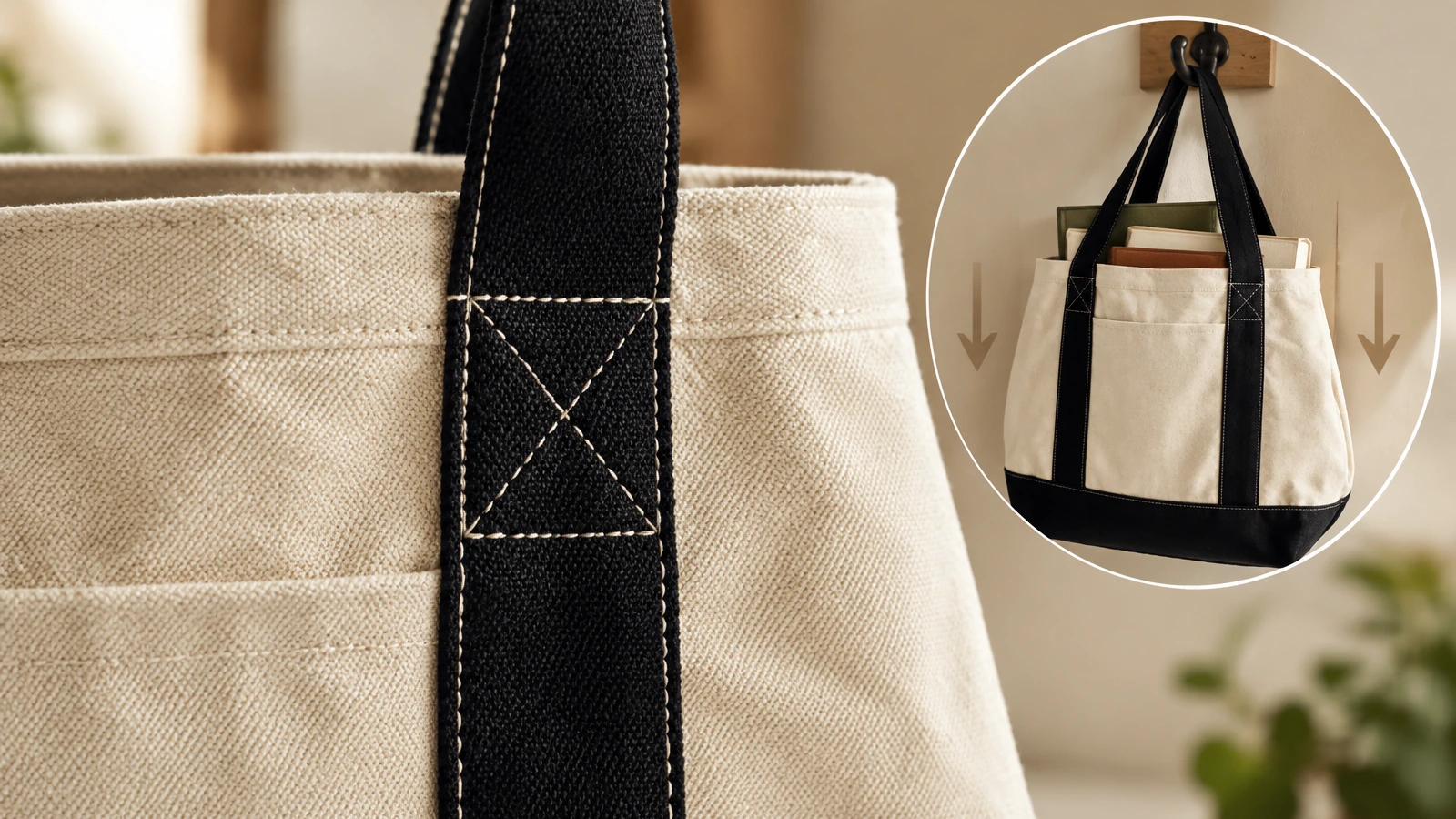
Handles usually fail where they join the bag, not in the middle of the strap. The attachment method matters as much as fabric weight. Put these details in the spec:
- Length and drop: total handle length plus the drop to the bag opening, which decides whether the bag fits over a shoulder.
- Width and material: folded self-fabric or cotton webbing, with the width in millimeters.
- Attachment: box-X stitching (a square with a cross) or bar-tacks at each end. State whether the handle is caught inside the top hem or only sewn to the outside.
- Hems: a double-folded top hem so cut edges cannot fray, plus finished inner seams.
- Stitch density: a stitches-per-inch figure you count on the approved sample and write down as a number. ISO 4915 names stitch types, so both sides can describe the same stitch.
Then test the sample. Load it with a measured weight that reflects real use, such as books, bottles or groceries. Hang it by both handles overnight, then repeat with one handle, since people often carry a tote that way. Afterward, look for seam slippage, popped stitches or fabric pulling around the box-X, and photograph each stage.
Treat any load rating with care until you see a lab report. A fabric grab-strength figure, such as one from ASTM D5034, measures the cloth, not the handle seam. Ask whether a quoted kg or lb figure came from a third-party test on the finished bag. If it did not, treat it as marketing.
Screen print, DTF, DTG or embroidery: match the method, then compare quotes
| Factor | Screen print | DTF |
|---|---|---|
| Best artwork | Few solid spot colors, bold shapes | Photos, gradients, many colors |
| Run size | Mid to large; setup spread wider | Small to mid |
| Hand feel | Ink sits in the weave | Thin film on the surface |
| Files | Vector plus Pantone references | About 300 dpi transparent PNG, final size |
| Setup | One screen per color | No screens |
DTG prints full color directly into light natural cotton and suits small runs. Embroidery suits small logos on heavier canvas, but it cannot reproduce fine text. For artwork preparation, follow the file rules in the table. A supplier who silently accepts a screenshot is a warning sign.
Ask for setup costs itemized: screens per color, embroidery digitizing and extra print positions. Also ask whether screens, embroidery files and Pantone numbers are archived for reorders. Then compare quotes like for like, with the same finished size, oz and GSM, colors and positions, handle spec, packaging, sample cost and shipping terms.
Zigpac's listed canvas tiers, dated November 2026, show how to read a tier table: 100+ US$1.95, 500+ US$1.45, 1,000+ US$1.10 and 3,000+ US$0.90 per piece. That puts 500 bags at about US$725 and 1,000 bags at about US$1,100. Check where your quantity sits. At the 500+ rate, 900 bags cost about US$1,305, which is more than 1,000 bags at US$1,100. The final price is on your quote, because size, fabric weight, print colors and positions, handles and packaging all change it. Freight, duties and inspection are counted separately.
Canvas tote bag sample check and pre-shipment inspection
Numbered sample and golden sample
The free eProof checks layout, and the physical sample checks the bag. Ask for a pre-production sample sewn from the bulk fabric lot, with a sample number on its tag and on the quote. On the sample, measure:
- width, height and gusset
- handle length, drop and width
- print size and its distance from the hem
- color against the Pantone reference in daylight
- swatch weight
- stitches per inch at the handle
If the bags will be washed, launder one sample the way end users will. Re-measure the size, print area and handles, and look for cracking or bleeding. When the sample passes, both sides sign and date it and each keeps one copy. This golden sample becomes the inspector's physical reference. Any later change, such as a new fabric lot or a new ink, needs a new sample. Zigpac's physical samples ship for US$5–30.
Pre-shipment inspection under ISO 2859-1
ISO 2859-1 sets sampling plans for inspection by attributes. Lot size and inspection level determine how many bags to pull, and the AQL sets the accept and reject numbers. Write the plan into the PO. For example, a 1,000-bag lot at general inspection level II draws 80 bags. At AQL 2.5 for major defects, the lot passes with 5 majors and fails at 6. At AQL 4.0 for minor defects, it passes with 7 and fails at 8. Many buyers allow zero critical defects. Treat these as example values for your PO.
Agree defect classes in advance, with photos:
- Critical: a missing handle, mold, the wrong logo or color, or a strong odor.
- Major: broken stitching at a handle joint, a smeared or off-position print, holes, or size outside tolerance.
- Minor: loose threads, small marks or a wavy hem.
Add checks that garment checklists miss. Smell the sampled bags, because a musty odor points to damp storage. Feel inside the folds for moisture, and confirm piece counts per carton against the packing list. One public review describes all 24 totes in an order arriving damp and mildewed. On arrival, photograph the cartons before opening them and note any damage on the delivery receipt. Open samples within the claim window you agreed in writing, since event bags often sit unopened for weeks.
Supplier red flags, and when jute is the better bag
- Prices quoted without oz or GSM.
- "No minimum" alongside promises of custom sizes or handles.
- Bulk payment requested before a physical sample.
- Lead time counted from the order date rather than from artwork approval.
- Claims of organic, recycled or tested materials without a certificate covering the product, such as OEKO-TEX STANDARD 100[4], GOTS[5] or GRS.
- Totes for children under 12 supplied without a Children's Product Certificate or lead testing[6].
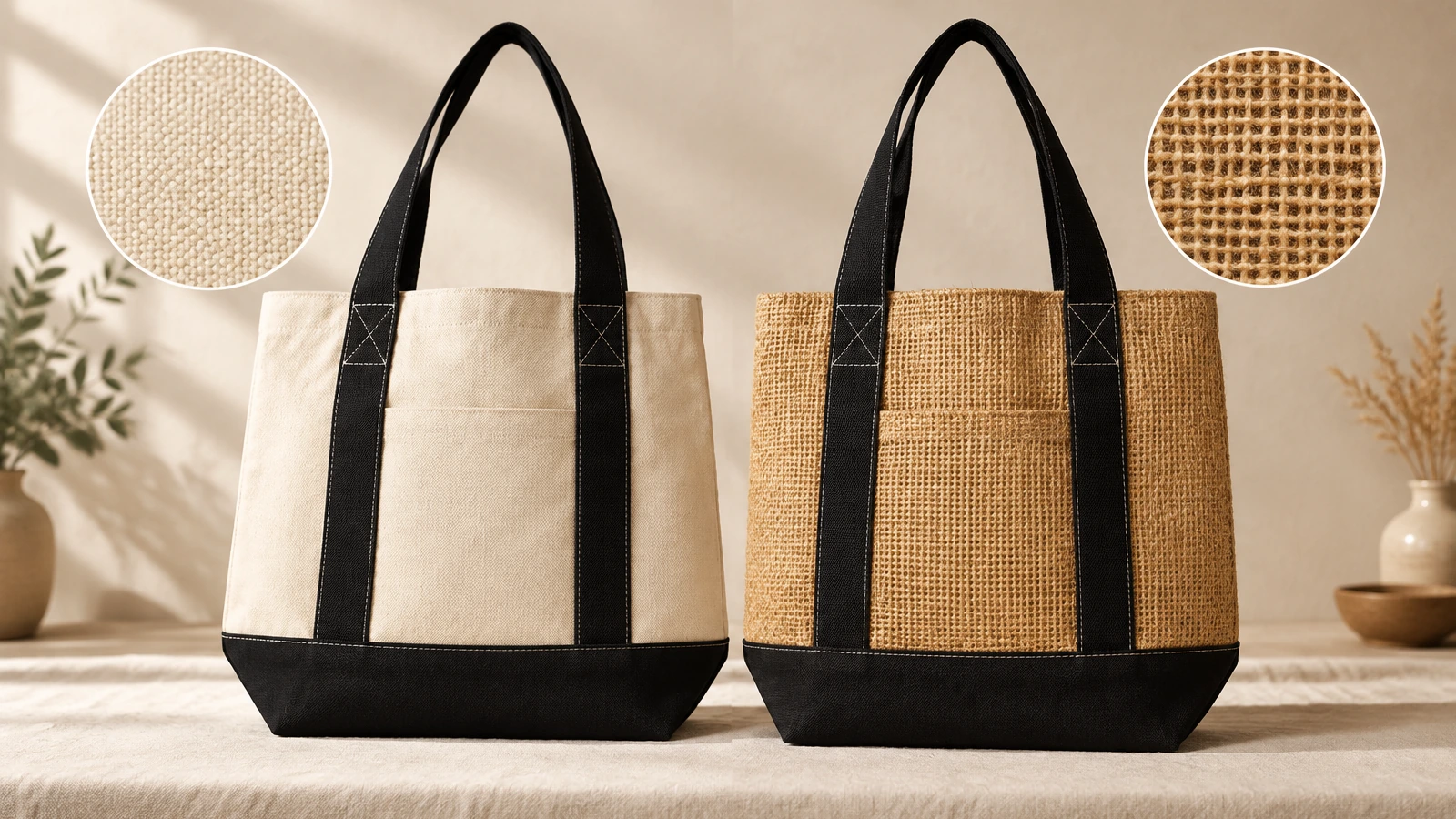
Canvas handles fine detail and laundering better. Jute is the better choice when you want a coarse, natural look for market or grocery bags and your logo is bold. Zigpac's "Custom Jute Tote Bags" come in natural or laminated jute or Juco at 200–450 GSM and are usually screen printed in one to four bold colors. Fine strokes and gradients break up on the jute weave, while Juco holds finer print.
FAQ
FAQ: What does "no minimum" mean from a canvas tote supplier?
It usually means the supplier decorates stock blanks instead of sewing bags to your spec. You can change the logo, ink color and print position, but not the fabric weight, size or handles. That works for small, fast runs. A custom size or reinforced handles needs an OEM maker, pattern work and at least one sampling round.
FAQ: How can I check a supplier's oz claim without a lab?
Weigh a swatch. Cut 10 × 10 cm from the sample or an offcut, weigh it to 0.01 g and multiply by 100 to get GSM, then divide by 33.9 to get oz/yd². A 2.71 g swatch is about 271 GSM, or 8 oz. Average three swatches and record the result next to the golden sample.
FAQ: Which AQL should I put in the purchase order?
Pick limits that match the bag's use and write them into the PO under ISO 2859-1. A common example is general inspection level II with AQL 2.5 for major defects, 4.0 for minor defects and zero critical defects. Agreeing in advance, with photos, which faults count as critical, major or minor matters even more.
FAQ: Is screen print or DTF better for a 500-piece logo order?
Screen print is usually better for a logo with a few solid colors at 500 pieces, because the setup is spread across the whole run. Choose DTF for photos, gradients or many colors. Send vector files with Pantone references for screen print, or a transparent PNG at about 300 dpi and final size for DTF.
FAQ: How long does Zigpac take, and when does the clock start?
Zigpac's standard production time is 10–15 days, with the final schedule on your quote. The clock starts at artwork or sample approval, not at the order date, and transit is counted separately. Budget time for the free eProof and a physical sample (US$5–30), then add inspection and freight when working back from your in-hand date.
Key Takeaways
- Convert every oz claim to GSM and verify it with a swatch. — 1 oz/yd² ≈ 33.9 GSM; swatch grams × 100 = GSM (Source)
- Corporate tote programs are judged on use, not on handout counts. — 67% of 1,000+ end-buyers measure success by voluntary use (Source)
- Durability reads as value. — 70.4% name it the strongest value signal (Source)
- Compare totals at your real quantity. — 1,000 bags ≈ US$1,100 versus 900 bags ≈ US$1,305 on November 2026 tiers, with the final price on your quote (Source)
Next step
Choose your supplier on documents, samples and inspection terms rather than photos. To source wholesale custom canvas tote bags, send your artwork, bag size, fabric weight, handle style, print method, quantity and in-hand date, and ask Zigpac for a quote on custom canvas tote bags. Zigpac confirms the final MOQ, price and schedule on the quote, with a free eProof and a physical sample for US$5–30 before bulk production.
Footnotes
- ASI, report on a 2026 corporate end-buyer swag survey (January 2026). ↩
- PPAI Research, "New Year, New(-ish) Trends." ↩
- U.S. Federal Trade Commission, "Threading Your Way Through the Labeling Requirements Under the Textile and Wool Acts." ↩
- OEKO-TEX, STANDARD 100 standard text. ↩
- Global Organic Textile Standard (GOTS), Global Standard gGmbH. ↩
- U.S. Consumer Product Safety Commission, "Total Lead Content." ↩





The information below is required for social login
Sign In
Create New Account