We use cookies to enable our websites to remember information, to help some website functionalities to work properly, to understand how you interact with and use our websites and to display you content and ads that are relevant and engaging for you.
By clicking Accept All you consent to the use of these cookie.
The store will not work correctly when cookies are disabled.
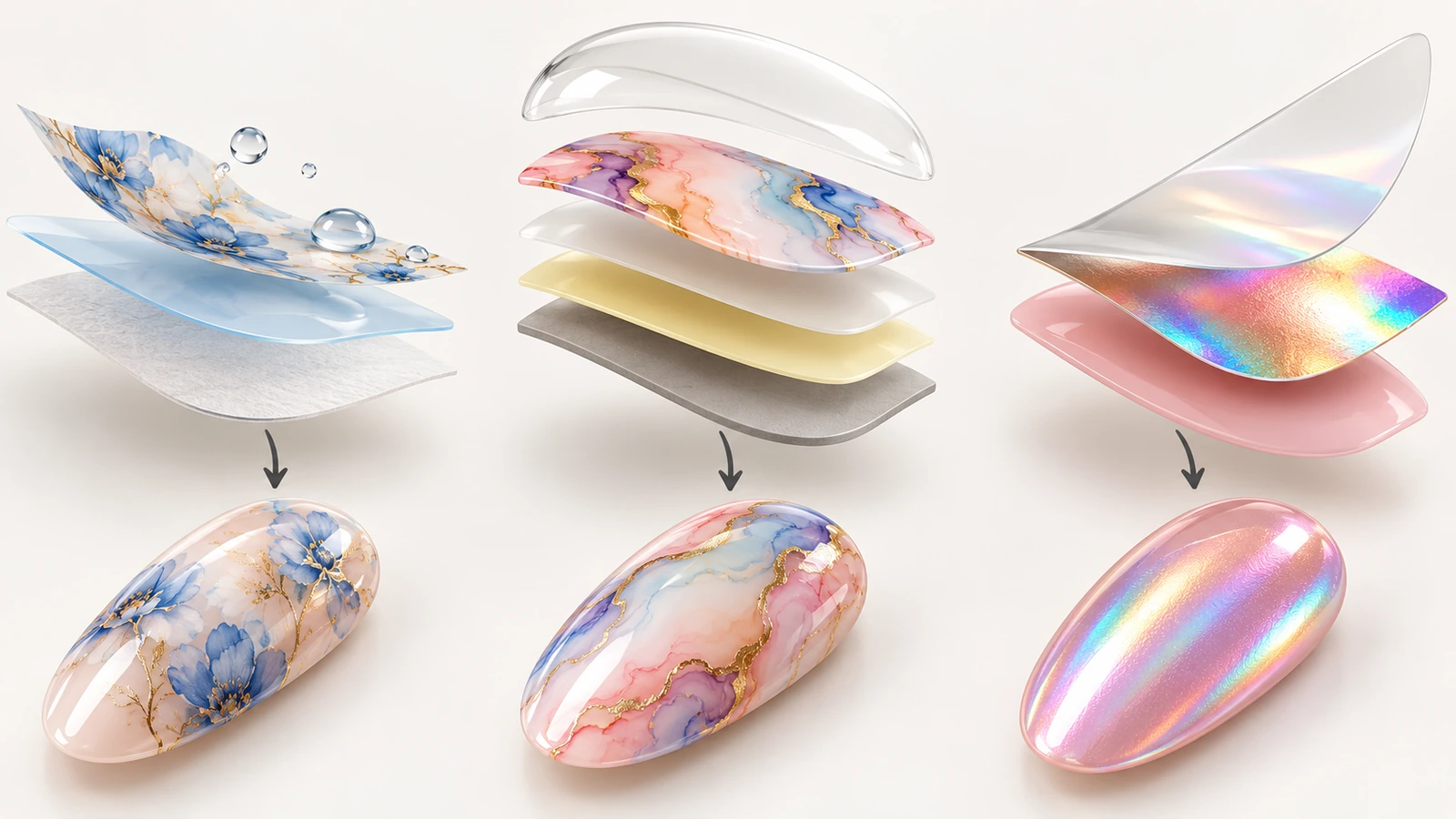
Quick answer: 3D nail art decals come in three main constructions. Water-slide decals are an ultra-thin printed film that is released with water and sealed under top coat. Raised or embossed adhesive decals are peel-and-stick sheets with a relief you can feel. Foil and holographic transfers are metallic layers that create depth through light rather than height. Pick the format by who applies it. Salons and gel techs suit water-slide and foil. Retail DIY, kids and character lines suit raised peel-and-stick sheets.
Ask three suppliers for "3D nail art decals" and you can get three different products back. One sends a sheet of water-slide film. One sends puffy peel-and-stick stickers. One sends holographic foil. All three are sold under the same words. The labels on marketplaces and supplier catalogs blur together, so a range plan written around "3D" can end up describing a product that only one type of customer can actually apply.
The cost of picking the wrong format shows up after launch. Thick raised pieces lift where the nail curves. Relief catches hair and knit sweaters. A first-time home user drops a water-slide decal into a glass of water and has no idea what to do next. And a holographic sheet sold as "3D" earns the review nobody wants: "There's no 3D." Getting the applier right matters a great deal. In a 2025 survey of more than 4,000 American women who buy beauty products, 96% said they do their nails regularly. Of those, 43% do them only at home and another 47% split between the salon and DIY, according to The Benchmarking Company[1]. For most of your buyers, then, the person putting the decal on is not a nail technician.
Dimension is also spreading into neighboring formats. A trade report from October 2026 covered a new glue-on gel nail line built around "dimensional details" and raised textures, as reported by Happi[2]. This guide separates the three decal constructions. It covers how each is built, which brands and channels each one fits, and how to choose a format before you brief a private-label range.
What Are 3D Nail Art Decals, Format by Format?
In this category, "3D" covers two different promises. Tactile 3D is relief you can feel with a fingertip: puffy ink, a clear resin dome, or an embossed layer. Visual 3D is depth the eye perceives on a surface that is actually flat. Holographic film, metallic foil and shaded print all fall here. Most customer disappointment comes from the gap between these two meanings, so your spec sheet should say which one each SKU delivers.
Water-slide decals: thinnest film, sealed in place
A water-slide decal is printed onto a backing paper with a water-soluble release coating, then covered with a very thin clear film. Soaking frees the film so it can slide onto the nail. The film has no real adhesive of its own. The base coat beneath it and the top coat or gel above it hold it in place. One decal maker's published comparison puts water-slide film at roughly 0.04 mm, against about 0.15 mm for a standard nail sticker. That thinness is why water-slide edges almost disappear once they are sealed.
The construction comes with three design rules buyers often miss. First, the artwork is usually printed on clear film, so any white area prints as transparent unless the design includes a white underbase. Pale motifs can vanish on pale polish. Second, embossed or "3D" water-slide versions need only a very thin matte top coat, because a thick gloss coat can flatten the relief. Third, some decal makers warn that high-acid base coats can make the print bleed.
Best fit: salon and gel-tech lines, nail-artist kits, education sets, and press-on makers who encapsulate decals in gel. The format is a harder sell for impulse retail aimed at first-time DIY buyers, because the process requires water, timing and a top coat.
Raised and embossed adhesive decals: the peel-and-stick format
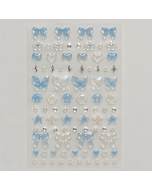
This is what most shoppers mean by 3D nail art stickers. A typical build starts with a release liner, then a pressure-sensitive adhesive, a flexible film, the printed artwork, and finally a raised layer of puffy ink, clear resin or embossing. A European patent for a raised nail sticker describes a flexible, shape-memory film between 30 and 140 µm thick with a self-adhesive underside. The film is pre-formed into a convex shape that follows the nail's natural curve, according to the European Patent Office record EP 3 908 146 B1[3]. A patent shows that a technical approach exists. It is not a performance standard.
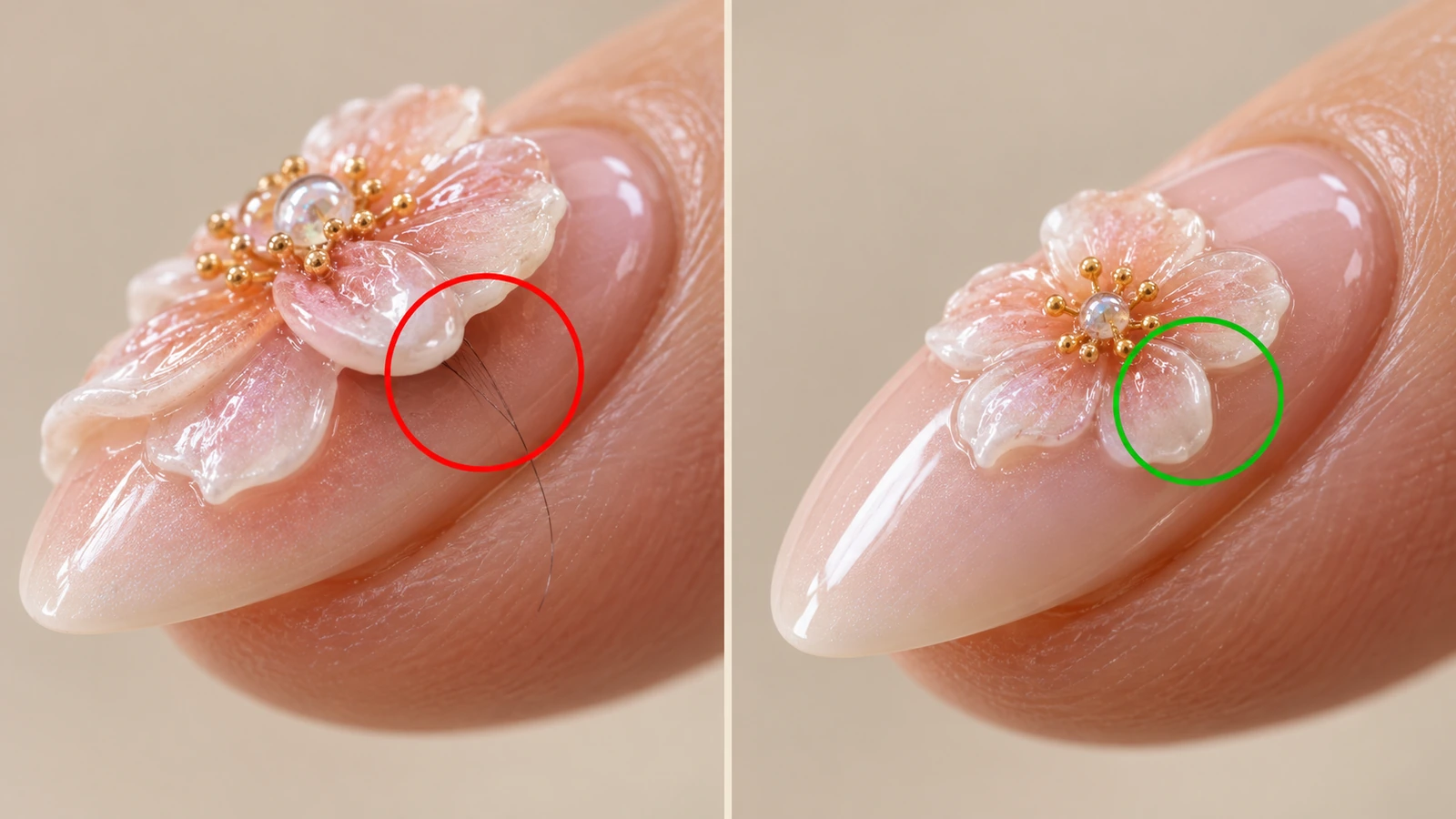
The format's main advantage is dry application with tweezers, which makes it the easiest of the three for a consumer to use. Its weakness is the height itself. In user forums, larger raised pieces are reported to "pop up at the ends where my nail curves." One long-time hobbyist on r/RedditLaqueristas summed up everyday wear like this: "they never last longer than a few days. They will start snagging on things." The ways to reduce lifting and snagging through design and backing choices are covered on our page for custom 3D raised nail art sticker sheets, so they are not repeated here.
Best fit: mass retail DIY, kids and licensed character ranges, seasonal and holiday drops, gift-with-purchase inserts, and salons that want a quick accent-nail add-on. Shoppers looking for 3D stickers nail art ideas are mostly this audience. They want visible texture in minutes and accept that the look will last days rather than weeks.
Foil and holographic transfers: depth through light
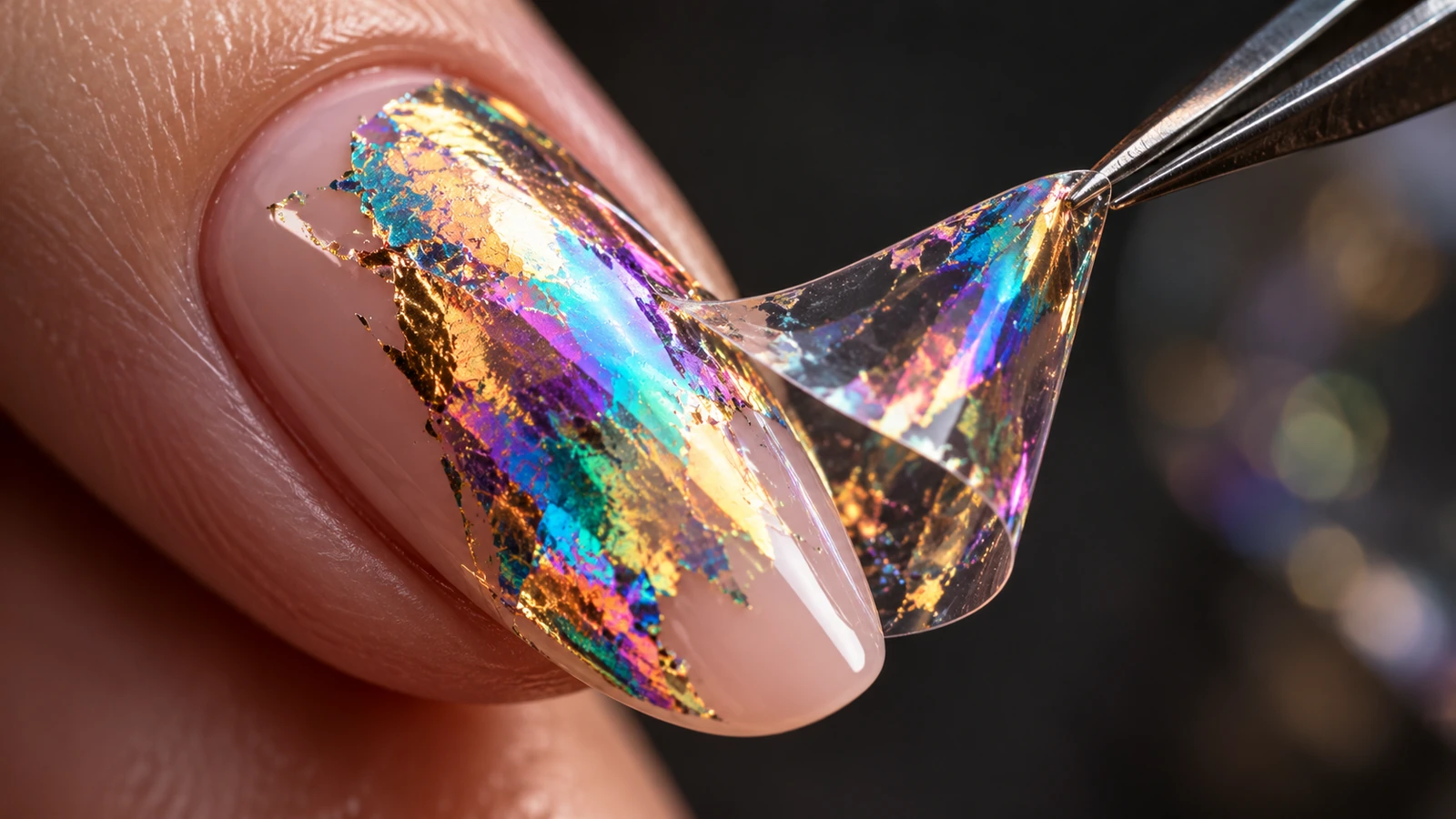
Two constructions share this label. A transfer foil is a metallized layer on a carrier film. It is pressed onto a tacky foil adhesive or an uncured gel layer, and then the carrier is peeled away, leaving only the metal behind. A holographic decal is a sticker or water-slide decal built on holographic film. Its diffraction pattern shifts with the viewing angle, so it reads as depth without adding height.
Foil adds almost no thickness and suits chrome and mirror trends, which makes it a natural partner for gel services. The risk is mostly a matter of honest labeling. A review video that investigated heavily retouched nail products put it bluntly: "It's all just a cheap printed picture… There's no 3D." If a holographic SKU is sold as "3D," expect reviews like that one. Sell it as "holographic" or "metallic" and let the tactile claim belong to raised formats. For custom holographic print, ask for a physical proof. General sticker-printing complaints often involve die lines that cut into artwork and colors that print darker than the approved screen proof.
Best fit: gel salons, pro foil kits, premium retail lines sold as metallic or holographic, and hybrid SKUs that put a raised dome on top of holographic film.
How to Choose a Decal Format for a Private-Label Range
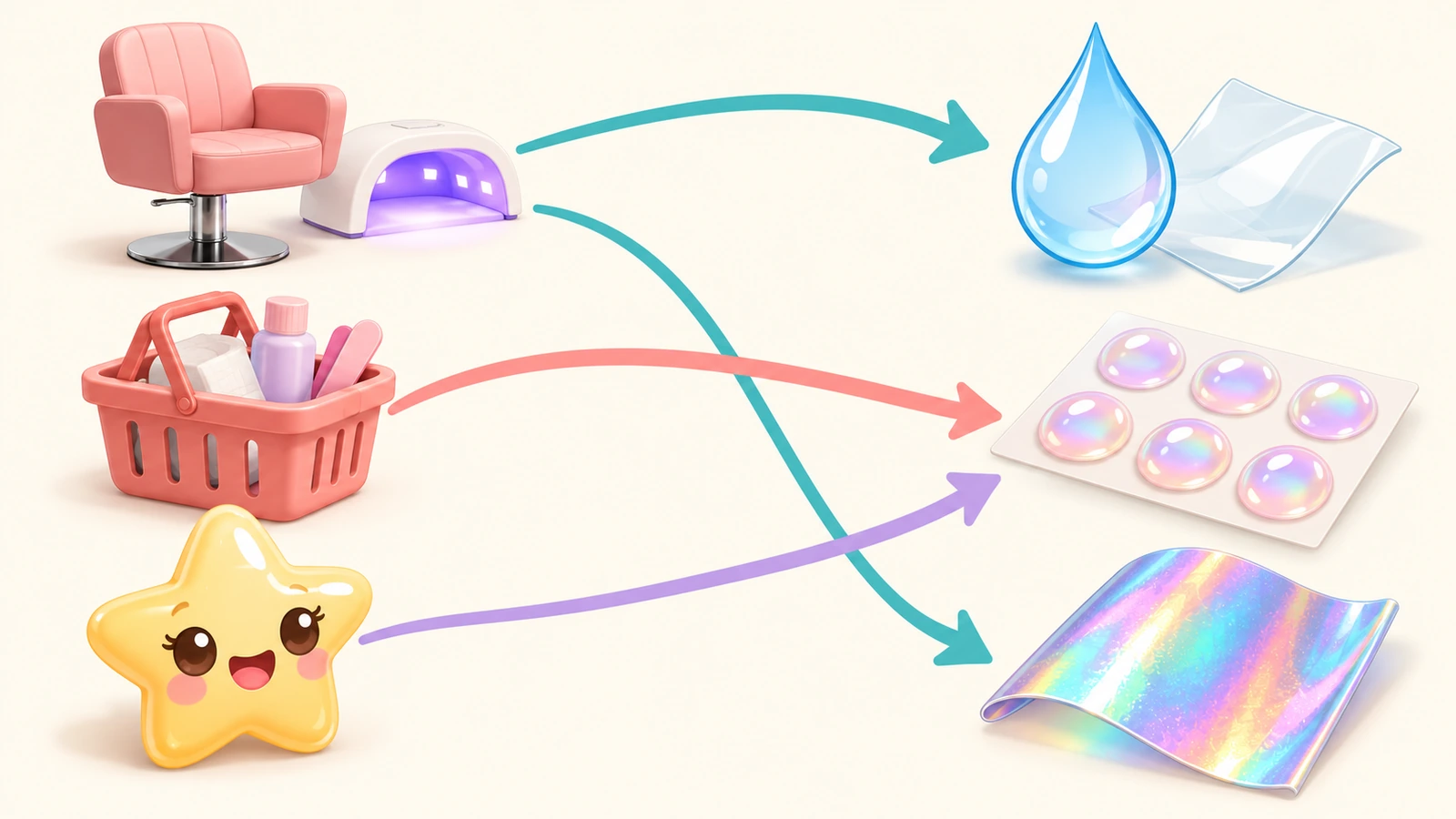
Name the applier before the artwork. If a technician with gel and a lamp applies the product, water-slide and foil formats open up. If a consumer applies it at a kitchen table, dry peel-and-stick is the realistic default, and any wet or lamp step becomes a support burden.
Write the "3D" claim as tactile or visual. Put it on the spec sheet and the pack: "raised texture" for relief, "holographic" or "metallic finish" for foil. This one decision prevents most of the "not as pictured" complaints the category attracts.
Check artwork against the format's limits. Water-slide needs a white underbase decision. Raised decals need relief placed away from the free edge, with the tallest elements kept smaller. Foil needs bold shapes, because very fine lines tend to break up when the carrier is peeled. Fixing artwork at this stage costs far less than reprinting.
Decide the regulatory path early. The format determines how much chemistry review you need. In the U.S., nail products are generally regulated as cosmetics and do not need FDA approval before sale. The FDA[4] also notes that traces of reactive monomers can cause redness, swelling and pain in the nail bed. Labels must carry warnings whenever needed to prevent a health hazard under 21 CFR 740.1[5]. The FDA also stated in September 2026 that it does not issue certificates of compliance[6], so treat any "FDA approved" decal claim as a red flag. In the EU, HEMA and Di-HEMA TMHDC in nail products are restricted to professional use with an allergy warning under Regulation (EU) 2020/1682[7]. The photoinitiator TPO has been prohibited in cosmetics since 1 September 2025, according to the European Commission[8]. These rules mainly affect curable gel systems such as foil gels and semi-cured strips, not dry printed film. Your full buyer checklist is on the custom raised sticker sheet page.
Take allergy signals seriously when gel is part of the kit. A dermatology review identifies allergic contact dermatitis, mostly from (meth)acrylates in nail glue and gel, as the most common adverse event with DIY nail cosmetics, per Wang and Lipner in Skin Appendage Disorders[9]. A European audit of 26,297 patch-tested patients found HEMA allergy in 2.82% of women and concluded that EU restrictions have not had the intended effect, according to the EECDRG study[10]. A dry decal sold alongside a separate foil gel is effectively two products, and each needs its own ingredient review.
Run a wear panel that mirrors real hands. Include deep C-curves, short and small nail beds, heavy keyboard users and frequent hand-washers. Log each failure by mode (edge lift, snagging, print wear, bleed) rather than as a single "fell off" count. Control the base layer as well. A nail-trend expert quoted in Byrdie[11] warns that stickers "will not fully adhere to any polish that is even slightly wet." If you skip that control, the panel will blame the decal for what was really a drying problem.
Build the range as hero plus accent. A salon line might lead with water-slide decals and add foil. A retail line might lead with raised sheets and add a flat or holographic sheet for customers who dislike texture. Many users say they like a small amount of relief but find full-coverage raised designs "too lumpy," so offering both heights widens your audience.
Water-Slide vs Raised vs Foil: Side-by-Side Comparison
Attribute
Water-slide decal
Raised / embossed adhesive decal
Foil / holographic transfer
Construction
Printed film on water-release paper
Liner + PSA + film + print + relief layer
Metallized layer on carrier film, or holographic film decal
Own adhesive
No, held by top coat or gel
Yes, pressure-sensitive
Foil: no (needs foil adhesive or tacky gel); holo decal: yes
Added thickness
About 0.04 mm (one maker's published figure)
Film of 30–140 µm in one patent, plus relief
Foil: negligible
What "3D" means
Visual, or shallow embossing
Tactile relief
Visual depth from light
Applier
Technician or practiced hobbyist
Consumer or technician
Technician with gel and lamp, mostly
Reported wear
Sellers cite 10–14 days under polish top coat and 2–4 weeks under gel (not lab-tested)
Users report a few days before snagging; longer when fully sealed
Tied to the gel or top coat system
Typical failures
Bubbles, white printing transparent, bleed under high-acid base
Edge lift on curves, snagging, bumps that won't smooth
Patchy transfer, "not really 3D" complaints
Best-fit buyer
Salon pro lines, artist kits, press-on makers
Mass retail, kids and character, seasonal, salon accents
Gel salons, chrome-trend and premium metallic lines
The wear figures in this table come from different kinds of sources: seller guides and individual user reports. They measure different things and should not be averaged into one number for your packaging. Hybrid SKUs are possible and increasingly common. A water-slide decal can carry a holographic layer, and a raised sticker can sit on holographic film. Hybrids still inherit the application method and failure modes of their base construction, so classify each one by how it attaches.
FAQ
FAQ: Are 3D nail art decals and 3D nail art stickers the same product?
Not always. "Sticker" usually means a dry, self-adhesive piece. "Decal" is broader and also covers water-slide film and foil transfers. When you request samples, name the construction (water-slide, pressure-sensitive raised, or foil) rather than the marketing term.
FAQ: Can a water-slide decal really be 3D?
Some water-slide decals have shallow embossing, but the relief is far lower than on raised adhesive decals. Decal makers recommend a very thin matte top coat to keep it visible, because a thick gloss layer can flatten it.
FAQ: Should a holographic foil range be labeled 3D?
It is safer to label it "holographic" or "metallic." The depth is optical, and shoppers who expect relief they can feel tend to leave "not as pictured" reviews.
FAQ: Do 3D nail art decals need FDA approval?
U.S. nail cosmetics generally do not need premarket FDA approval, but they must be safe under intended use and carry any necessary warnings. The FDA does not issue compliance certificates, so "FDA approved" decal claims are unreliable.
FAQ: Which format works best on press-on nails?
Press-on makers often encapsulate water-slide decals under gel, because the thin film disappears once sealed. Raised decals work as surface accents on press-ons, but the relief stays exposed and can catch on things.
FAQ: Is one format safer for sensitive customers?
Dry printed decals avoid a curing step. Most allergy evidence involves (meth)acrylates in gels and glues. If your kit includes a foil gel or a lamp-cured layer, that component needs its own ingredient and warning review.
Key Takeaways
Most decals are applied at home, so format must match a non-professional applier. — 43% of U.S. women do their nails only at home and another 47% mix salon and DIY (Source)
Raised decals add real, measurable height, which drives both appeal and snagging. — one patented raised sticker uses a 30–140 µm shape-memory film (Source)
Formats that rely on curable gel carry extra EU chemistry risk. — TPO has been banned in EU cosmetics since 1 September 2025 (Source)
Acrylate allergy is still a measurable problem despite EU restrictions. — 2.82% of women in a 26,297-patient audit tested positive to HEMA (Source)
"FDA approved" on a decal is a warning sign, not a credential. — on 9 September 2026 the FDA confirmed it issues no compliance certificates (Source)
Conclusion
Choosing among 3D nail art decals is mostly a channel decision. Water-slide film and foil reward a technician with gel and a lamp. Raised peel-and-stick sheets suit the large share of buyers who decorate their nails at home. Decide whether your "3D" is tactile or visual, check the artwork against what the format can physically reproduce, and settle the chemistry path before sampling. If a raised, peel-and-stick format fits your range, explore our custom 3D raised nail art sticker sheets and send us your artwork to request samples and a quotation for your brand.
Footnotes
The Benchmarking Company via GCI, "Obsessed with Nail Care," survey of 4,000+ U.S. women, published 2025-06-12. Link↩
Happi, "Kleo Kolor's New Glue-On Gel Line Offers 3D Nail Art," 2026-10-13. Link↩
European Patent Office, EP 3 908 146 B1, "Nail decorating and styling sticker, kit and method of applying the same," granted 2023-11-29. Link↩
U.S. Food and Drug Administration, "Nail Care Products." Link↩
Electronic Code of Federal Regulations, 21 CFR 740.1, warning statements for cosmetics (text as of 2025-10-02). Link↩
U.S. FDA, "FDA Clarifies It Does Not Provide Certificates or Other Documents to Verify Compliance of a Cosmetic Product," 2026-09-09. Link↩
EUR-Lex, Commission Regulation (EU) 2020/1682 of 12 November 2020 (HEMA and Di-HEMA TMHDC in nail products). Link↩
European Commission, "TPO in nail products: questions and answers," 2025-08-19. Link↩
Wang E, Lipner SR. "Adverse Effects of Do-It-Yourself Nail Cosmetics." Skin Appendage Disorders, 2024;10(3):180–185. Link↩
European Environmental Contact Dermatitis Research Group (EECDRG), HEMA patch-test audit 2016–2023, University of Perugia repository, 2026-10-10. Link↩
Byrdie, "How to Apply Nail Stickers," 2024-05-19. Link↩
Hi there! I'm Bruce, proud dad to my amazing son. I'm the founder of Zigpac, a printing and packaging company empowering small and medium-sized businesses with custom solutions. Let's create something great together!



 Blog PDF for offline reading












The information below is required for social login
Sign In
Create New Account