


 Blog PDF for offline reading
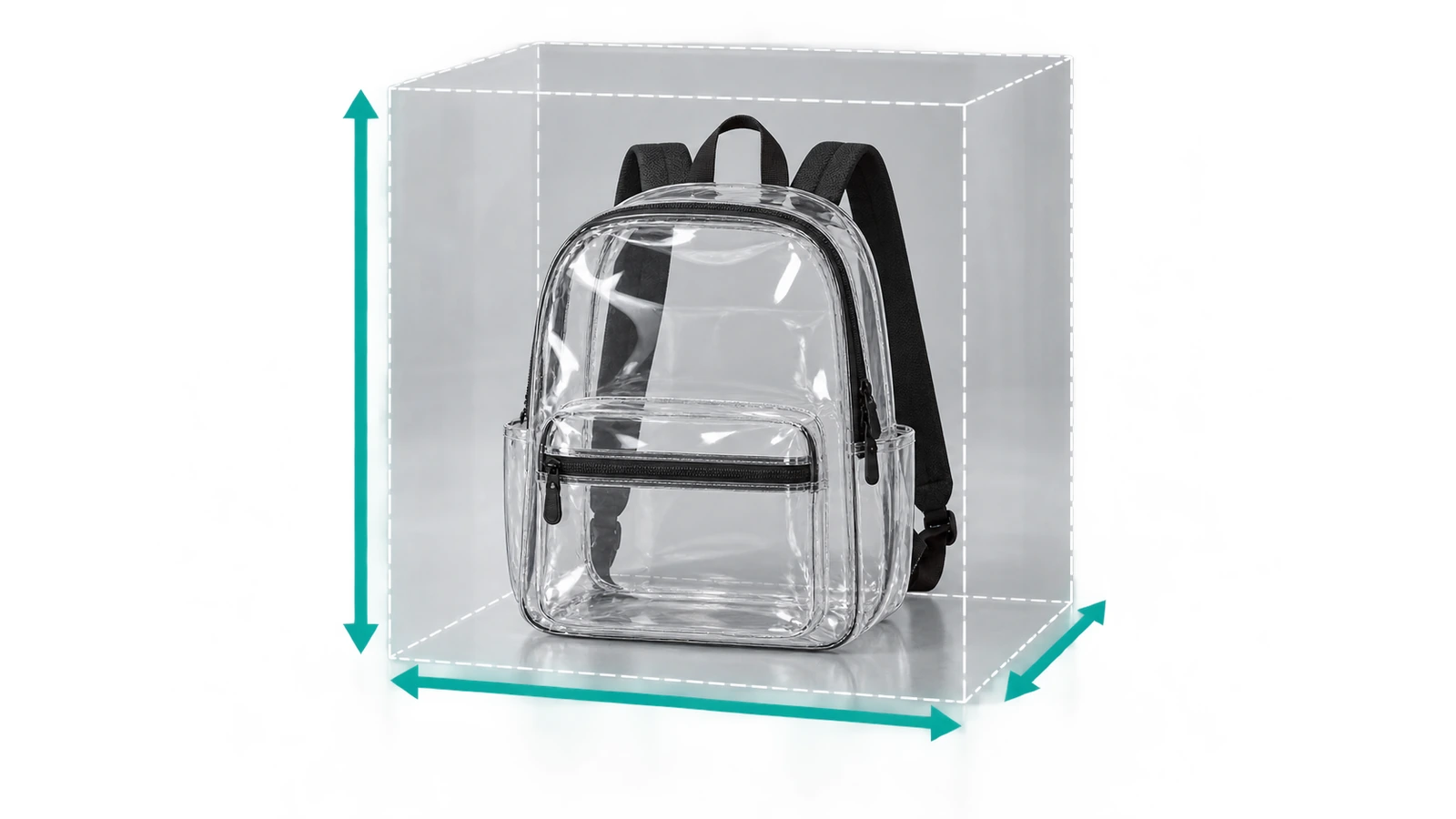
Quick answer: Most US stadium and event clear bag policy size requirements cap a bag at 12" x 6" x 12" (30.5 x 15.25 x 30.5 cm). The bag must be clear plastic, vinyl or PVC, with a logo on one side only and no hardware hiding the contents. School policies are often larger, and some venues ban backpacks entirely, so check the written rule for each venue before ordering branded bags.
When organizations buy branded clear backpacks, the clear bag policy size requirements of the destination venue are rarely the first thing on the brief, but they decide whether the order succeeds. A school district, booster club or event sponsor can order thousands of transparent bags that look right in the sample photo and still watch them get turned away at a stadium gate. This guide covers the measurable rules: outer dimensions, transparency, logo coverage and backpack eligibility. It also gives you a checking routine to run before any artwork is approved.
Why "clear" is not the same as "allowed"
The problem: Clear bag rules are written by many different authorities. They include sports leagues, individual stadiums, tournament organizers, universities and school districts. They share a common template but differ in the details. A bag sized for a classroom can exceed a stadium limit by several inches. A bag that meets the dimensions can still fail because the logo is too large, the PVC is tinted, or the venue does not accept backpacks of any kind.
The pain: The costs fall on the buyer, not the security staff. Families who received a school-issued bag end up buying a second one for game day. Event sponsors see their giveaway left in parking lots. In one widely reported case, Charlotte-Mecklenburg Schools paused distribution of clear backpacks after spending more than $400,000. Officials found that the bags carried California Proposition 65 warning labels, according to the Charlotte Observer[1]. That case was about labeling rather than size. It still shows the same lesson: a clear bag order has to clear every rule its users will face, not just look transparent.
The solution: Treat the venue policy as a written specification. Collect it, date it and measure against it before you finalize the design. The sections below explain how.
What clear bag policy size requirements cover
A clear bag policy is a security rule that limits what bags spectators or students can carry, so screeners can see the contents without opening them. The NFL introduced its version in 2013, and it has become the reference template for stadium approved bag dimensions in the United States. The current NFL Clear Bag Policy[2] sets five rules that a branded bag order has to respect:
- Material: clear plastic, vinyl or PVC.
- Size: no larger than 12" x 6" x 12" (30.5 x 15.25 x 30.5 cm). The policy explicitly includes clear backpacks, fanny packs and cinch bags that fit within those dimensions.
- Quantity: one compliant clear bag per person, plus one non-clear clutch no larger than 4.5" x 6.5".
- Visibility: no buckles, grommets, hardware or décor may conceal any part of the bag.
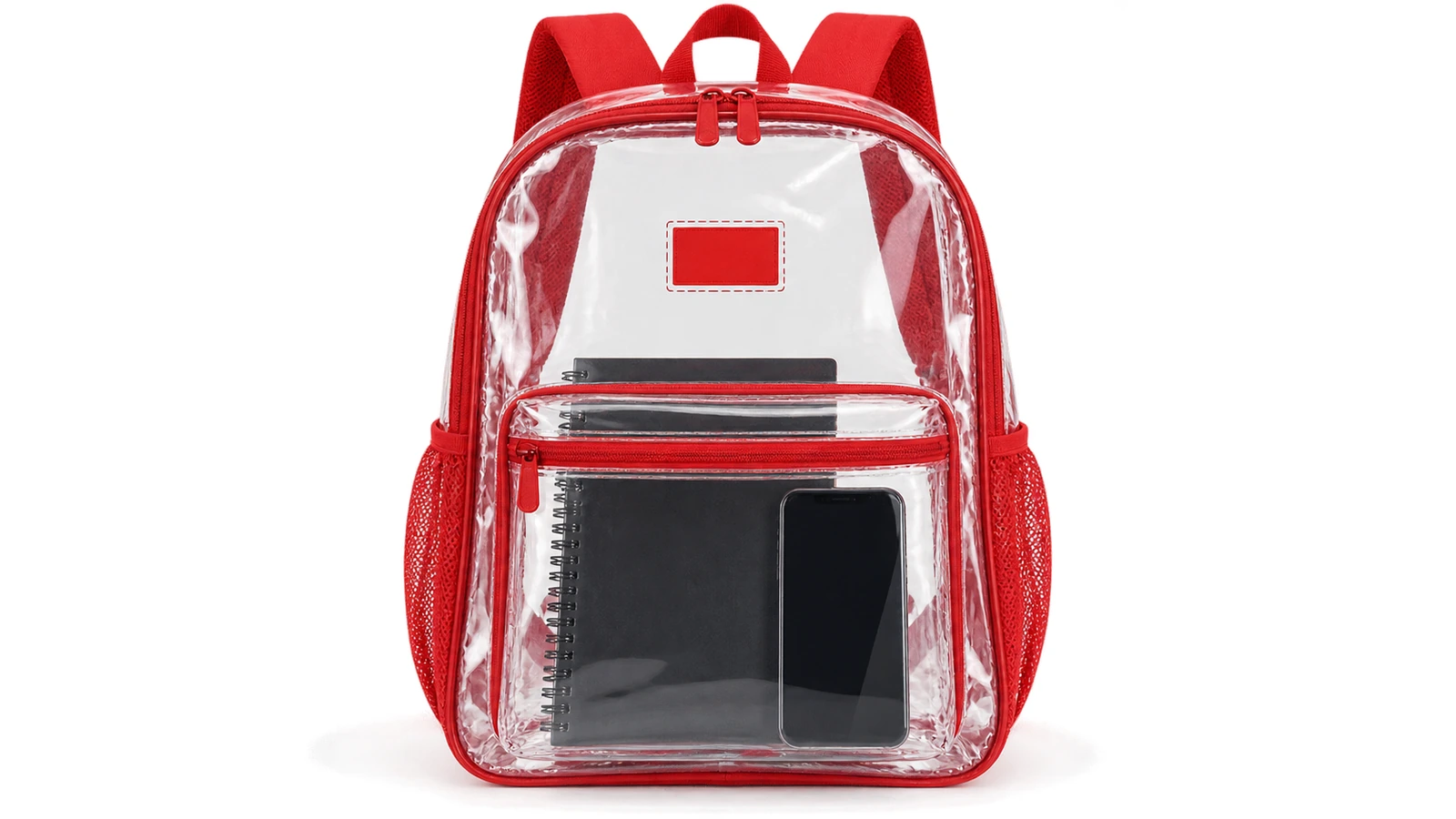
- Branding: the logo may appear on one side only.
The written policy says "one side" but does not give a logo size. An earlier NFL illustrated guide for Super Bowl LVIII[3] did specify a limit: the logo "cannot exceed 3.4"w x 4.5"h." Many school districts and promotional suppliers have since adopted that box as a working limit. It is best treated as a conservative design target, not as current league law.
Outside the NFL, the same template appears with small variations. The FIFA World Cup 2026 stadium guidance[4] requires clear plastic, vinyl or PVC bags no larger than 12 x 6 x 12 inches. However, FIFA prints the metric conversion as 30 x 30 x 15 cm, a different order from the NFL's 30.5 x 15.25 x 30.5 cm. If your artwork brief or supplier quote is written in centimeters, confirm which axis is the 6-inch depth. Do not copy a metric string from one policy into another.
How to check event security clear bag rules before ordering
The checklist below covers policy verification only. The material and construction details belong in a separate production brief. For guidance on writing that brief, see our page on custom clear PVC backpacks for school, work and events.
- List every place the bag must enter. A school-issued backpack may also need to enter Friday-night football, a district graduation and a regional arena. Write down each venue, because the strictest rule on the list determines the design.
- Get the written policy and record the date you checked it. Use the venue's own page or the school district's published document, not a reseller's "stadium approved" label. Policies change between seasons. For example, Ocean Springs School District[5] introduced a stadium rule effective August 24, 2026 that lists both "Backpack" and "Clear Backpack" as prohibited items.
- Confirm whether backpacks are allowed at all. This single question eliminates more designs than any dimension. Some venues accept only totes, cinch bags or one-gallon resealable bags. If a key venue bans backpacks, a compliant tote may be the better order.
- Compare finished outer dimensions, not panel sizes. Screeners measure the assembled bag. That includes gussets, binding tape, zipper pulls and anything that sticks out. A cinch bag with a 6-inch gusset is already at the depth limit, so any trim that adds width can push it over.
- Check transparency and color. The Raytown Schools clear backpack FAQ[6] states that "clear" means not mesh and not tinted (for example, purple-clear or tinted black). Brand colors can go on straps, binding or zipper tape. The body panels should stay untinted.
- Size the logo for the strictest venue. Print on one side only and keep the mark within a 3.4" x 4.5" area if any NFL-style venue is on your list. McAllen ISD[7] applies the same limit, allowing one logo no larger than 4.5" x 3.4" on clear branded bags at district events.
- Count pockets and inner pouches. Some venues add pocket limits. Lumen Field[8] requires clear backpacks to have no more than two pockets in addition to meeting the size limit. Opaque privacy pouches can help school users, but they may break a stadium's full-visibility rule.
- Confirm the compliance scope for young users. If the bags go to children aged 12 and under, decide with your testing lab which CPSC rules apply before production begins. The next section explains the main ones.
- Do a see-through test on the approved sample. Place a dark object inside the printed sample and check from arm's length that it is still clearly visible through the print. The steps for sample approval are covered on the product page.
- Check the policy again before the event. Visit the venue page again in the week of the first event the bags will be used at. The NFL policy itself tells fans to check the home team's site for stadium-specific rules.
Chemical rules that apply alongside the size rules
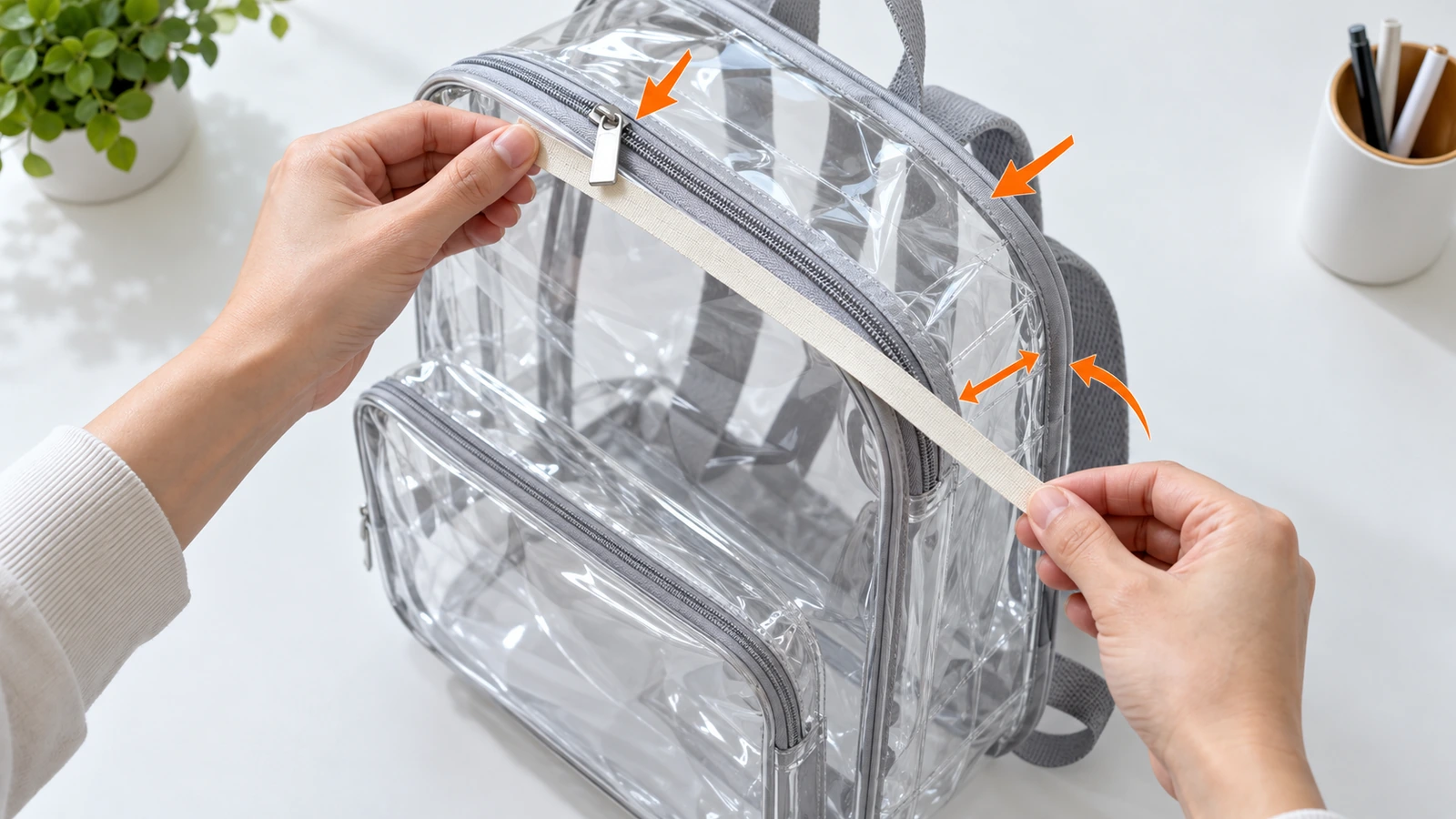
Size rules decide whether a bag passes the gate. Chemical rules decide whether a school can hand the bag to students at all. For children's products, the CPSC treats an item with more than 100 ppm lead in an accessible component as a banned hazardous substance, according to its total lead guidance[9].
Separately, the CPSC phthalate rule[10] under 16 C.F.R. part 1307 limits eight phthalates to 0.1% (1,000 ppm) in accessible plasticized parts. That rule applies to children's toys and child care articles. Whether a given school backpack falls into one of those categories is a classification question to settle with an accredited lab.
For bags sold in California, OEHHA lists DEHP[11], a plasticizer historically used in PVC, under Proposition 65. It has been listed as a carcinogen since 1988 and for developmental and male reproductive toxicity since 2003. Proposition 65 creates a warning obligation rather than a sales ban. That is exactly why the Charlotte bags arrived with labels on them.
Clear bag policy for venues: stadium, tournament and school rules compared
The table below compares published rules, checked in October 2026. It shows how much school clear backpack policy and stadium policy can differ for the same family.
| Authority | Maximum clear bag size | Clear backpacks allowed? | Logo / extras | What it means for a branded order |
|---|---|---|---|---|
| NFL (league-wide policy) | 12" x 6" x 12" (30.5 x 15.25 x 30.5 cm) | Yes, if within size | Logo on one side; no concealing hardware; plus one 4.5" x 6.5" clutch | The reference design target for most US stadiums |
| NFL Super Bowl LVIII guide (2023) | Same as above | Yes, if within size | Logo ≤ 3.4" W x 4.5" H | Useful as a conservative logo box |
| FIFA World Cup 2026 | 12 x 6 x 12 in (metric printed as 30 x 30 x 15 cm) | Clear bags only; check the stadium page | Clear plastic, vinyl or PVC | Same inches as the NFL; check how centimeters are listed in your brief |
| NCAA Men's College World Series 2026 | 12" long x 12" high x 6" wide | Non-clear backpacks prohibited | "Clear" without naming materials | College events may word rules differently, so read each one |
| Lumen Field | NFL size limit | Yes | No more than 2 pockets | Pocket count becomes a design constraint |
| Ocean Springs SD stadium (from 2026-08-24) | 12" x 6" x 12" totes | No: backpack and clear backpack both prohibited | One-gallon bags and small clutches allowed | A tote, not a backpack, is the compliant format |
| Raytown Schools (daily school use) | School-issued example is a 17" clear PVC backpack | Yes; students may buy their own | No mesh or tint; opaque pencil pouch ≤ 8" x 8" | A classroom-size bag does not automatically pass the stadium gate |
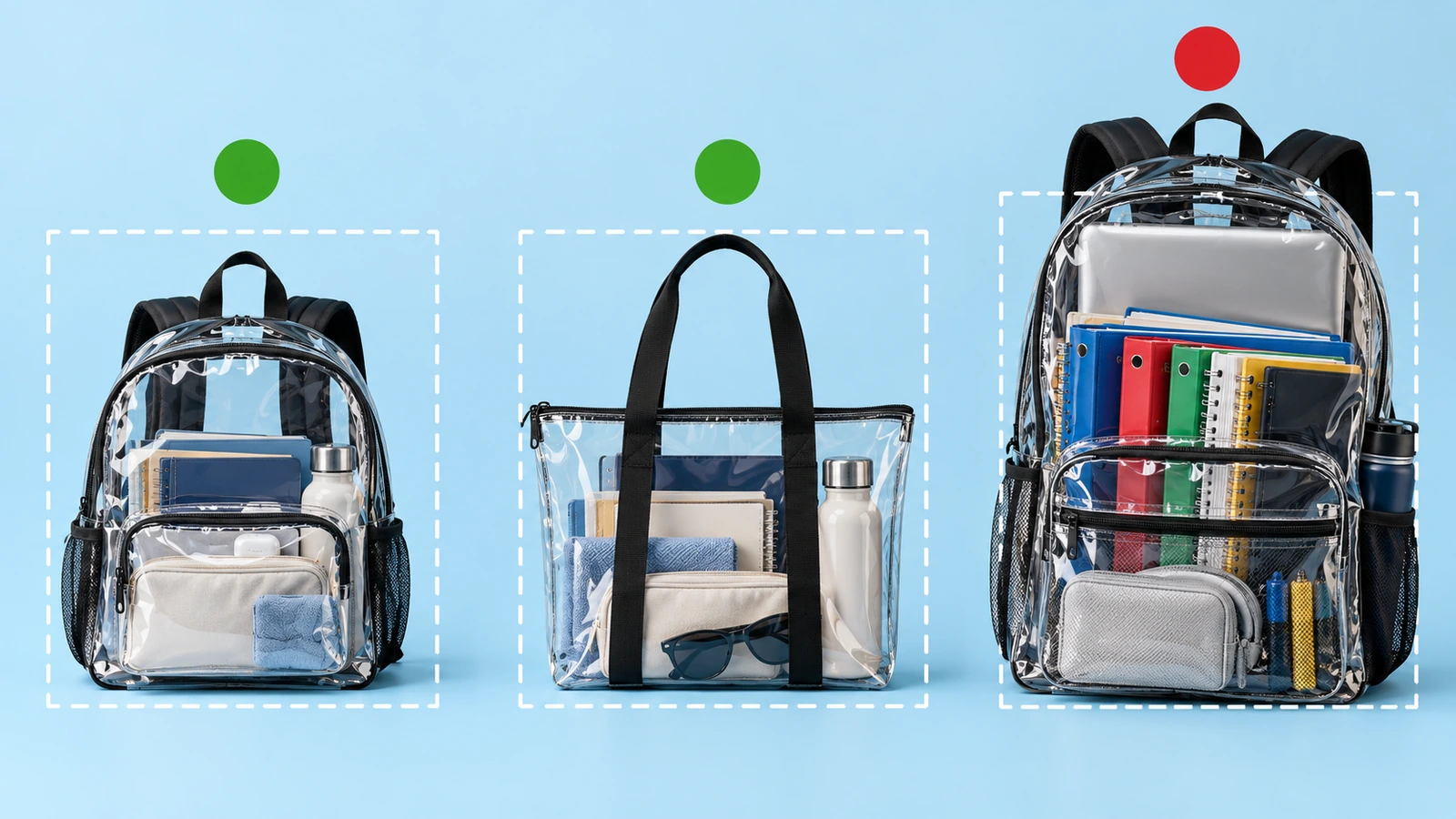
The pattern is consistent. Stadiums and tournaments limit volume and visibility so security lines move quickly. Schools allow more capacity because students carry books and laptops every day. The NCAA 2026 MCWS prohibited items list[12] shows that even within one sports governing body, wording varies. It says "clear" without naming PVC and lists the dimensions in a different order. For an organization buying one bag for both uses, the realistic choices are:
- A compact bag designed within 12" x 6" x 12" that works at venues but holds less for school.
- Two formats: a full-size school backpack plus a compliant game-day tote or cinch bag.
- One large school bag, with clear communication to families that it is not intended for stadium entry.
Where branded designs most often fail screening
Size is the easiest rule to check, but it is not the only way a bag fails. The NFL policy treats décor and hardware that conceal the bag as grounds for rejection, regardless of dimensions. In practice, four design choices cause most problems at the gate:
- Full-panel or double-sided prints that hide the contents.
- Tinted or frosted PVC chosen to match a team color.
- Metal badges or large buckles placed over the main compartment.
- Opaque organizer panels sewn inside.
Each one can be avoided by moving brand color to straps and trim and keeping the single logo within the 3.4" x 4.5" box.
Clear bag policy FAQ
FAQ: Can a school clear backpack be larger than 12" x 6" x 12"?
Often yes. School districts set their own daily-use rules. Raytown Schools, for example, issues a 17" clear PVC backpack and lets students buy their own as long as it is not mesh or tinted. That same bag would exceed NFL stadium limits, so families need a separate compliant bag for game day unless the district designed one bag for both uses.
FAQ: Does printing a logo make a clear bag non-compliant?
Not if it follows the venue's rules. The NFL allows a logo on one side of the bag. Its 2023 Super Bowl guide limited the logo to 3.4" wide by 4.5" tall, and districts such as McAllen ISD use the same box. Large, all-over or double-sided prints are the designs most likely to be rejected, because they reduce visibility.
FAQ: Are tinted, frosted or mesh "clear" bags allowed?
Generally no. School and stadium rules define clear as untinted plastic, vinyl or PVC that screeners can see through. Mesh and colored transparent films such as purple-clear or tinted black are specifically excluded in published district FAQs.
FAQ: Do all venues with a clear bag policy accept backpacks?
No. The NFL accepts clear backpacks within 12" x 6" x 12". Some school districts prohibit every backpack at their stadiums, clear or not, and accept only totes, one-gallon bags and small clutches. Some venues also limit the number of pockets. Always confirm backpack eligibility before choosing the format.
FAQ: Does "stadium approved" on a product listing guarantee entry?
No. "Stadium approved" is a seller's claim, not a certification. Entry depends on the specific venue's current written policy and on the finished bag's measured outer dimensions, transparency, logo placement and hardware. Check the venue page and measure the actual sample.
FAQ: What chemical documentation should schools ask for?
For bags given to children 12 and under, ask for third-party lab testing that matches the production batch. It should cover lead in accessible components (CPSC limit 100 ppm for children's products). Also ask the lab whether the CPSC phthalate limit of 0.1% per listed phthalate applies to your product category. For California distribution, decide in advance how Proposition 65 will be handled, rather than discovering warning labels after delivery.
Key takeaways
- The common stadium ceiling is a fixed box, measured on the finished bag. — 12" x 6" x 12" / 30.5 x 15.25 x 30.5 cm (Source)
- Keep a single logo inside a small, one-sided print area. — 3.4" W x 4.5" H (Source)
- Metric conversions differ between policies, so confirm which axis is depth. — FIFA lists 30 x 30 x 15 cm for the same 12 x 6 x 12 in (Source)
- Pocket count can be a rule, not just a feature. — max 2 pockets on clear backpacks at Lumen Field (Source)
- Some venues ban backpacks outright, even clear ones. — rule effective 2026-08-24 at Ocean Springs SD stadiums (Source)
- Children's products face a hard lead limit. — 100 ppm in accessible components (Source)
- Compliance gaps can halt an entire school rollout. — more than $400,000 spent before distribution was paused (Source)
Conclusion
Clear bag policy size requirements are simple to state and easy to get wrong in production. The rules come down to a 12" x 6" x 12" box, untinted material, one modest logo and nothing that hides the contents. Before you order, collect the written policy for every venue the bag will enter, record the date you checked it, and make the strictest rule your design target. Then measure and see-through test the actual sample, not the drawing.
Once you know which rules your bags must meet, turn that list into a production brief. Our custom clear PVC backpacks page explains how to specify dimensions, branding and sampling. You can also send us your venue list and target event dates for a quote based on your exact requirements.
References
- Charlotte Observer — CMS pauses clear backpack distribution after warning labels found (2022-03-29) ↩
- National Football League — Clear Bag Policy (accessed October 2026) ↩
- National Football League — Super Bowl LVIII Clear Bag Policy PDF (2023) ↩
- FIFA — World Cup 2026 Atlanta fan safety and bag policy (2026-03-13) ↩
- Ocean Springs School District — Clear Bag Requirements (effective 2026-08-24) ↩
- Raytown Schools — Clear Backpack Frequently Asked Questions (2025) ↩
- McAllen ISD — Clear Bag Policy (2025-08-28) ↩
- Lumen Field — Clear Bag Policy (accessed October 2026) ↩
- U.S. Consumer Product Safety Commission — Total Lead Content (CPSIA Section 101) ↩
- U.S. Consumer Product Safety Commission — Phthalates Business Guidance (16 C.F.R. part 1307) ↩
- California OEHHA — Di(2-ethylhexyl)phthalate (DEHP) Proposition 65 listing ↩
- NCAA — 2026 Men's College World Series Prohibited Items (PDF) ↩







The information below is required for social login
Sign In
Create New Account