We use cookies to enable our websites to remember information, to help some website functionalities to work properly, to understand how you interact with and use our websites and to display you content and ads that are relevant and engaging for you.
By clicking Accept All you consent to the use of these cookie.
The store will not work correctly when cookies are disabled.
Quick answer: Scratch off label printing cost depends on seven levers: run quantity, label size and die shape, unique variable-code printing, scratch layer thickness and opacity, security features, roll or sheet delivery, and code verification. Compare supplier quotes only when every printer has priced the same specification on all seven levers.
You send the same artwork to three printers and get three quotes that differ by multiples. That spread usually does not mean one supplier is cheap and another is greedy. It means each one priced a different job. One quoted a single thin silver pass, another quoted a blocking layer plus two scratch passes, and the third left out code verification. This guide breaks scratch off label printing cost into the parts procurement teams can actually control. You can then budget a promotion, PIN or prize-code program accurately and line up quotes on equal terms.
Choosing on headline unit price alone has a real cost when the panel underperforms. In a California audit, security testing of instant tickets already on sale found six games with "catastrophic failures": enough hidden data was readable to compromise the games, and the affected tickets were not pulled from retail. California State Controller audit[1] In a federal case over printed scratch game cards, the buyer had paid more than $700,000, and expert witnesses disputed whether a light source and a bent card were enough to read the hidden codes. Emirat AG v. High Point Printing[2] A cheaper panel that fails will cost far more than the money it saved.
What Does Scratch Off Label Printing Cost Actually Include?
A printed scratch-off code label is a pressure-sensitive label with hidden information under an opaque layer that the end user removes with a coin. The hidden information is usually a unique code, a PIN or a prize result. If you need the basic construction explained first, our custom printed scratch-off code labels page covers it. This article deals only with price.
Every quote combines two kinds of money. One-time costs are paid once per job no matter how many labels you order. They include prepress and proofing, plates or screens, a cutting die for a non-standard shape, press makeready and the waste it produces, variable-data setup, and quality-control setup. Per-unit costs grow with every label printed. They include face stock and adhesive, base ink, inkjet code printing, protective varnish, scratch coating, inspection time, packing, and an overs allowance for spoilage.
The number that matters for budgeting is not the price per label but the landed cost per usable code:
+ freight and any compliance testing, divided across the run
That calculation is the honest cost per unit for scratch off codes. It also shows why a quote that looks cheap can come out expensive once spoiled, duplicated or unreadable codes are taken out of the count.
What Affects Scratch Off Label Price: The Seven Cost Levers
1. Run quantity and setup amortization
Quantity is the strongest lever because it divides the one-time costs. On a short run, setup can make up most of the unit price. On a long run, it shrinks to a rounding error, and material, coating and inspection dominate. That is also why doubling the quantity never halves the unit price: the per-unit portion stays the same.
A printer sets its scratch off label minimum order quantity at roughly the point where setup stops overwhelming the unit price on its equipment. Narrow-web flexo, digital and screen lines break even at different volumes. Rather than asking for one price, ask for price breaks at three quantities, such as your expected volume, half of it and double it. You can then see the setup share directly. Also confirm the overs/unders tolerance, because a run that ships slightly short of your code file creates a reconciliation problem as well as a billing one.
2. Label size, shape and panel area
Size affects cost in three ways. Larger labels consume more face stock and adhesive. Fewer of them fit across the press web, so every label takes more press time. And the scratch panel area determines how much of the most specialized coating is used. Designers often enlarge panels for looks, but the panel only needs to cover the hidden data plus a small safety margin, because scratch ink tends to spread slightly beyond the specified shape.
Shape mostly matters through tooling. A rectangle or circle that fits a die the printer already owns costs nothing extra. A custom contour needs a new cutting die, which is a one-time charge that is significant on small runs and negligible on large ones. Before approving a custom shape for brand reasons, ask the supplier which standard dies come closest to it.
3. Variable code printing cost per label
Printing a unique code on each label is cheap per impression. The real cost lies in everything around the impression: receiving or generating the code file, checking it for duplicates and format errors, mapping codes to the print sequence, setting up a check digit or barcode symbology, transferring and storing the file securely, and deleting it after the job. Most of this is fixed work, so it weighs heavily on small runs. Digital and inkjet systems have made serialization far more accessible. An industry review of security labels notes that this has made traceability and brand protection "more accessible and cost-effective than ever before." Label & Narrow Web[3]
Several choices raise the variable code printing cost per label. Having the printer generate codes instead of supplying your own adds generation and secure-storage work. Prize seeding means placing winning codes at defined positions in the run. Adding a scannable barcode or QR code next to the human-readable code requires print-quality grading. Splitting codes into tiers, such as different prize values on different rolls, adds sorting. Each choice is reasonable. Just make sure every supplier has priced the same ones.
4. Scratch layer thickness and opacity
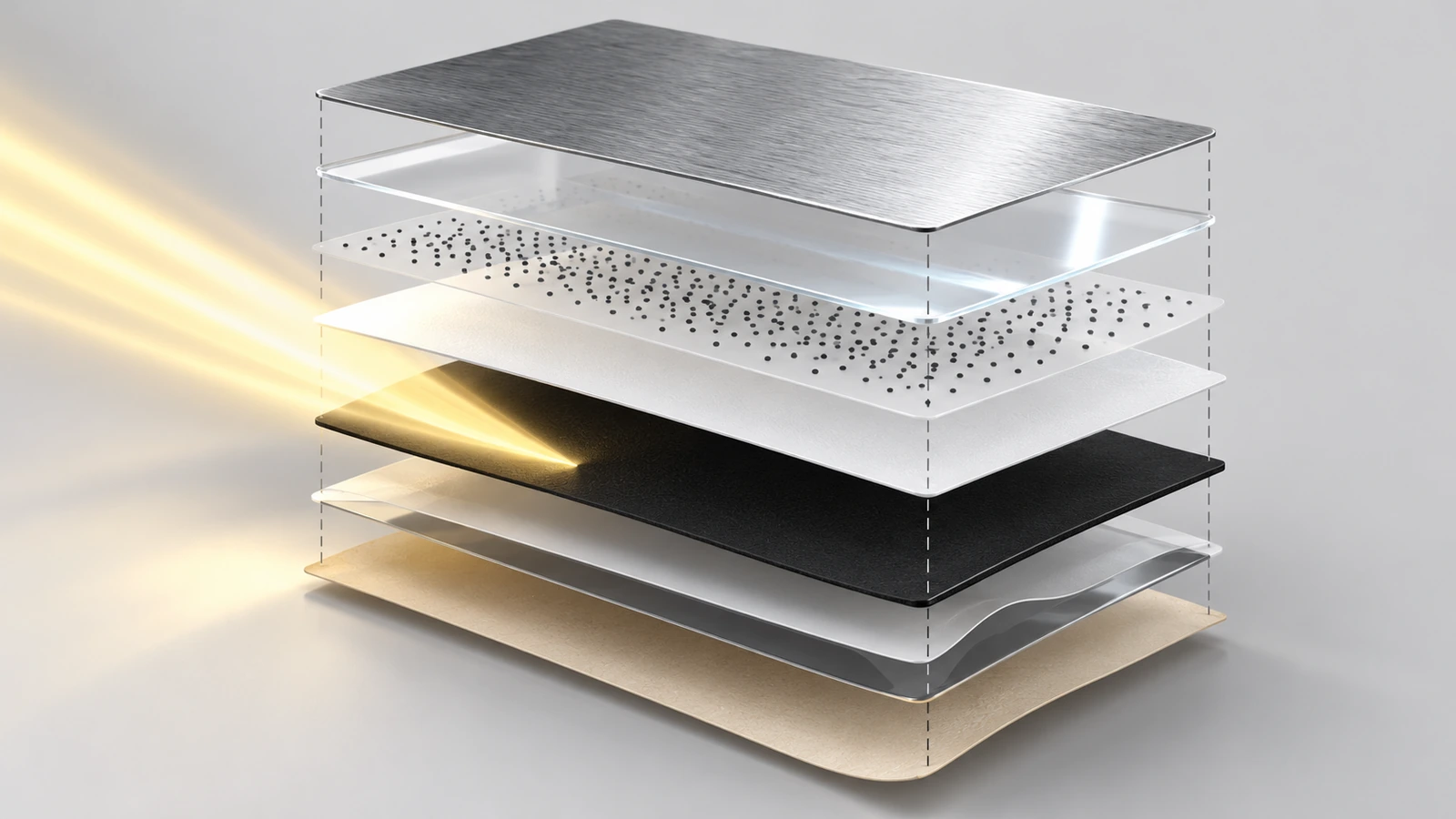
This is where similar-looking quotes most often differ underneath. A basic panel is one release varnish plus one pass of silver scratch ink. A security-grade build adds layers. In lottery tickets, a heavy black layer under the data absorbs light, a white layer scatters it, and a varnish over the numbers stops ink migration. The covering looks like a single surface but is several layers stacked together. These layers are designed to defeat candling, which means reading through the card with strong light, and wicking, which means using solvents to draw the ink out. Lottery USA[4] Each added layer costs ink, a curing step and press speed, and the varnish has to cure fully before scratch ink goes on top, so the schedule cannot be compressed.
You cannot buy opacity by name because the industry has no shared definition of it. One patent states plainly that the opacity provided by scratch-off security features is "not well-defined within the industry." EP3471846A1[5] Scratch feel also varies between batches. Michigan's lottery noted that across a game of 10 to 12 million tickets, the latex covering on some batches can be stickier than on others. Detroit Free Press[6] In practice, specify a test rather than an adjective: no hidden data readable under strong front light, back light or angled light; clean removal with a coin and no damage to the code; and no full-panel lift when tape is applied and pulled. Gold panels usually hide less than silver, so a gold design may need an extra pass to pass the same test.
5. Added security features
Security features turn "hidden" into "tamper-evident." Options include security slits cut into the label, destructible face stocks that fracture when someone tries to peel them, aggressive adhesives, and patterned overprints that do not line up again if a panel is lifted and put back. Other options are UV-fluorescent marks, holographic layers and printed control numbers. Each adds material, tooling or a press step. The threat is real. Police have described gift card scammers who scratch off cards, copy the numbers and repackage the cards with a fake scratch-off label. The Mercury News[7]
Match the security level to the value of what is hidden instead of paying for the maximum. The lottery industry's security framework, WLA-SCS:2024, applies to instant ticket production, including printing integrity and prize confidentiality. WLA-SCS:2024 Code of Practice[8] It is a useful reference for PIN and stored-value programs, but it is not a certification that promotional labels carry. Our product page sets out which rules and standards actually apply by program type.
Compliance testing is a separate cost line that is easy to miss. If the labels go on a children's product, the scratch coating counts as a surface coating, and the federal limit for lead in paint and similar surface coatings is 0.009%. 16 CFR Part 1303[9] If the adhesive will form the food-contact surface of a label applied to food, it must meet the conditions in 21 CFR 175.125. 21 CFR 175.125[10] Lab reports and qualified materials add cost, so bring them up at the quote stage rather than after the proof.
6. Roll or sheet delivery format
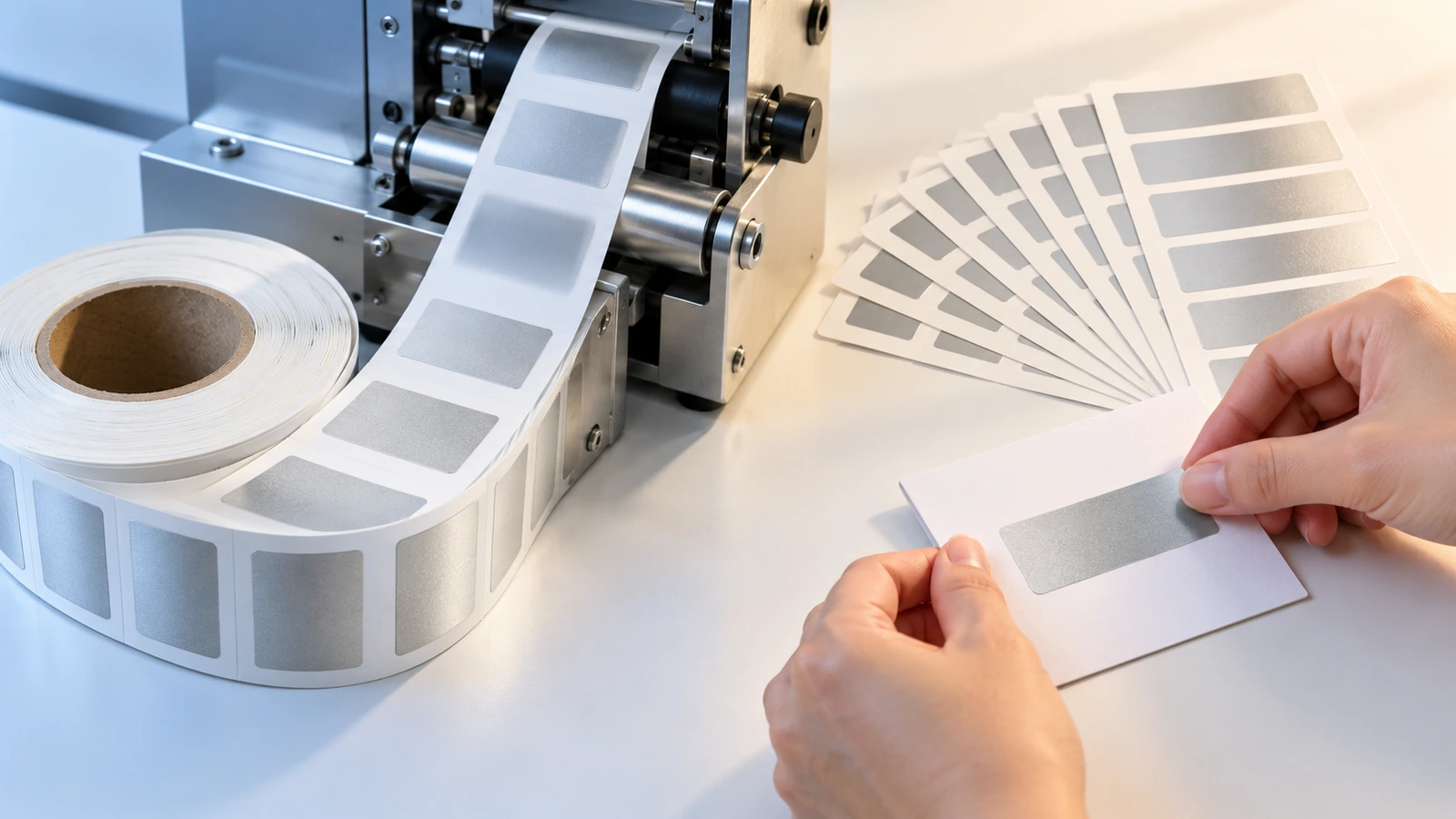
Rolls feed automatic applicators and are usually the efficient format for volume. They come with their own specification items: core size, maximum outer diameter, unwind direction, labels per roll and splice policy. When codes are sequential, keeping the sequence continuous across rolls and documenting where each roll starts and ends adds handling cost. Sheets require an extra sheeting and counting step and suit hand application. Hand application, however, moves labor cost from the printer's invoice to your own payroll. Price the format you will actually apply with, and include your application labor when you compare.
7. Code verification and reconciliation
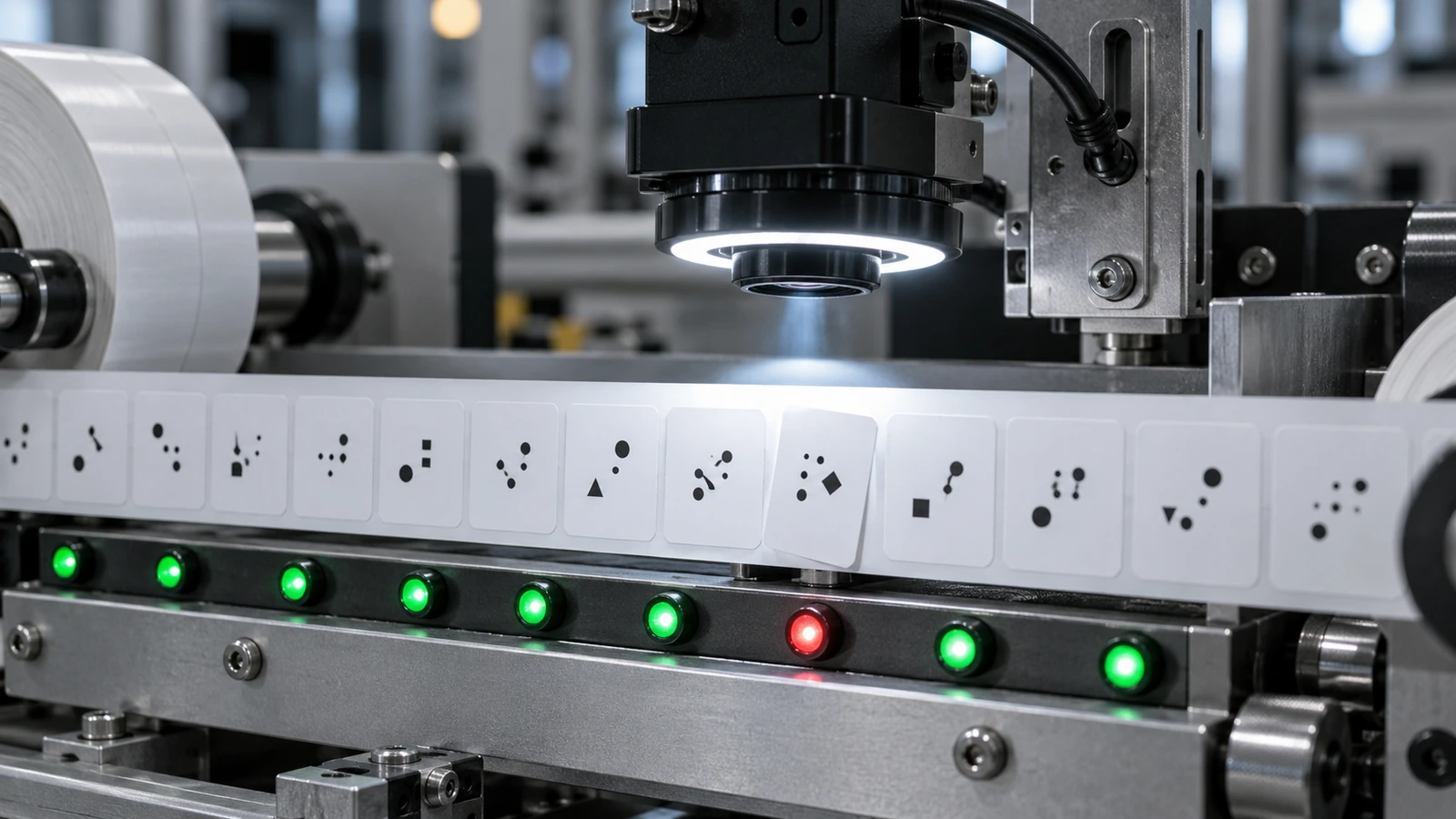
Verification is the line most often left out of low quotes, and the one that protects the program. A full service uses an inline camera to read each code before it is covered. It flags duplicates, missing codes and unreadable prints, removes bad labels, and delivers a reconciliation report that matches the printed codes to your file. Re-printing specific rejected codes is the most expensive part because it breaks the normal sequence. Regulators build validation into their own specifications. British Columbia's 2026 scratch-ticket standard requires prize symbols concealed under a scratch-off covering, with a validation number in human-readable form, barcode form, or both. TGSNE2 v2.0[11]
Proofing belongs to the same line. Code font, character height and the separation of ambiguous characters such as 0/O and 1/I decide whether customers can redeem without calling support. After complaints that the digits on one scratch game were hard to read, the Ohio Lottery reprinted it in a clearer font. News 5 Cleveland[12] A test print with real data costs far less than a reprint.
How to Build a Quote Request Suppliers Can Price the Same Way
Freeze one spec sheet. Include finished size and shape, face stock, adhesive type, application surface, panel size and color, the opacity and scratch tests the samples must pass, security features, delivery format, and the verification deliverable. Send the identical sheet to every supplier.
Request three quantity breaks. Comparing them shows how much of each quote is setup and how much is per-unit cost, and where each supplier's scratch off label minimum order quantity falls.
Require one-time and per-unit lines to be shown separately. Dies, plates or screens, data setup and proofs should each be visible as their own line, so you can see what a reorder will cost.
Specify how codes are supplied. State whether you supply them or the printer generates them, the file format, the uniqueness rules, the prize-seeding logic, and the file deletion confirmation you expect.
Define "verified." Specify 100% camera inspection or sampling, the reconciliation report format, and how rejected codes are handled.
Ask about testing and compliance. If children's or food-contact use applies, ask which tests are included and which are quoted separately.
Compare landed cost per usable code. Divide the total, including freight and testing, by the number of verified usable codes delivered, not by labels printed.
Comparison: Lower-Cost vs Higher-Cost Spec Choices
Cost lever
Lower-cost choice
Higher-cost choice
When the higher cost is worth it
Run quantity
Long run, setup spread thin
Short run, setup dominates
Testing a promotion before full rollout
Size and shape
Standard die, panel just covers the data
Custom die, oversized panel
Shape is part of the brand or fits a fixed package window
Variable data
You supply a clean, de-duplicated file
Printer generates, seeds prizes, adds barcode
Prize distribution or barcode redemption is required
Panel build
Release varnish plus one silver pass
Blocking layer, varnish, multiple scratch passes
Hidden value is cash, stored balance or a PIN
Security features
None beyond opacity
Slits, destructible stock, patterned overprint
Cards sit on open retail racks before purchase
Delivery
Rolls for machine application
Sheets, or sequence-tracked rolls
Hand application, or sequence audits needed
Verification
Sample inspection
100% inline camera plus reconciliation
Every code must be redeemable and unique
Program type
Where the budget should go
Risk if under-specified
Fun reveal, no redeemable value
Basic opacity, clean scratch
See-through panels that spoil the surprise
Discount or promo codes
Variable data, readable font, sample verification
Unreadable or duplicate codes leading to support costs
FAQ: Why does the per-label price fall so sharply as quantity increases?
Dies, plates or screens, data setup, proofing and makeready waste are paid once per job. Spread over a small run they dominate the unit price. Spread over a large run they almost disappear, and what remains is material, coating and inspection, which do not get cheaper per label.
FAQ: What is a typical scratch off label minimum order quantity?
It depends on the press technology, the number of panel layers and whether a custom die is needed, so a published figure rarely matches your job. Send your spec sheet and request a quote at three quantities. The price breaks will show you where the minimum makes economic sense for your program.
FAQ: How much does variable data add to the cost per label?
The inkjet impression itself adds little. The cost sits in file handling, duplicate checks, prize seeding, barcode grading and verification, and most of that is fixed work. On a small run it can be a large share of the unit price. On a large run it becomes a small one.
FAQ: Can I save money with blank scratch stickers applied over my own printed codes?
For low-value reveals, yes. For redeemable codes, blank stickers applied afterward move labor to you, are prone to alignment errors and offer weak tamper evidence. Buyers frequently report see-through panels and stickers that are hard to scratch. Once rework and failed redemptions are counted, the saving is often lost.
FAQ: Do I need a lottery-grade panel for a marketing promotion?
Usually not. Lottery frameworks such as WLA-SCS:2024 govern instant ticket production. Promotions need a panel that passes your own light, scratch and tape tests at the value of the prize. Pay for multi-layer blocking and tamper evidence when the hidden data is cash, stored value or a PIN.
FAQ: Are test reports and compliance checks included in a standard quote?
Often not. Lead testing for children's products and documentation for food-contact adhesives are typically quoted separately. State the end use in your request so they appear as visible lines rather than surprises later.
Key Takeaways
Under-specified panels carry costs far larger than any unit-price saving. — 6 instant games found with catastrophic security failures in one state audit (Source)
Disputes over hidden-code security get expensive. — more than $700,000 paid for scratch game cards later contested in federal court (Source)
Specify a scratch-feel test, because batches vary even at industrial scale. — 10 to 12 million tickets per game, with some batches stickier than others (Source)
Children's-product use adds a lead test to the scratch coating budget. — 0.009% lead limit for surface coatings (Source)
Write verification into the spec the way regulators do. — 2 permitted validation-number formats, human-readable or barcode, in the 2026 BC standard (Source)
Serialized printing keeps getting cheaper, so compare setup lines carefully. — 2026 industry review calls traceability more cost-effective than ever (Source)
Conclusion: Price the Specification, Not the Label
Scratch off label printing cost becomes predictable once you stop comparing headline unit prices and start comparing specifications. Fix the seven levers, separate one-time costs from per-unit costs, define what "verified" means, and divide by usable codes rather than printed labels. Quotes that looked wildly different will either converge or show exactly where one supplier left something out.
To get a quote built this way, send us your code volume, label dimensions, application method and the value of what the panel hides. We will price our custom scratch off labels line by line, so you can compare them with any other quote on equal terms.
Hi there! I'm Bruce, proud dad to my amazing son. I'm the founder of Zigpac, a printing and packaging company empowering small and medium-sized businesses with custom solutions. Let's create something great together!



 Blog PDF for offline reading













The information below is required for social login
Sign In
Create New Account