We use cookies to enable our websites to remember information, to help some website functionalities to work properly, to understand how you interact with and use our websites and to display you content and ads that are relevant and engaging for you.
By clicking Accept All you consent to the use of these cookie.
The store will not work correctly when cookies are disabled.
Quick answer: Custom acrylic charms are small printed acrylic pieces made for bags, phones, zippers, lanyards, packaging inserts, and blind boxes. Choose the format by distribution channel, daily handling stress, and collectability goal instead of defaulting to a keychain.
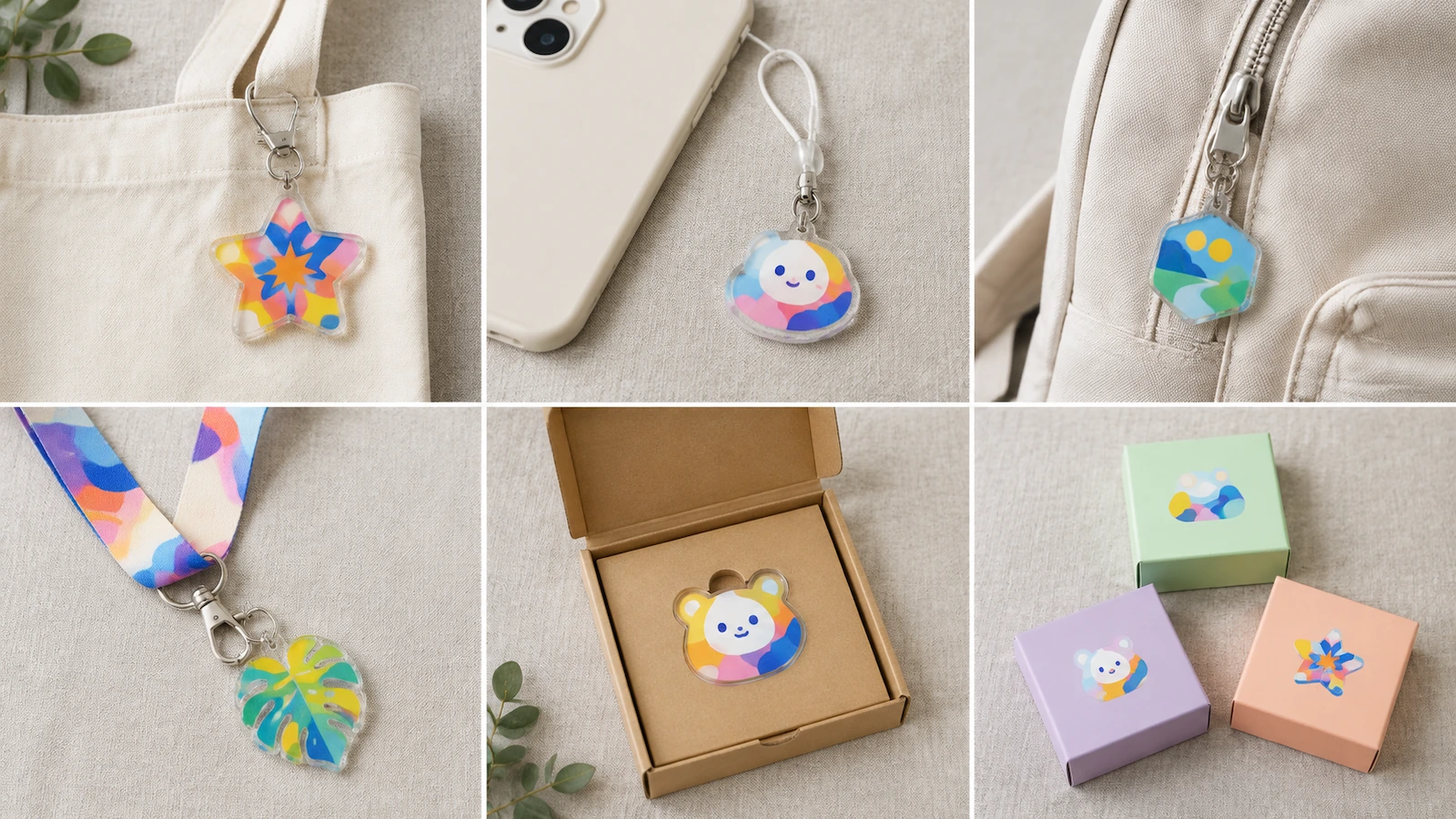
Most merchandise briefs still say "keychain." In practice, the finished piece often ends up somewhere else: on a tote strap, a phone case, a backpack zipper, a conference lanyard, or loose inside a mailer box. Each of those places handles acrylic differently. Each one also suits a different sales or giveaway channel.
When the format does not match where the charm lives, the problems are predictable. A surface-printed zipper pull wears under the thumb. A bonus insert does not fit the slot the packaging team designed. A blind-box series loses goodwill when one design misprints and collectors cannot finish the set. A charm that is too heavy flips an event badge face-down all day.
The complaints are already visible in public reviews. In a sample of 8 verified reviews of a clear acrylic keyring product, 3 mentioned scratches on arrival[1]. One independent reviewer reported that a charm carried on a heavy keyring "can get slightly dinged after 6 months"[2].
This guide is for brand, licensing, and event merchandise teams. It maps six charm formats to the channels, collectability mechanics, and merch lines each one fits best, so you can choose the program before anyone opens an artwork file. The production questions are covered in our guide to custom printed acrylic keychains: file preparation, sizing, attachments, sample checks, and quote comparison.
What Are Custom Acrylic Charms?
A custom acrylic charm is a decorated piece of acrylic sheet, also called PMMA or poly(methyl methacrylate), that is cut to a custom outline. It is printed with your artwork and designed to hang from, clip onto, or sit inside a host object. A keychain is one kind of charm: a charm paired with hardware built to carry keys. Everything else in the charm family is designed around a different host. That host may be a bag, a phone, a zipper, a lanyard, a box, or a collector's shelf.
Material terminology matters when you compare suppliers. ASTM D788[3] classifies PMMA molding and extrusion compounds. Finished acrylic sheet is covered separately by ASTM D4802[4]. When a supplier says "premium acrylic," ask which sheet type and thickness they mean. Cast and extruded sheet behave differently during laser cutting and edge finishing.
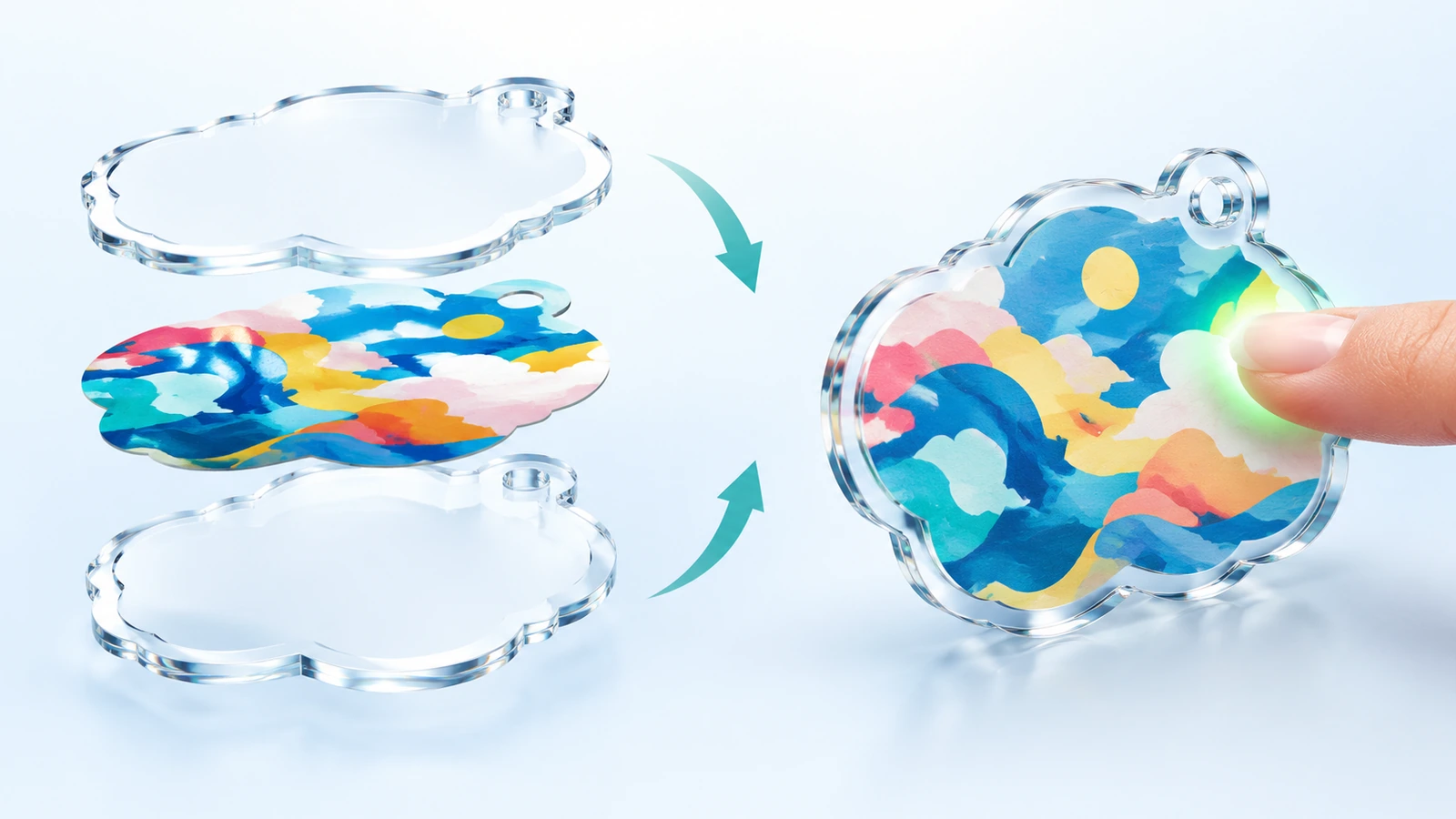
For format planning, three print constructions matter most:
Front-printed single layer: the ink sits on the outer surface. It is the brightest option, but it is exposed to rubbing.
Reverse-printed single layer: the ink sits on the back face and is viewed through the clear acrylic. The front surface protects the image.
Sandwich (layered): the print is enclosed between two bonded acrylic layers. One collector described the appeal directly: "the design is tucked inside and won't scratch off"[5]. The trade-off is registration. A 2026 post noted that sandwich charms "are often misaligned"[6], so layer alignment needs to be part of sample approval.
Size, print layout, surface finish, and hardware options are covered in our acrylic keychain specification guide. The rest of this article focuses on which charm format to choose.
Six Charm Formats and What Each One Demands
1. Bag charms
Bag charms hang from tote straps, handbag rings, and backpack handles. They are seen from a distance and they spin as the bag moves. That makes a bold silhouette and double-sided artwork more important than fine detail.
The main stress is impact against buckles and other bag hardware, not abrasion. Bag charms are the strongest format for retail and fan merchandise, where the charm acts as a visible badge of belonging. Many brands sell them as a stack: one hero charm plus smaller companion charms on a shared ring. A stack increases basket size without a new product category.
2. Phone charms
Phone charms attach to a strap tab or to the lanyard hole of a phone case. Weight and edge shape matter more here than in any other format. A heavy or sharp-cornered charm swings into the screen and the camera bump.
Keep the outline compact and the corners rounded, and pair the charm with a short strap. Phone charms suit youth-oriented campaigns, fan events, and accessory upsells sold with phone cases.
3. Zipper pull charms
A zipper charm is handled more than any other format. It is pinched every time the bag, jacket, or pencil case is opened, so this is where front-printed artwork fails first. Specify reverse-printed or sandwich construction, and ask the supplier how print adhesion is verified.
A cross-hatch tape method such as ASTM D3359[7] is a reasonable reference point. Request the rating the bulk lot achieved, not a general statement that it "passed."
Zipper charms work well for school, sports, and outdoor programs where the charm sees daily use for a full season.
4. Lanyard charms
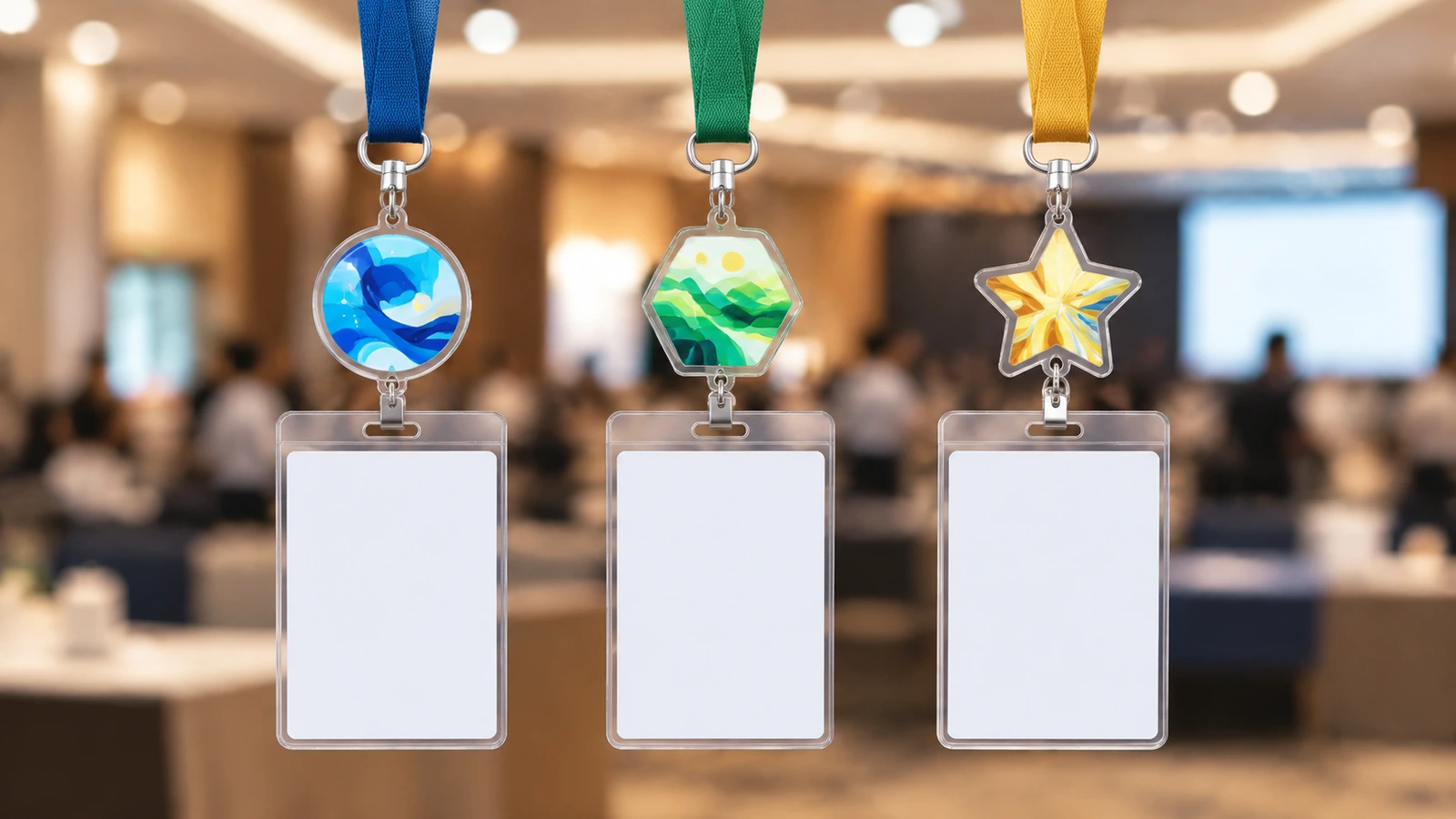
Lanyard charms clip onto event lanyards or badge reels. They hang near the face, so they get photographed and noticed in conversation.
They also support a collectability mechanic that suits multi-day events. Release a different charm each day, or at different booths, and attendees have a reason to return. Charms can also mark attendee tiers, such as exhibitor, speaker, or VIP, without reprinting badges.
The main constraint is weight. A charm that outweighs the badge pulls it sideways or flips it face-down.
5. Packaging-insert charms
Insert charms ship inside a product box, subscription mailer, or preorder package as a bonus. They usually need no hardware, or hardware bagged separately, so they lie flat.
The most common risk is fit. In the review sample above, a buyer printed artwork to a listed 1.8 × 1.25 in window and found it "slightly too small"[1]. Listed dimensions and the physical part did not match. Test-fit a physical sample in the actual packaging slot before you sign off.
Also decide whether the protective film stays on. An insert charm goes straight to the customer, with no retail staff to remove it.
6. Blind-box charms
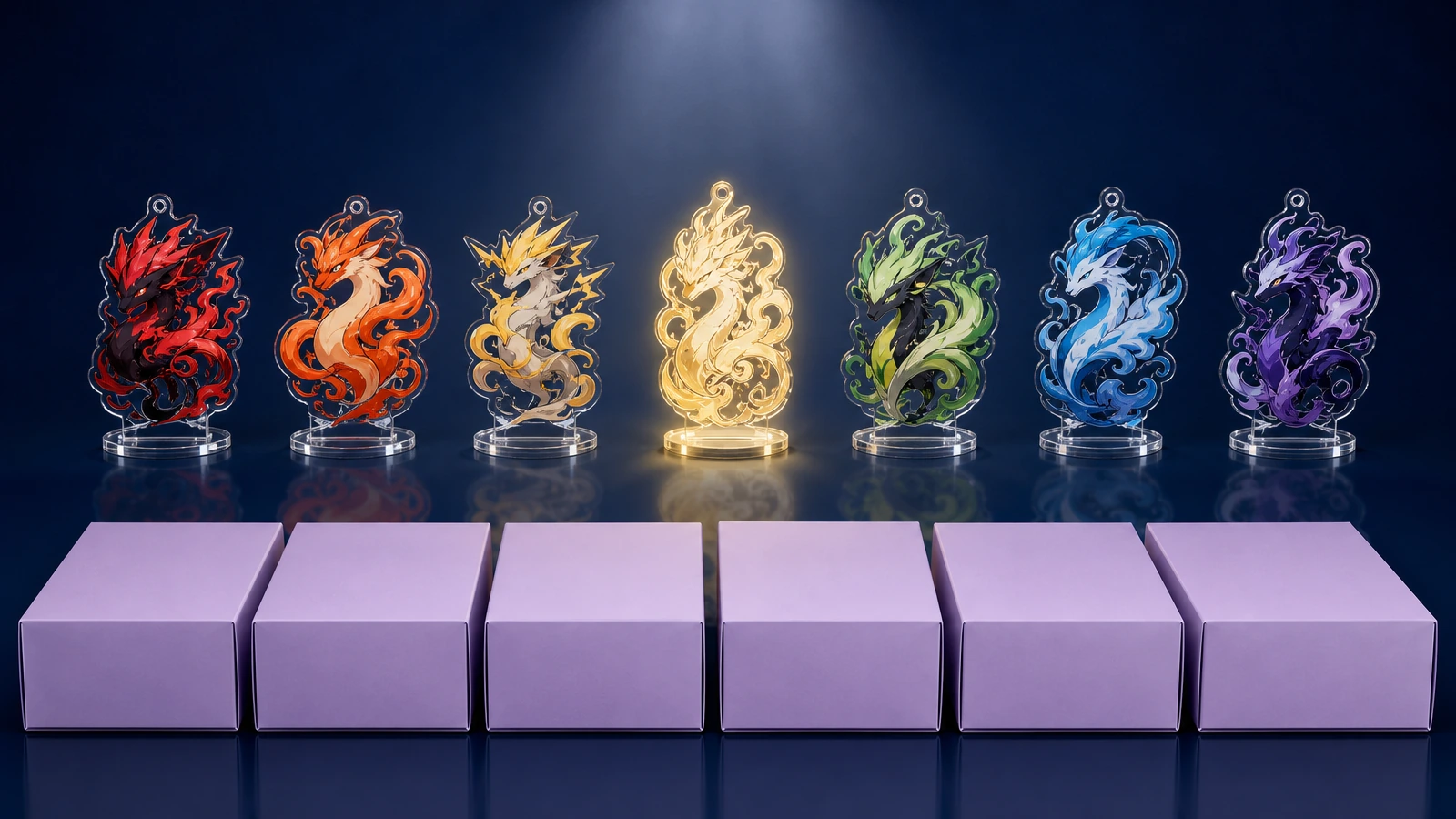
Blind-box charms are sold in opaque sealed packaging as a numbered series, often with a rarer chase or secret design. Of the six formats, this one has the most planning steps.
Assortment ratio: fix the ratio between designs, and the share of chase pieces, before production.
Pack-out accuracy: the person packing each box cannot see the design once it is sealed, so sorting has to be correct the first time.
Licensing approvals: each design in the series usually needs its own approval from the licensor.
Packaging disclosure: show the full series as silhouettes on the packaging and state whether a chase design exists. Collectors read surprise as fun only when the rules are clear.
Legal check: if blind boxes are given away rather than sold, review chance-based promotion rules with counsel.
How to Choose a Custom Acrylic Charms Program in Five Steps
Start with the distribution channel. Decide first whether the charm will be sold, given away, or bundled with another product. These channels are measured differently. A giveaway is judged by reach and how long people keep it. A retail charm is judged by sell-through and margin. An insert is judged by unboxing reactions and repeat orders.
Industry research from PPAI[9] treats promotional products as a distinct marketing channel. Use that framing to set giveaway goals separately from retail goals.
Choose a collectability mechanic. There are four common options:
Single hero design: builds awareness.
Matched set: encourages repeat visits, for example one charm per event day.
Open series: encourages repeat purchases over time.
Blind-box series: creates the strongest repeat demand and also the highest operational load.
The mechanic you choose sets the number of SKUs, which in turn sets the approval workload and the inventory risk.
Match construction to handling stress. Rank the formats by how often they are touched: zipper first, then phone, lanyard, and bag, with inserts and display pieces last. Put reverse-printed or sandwich construction where hands make contact.
People disagree about whether acrylic charms are for display or for carrying. One collector called them "more for display than carrying around"[8]. Decide which use you are designing for, and state it in the product description.
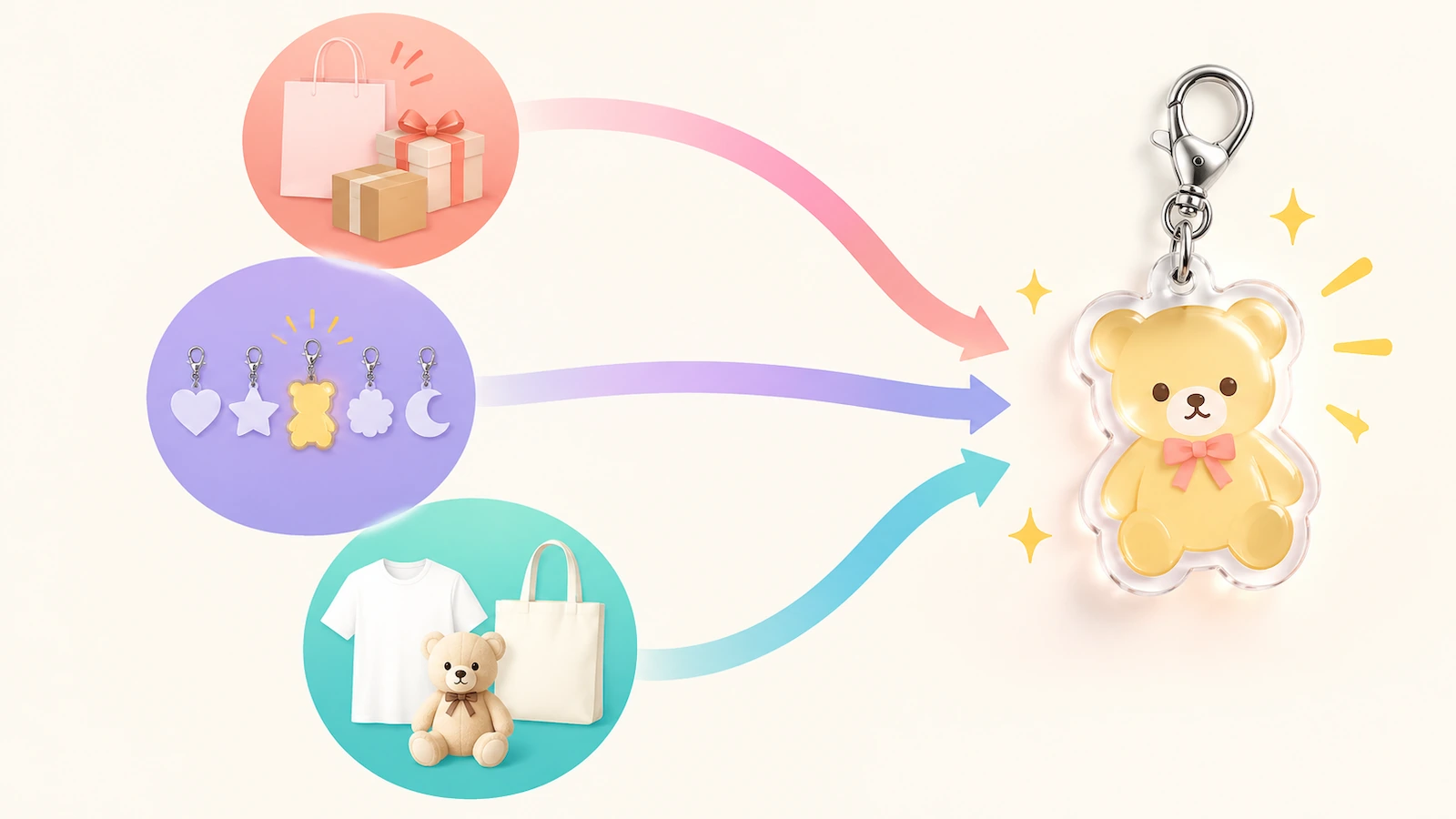
Fit the charm into the merch line. Charms usually work as the lowest-priced item in a range, as a cross-sell for apparel or plush, or as the item that refreshes a drop between bigger releases.
A bag charm can echo the artwork on a matching tote. An insert charm can preview the next series. Plan release timing for the whole line, not one SKU at a time.
Lock approvals and pack-out rules for multi-design programs. Name one approver per design. Keep a master sheet that lists each design's construction, hardware, and packaging. For blind boxes, document the assortment ratio and how pack-out will be verified.
Which Format Fits Your Channel? Side-by-Side Comparison
When buyers compare custom charms, acrylic usually wins on full-color detail and custom outlines. Consumer roundups such as The Spruce[10] highlight vibrant color and easy customization. The table below shows where each format fits.
FAQ: What is the difference between an acrylic charm and an acrylic keychain?
A keychain is a charm paired with key-carrying hardware. A charm is the decorated acrylic piece itself, designed for a particular host: a bag, phone, zipper, lanyard, box, or shelf. Choosing the host first tells you which hardware, construction, and weight the piece needs.
FAQ: Are acrylic charms durable enough for zipper pulls and daily carry?
Yes, if the construction matches the stress. Use reverse-printed or sandwich construction so fingers touch clear acrylic instead of ink. Ask the supplier for a documented print-adhesion result, for example a cross-hatch rating, from the bulk lot. Front-printed charms are better suited to display or low-contact formats.
FAQ: Can acrylic charms ship as packaging inserts without hardware?
Yes. Flat, hardware-free charms suit mailers and product boxes. Test-fit a physical sample in the actual packaging slot, because listed dimensions and real parts can differ. Also decide whether the protective film should be removed before packing.
FAQ: How should a blind-box charm series be planned?
Fix the number of designs, the assortment ratio, and whether a chase design exists before production. Get each design approved individually. Show the full series as silhouettes on the packaging, and agree on how pack-out accuracy will be verified, because errors cannot be seen once the boxes are sealed.
FAQ: What is a sandwich acrylic charm?
A sandwich charm encloses the printed layer between two bonded acrylic layers, so the artwork cannot be scratched off. Check layer alignment during sample approval, because misaligned layers are the most commonly reported flaw.
FAQ: How do I get pricing and lead times for a charm program?
Pricing and timing depend on format, construction, number of designs, hardware, and packaging. Send your channel, collectability mechanic, and target delivery date through our custom acrylic keychain and charm inquiry page for a quote based on your brief.
Key Takeaways
Protect the print wherever hands touch the charm. — 3 of 8 sampled verified reviews mentioned scratches on arrival (Source)
Daily carry on heavy key rings causes visible wear. — one reviewer reported dings after about 6 months (Source)
Test-fit insert charms in the real packaging, not against a spec sheet. — a print sized to a listed 1.8 × 1.25 in window still came out too small (Source)
Name the exact acrylic grade when you compare suppliers. — ASTM D788-21 classifies PMMA compounds, separately from sheet specifications (Source)
Add layer alignment to sandwich-charm sample approval. — misalignment was flagged in a public collector post in August 2026 (Source)
Conclusion
Custom acrylic charms work best when the format is chosen to fit the channel. Bag charms build visible fan identity. Phone and zipper charms need compact, protected construction. Lanyard charms turn events into collections. Insert charms reward buyers at unboxing, and blind boxes drive repeat purchases when the rules are clear.
Decide the channel, the collectability mechanic, and the place in your merch line first. Specifying construction, artwork, and quantities becomes much easier after that.
Verified-purchase review sample (8 reviews; product rated 4.4 stars from 1,156 ratings) for a clear acrylic photo keyring listing on a major US marketplace, captured August 2026. Listed outer size 2.16 × 1.5 in; inner window 1.8 × 1.25 in. ↩
Giftable, independent consumer review of custom acrylic keychains, January 2024. ↩
ASTM International, D788-21 Standard Classification System for Poly(Methyl Methacrylate) (PMMA) Molding and Extrusion Compounds. astm.org↩
ASTM International, D4802 Standard Specification for Poly(Methyl Methacrylate) Acrylic Plastic Sheet. ↩
Public collector post on X describing sandwich-type acrylic charm construction, February 16, 2026. ↩
Public post on X noting rising acrylic material prices and misalignment in sandwich charms, August 3, 2026. ↩
ASTM International, D3359 Standard Test Methods for Rating Adhesion by Tape Test. ↩
Public collector post on X on display versus daily-carry use of acrylic charms, March 6, 2026. ↩
Promotional Products Association International (PPAI), industry data and research. ppaionline.org↩
The Spruce, acrylic keychain roundup, October 2023. thespruce.com↩
Hi there! I'm Bruce, proud dad to my amazing son. I'm the founder of Zigpac, a printing and packaging company empowering small and medium-sized businesses with custom solutions. Let's create something great together!



 Blog PDF for offline reading












The information below is required for social login
Sign In
Create New Account