We use cookies to enable our websites to remember information, to help some website functionalities to work properly, to understand how you interact with and use our websites and to display you content and ads that are relevant and engaging for you.
By clicking Accept All you consent to the use of these cookie.
The store will not work correctly when cookies are disabled.
Quick answer: Strong lapel pin ideas start with a job: reward a milestone, mark membership, commemorate an event, or carry one short message. Then decide who earns the pin, how often it is worn, and how the series will grow.
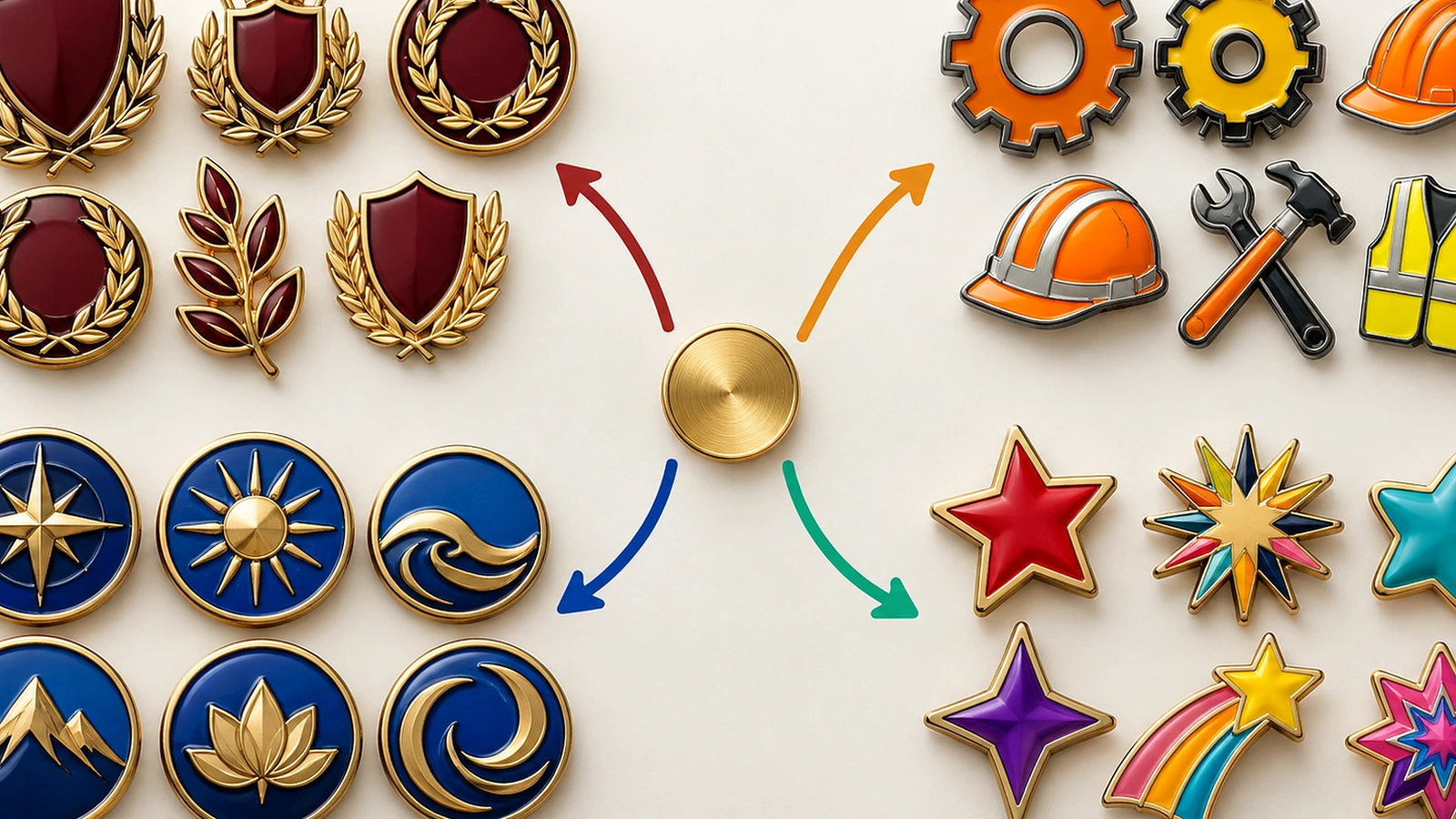
Most pin projects start with one request: "Can you turn our logo into a pin?" Few start with the more useful question: what is this pin supposed to do? The lapel pin ideas in this guide are organized by that job. They cover employee recognition, milestone and safety awards, club and membership programs, event commemoratives, and text-only designs for teams that have no artwork. Settle the strategy first. The manufacturing decisions come later and are much easier once the strategy is clear.
Skipping this step creates predictable problems. A five-year service pin ends up looking almost identical to the welcome pin given to every new hire. A safety award looks like trade-show swag, so nobody treats it as an honor. A club pin designed for one year has no room for next year's version. A volunteer committee with no designer stalls for weeks waiting for "artwork." Pins also compete for attention in a crowded field. U.S. promotional product sales reached $26.78 billion in 2024, according to the PPAI 2024 Sales Volume Report[1]. The same report's category notes also say that its "Buttons & Badges" category does not include lapel pins used as awards. Even the industry treats a recognition pin as a different object from a giveaway, and your program should too.
The fix is to decide what the pin says, who receives it, and how it fits into a series before anyone requests a quote. The sections below show how.
What Makes a Lapel Pin Idea Work?
A lapel pin idea is more than a design. It is four decisions made together, and a pin that misses any one of them tends to end up in a drawer:
Message: the single thing the pin signals. Examples are "ten years with us," "member of this chapter," "I was there," or one word such as "Mentor."
Earning rule: whether the pin is earned, assigned by role, or handed to everyone. This rule controls how much the pin is worth to the wearer.
Wear context: a suit lapel every day, a lanyard for one weekend, a uniform jacket on a plant floor, or a display board at home. The context determines how much wear the pin has to survive.
Series logic: how this pin relates to the next one. Plan from the start whether next year's version changes the color, adds a date, or uses a new shape.
A useful test: if two people in the same room wear different pins from your program, can an observer tell which person has the higher milestone or the different role? If not, the idea needs more contrast before it needs more detail.
How to Turn Lapel Pin Ideas Into a Program
Step 1: Name the job in one sentence
Write a sentence such as "This pin thanks volunteers who complete a full season" or "This pin identifies chapter officers at public events." If the sentence needs the word "and," you probably need two pins. A pin that tries to both reward and promote usually does neither well.
Step 2: Write the earning rule before the artwork
Decide who qualifies, who approves, and when the pin is presented. Earned pins should be presented in front of colleagues, such as at a meeting, ceremony, or team huddle. Handing them out silently in an envelope strips away most of their value. Distributed pins, such as event attendee pins, need a different rule: how to stop one person from taking a handful.
Step 3: Design a series architecture, not a single pin
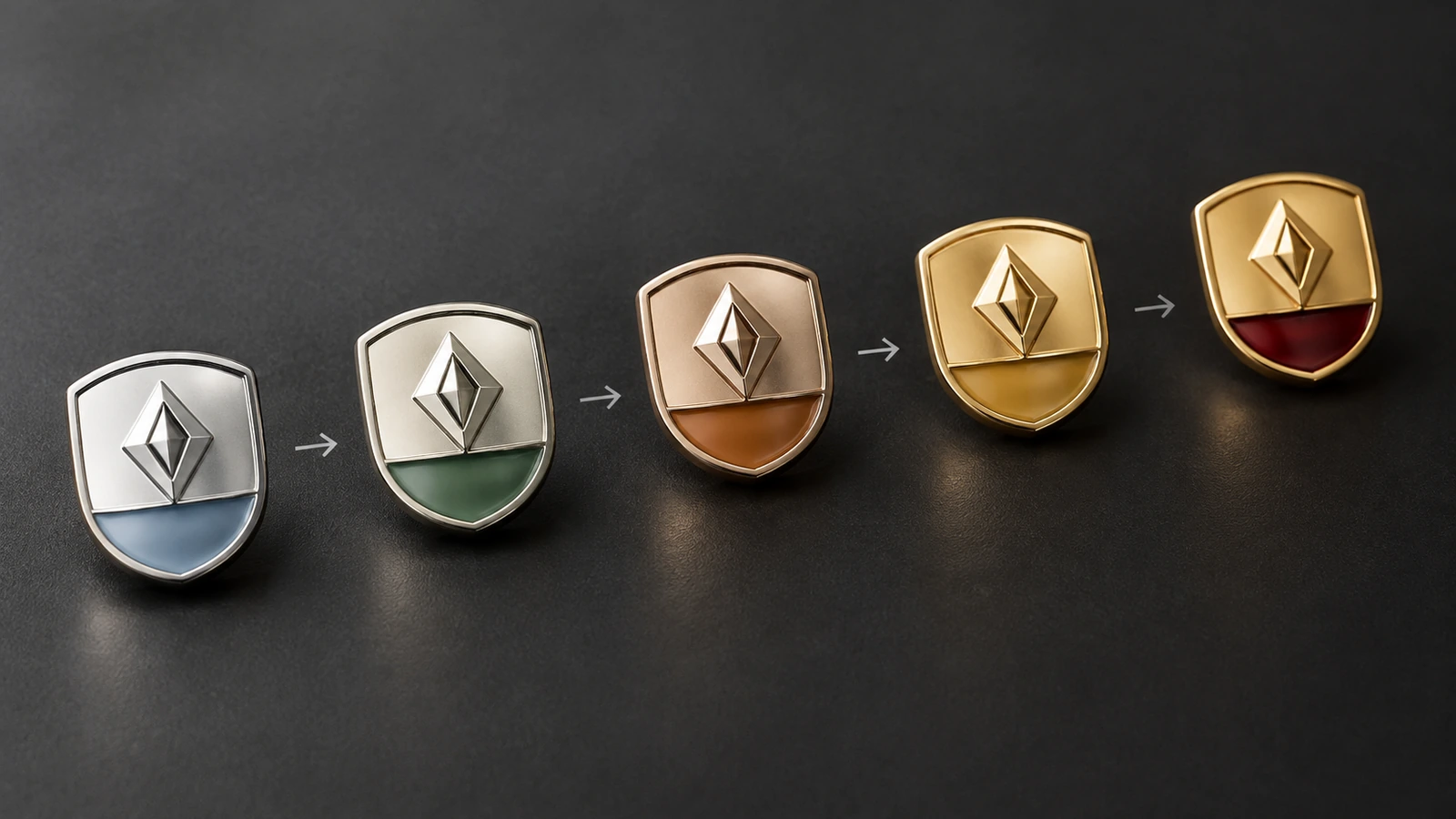
Choose one base design that stays constant and one variable element that changes. Common variable elements are a color band that advances with each tier, a dated bar, an outline shape that changes per level, or a metal finish that moves from cooler to warmer tones as milestones rise. This keeps the program recognizable and still makes every level distinct. It also means adding a new tier later is a small change instead of a redesign.
Step 4: Test perceived value with the people who will wear it
The audience's opinion of a pin often decides whether it gets worn. One tabletop game creator publicly asked crowdfunding backers[2] whether they wanted a different pin finish than the one planned, because many backers had raised it. Collector discussions also show that perceived value is not uniform. In one r/EnamelPins thread on perceived value[3], some members associate certain finishes with knockoffs, while others prefer exactly that texture. For prestige awards, show two mockups to a few senior recipients before committing. For giveaways, test with a few people from the target crowd.
Step 5: Plan distribution, replacement, and a pilot
Decide where spare pins are stored and who reorders them. Also decide how a lost milestone pin gets replaced without devaluing it. If you are rolling out across many sites, pilot one design first. One creator described a 400-pin order[4] in which most pieces had uneven surfaces or missing fill, and roughly 70% were graded as seconds. A defect rate like that hurts far more when the pins were meant to honor people. Once the strategy is set, our proof-first guide to ordering custom soft enamel pins covers artwork preparation, proofs, and supplier evaluation.
Lapel Pin Ideas by Program Type
Employee recognition
Recognition pins work best when they mark something specific and rare enough to be noticed. Ideas that hold up over time include:
Service-year series: one base emblem, with the variable element advancing at each anniversary tier you define.
Values pins: one pin per company value, awarded through peer nomination rather than by managers alone.
Cohort pins: a shared design for everyone who joined or graduated a training program together. These build relationships across departments.
Role-transition pins: first-time manager, mentor, or trainer pins that mark a change in responsibility rather than time served.
Retirement or alumni pins: a final design in the series that recipients keep after they leave.
Avoid putting a marketing tagline on a recognition pin. Recipients wear what feels like an honor, and a campaign slogan turns the pin back into swag.
Milestone and safety awards (custom industrial pins)
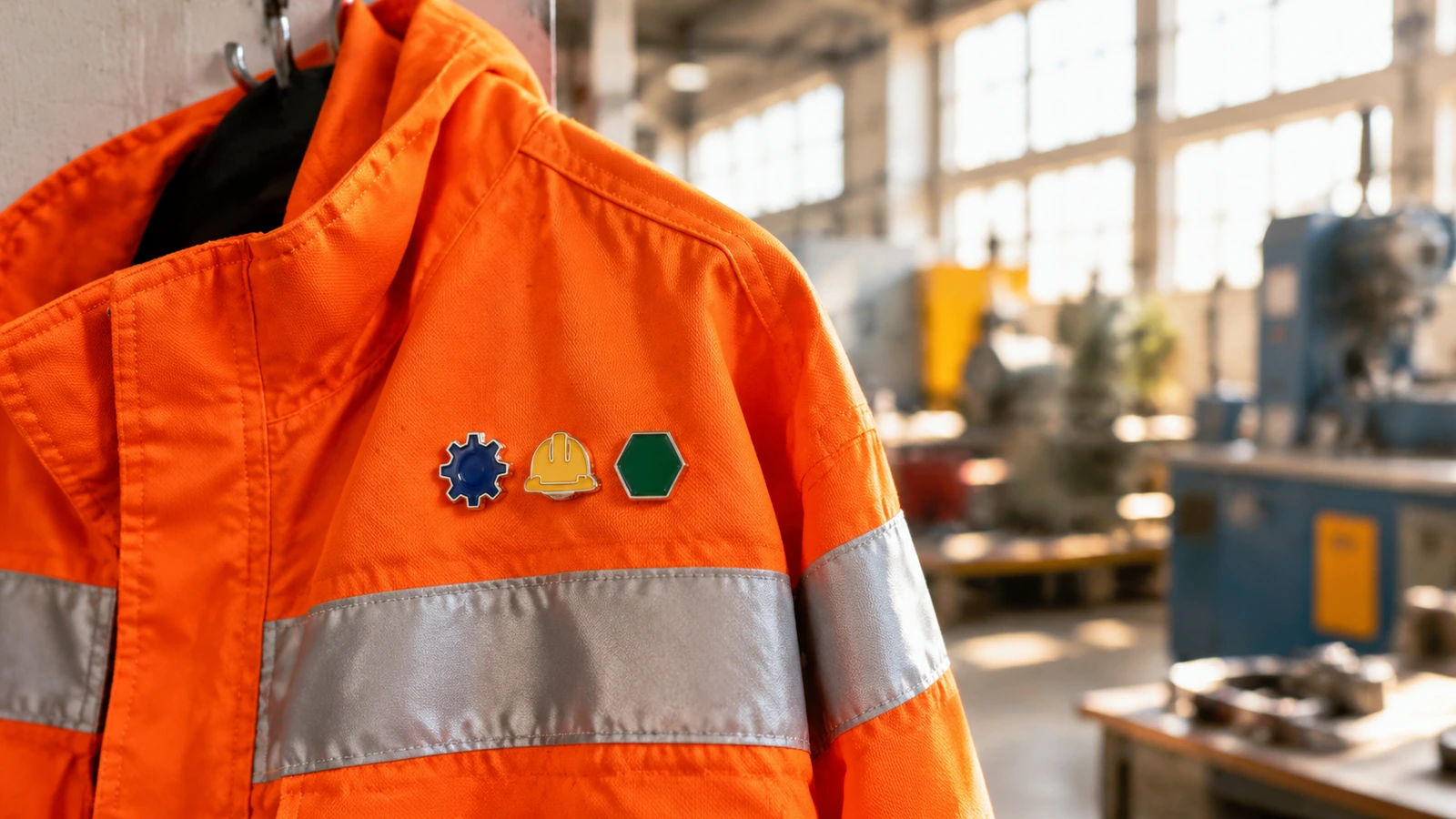
Custom industrial pins are common on plant floors, in construction crews, and in utilities. These settings work well for pins because uniforms are standardized, so a small pin is easy to spot. Strong ideas include site-level milestone pins, training-completion pins for specific certifications your organization runs, safety committee membership pins, and plant or project anniversary pins. Machinery silhouettes such as gears, cranes, and hard-hat shapes, along with high-visibility color accents, read clearly at a distance.
One strategic caution: many safety professionals warn that rewarding only "zero recorded injuries" can quietly discourage people from reporting incidents. Balance outcome milestones with pins for leading behaviors, such as completing training, reporting near-misses, or leading a toolbox talk. Agree with your safety team where pins may be worn. Jackets, lanyards, and hat bands are typical locations, and protective equipment should never be pierced.
Club and membership pins
Service clubs, alumni associations, unions, and professional societies use pins to show belonging and tenure. Rotary club lapel pins are a familiar example of a layered system that other organizations can copy:
New-member pins presented during induction, ideally by the sponsoring member.
Attendance or tenure pins that follow the same series architecture as service-year pins.
Officer and past-officer pins that show role history.
Service-project pins that commemorate a specific local project, so members wear the club's impact and not just its name.
Sponsor-a-member pins that recognize recruitment.
Chapters of larger organizations should check the parent body's emblem and brand guidelines before modifying an official mark. Rotary International, for example, publishes rules on how its emblem may be used. A common approach is to keep the official emblem untouched and put local identity in a separate bar or companion pin.
Event commemoratives
Event pins carry the message "I was there," so the date, place, or edition should appear somewhere in the design. Ideas that add value beyond a simple souvenir:
Role variants: the same design in different colors for attendees, volunteers, speakers, and staff. Organizers can identify roles at a glance.
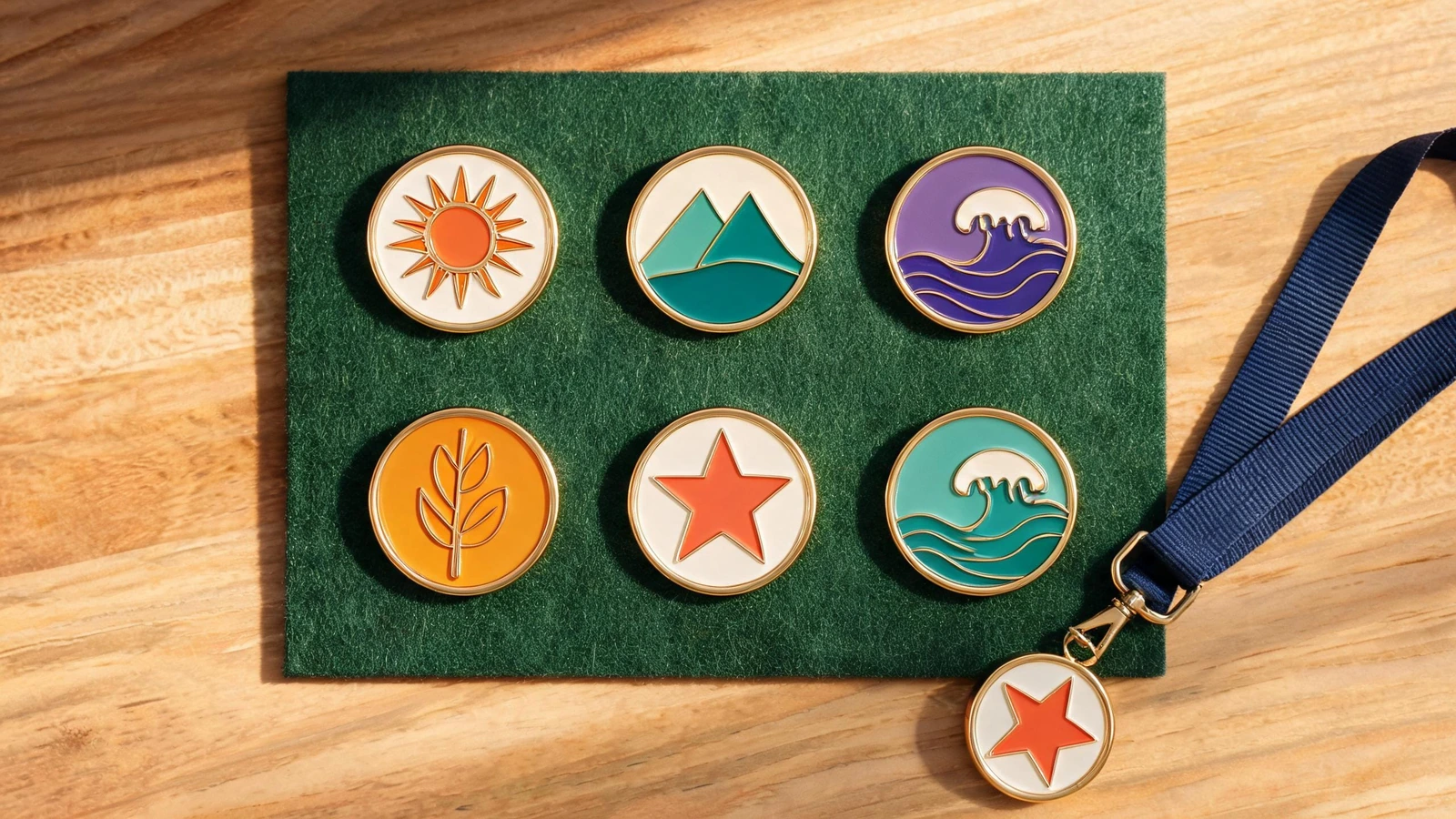
Collect-the-set pins: one pin per day, session track, or venue zone, which encourages people to return.
Trading pins: for tournaments and conventions where swapping pins is part of the culture. Make each team's or group's design distinct.
Edition series: annual events keep one frame and change the central motif each year, so returning attendees build a collection.
Two checks apply here. First, sponsor or partner logos require written permission from the owner. Second, if pins will be given to children at school events, youth sports, or family festivals, children's product rules may apply. The U.S. Consumer Product Safety Commission's total lead content guidance[5] sets a 100 ppm limit for substrate lead and a 90 ppm limit for surface coatings in children's products. ASTM F2923-20[6] addresses specified elements and certain mechanical hazards in children's jewelry. Tell your supplier the recipients' age range at the start so the right documentation can be discussed.
Text-only designs for teams without artwork
Not having a designer does not mean you can't have a pin program. Custom lapel pins with text only and no artwork are often the clearest option, because type in raised metal reads well and looks timeless. Ideas that work:
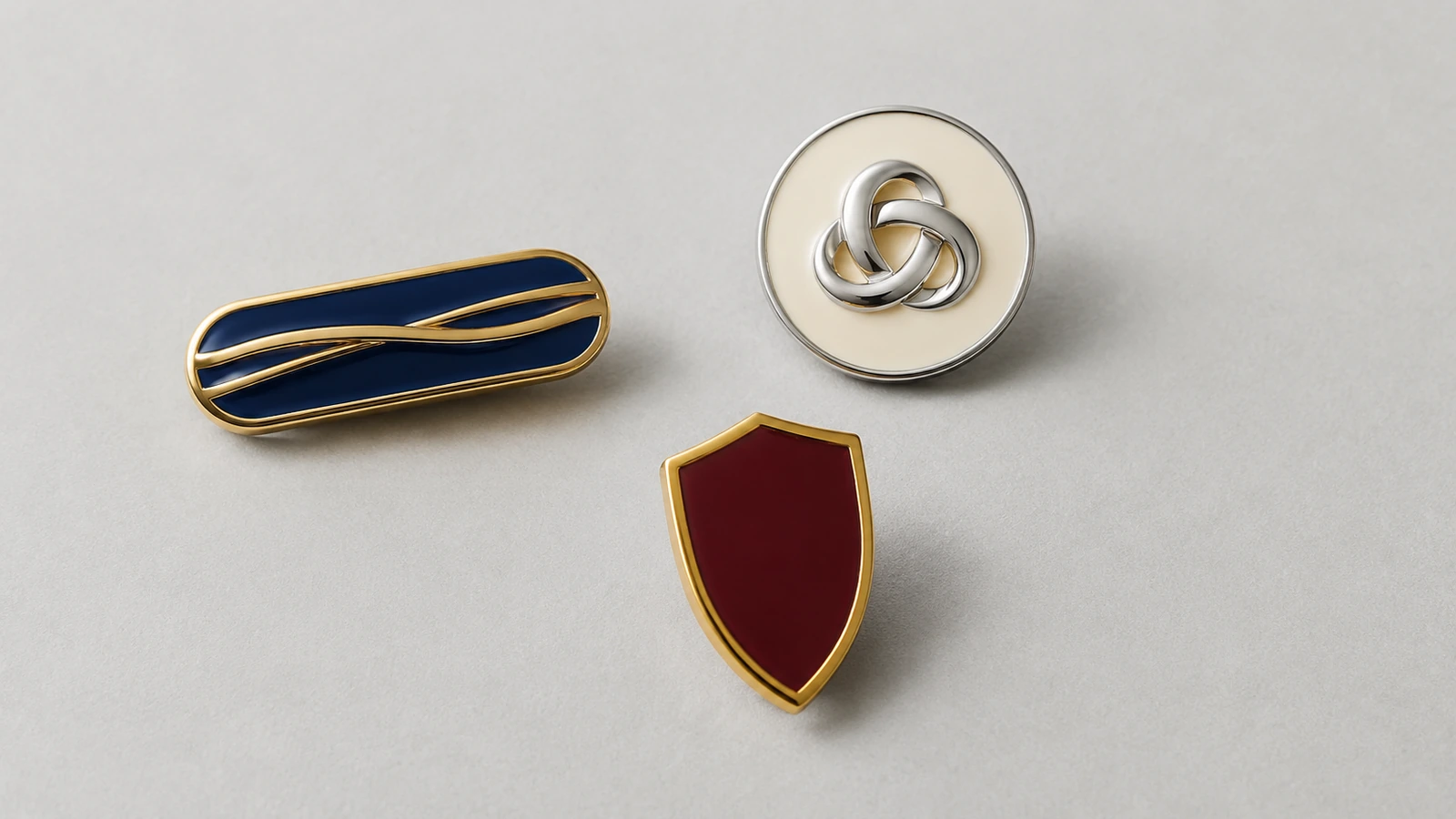
Single-word role pins: one word such as "Mentor," "Volunteer," "Founder," or "Captain" inside a simple circle, bar, or shield outline.
Monogram or initials: two or three letters for a family business, chapter, or team.
Wordmark pins: your organization's name set in a single typeface, with no logo needed.
Date or place pins: a founding year, an event year, or the name of a city or site.
Motto pins: a short phrase of a few words. Pins are small, so a long tagline turns into an unreadable texture.
Some rules for text-only designs. Choose one typeface with open letter shapes, and avoid hairline scripts. Let the metal carry the letters while one solid color fills the background, or the reverse; don't mix both approaches on a single pin. Use a strong outline shape so the pin still reads as a deliberate object from across a room. Keep extras to a minimum. One creator's published review noted that small decorative details added at the last minute made the finished pin feel too busy. The creator also said a color came out lighter than designed and blamed themselves for approving the proof without double-checking. Proof review is covered in detail in our custom soft enamel pin buying guide, so it isn't repeated here.
Which Pin Idea Fits Which Goal?
The table compares program types by strategy only. Choosing a construction (finish, metal, backing) is a separate decision.
Program type
Core message
Who receives it
Typical wear frequency
Series logic
Decide before quoting
Employee recognition
"You achieved this"
Earned by individuals
Daily or at formal occasions
Tiered by years or roles
Earning rule, tier count, ceremony
Safety and milestone awards
"Our crew did this safely"
Crews, sites, trainees
Daily on work clothing
Milestones plus behavior pins
Where pins may be worn, balance of outcome and behavior pins
Club and membership
"I belong here"
Members by status
At meetings and public events
Tenure, office, projects
Parent emblem rules, local identity element
Event commemorative
"I was there"
Attendees, roles, teams
One event, then collected
Annual or per-day editions
Role colors, sponsor permissions, recipient age
Text-only
One word or name
Any of the above
Depends on program
Change a word, date, or color
Exact wording, typeface, outline shape
Wear frequency is the column that most affects later production choices, so set it honestly. Collectors disagree about finishes. Some say they love the tactile texture of recessed enamel[7]. Others say they prefer the more consistent look of a flat, polished surface[8]. In a thread on detailed designs[9], one commenter warned that after a couple of years some pins can show yellowing, cracking, or flaking plating, depending on materials, manufacturing, and handling. A pin worn every day on a work jacket and a pin worn for one weekend need different expectations. Tell your supplier which one you are ordering.
Frequently Asked Questions
FAQ: What are good lapel pin ideas for employees?
The most durable ideas are service-year series with a constant base design and one changing element, peer-nominated values pins, cohort pins for training graduates, and role-transition pins for new managers or mentors. Each should have a written earning rule and be presented in front of colleagues.
FAQ: Can we order custom lapel pins with text only and no artwork?
Yes. A single word, initials, a wordmark, or a date inside a simple outline shape is a complete design. Send the exact wording, your preferred typeface, and the outline shape. A supplier's design team can usually build a proof from that, and you review it before anything is produced.
FAQ: What should rotary club lapel pins and other club pins include?
A layered system works well: new-member, tenure, officer, service-project, and sponsor pins. Keep any official parent-organization emblem unmodified and in line with its brand guidelines. Put local club identity in a separate bar, a companion pin, or a changing color element.
FAQ: How do custom industrial pins fit into a safety program?
Use them for site milestones, training completion, and safety committee roles, and include pins that reward leading behaviors such as near-miss reporting. That way the program does not reward silence about incidents. Agree with your safety team on where pins may be worn, and never attach them to protective equipment.
FAQ: How many designs should a new pin program start with?
Start with one base design and decide the variable element (color band, date bar, or outline) up front. You can then add tiers or editions later without redesigning anything. For organization-wide rollouts, pilot a single design before ordering every tier.
FAQ: Do pins handed out at children's events need special checks?
They may. Pins intended for children can fall under children's product rules, including CPSC lead limits and ASTM F2923 for children's jewelry. Tell your supplier the recipient age range early and ask what testing documentation applies to your order.
FAQ: Can we put sponsor or partner logos on event pins?
Only with written permission from the logo owner. A supplier agreeing to produce a design does not grant you the right to use someone else's trademark, so collect approvals before the proof stage.
Key Takeaways
Treat recognition pins as awards, not giveaways. — PPAI reports $26.78 billion in 2024 U.S. promotional product sales, up 2.63%, and its Buttons & Badges category excludes lapel pins used as awards (Source)
Pilot one design before an organization-wide rollout. — In one creator's 400-pin order, roughly 70% of pieces were graded as seconds (Source)
Pins for children's events may need extra compliance checks. — CPSC limits lead in children's products to 100 ppm in the substrate and 90 ppm in surface coatings (Source)
Children's jewelry rules can apply to pins. — ASTM F2923-20 covers specified elements and certain mechanical hazards in children's jewelry (Source)
Match the finish to how often the pin is worn. — One collector reported possible yellowing, cracking, or flaking after a couple of years of use (Source)
Conclusion
The best lapel pin ideas are decided before the artwork exists. Write one sentence describing the pin's job. Set an earning rule people can trust. Build a series that can grow, and size durability expectations to how the pin will actually be worn. Recognition, safety, membership, event, and text-only programs each need a different balance of those four decisions, and the comparison table gives a quick starting point.
When your message, tiers, and wear context are settled, you are ready to talk production. Read our custom soft enamel pins guide for proofs and supplier checks, then send us your program brief for a quote based on your quantities, timeline, and destination.
Hi there! I'm Bruce, proud dad to my amazing son. I'm the founder of Zigpac, a printing and packaging company empowering small and medium-sized businesses with custom solutions. Let's create something great together!



 Blog PDF for offline reading





The information below is required for social login
Sign In
Create New Account