We use cookies to enable our websites to remember information, to help some website functionalities to work properly, to understand how you interact with and use our websites and to display you content and ads that are relevant and engaging for you.
By clicking Accept All you consent to the use of these cookie.
The store will not work correctly when cookies are disabled.
Quick answer: Custom logo canvas tote bags justify their higher unit price only when recipients keep using them. A 10–12 oz canvas (about 340–410 gsm) is four to five times heavier than 80 gsm non-woven and takes embroidery, screen printing and washing far better. A UK Environment Agency study found that a cotton bag needs 131 uses to match a single-use bag's climate impact, compared with 11 for non-woven polypropylene. Choose canvas for retail, gifting and long-running brand programs, and choose non-woven for high-volume, one-day giveaways.
Most brand teams order custom logo canvas tote bags for one reason: canvas signals quality in a way a thin promotional bag cannot. The trouble starts when the cartons arrive. The fabric is thinner than the listing suggested, the bag measures half an inch short, the cotton shrinks after one wash, and the embroidered logo puckers because the base cloth could not support the stitch density. If you paid canvas prices for an audience that drops the bag in a closet after the event, the premium bought nothing.
The complaints from real buyers are specific. One marketplace reviewer who bought a bulk pack of cotton totes wrote: "Not preshrunk! Shrank considerably to the point of not being usable after 1 cold water wash and tumble dry." Another reported that totes sold as 16 × 15 inches actually measured 14.5 × 15.5 inches flat, with "NOT a gusset … they simply have a flat base." A third, buying for a heat-press promotion, said the bags "smelled very strongly of vinegar," which delayed packing until they had aired outside for several days. None of these failures shows up in a mockup. Each one shows up on the day the bags are handed out.
This guide covers the decisions that prevent those outcomes. It explains how canvas weight is measured, which logo methods suit which fabric, how to calculate cost per use honestly, and how to plan lead time backward from your event. It also says plainly when a non-woven tote is the better buy.
What Counts as a Canvas Tote, and How Is Fabric Weight Measured?
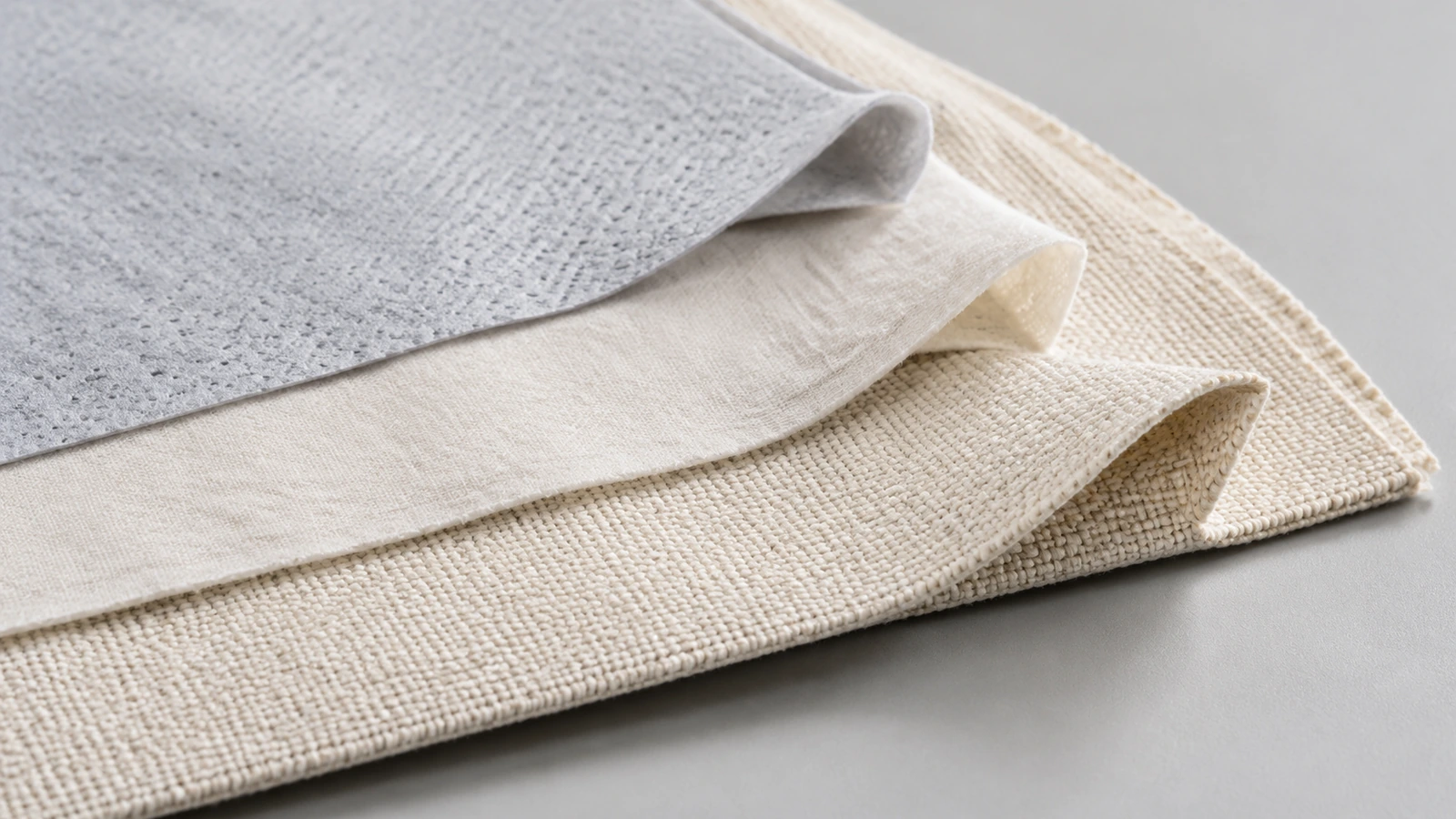
Canvas is a tightly woven plain-weave cotton, also sold as "duck." Lighter cotton totes are usually made from sheeting or muslin, which uses the same fiber in a looser, thinner construction. Non-woven totes are a different material altogether. Polypropylene fibers are bonded into a sheet instead of being woven, and under U.S. fiber-naming rules that fiber is called olefin[1], defined as at least 85% ethylene, propylene or other olefin units by weight. For buyers, the practical difference is simple: woven cotton absorbs ink and holds stitches, while bonded polypropylene has a plastic surface that ink sits on top of.
The biggest source of confusion is the unit of measure. U.S. canvas is quoted in ounces per square yard, while non-woven is quoted in grams per square meter (gsm). One oz/yd² equals about 33.9 gsm. Some mills quote ounces per linear yard at a fixed width, which gives a different number for the same cloth. Ask every supplier which convention they use before you compare quotes.
Fabric (as quoted)
Approx. gsm
Typical feel
Typical brand role
Non-woven PP, 80 gsm
80 (≈2.4 oz/yd²)
Light, papery, holds a crease
Event and trade show giveaways
Light cotton / muslin, 4–5 oz
≈136–170
Soft, slightly see-through
Craft kits, party favors, short campaigns
Cotton, 6 oz
≈203
Flexible, opaque in most colors
Conference bags, book bags
Canvas, 8 oz
≈271
Firm, structured
Retail bags, member gifts
Canvas, 10–12 oz
≈339–407
Stiff, stands up when loaded
Premium gifts, merch, embroidery
The gsm values above are unit conversions, not test results. To make a weight claim verifiable, write the test method into the purchase order. ASTM D3776 covers mass per unit area of woven fabric, so ask for the nominal weight together with a tolerance, such as ±5%, measured to that method.
How Do You Specify Custom Logo Canvas Tote Bags?
A canvas spec sheet needs more lines than a non-woven one, because cotton changes after it leaves the factory. It shrinks, takes on dye unevenly and can carry odors from finishing chemicals. The following steps follow the order in which most problems appear.
Define the job before you choose the fabric. Write down who receives the bag, what they will carry and how often you expect them to reuse it. A book bag for a school program, a retail bag and a conference handout point to three different weights.
Lock weight, unit and tolerance. State "oz per square yard" or "gsm," cite the ASTM D3776 method and set a tolerance. Reviewers who complained that bags felt "much thinner than the photos" had no written weight to hold the seller to.
Require pre-shrunk fabric and a shrinkage limit. Ask for dimensional change after home laundering, tested to AATCC TM135, with a maximum percentage in each direction. If the supplier cannot pre-shrink, put "spot clean only" on the care instructions and plan the artwork for some shrinkage.
Specify finished size flat and loaded. List width, height and gusset depth separately, and state whether the gusset is a sewn panel or a boxed corner. A "flat base" bag holds far less than the same footprint with a real gusset.
Specify handle construction. Ask for box-and-X stitching where the handles meet the body, and state whether the bag should be carried by hand or on the shoulder. Handle length decides whether people carry the bag on their shoulder, and shoulder carry is what keeps your logo visible in public.
Add colorfastness for dyed canvas. For colored or printed bags, ask for crocking (rub-off) results to AATCC TM8 and laundering results to AATCC TM61. Natural canvas often has dark specks woven in, which can break up fine lines in a one-color logo.
Confirm odor and packing. Ask for bags to be aired before packing and sealed with moisture protection. Cotton shipped damp can mildew in a container.
Check who the bag is for. If the tote is designed or marketed for children 12 and under, as school book bags often are, it falls under the Consumer Product Safety Improvement Act[2], which requires lead and phthalate limits, third-party testing and tracking labels.
Decoration materials can create compliance risk even when the cotton does not. In 2024, California's Attorney General logged a Proposition 65 notice against a "Patriotic Reusable Tote" alleging DEHP exposure[3], a phthalate plasticizer. Plastisol inks, heat-transfer vinyl and coated trims are the usual places phthalates enter a fabric bag, so request batch test reports for those components on any bags sold or distributed in California.
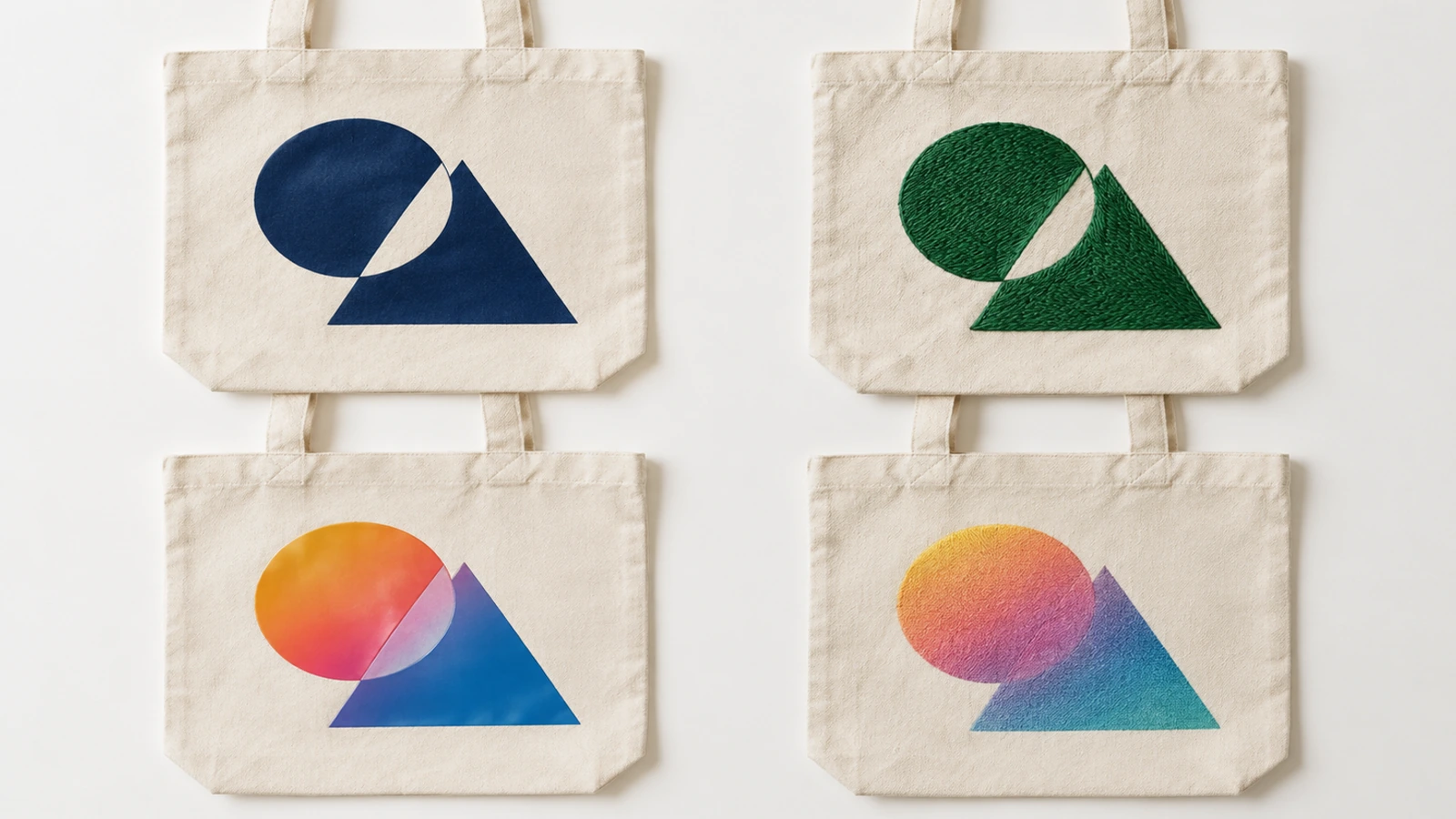
Which Logo Print Method Fits Canvas and Cotton?
Cotton absorbs ink into its fibers, so prints on canvas look softer and wear in gradually instead of flaking off. That is the main technical reason canvas photographs and ages better than non-woven, where ink sits on a heat-sensitive plastic surface and curing temperatures have to stay low to avoid melting the bag.
Method
Best for
Fabric guidance
Watch out for
Screen printing (water-based or plastisol)
One to four spot colors, bold marks, larger runs
Any weight; water-based ink feels softest on natural canvas
Setup per color; fine lines on textured or speckled canvas
Embroidery
Premium gifts, small marks, retail merch
Heavier canvas resists puckering under dense stitching
Digitizing and sew-out approval add steps; large fills get heavy
Heat transfer / DTF
Full color, gradients, short runs
Smooth, mid-to-heavy cotton gives the most even adhesion
Glossy hand feel; transfer film chemistry (see Prop 65 above)
Direct-to-garment (DTG)
Photographic art on light canvas
Needs pretreatment; strongest on natural or white
Muted results on dark dyed canvas without a white underbase
Sublimation
Not suitable
Sublimation dyes bond to polyester, not cotton
Often mislisted on cotton totes; one buyer's "sublimation dreams died" on arrival
Contrast is the other common failure. A buyer of dark custom totes said the logo "didn't show up quite as much as I'd like" and wished a designer had flagged it before production. On navy, black or forest canvas, ask for an underbase or an opaque ink, and approve a physical strike-off instead of a screen mockup.
How Do You Calculate Cost per Use?
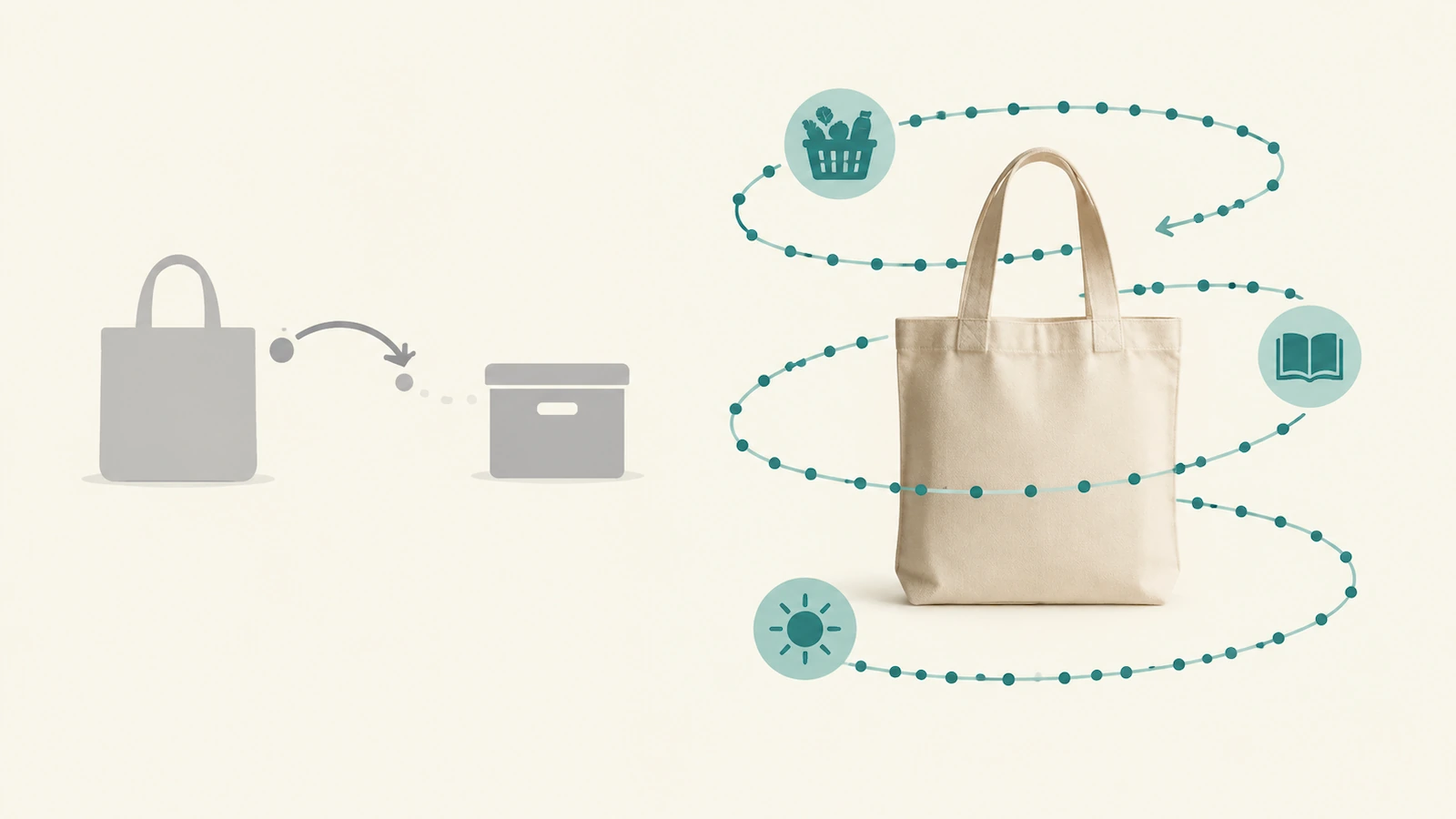
Unit price is the wrong number for comparing a canvas tote with a non-woven one. The number that matters is cost per use: landed unit cost, including setup, decoration and freight, divided by the number of times a recipient realistically carries the bag in public. Each carry is an impression for your brand.
Here is a worked example using hypothetical index values, not quotes. Say a non-woven tote costs 1 unit and a canvas tote costs 4 units. If the non-woven bag is carried twice and the canvas bag 30 times, cost per use is 0.5 for non-woven and about 0.13 for canvas, so canvas wins clearly. If the canvas bag is carried only three times, its cost per use is 1.33 and it loses. The premium only pays off when real reuse beats the price multiple.
The environmental math follows the same logic. The UK Environment Agency's life cycle assessment of carrier bags[4] estimated that a cotton bag must be used 131 times to match the global warming potential of a conventional single-use bag, while non-woven polypropylene needs 11 uses. The Guardian's 2024 reporting on tote overproduction[5] argued that for many giveaway totes it is "mathematically improbable if not impossible" they will reach the dozens-to-thousands of uses required. A canvas program that ships thousands of bags to people who already own a drawer full of them fails both the brand test and the sustainability test.
Low-quality giveaways do not escape the problem either. Fast Company's critique of conference swag[6] noted that most such bags "aren't particularly sturdy or well designed, so they're not that useful for bringing to the grocery store." Canvas tends to earn its price when at least three of these conditions hold:
Recipients are a defined, smaller group, such as customers, members, employees or donors, rather than anonymous foot traffic.
The bag has an everyday job, like groceries, books, a laptop or the gym, and a handle length that suits that job.
The design works as something people choose to carry, not just as an ad. A subtle mark usually gets reused more than a large logo.
The bag is sold or bundled with a purchase instead of handed out at random.
The program runs for months or years, so a consistent bag builds recognition over time.
The money at stake is significant. According to PPAI's sales volume estimate[7], U.S. promotional product distributor sales reached $27.1 billion in 2025, with sustainable products accounting for about $3.8 billion, or 14%. Bags compete for a share of that budget, and buyers are increasingly asked to show results beyond the number of units shipped.
Canvas vs. Cotton vs. Non-Woven: Side-by-Side Comparison
Factor
Heavy canvas (10–12 oz)
Light cotton (4–6 oz)
Non-woven PP (80 gsm)
Approx. weight
≈339–407 gsm
≈136–203 gsm
80 gsm
Environmental break-even (UK EA)
131 uses (cotton)
131 uses (cotton)
11 uses
Logo methods
Screen, embroidery, DTF, DTG
Screen, DTF, light embroidery
Screen at low cure temperature, heat transfer; no sublimation
Washing
Washable if pre-shrunk
Shrinks unless pre-shrunk; often spot clean only
Spot clean, air dry, no ironing
Perceived value
High; often kept as a keeper bag
Moderate; craft and favor use
Functional handout
Main failure risk
Paying a premium for low reuse
Thin, see-through cloth; shrinkage
Handle tears, ink rub-off, little reuse after the event
Best program fit
Retail, gifting, merch, loyalty
Kits, school programs, short campaigns
Trade shows, festivals, high-volume sampling
If your audience is large, anonymous and only needs a bag for the day, non-woven is the rational choice, provided it is built to survive that day. For that use case, see our stitched custom non-woven tote bags built for event day, which cover fabric specification, construction, inspection and sourcing routes for promotional programs in detail.
Fiber and recycled-content claims need care for both materials. Under the FTC Green Guides, a "recycled cotton" claim must be qualified by weight percentage unless the whole product is recycled content, as set out in 16 CFR 260.13[8]. An unqualified "recyclable" claim requires recycling access for a substantial majority of consumers under 16 CFR 260.12[9]. Our product page covers non-woven, California and import claims.
How Should You Plan Lead Time for a Canvas Program?
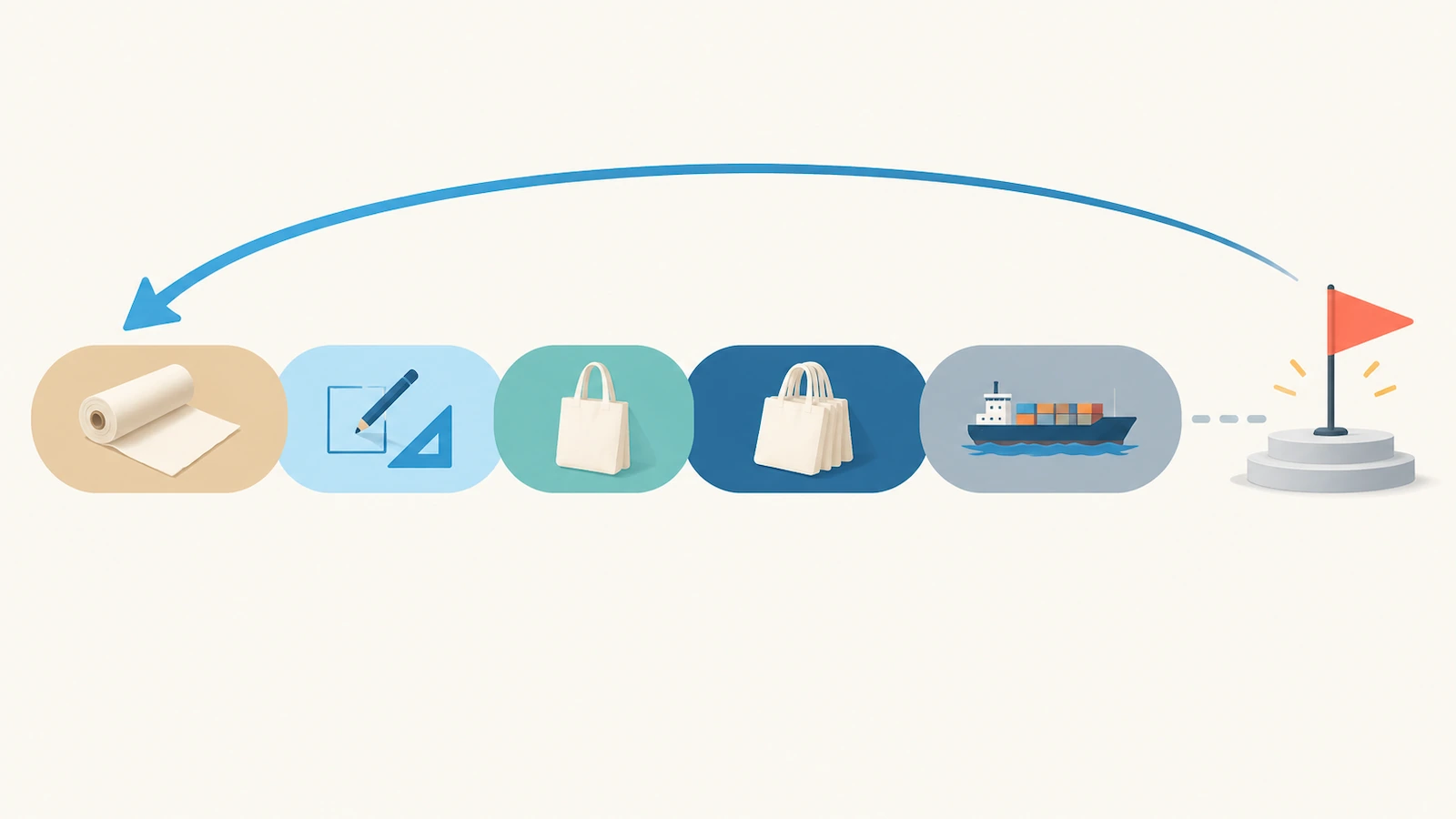
Canvas schedules run longer than non-woven schedules because the fabric goes through more steps, and each step can force a re-approval. Start from your in-hand date and work backward through these stages, asking your supplier to commit to a time for each one in writing.
Fabric sourcing and dyeing. Stock colors move fastest. Custom dye matches and pre-shrinking add time and make lab dips necessary.
Artwork preparation. Screens for spot colors, digitizing for embroidery, or color-managed files for DTF and DTG.
Physical sample or strike-off. Check weight, size, handle stitching, logo contrast and odor on the actual cloth. Any change to fabric weight or size usually means a new sample.
Bulk sewing and decoration. Embroidery runs more slowly than screen printing, so plan for its throughput on larger orders.
Inspection, packing and transit. Allow time to air cotton, pack it dry and ship it. Add a buffer so a single delay does not cost you the event.
Lead times and minimums vary with fabric weight, color, decoration method and quantity, so we do not publish a single figure. Share your event date, quantity and artwork, and we will build a written timeline. For how sampling and inspection protect an event date in a non-woven program, see the custom non-woven tote bag page.
FAQ
FAQ: Can a logo be sublimated onto a canvas tote?
No. Sublimation dyes bond with polyester, not cotton, so 100% cotton canvas needs screen printing, embroidery, DTF, DTG or heat transfer. Non-woven polypropylene cannot be sublimated either. If a listing promises sublimation on a cotton tote, confirm the fiber content in writing before you order.
FAQ: Will custom canvas totes shrink when washed?
Unwashed cotton can shrink noticeably in a warm wash or a tumble dryer, and buyers report bags that became unusable after one cycle. Specify pre-shrunk fabric with a maximum dimensional change tested to AATCC TM135, or label the bags "spot clean, air dry" and allow for shrinkage when you size the logo.
FAQ: What canvas weight works best for an embroidered logo?
Heavier canvas, around 10 oz and above, supports dense stitching without puckering. On 4–6 oz cotton, use a smaller logo, open fill patterns or a stabilizer, and approve a sew-out before bulk production.
FAQ: Is a canvas tote more sustainable than a non-woven tote?
Only if it is reused far more often. The UK Environment Agency's assessment put cotton's break-even point at 131 uses, compared with 11 for non-woven polypropylene. Giving canvas to a smaller audience that will actually reuse it is more defensible than handing it out in bulk.
FAQ: Do custom cotton tote bags need a fiber content label?
The FTC's guide to the Textile and Wool Acts lists tote bags among products not covered[10] by mandatory fiber labeling. Any fiber claim you choose to make, such as "100% cotton" or "recycled cotton," must still be accurate.
FAQ: How much do custom fabric totes cost, and what is the minimum order?
Pricing depends on fabric weight, dye color, decoration method, number of print colors or stitches, quantity and freight, so a single number would mislead you. Send us your quantity, artwork and in-hand date for a written quote and timeline.
Key Takeaways
Canvas only beats non-woven when it is actually reused. — 131 uses for cotton vs. 11 for non-woven PP to break even on climate impact (Source)
Mass giveaways rarely reach the reuse that justifies them. — reuse targets of "dozens-to-thousands" of uses called improbable for many totes (2024) (Source)
Bag budgets compete within a large, results-focused channel. — $27.1B in U.S. promotional sales in 2025, 14% from sustainable products (Source)
Totes for children carry federal testing duties. — CPSIA applies to products designed for children 12 and under (Source)
Decoration chemistry can trigger Prop 65 exposure. — a 2024 notice alleged DEHP in a reusable tote (Source)
Recycled-cotton claims need a stated percentage. — 16 CFR 260.13 requires qualification by weight unless the whole product is recycled content (Source)
Conclusion: Buy the Bag Your Audience Will Carry
Canvas is not automatically the premium choice, and non-woven is not automatically the cheap one. The right tote is the one with the lowest cost per real use for the audience you are reaching. For a smaller audience that will reuse the bag, write weight, shrinkage, handle stitching and colorfastness into the spec and pay for canvas. For a crowd that only needs a bag for the day, choose a well-built non-woven tote and put the savings elsewhere. Tell us your audience, quantity and date, and we will recommend the material, print method and timeline that fit, starting with our custom non-woven tote bags for event programs.
Hi there! I'm Bruce, proud dad to my amazing son. I'm the founder of Zigpac, a printing and packaging company empowering small and medium-sized businesses with custom solutions. Let's create something great together!



 Blog PDF for offline reading












The information below is required for social login
Sign In
Create New Account