


 Blog PDF for offline reading
Quick answer: Custom magnets for fridge marketing work when each magnet gives people one useful reason to keep it on the door, such as an after-hours number, a delivery line, a seasonal checklist or an event keepsake. It also needs one trackable call to action. Choose a single campaign goal, hand the magnet out at a moment of trust, attribute responses with unique numbers or links, and check retention at fixed intervals.
Most business cards end up in a drawer, and most flyers are recycled within days. Custom magnets for fridge doors are one of the few promotional pieces that can stay at eye level in a customer's kitchen for months, but only when they earn that spot. This playbook is for real estate agents, restaurant owners, clinic managers and event organizers who want to treat customized refrigerator magnets as a planned campaign with a goal, a distribution plan and a scoreboard rather than as leftover-budget swag.
Weak campaigns rarely fail at the printing stage. They fail at the planning stage. A typical failed magnet carries a logo, five contact methods and a slogan. Someone hands it out with no context, and nobody ever tracks it. Marketplace reviewers describe the same symptoms in their complaints. One wedding buyer said her favors were so small that guests "could barely see the writing." Another shopper found that a new magnet "wouldn't stick to my new stainless steel fridge." In both cases the magnet ends up in a junk drawer. Because nothing was tracked, the marketing team also has no way of telling whether the budget produced a single phone call.
The fix is to plan the magnet like a direct-response asset. That means one goal, one action, one distribution moment and one measurement hook, all decided before anyone opens a design file. The sections below walk through each decision in order.
What a promotional fridge magnet is, and the two jobs it must do
A promotional fridge magnet is a printed piece with a magnetic back, made to be displayed on a steel appliance or surface inside a customer's home or workplace. It has two separate jobs. The first is retention: the magnet has to stay displayed. The second is response: it has to prompt a call, visit, booking or order at the moment the customer needs one. A magnet can succeed at one job and fail at the other. A beautiful keepsake can stay up for years and never generate a call, while a coupon magnet can drive a burst of orders and then be thrown away. You need to decide which job matters more before you design anything, because that choice determines what goes on the face.
The category is large enough to be taken seriously as a channel. HTF Market Intelligence values the global custom fridge magnets market[1] at about USD 450 million and projects USD 700 million by 2033, with promotional products as the leading application. Reports define the market differently, so their totals vary. DataIntelo, for example, sizes the wider fridge magnets market[2] at USD 4.8 billion in 2025 and attributes 61.3% of that to household applications. That household share supports the basic premise of this playbook: the refrigerator door is personal territory that a brand is invited onto. The magnets also sit inside a much bigger promotional economy. TechSci Research, citing figures from the Promotional Products Association International, reports that promotional products sales[3] reached USD 26.78 billion in 2024. The same report notes that sustainable products made up 13.8% of industry sales, which is 20% growth over the prior year.
Formats range from thin flexible vinyl sheets to rigid pieces. Rigid acrylic is cut from poly(methyl methacrylate). General-purpose cast PMMA sheet is specified under ISO 7823-3[4], which covers sheet from 1 mm to 10 mm thick. Acrylic tends to feel like a keepsake rather than a flyer, and that perception matters for retention. Construction, finishes and backing choices are covered on our UV-printed, laser-cut acrylic fridge magnet page, so this guide stays on strategy.
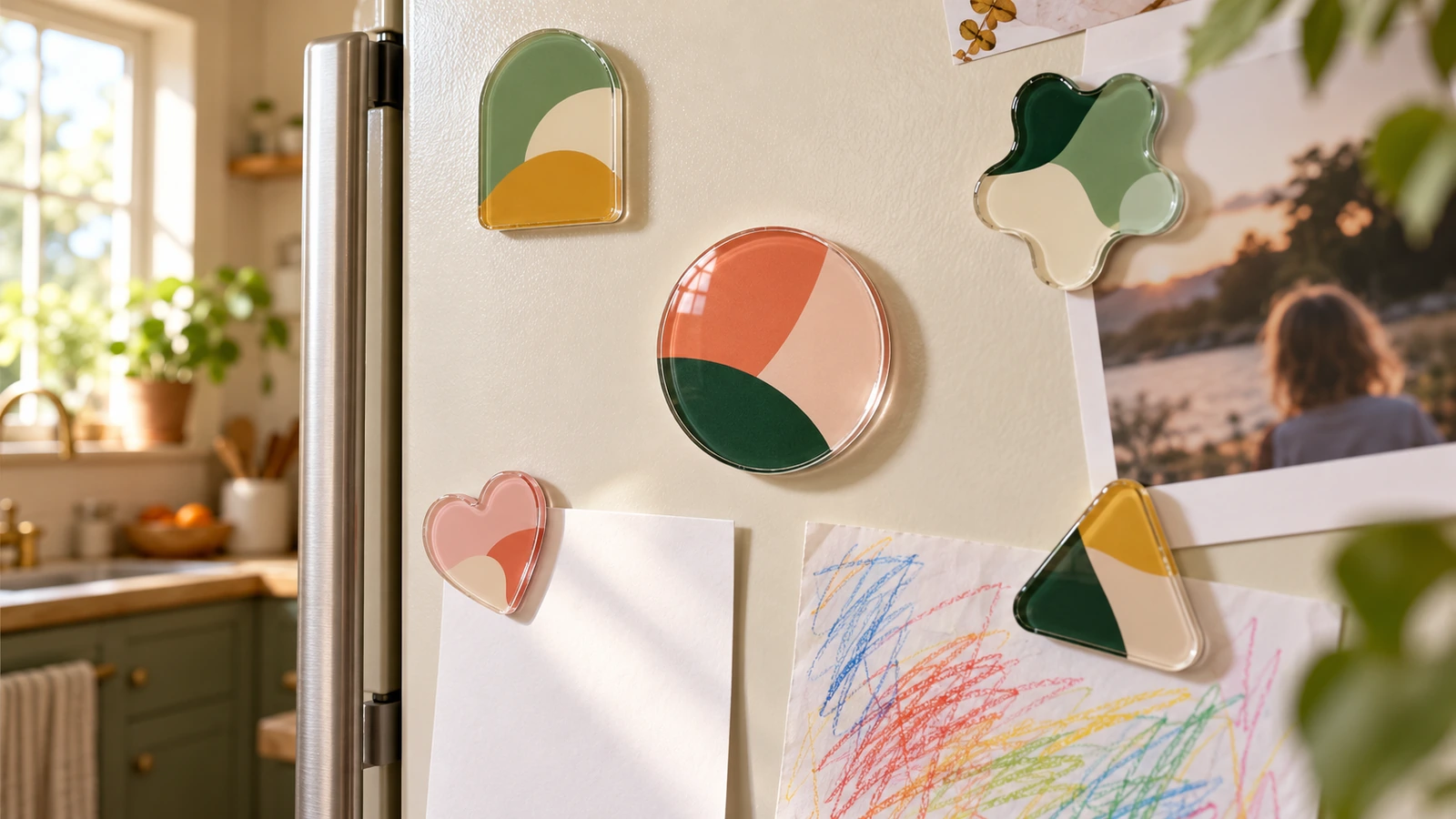
How to plan a custom magnets for fridge campaign in six steps
Step 1: Commit to one campaign goal
Each goal implies different content, a different distribution moment and a different metric. If you try to serve all of them, the magnet ends up serving none. Pick one:
- Top-of-mind recall. The aim is to be the name people remember when a need comes up months later. This suits real estate agents and insurance brokers.
- Repeat purchase. The aim is to shorten the path to the next order. This suits restaurants, takeaway and catering.
- Appointment and recall. The aim is to make booking or calling the after-hours line effortless. This suits clinics, dentists and veterinary practices.
- Attendance and rebooking. The aim is to put the date on the fridge and keep the brand there after the event. This suits event organizers, venues and schools.
- Urgent service. The aim is to be the number people find when something breaks. This suits plumbers, electricians and HVAC contractors.
Step 2: Decide what information belongs on the magnet
Build the face in three layers, ranked by importance. First comes a reason to keep, the element that makes the magnet useful or meaningful on its own. Examples include an emergency contact block, a seasonal home-maintenance checklist, a school-year calendar, delivery hours, or a photo memory from an event. Second comes one primary action, which should be a single phone number or a single short web address, never both given equal weight. Third comes the brand identity, meaning a logo and name sized so that it supports the action rather than competing with it.
Be just as deliberate about what you leave off. Prices, staff names, promotional deadlines and long URLs all date the magnet or clutter it, and a dated magnet gets thrown away. If an expiry date is part of the plan, as with a season-specific offer, budget for the next print run now. A practical test is whether someone standing across the kitchen can identify the one thing to do. If they can't, cut content. Getting legible dimensions and artwork right is a production question. Our custom acrylic fridge magnets page covers sizing for readability and artwork approval.
Step 3: Choose the distribution moment
A magnet handed over at a moment of trust arrives with context. A magnet that arrives cold is just another object to sort. Plan the hand-off around moments like these:
- Real estate: at closing or key handover, in open-house follow-up packs, or as an annual sphere-of-influence drop paired with a market update.
- Restaurants: inside delivery and takeaway bags for first-time customers, and stapled to catering invoices.
- Clinics: in new-patient welcome packets and with after-visit care instructions, especially when the magnet carries the after-hours line.
- Events: in registration kits as a save-the-date for the next edition, or mailed afterward as a thank-you keepsake.
- Home services: left on the job, ideally placed by the technician on the water heater, breaker panel or garage fridge, where the next emergency will happen.
Two practical checks apply here. Many modern stainless steel doors are not magnetic, so tell recipients about secondary surfaces such as filing cabinets, whiteboards, lockers or the garage fridge. If you mail a rigid magnet, plan protective packaging and confirm postage with your carrier before you settle the design.
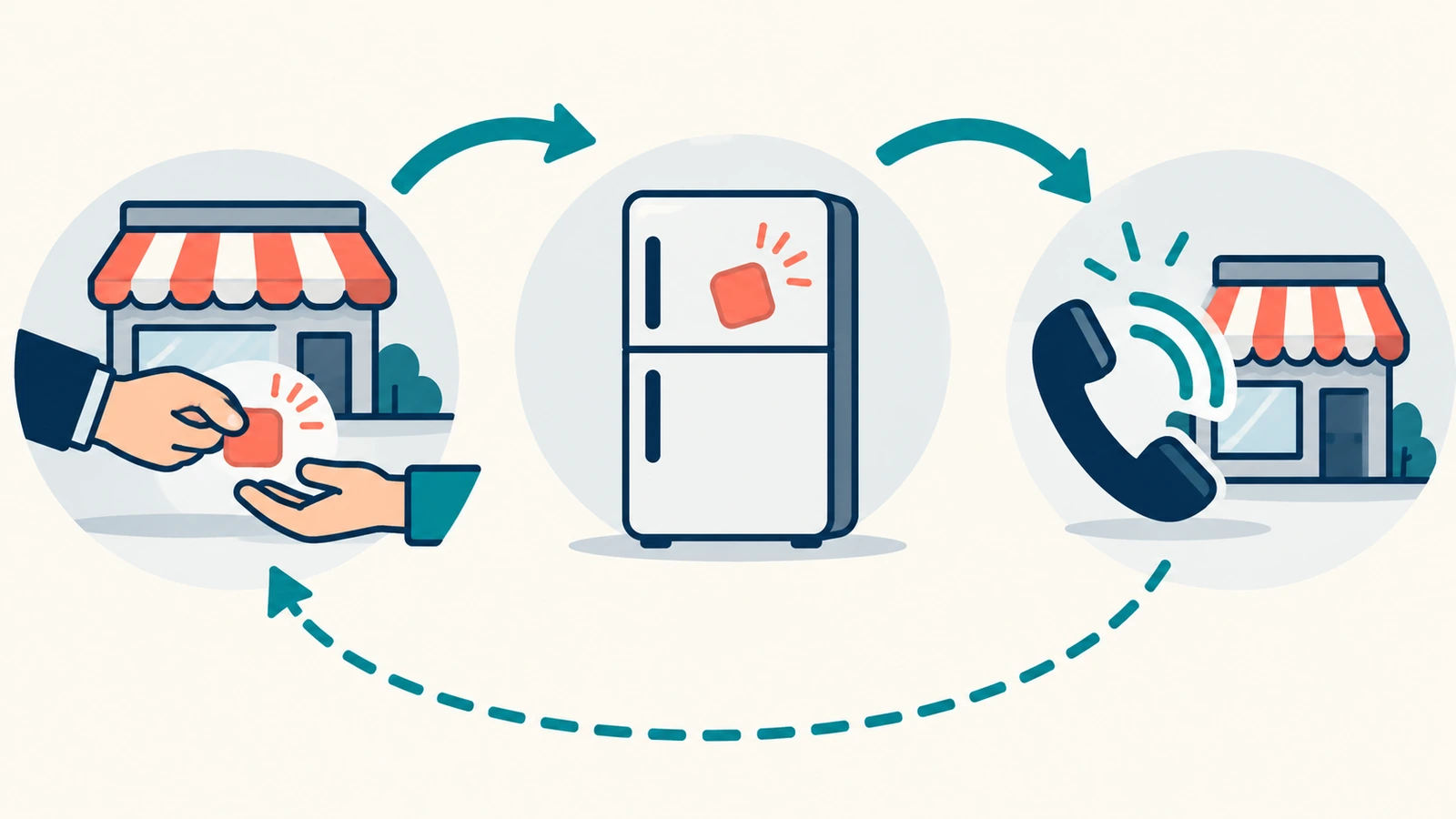
Step 4: Build measurement hooks before you print
Once the magnet is printed, attribution can't be added. Choose one hook for each magnet version:
- a dedicated tracking phone number or extension used nowhere else;
- a short vanity web address that redirects to a landing page with campaign tags;
- a QR code pointing to a redirect you control, so the destination can change without a reprint;
- a printed offer or referral code unique to the magnet;
- an intake question ("How did you find us?") with "fridge magnet" as an option your staff are trained to log.
To compare channels, neighborhoods or events, print separate versions with separate hooks. Ask your custom magnet printing services provider whether several designs can share one order and how each version is kept separate in packing, so that the version sent to one neighborhood doesn't end up in another.
Step 5: Measure response and retention
Keep a distribution log that records the date, quantity, version, channel and recipient segment. Then track four numbers:
- Response rate = attributed responses ÷ magnets distributed.
- Cost per response = total program cost (design, production, packaging, postage, staff time) ÷ attributed responses.
- Retention rate = recipients confirming the magnet is still displayed ÷ recipients surveyed.
- Time to first response = days between distribution and the first attributed contact, which shows whether the magnet works as an immediate trigger or a slow-burn reminder.
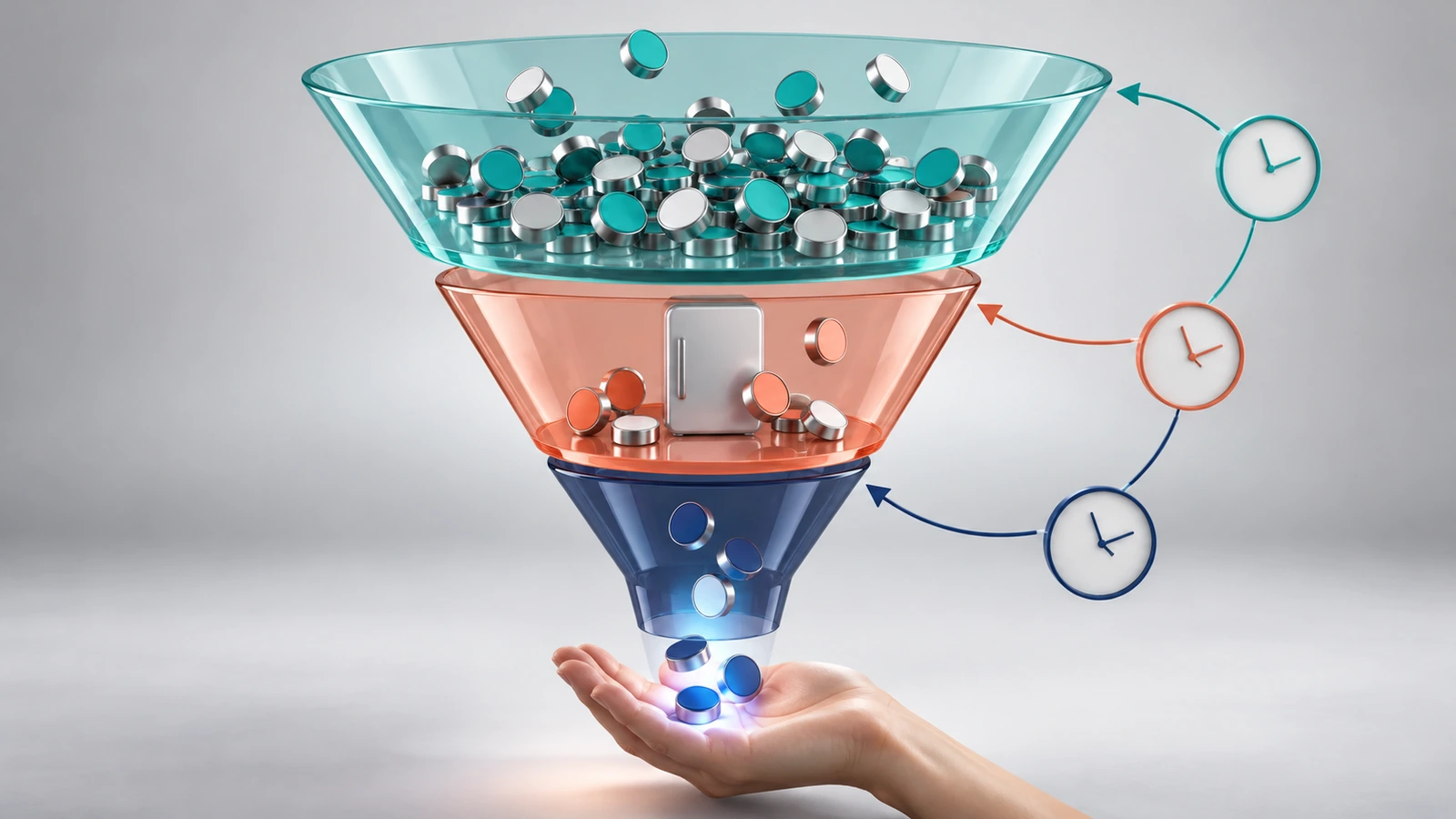
Check retention at fixed intervals such as 30, 90 and 180 days. Use touchpoints you already have: appointment reminders, follow-up calls, post-event surveys, or a small reward for customers who share a photo of the magnet in place. For a clean read on incremental impact, send magnets to half of a comparable list and compare response from both halves over the same window. Without that comparison, you are measuring customers who would have called anyway.
Step 6: Clear safety and compliance before you order
A magnet that ends up in a child's hand is a safety issue as well as a branding one. The US Safety Standard for Magnets (16 CFR Part 1262)[5] covers certain products designed, marketed or intended for entertainment, jewelry, mental stimulation or stress relief. It requires every loose or separable magnet that fits within the small-parts cylinder to have a flux index below 50 kG² mm². Whether a promotional magnet falls in scope depends on how it is designed and marketed. The CPSC's business guidance on magnets[6] explains how covered products must be certified.
Decorative fridge magnets are not exempt from enforcement. In September 2026 the CPSC announced a recall of about 4,640 bear-shaped refrigerator magnets[7] because they contained loose magnets that violated the mandatory standard. The standard itself was approved in 2022[8] to prevent deaths and serious injuries from high-powered magnet ingestion. Regulators elsewhere take the same view. Health Canada[9] warns that small, powerful magnets can cause severe internal injuries if swallowed.
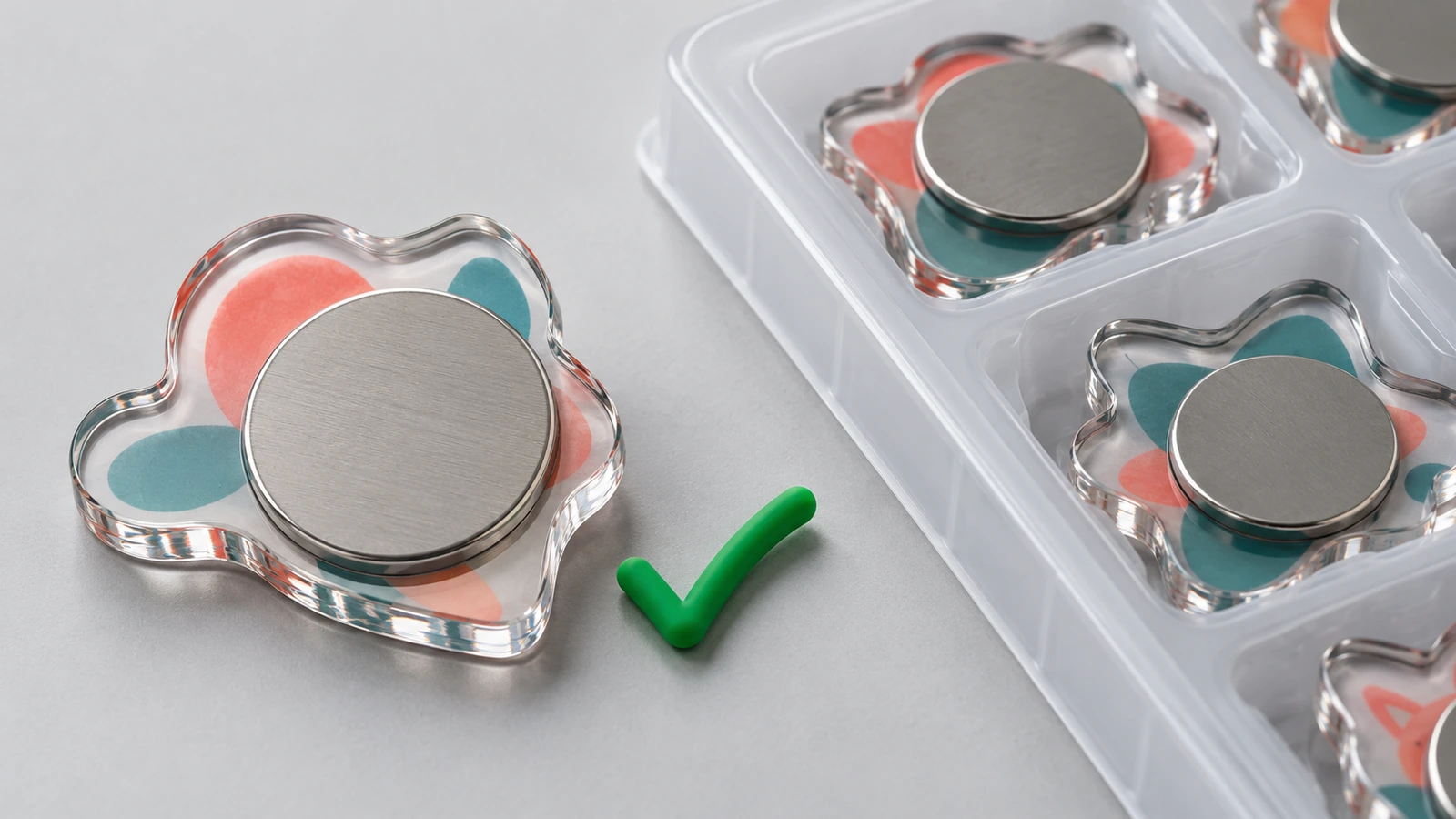
For pediatric clinics, schools and family events in particular, ask your supplier how the magnet is attached, request their compliance documentation, and don't hand out pieces with small magnets that could come loose. After the plan is settled, the production steps are documented on the product page: artwork approval, sampling and what a physical sample should prove.
Which use case suits which campaign goal?
This table puts the steps above side by side for the five most common business users. It shows what makes each magnet worth keeping and what number proves it worked.
| Business | Best-fit goal | Reason to keep | Primary action | Distribution moment | Main metric |
|---|---|---|---|---|---|
| Real estate agency | Top-of-mind recall | Seasonal home-care checklist or local emergency numbers | Agent's direct line | Closing, key handover, annual drop | Retention rate at 90 and 180 days; referral calls |
| Restaurant | Repeat purchase | Delivery hours and order line | Short ordering URL | First delivery or takeaway order | Repeat-order rate of magnet recipients vs. non-recipients |
| Clinic | Appointment and recall | After-hours and booking numbers | Booking line | New-patient packet, after-visit instructions | Bookings via tracked number; missed-appointment trend |
| Event organizer | Attendance and rebooking | Keepsake artwork plus next date | Registration URL | Check-in kit or post-event thank-you | Early registrations using the magnet code |
| Home services | Urgent service | "Who to call" emergency block | 24-hour phone line | Left on equipment after a job | Calls to the tracked line; time to first response |
The keepsake angle is often underrated, especially for events. China Daily reported that a museum sold over 80,000 souvenir fridge magnets in three months[10], with related merchandise sales exceeding 10 million yuan. People will queue for a magnet that carries a memory, so event organizers should design for that emotional value first and put the contact details second.
Magnets are not always the right leave-behind. This second comparison helps you decide when another format fits better:
| Leave-behind | Where it usually lives | Best when | Weak when | Measurement fit |
|---|---|---|---|---|
| Fridge magnet | Kitchen door, cabinets, equipment | The need recurs or arrives unpredictably | The offer expires in days; the audience's fridges aren't magnetic | Strong: tracked lines, codes, retention checks |
| Business card | Wallet, drawer, desk | One-to-one networking | The customer needs you months later at home | Weak unless paired with a unique code |
| Flyer or door hanger | Briefly on the counter, then recycling | Short, dated promotions | Long-term recall | Moderate: offer codes during a short window |
| Sticker | Laptops, bottles, equipment | Brand affinity with fans | Contact-driven services | Weak for response; good for visibility |
FAQ
FAQ: Do customized refrigerator magnets still work when so many fridges are stainless steel?
Many stainless steel refrigerator doors are not magnetic, so plan for this rather than hoping it won't affect your audience. Test a sample on the appliances common in your area. Then tell recipients about alternatives such as side panels, garage fridges, filing cabinets, whiteboards and lockers. Home-services brands avoid the problem by placing the magnet on equipment themselves.
FAQ: How long should a promotional magnet stay relevant?
Design for the shelf life you actually want. Evergreen content such as phone lines, emergency blocks and checklists can stay useful for years. Dated content such as prices, events and staff names expires on a schedule. If you include dated content, plan a refresh cycle in advance, for example an annual drop for real estate or a new edition for each event.
FAQ: Should I put a QR code on a promotional magnet?
Yes, but only if it points to a redirect you control. A QR code that leads to an expired campaign page will outlive your marketing and frustrate the people who scan it. Pair the code with a short readable web address for people who won't scan, and give each magnet version its own campaign tags so responses can be attributed.
FAQ: How many custom made fridge magnets should I order, and what do they cost?
Base the quantity on your distribution log plan, meaning how many hand-off moments you expect in the period until your next refresh, plus a reserve for replacements. Pricing and minimums depend on quantity, size, shape and finish, so request a quotation with your planned versions and quantities rather than relying on generic price lists.
FAQ: Are fridge magnets customized for family events or pediatric clinics safe to hand out?
Treat safety as a purchasing requirement. Small magnets that can come loose are a serious ingestion hazard, and US rules under 16 CFR Part 1262 set a flux-index limit for loose or separable magnets in covered products. Ask your supplier how the magnet is attached and for their compliance documentation. Avoid giving small, detachable pieces to young children.
FAQ: How do I prove the campaign's return to management?
Report cost per attributed response next to your other channels, and run a split test. Send magnets to half of a comparable list and compare response rates over the same period. Add retention checks at 30, 90 and 180 days so you can show both how long the magnet stays displayed and how often it prompts a response.
Key takeaways
- Custom fridge magnets are a growing, measurable promotional niche. — about USD 450 million today, projected to reach USD 700 million by 2033 (Source)
- The refrigerator is household territory, so magnets must earn their place. — household applications accounted for 61.3% of fridge magnet revenue in 2025 (Source)
- Promotional products are an established channel that deserves real tracking. — USD 26.78 billion in promotional products sales in 2024, with sustainable products at 13.8% (Source)
- Loose small magnets in covered products face a hard safety limit. — flux index must be below 50 kG² mm² (Source)
- Decorative fridge magnets do get recalled, so check compliance before you order. — about 4,640 units recalled in September 2026 (Source)
- Keepsake value drives retention, especially for events. — over 80,000 museum magnets sold in three months (Source)
Conclusion
A promotional magnet earns its place on the fridge when it does a job for the household and makes one action effortless for your business. The six steps above give you a repeatable process: commit to one goal, rank the content on the face, hand the magnet over at a moment of trust, build in attribution before printing, measure both response and retention, and clear safety requirements before you order. Use the comparison tables to match your business to the right goal, and recognize when a flyer or business card is the better tool.
Once your campaign plan is ready, share your goal, versions and distribution quantities with us. Our custom acrylic fridge magnets are UV-printed and laser-cut to your artwork, and we will prepare a quotation built around the finished piece your campaign needs.
Footnotes
- HTF Market Intelligence, "Global Custom Fridge Magnets Market Comprehensive Study 2026–2033" (2026). htfmarketintelligence.com ↩
- DataIntelo, "Fridge Magnets Market Research Report 2034," report CG-247095 (updated 2026). dataintelo.com ↩
- TechSci Research, "Fridge Magnets Market" report, citing Promotional Products Association International data for 2024 (2025). techsciresearch.com ↩
- International Organization for Standardization, ISO 7823-3:2021, "Plastics — Poly(methyl methacrylate) sheets — Part 3: Continuous cast sheets." iso.org ↩
- Electronic Code of Federal Regulations, 16 CFR Part 1262, "Safety Standard for Magnets" (effective October 21, 2022; current text accessed October 2026). ecfr.gov ↩
- U.S. Consumer Product Safety Commission, "Business Guidance: Magnets" (accessed October 2026). cpsc.gov ↩
- U.S. Consumer Product Safety Commission, recall of bear-shaped decorative refrigerator magnets, recall no. 26-760 (September 10, 2026). cpsc.gov ↩
- U.S. Consumer Product Safety Commission, "CPSC Approves New Federal Safety Standard for Magnets to Prevent Deaths and Serious Injuries from High-Powered Magnet Ingestion" (2022). cpsc.gov ↩
- Health Canada, "Danger to human health or safety assessment: products containing small powerful magnets" (accessed October 2026). canada.ca ↩
- China Daily, report on museum souvenir fridge magnet sales (November 2, 2024). chinadaily.com.cn ↩





The information below is required for social login
Sign In
Create New Account