


 Blog PDF for offline reading
Quick answer: A customized notebook program usually works at one of four depths: one shared logo design, a few version variants (by department or color), sequential numbering, or full per-recipient personalization with names. Each step deeper adds proofs, data handling and sorting. That tends to raise the per-unit cost, split quantities across versions, and extend lead time. Choose shared branding for events with unknown recipients, and keep names for known lists such as onboarding cohorts and executive gifts.
Why personalization decisions go wrong when they come last
Most teams start a notebook order with the cover artwork and treat names, numbers or department versions as a detail to add later. That order of decisions causes most failed programs. Once a recipient list is attached to the job, it becomes a data project as well as a print project. Someone has to own the spelling, the version codes and the packing order, and every late change goes back through the whole chain.
The stakes are real because branded merchandise is not a niche spend. Promotional products distributors in the U.S. sold $26.78 billion in 2024, up 2.63%[1], and notebooks compete for that budget against apparel, drinkware and tech. A misspelled name on a welcome gift is more than a reprint cost. It is the first thing a new employee notices about the company. Leftover named notebooks cannot go to anyone else, so overstock that would be harmless in a shared-logo run becomes waste.
The fix is to decide how deep the customization goes before design starts. Then pick where each personal element sits on the product, and schedule the data alongside the artwork. The rest of this guide covers that decision.
What the four customization levels mean
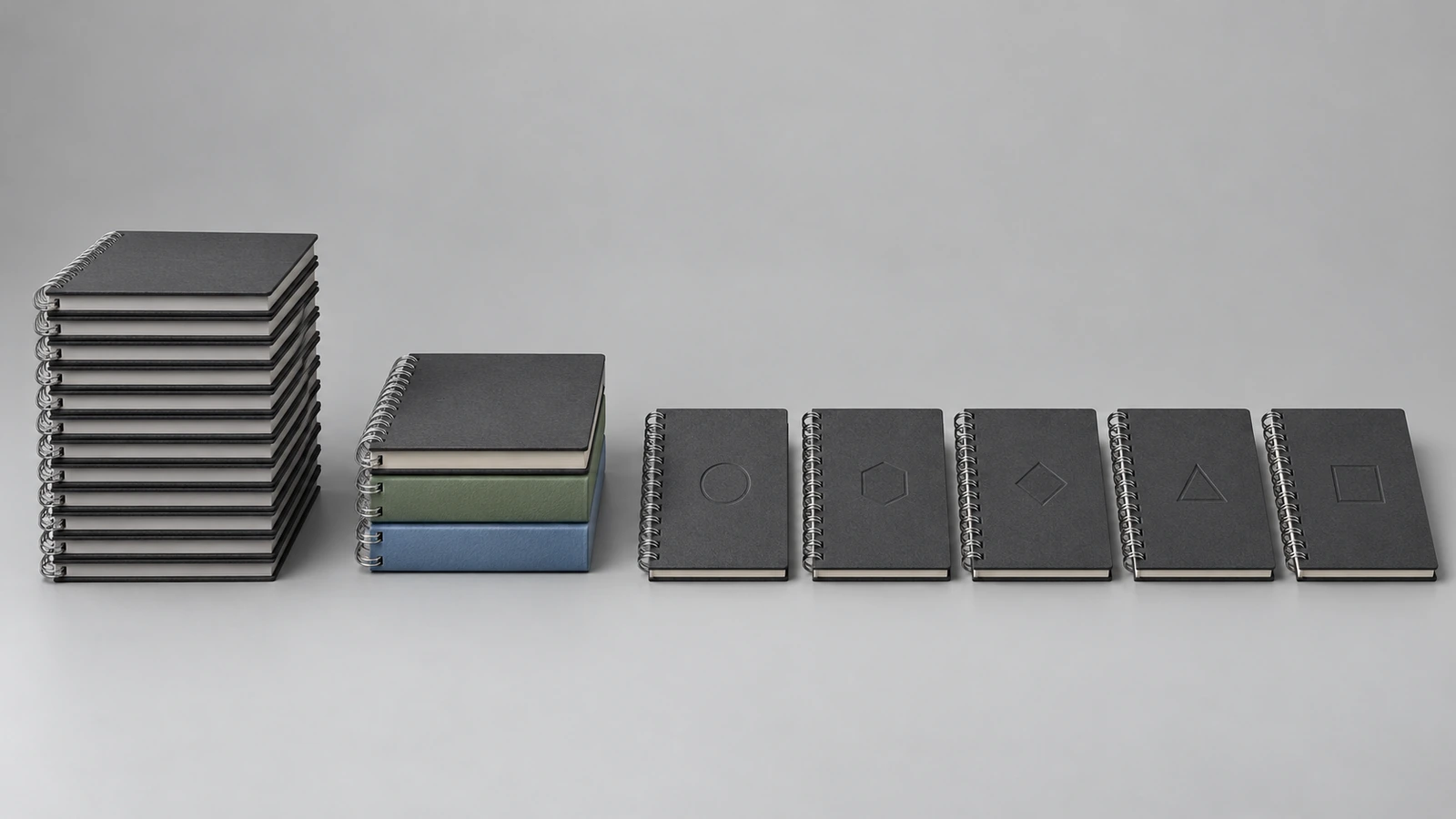
"Custom" covers a wide range. A notebook with a logo foil on the cover and a notebook with a different employee's name on each cover are both called custom designed notebooks, but they are different jobs. It helps to name the levels explicitly when briefing a supplier.
- Level 1: Shared branding. Every unit is identical: same cover art, same interior, same wire color. The supplier sets up once and runs the whole quantity.
- Level 2: Version variants. A small number of fixed designs within one order. Examples are three cover colors for three regions, or a different interior insert for sales and engineering. Each version is its own mini-job with its own approval.
- Level 3: Sequential numbering. Units are identical except for a unique number. Teams use this to track which notebook went to whom, or to issue controlled notebooks for a training cohort or confidential project.
- Level 4: Per-recipient personalization. Each unit carries information about one person, such as a name, a role or a personal message. Every unit is a variable-data item that must reach a specific recipient.
The binding format matters here. The paper notebook market is large, an estimated $76.28 billion in 2025, and spiral and Wire-O formats together took 30.41% of 2024 revenue[2]. That makes wire binding one of the most common platforms for branded programs. Twin-loop wire binding[3] closes metal loops through punched holes, and a closed metal spine cannot be reopened to swap a single page. For personalization, this means anything printed on the cover or interior pages has to be correct before binding. Correcting one name means cutting the wire and rebinding that unit. Elements added after binding, such as a sleeve, a belly band, a bookplate sticker or a name card in the kit, can be corrected without touching the notebook. If you need background on the binding itself, the custom wire-o notebooks page covers how double-loop binding differs from other formats.
How to plan a customized notebook program, step by step
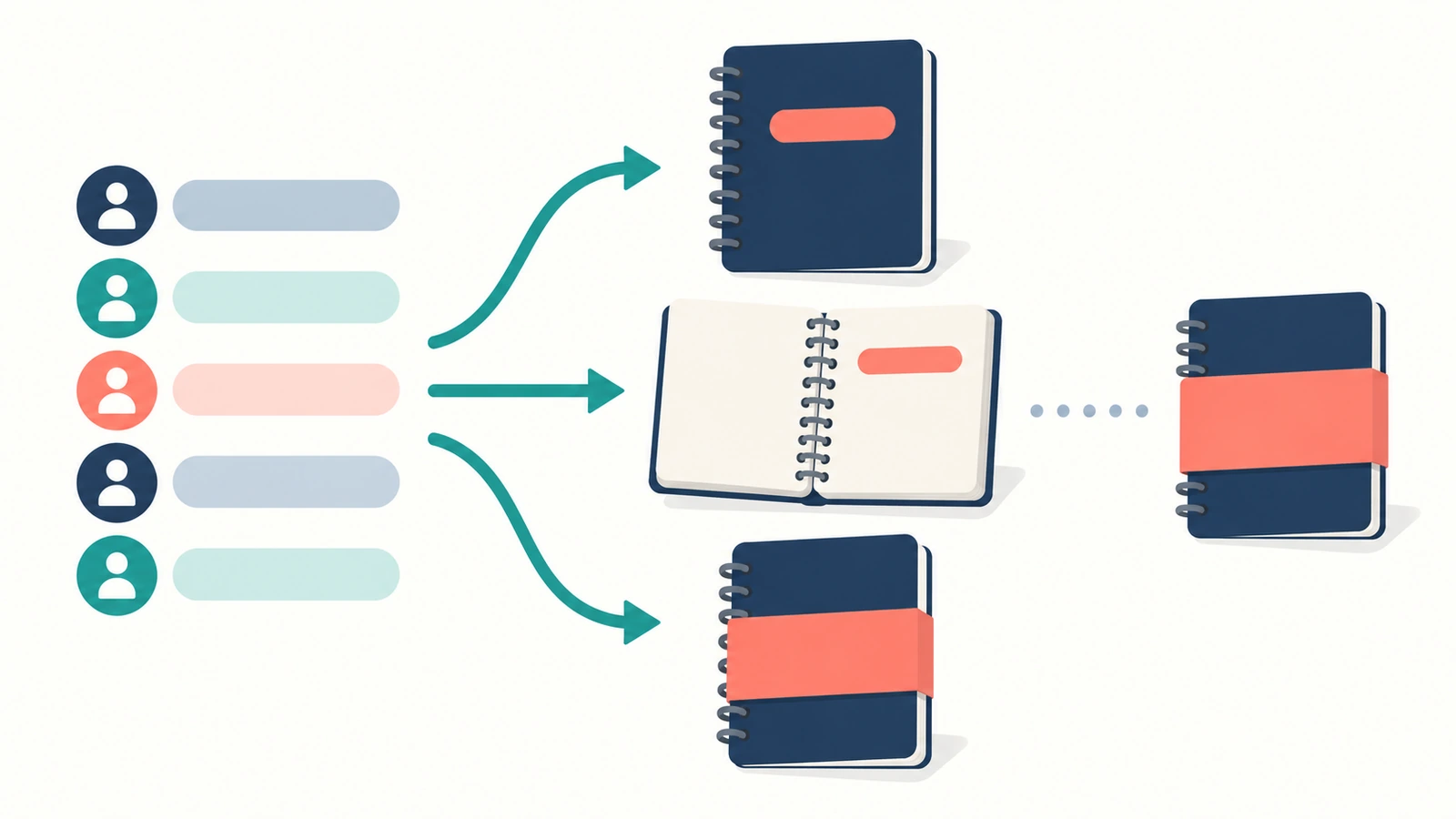
- Rate how certain your recipient list is. Ask how confident you are that the names you have today will be the names on the delivery date. A holiday gift list for current staff is high-certainty. An onboarding program for hires over the next two quarters is low-certainty. A trade show is effectively zero, because you do not know who will walk up. List certainty, more than budget, should set the ceiling on customization depth.
- Pick the deepest level the list can support. High-certainty lists can carry Level 4. Medium-certainty lists, such as department headcounts that are known but individual names that may change, fit Level 2 or 3. Unknown recipients get Level 1. Going deeper than the list supports means paying for reprints.
- Decide where each personal element lives. Use three zones: the cover (printed before binding, most visible, hardest to correct), an interior page (also before binding, visible only when opened), and post-bind elements (sleeve, band, sticker, card). A common hybrid uses a shared-branded notebook with a personalized sleeve or bookplate. It gives a personal look while production stays at Level 1.
- Build the data file before artwork is final. Use one row per physical unit. Columns should cover the text exactly as it will print, a version code, a sequence number if used, and a delivery group. Agree on a maximum character count that fits the layout zone, and test the longest real name against it. If your program spans countries, check that the chosen font contains every accented or non-Latin character on the list. Missing glyphs are a common failure that only appears at proof stage.
- Approve variants and data separately. Sign off one proof of each version, then a full list proof showing every name or number as it will print. If personalized units run on a different press process from the shared ones, ask whether the printer works to a cross-process color method such as G7, which targets visual consistency across print processes[4]. This keeps a named cover and an unnamed cover from looking like two different brands.
- Plan spares by type. In a Level 1 run, extra units cover anyone. In a Level 4 run, they cover nobody. Order a small reserve of unpersonalized units in the same design, and agree in advance how a single misprinted name will be replaced and how long that takes.
- Schedule backward from the hand-over date with a data freeze. Set one fixed date after which the list cannot change. Changes after the freeze go into a second batch or a post-bind element. They do not go into the main run.
How deep should a customized notebook go? Comparing minimums, cost and timing
The table shows directional effects only, because actual minimums, prices and lead times depend on process, quantity and supplier. Use it to frame questions in a quote request, not to set numbers.
| Level | Effect on minimum quantity | Effect on unit cost | Effect on lead time | Best-fit use case | Main risk |
|---|---|---|---|---|---|
| 1. Shared branding | One minimum for the whole order | Lowest; setup is spread across every unit | Shortest; one approval, one run | Trade shows, conferences, retail stock | Generic feel if the design is weak |
| 2. Version variants | May apply per version, so ask | Rises with each extra setup and smaller version quantities | Longer; one proof cycle per version | Regional teams, departments, multi-brand groups | Version counts drift from actual headcount |
| 3. Sequential numbering | Usually tied to the base run | Moderate; adds a variable-data step | Adds number-range checking and sorting | Training cohorts, controlled or tracked notebooks | Gaps or duplicates in the number register |
| 4. Per-recipient names | Base run minimum still applies, but every unit is unique | Highest; variable data, unit-level checks, sorted packing | Longest; data freeze, list proof, packing by recipient | Onboarding kits, executive and client gifts | Misspellings, late changes, unusable overs |
| Hybrid (Level 1 notebook + personalized sleeve or card) | Same as Level 1 | Level 1 plus the add-on | Notebook runs early; personal layer can follow | Rolling onboarding, gifts with uncertain lists | Add-on can look detached if styled separately |
Process choice matters as much as level. Decoration methods that need a physical die or plate per design scale poorly when every unit is different. Digital and other die-free methods handle variable data more easily. When you request quotes for a personalized order, ask which process the supplier would use for the variable element and whether that process matches the finish on the shared parts of the cover.
Numbering has one consideration names do not. If numbered notebooks will serve as records, for example in a regulated training log, paper longevity matters. ISO 9706 sets permanence requirements for unprinted document paper[5]; its 1994 edition was withdrawn in 2025 and revised as ISO 9706:2025. It is worth asking whether the text stock has been tested against it, and to which edition. A promotional notebook does not need this. A record notebook might.
Matching the level to gifting, onboarding and events

Onboarding. This is where personalization pays off most, and also where it is hardest to schedule. In PPAI consumer research, 62% of respondents said they felt valued when an employer gave them a promotional product, and 53% felt accepted into the team[6]. Hiring is continuous, though, and a batch of named covers is out of date as soon as a start date moves. The usual working model is a Level 1 or Level 2 notebook held in stock, with each new hire's name on a sleeve, band or card added in the week they start. Department colors (Level 2) let HR personalize the notebook's look by team without tracking individual names through production.
Executive and client gifts. The list is short, known and stable, so Level 4 is practical. The quantity is small, so the higher per-unit effort matters less to the total budget. Put the name where it will be seen without looking like a label. A quiet placement on the cover or a dedicated first page usually reads as more considered than a large name across the front.
Conferences. These fall in between. If registration closes well before the event, attendee names are possible but carry a no-show risk: named units for absent attendees are waste. Many organizers use Level 1 for the general pack and save personalization for speakers and VIP guests, whose lists are confirmed earlier.
Trade shows and open events. These are Level 1 because recipients are unknown. Spend the budget on making the shared design something people keep. A well-made notebook that looks like a product instead of a giveaway does more than any variable element could.
Training programs. Numbering (Level 3) fits here. Issuing notebook number 14 to participant 14 makes collection, audit or reissue straightforward, and it avoids misspelled names.
A customised notebook for retail or for sale by a creator is a separate case: personalization is usually done by the buyer, not at production. Building notebooks customizable after purchase, with a blank name plate or a writable first page, often beats printing names at all.
FAQ
FAQ: Can one order mix shared branding with named units?
Usually yes. The common setup is a shared base design for the full quantity with a variable element on a subset, such as names for VIPs and plain covers for everyone else. Ask the supplier whether the named and unnamed units run on the same process, and approve one of each side by side so the brand looks consistent.
FAQ: What is the most cost-efficient way to personalize notebook gifts?
Keep the notebook itself at shared branding and personalize something added after binding: a sleeve, belly band, bookplate or name card. The notebook gets the efficiency of a single run, and a wrong or changed name only means replacing a small paper item instead of rebinding a wire spine. Request a quote for both options and compare the totals.
FAQ: How should we handle late hires or name changes?
Set a data freeze date and treat anything after it as a second batch or a post-bind item. Keep a small stock of unpersonalized units in the same design so a late joiner never goes without. Do not reopen the main production run for single changes.
FAQ: Do department variants need separate approvals?
Yes. Each version is effectively its own design, so approve a proof of every one. Keep the number of versions small. Each extra variant adds an approval cycle and splits the quantity, which can affect minimums depending on how the supplier counts them.
FAQ: Does personalization change sourcing or safety paperwork?
It can. If the program makes a forest-certification claim, every variant must be produced and invoiced under the supplier's FSC chain-of-custody certification[7], not only the main version. If names are aimed at children, as in a school program, the notebooks may count as children's products, where U.S. rules cap total lead in accessible parts at 100 ppm[8]. The metal wire is one of those parts. Document requirements are covered on the wire-o notebook product page.
FAQ: What happens to named notebooks that are never handed out?
They generally cannot be reused, which is the strongest reason to keep overs unpersonalized. If they must be disposed of, many U.S. recycling programs ask users to remove the metal spiral or coil before recycling the paper[9]. That is worth knowing if the program makes sustainability claims.
Key takeaways
- Branded merchandise is a large channel where notebooks compete with other items for budget — $26.78 billion in U.S. distributor sales in 2024, up 2.63% (Source)
- Employer gifts affect how new staff feel, which makes onboarding the strongest case for personalization — 62% felt valued and 53% felt accepted into the team (Source)
- Wire binding is a mainstream platform, so its permanence must be planned around — spiral and Wire-O took 30.41% of 2024 paper notebook revenue (Source)
- Children's programs raise the compliance bar for personalized units — 100 ppm total lead limit for accessible parts of children's products (Source)
- Numbered record notebooks may need permanent paper — ISO 9706 (1994 edition) was withdrawn in 2025 and revised as ISO 9706:2025 (Source)
Conclusion
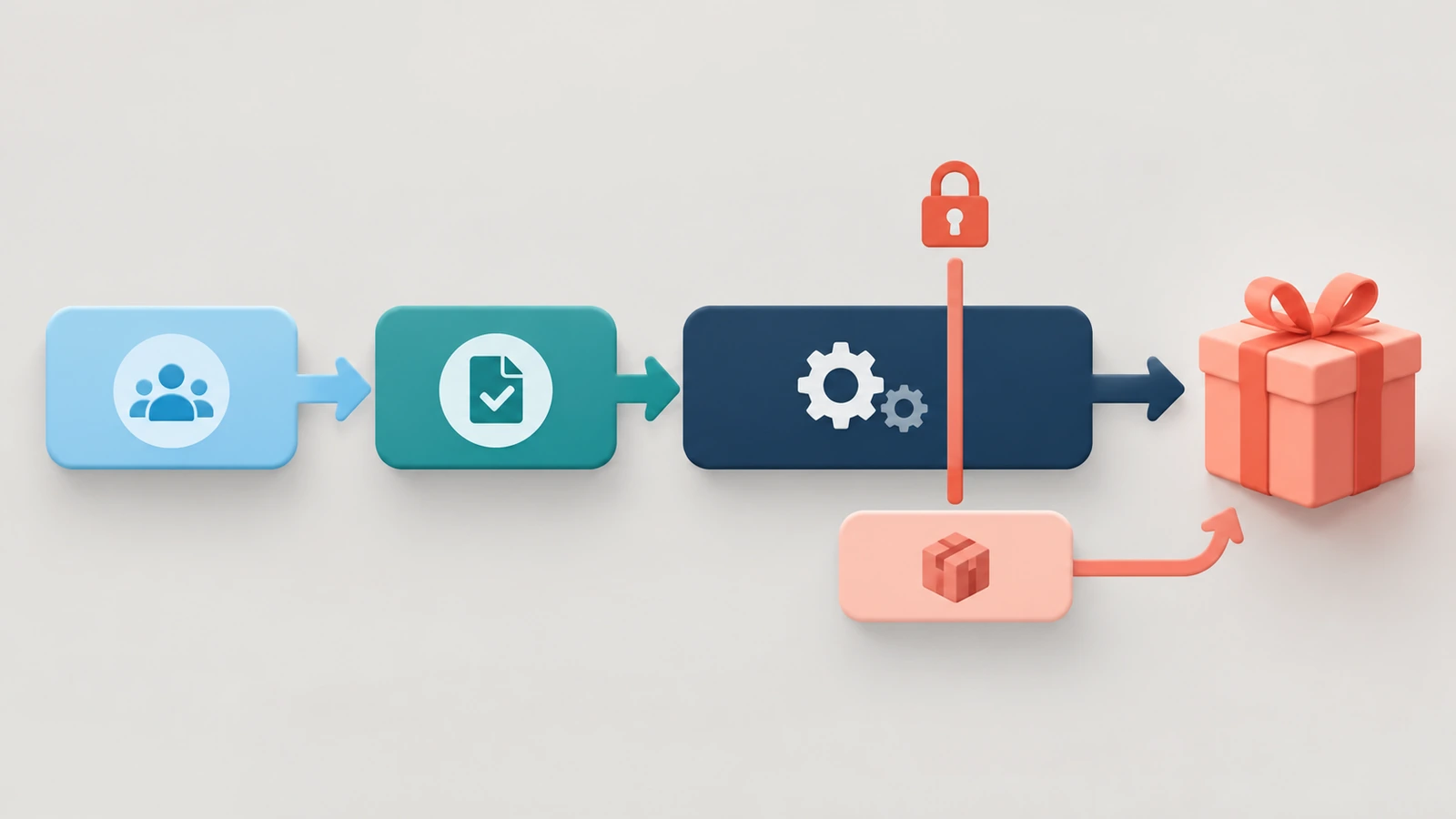
The best customized notebook program is not the most personalized one. It is the one whose customization depth matches how certain the recipient list is. Use shared branding when you do not know who will receive the notebook. Use variants or numbering when you know the groups but not the individuals. Use names only when the list is short, stable and frozen in time. Where the list keeps changing, put the personal layer on something added after binding, so the wire spine never has to be cut.
When you are ready to price a program, bring the recipient count, the number of versions, the data freeze date and the hand-over date. Those four inputs shape the quote more than the artwork. You can start with the custom wire-o notebooks range and request a quote for the level that fits your program.
Sources
- PPAI, "PPAI Sales Volume Estimate: Modest Growth in 2024, but Reasons for Optimism Remain," published 2025-02-20. ppai.org ↩
- Mordor Intelligence, "Paper Notebook Market Size & Share Analysis (2025–2030)," updated January 2026. mordorintelligence.com ↩
- Wikipedia, "Wire binding," accessed October 2026. en.wikipedia.org ↩
- PRINTING United Alliance, "G7 Certifications," accessed October 2026. printing.org ↩
- ISO, "ISO 9706:1994 Information and documentation — Paper for documents — Requirements for permanence," withdrawn 2025-05-29 and revised by ISO 9706:2025. iso.org ↩
- PPAI Research, "Consumers Covet Promo During Economic Hardships," published 2023-03-13; survey fielded February 2023, n>480. ppai.org ↩
- Forest Stewardship Council, "Chain of Custody," accessed October 2026. fsc.org ↩
- U.S. Consumer Product Safety Commission, "Total Lead Content," accessed October 2026. cpsc.gov ↩
- City of San José, "San José Recycles: Notebooks," accessed October 2026. sanjoserecycles.org ↩












The information below is required for social login
Sign In
Create New Account