We use cookies to enable our websites to remember information, to help some website functionalities to work properly, to understand how you interact with and use our websites and to display you content and ads that are relevant and engaging for you.
By clicking Accept All you consent to the use of these cookie.
The store will not work correctly when cookies are disabled.
Quick answer: To run an engraved leather journal programme for many recipients, start by freezing a clean name list. Use laser engraving when every name is different, approve a proof that shows every single name, and give each journal a recipient ID that stays with it from engraving through packing to delivery.
Last updated: October 20, 2026
An engraved leather journal with one person's name on the cover is a different job from a batch of logo notebooks. Every piece is unique, so every piece can also be wrong in its own way. This guide is for corporate gifting, HR and event teams who need hundreds of personalised leather notebooks to arrive correct, on time and with the right person. It covers how to treat the name list as production data, when to choose laser engraving or debossing for individual names, how to proof variable text, and how to keep each piece matched to its recipient after it leaves the engraving table.
Why per-name personalisation goes wrong, and why it matters
The problem: a logo run has one artwork file. A name run has as many artwork files as recipients. Each name is typed by a person, often copied from an HR system or event registration tool, and then passed between several spreadsheets before it reaches the engraver. Every hand-off can introduce an autocorrected surname, a lost accent or a duplicated row.
The pain: a misspelled name on a gift does more damage than a blank cover. The recipient sees it straight away, and it implies the sender did not check. Fixing it means one unit gets reprinted on its own while the rest of the batch has already shipped. The stakes are rising because gift budgets are moving toward fewer, better items. PPAI's estimate of U.S. distributor sales put promotional products at $27.1 billion, up 1.3%[1]. The association's economist summarised the shift this way: "Buyers are choosing better products, not just cheaper ones." Buyer research from ASI also describes the 35–44 age group as especially brand-conscious[2]. That age group is the one most likely to be approving your gift budget.
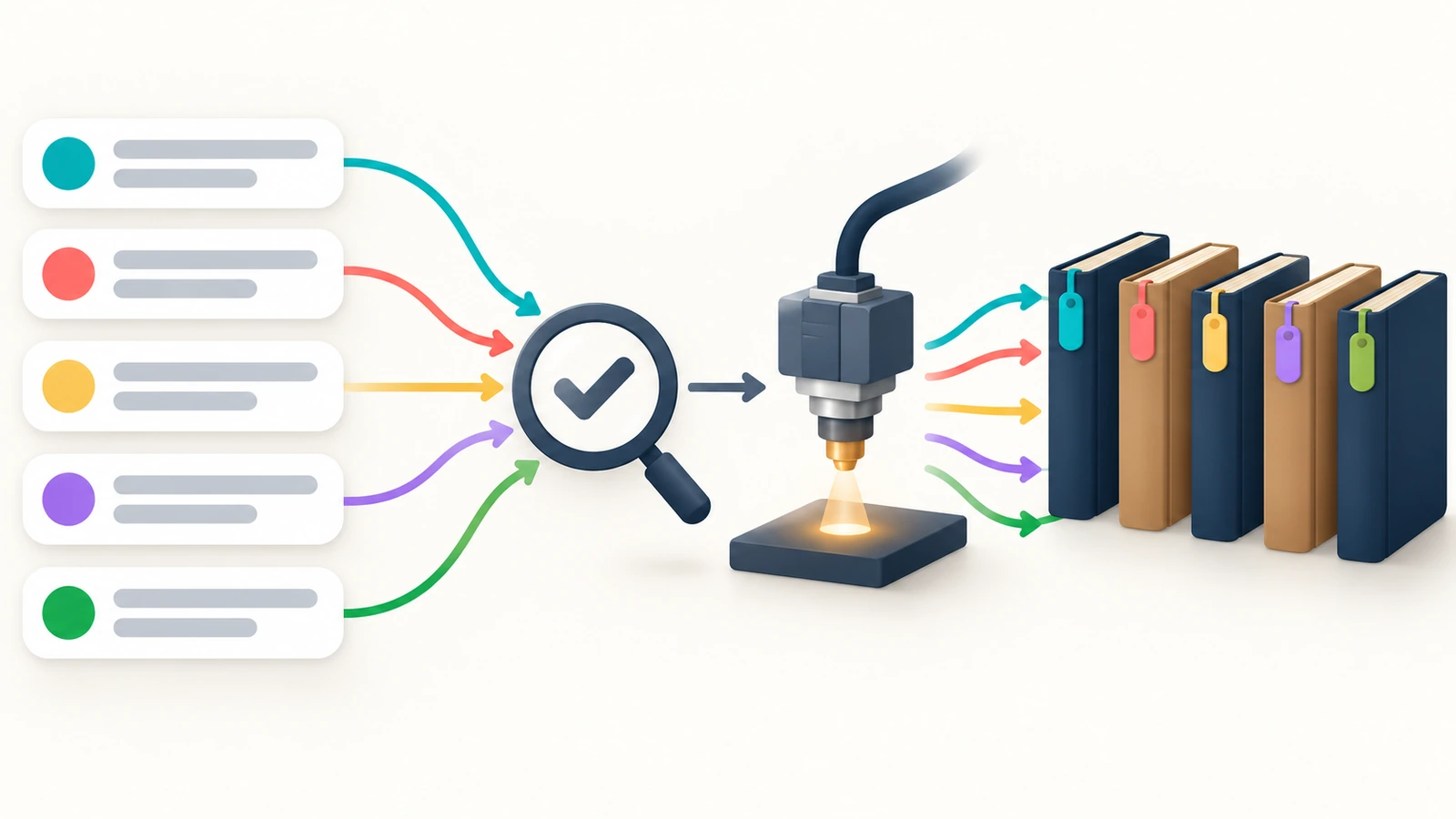
The solution: treat the programme as a small data-to-manufacturing pipeline with a fixed name list, defined text rules, a method suited to variable text, a proof of every name, and a recipient ID that travels with each journal. The rest of this article walks through that pipeline. Personalisation is now a large part of what branded merchandise is expected to do, in a U.S. market PPAI and Oxford Economics size at $174 billion in branded merchandise spending[3]. Of that, promotional products account for roughly $50 billion, according to the accompanying infographic[4].
What does "engraved leather journal" mean in corporate gifting?
Buyers use the term loosely. Suppliers interpret it precisely, so agree on the words before you request a quote:
Engraved usually means laser engraved. A focused beam removes or alters the cover's surface to leave a mark, and no physical tool is needed. That is why it suits text that changes on every piece.
Debossed (blind debossed) means a heated die is pressed into the cover to leave a recessed impression with no colour added.
Foil debossed or hot-foil stamped means the same pressing action with a metallic or coloured foil transferred into the impression. "Gold engraved names" on gift listings are often actually foil stamped.
Embossed means a raised impression. This is rare for names on journal covers because it needs a matched pair of dies.
A monogrammed leather journal carries initials, typically two or three characters, instead of a full name. That makes it the easiest variable format to keep consistent, because every monogram fits the same space. A personalised leather notepad or personalised leather notebook may carry a full name, a name plus job title, or a short message. Each extra line multiplies the proofing work.
"Leather" in corporate gifting often means PU (polyurethane-coated) leather, not hide. Say so plainly on the gift card or in the internal brief. Recipients who discover the material on their own tend to feel misled, and buyer reviews of synthetic covers repeatedly mention that feeling. If you ship into the EU, ask about solvent residues as well: SATRA notes that DMF, a solvent historically used in PU coating, is a REACH substance of very high concern, with disclosure duties above 0.1% (w/w)[5]. Cover construction, finishes and compliance paperwork are covered on our custom PU leather notebooks page, so this guide stays focused on the personalisation workflow.
Why the cover material decides whether the name lasts
The failure mode is equally well documented. Users in notebook communities report that once a PU cover starts flaking, "there's not really any way to reverse it"[8]. Corners and edges usually fail first. For personalisation this has two practical consequences. First, place names away from the spine hinge and corners. Second, ask for an engraving test on the exact cover stock and colour you will receive, not on a generic swatch.
How do you plan an engraved leather journal run step by step?
Step 1: Build the name list as production data, not a mailing list
The engraver works only from what is in the file, so the file needs one row per physical journal and one column per decision. A structure that holds up in production:
Column
Purpose
Common error it prevents
Recipient ID
Unique key that follows the journal to delivery
Two people with the same name receiving each other's gift
Line 1 (exactly as engraved)
The literal text, including capitalisation
The engraver "correcting" a deliberate lowercase or spacing
Line 2 (optional)
Title, department or initials
Mixing titles into the name field
Cover colour
Per-recipient colour if colours are mixed
Right name on the wrong colour
Destination group
Office, event or ship-to batch
Correct journal sent to the wrong site
Change log / version
Records every edit after the list is frozen
Approving an old version of the list
Before freezing the list, clean it for the errors spreadsheets introduce without anyone noticing. Look for trailing spaces, autocorrected names (for example "Sean" changed to "Seen"), accents stripped during CSV export (José, Zoë, Søren), names forced to all caps by the source system, and duplicates. Ask each recipient, or their manager, whether they want a preferred name instead of their legal name. Keep personal data to a minimum: the engraving file needs the name and an ID, not a home address or date of birth.
Step 2: Set text rules before anyone designs a proof
Variable text needs fixed rules, or every unusual name becomes a one-off decision. Agree on the following with your supplier:
Font and character support: confirm the font contains every character in your list. Non-Latin scripts and some accented letters are missing from many display fonts.
Maximum characters per line: base this on the engraving area for your cover size, measured on the physical cover.
Long-name rule: decide in advance whether long names scale down, wrap to two lines or switch to initials, so the longest name on the list does not distort the whole layout.
Placement anchor: fix the name position relative to the cover edge or the company logo, so a stack of journals looks consistent side by side.
Step 3: Choose the method that matches how variable your text is
Fully variable full names favour laser engraving. A fixed logo plus a short monogram can use debossing for the logo and laser or foil for the initials. The comparison below sets out the trade-offs.
Step 4: Proof every name, then physically test the extremes
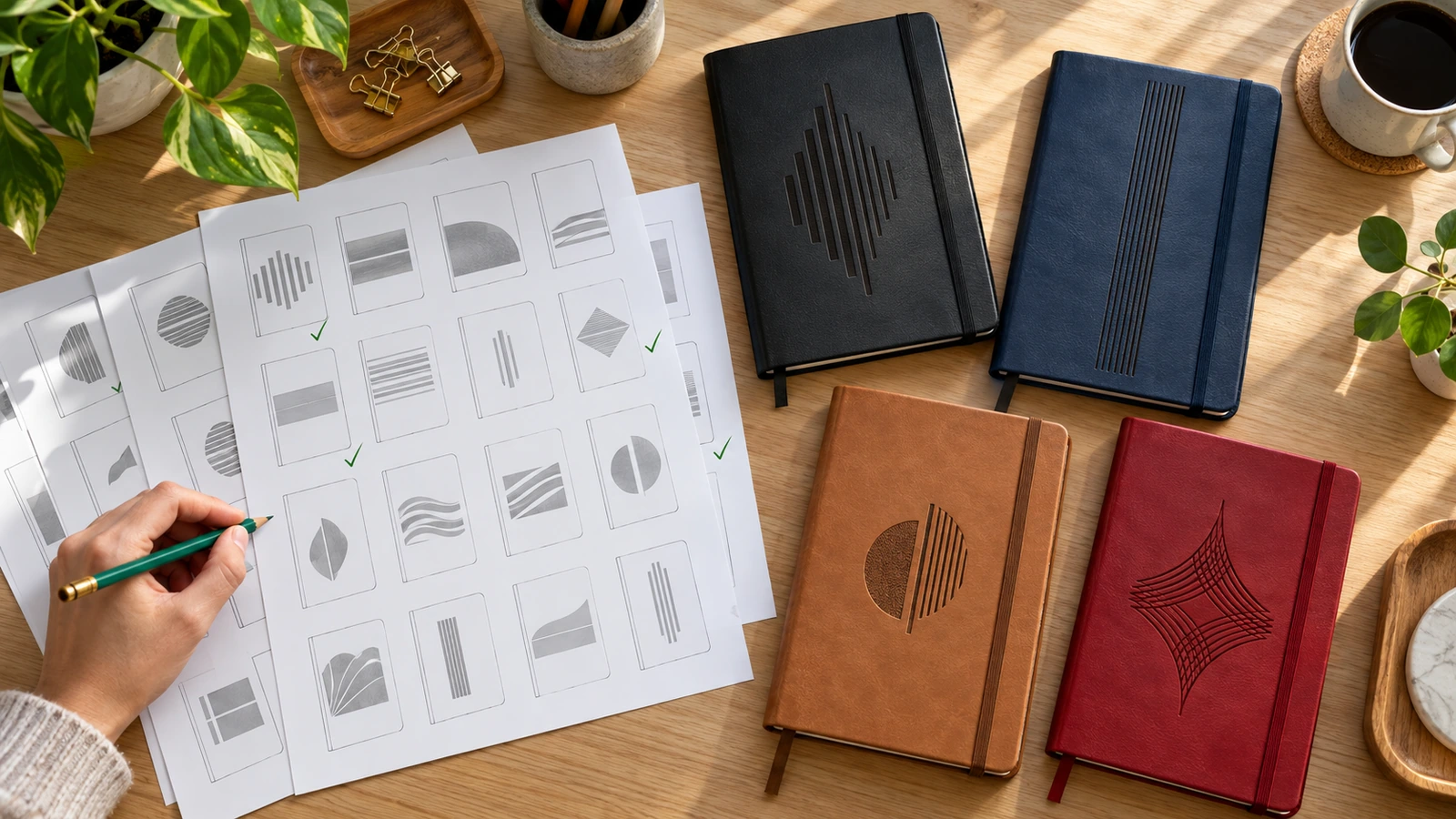
A single sample with one placeholder name does not prove a variable run. Ask for a proof sheet that renders every row of the frozen list in the final font and position, labelled with the recipient ID and the list version. One person should check it against the source system, line by line, then sign off quoting the version number.
Then request physical test pieces that cover the edge cases:
the longest name on the list
the shortest name
a name with accents or special characters
one piece in each cover colour
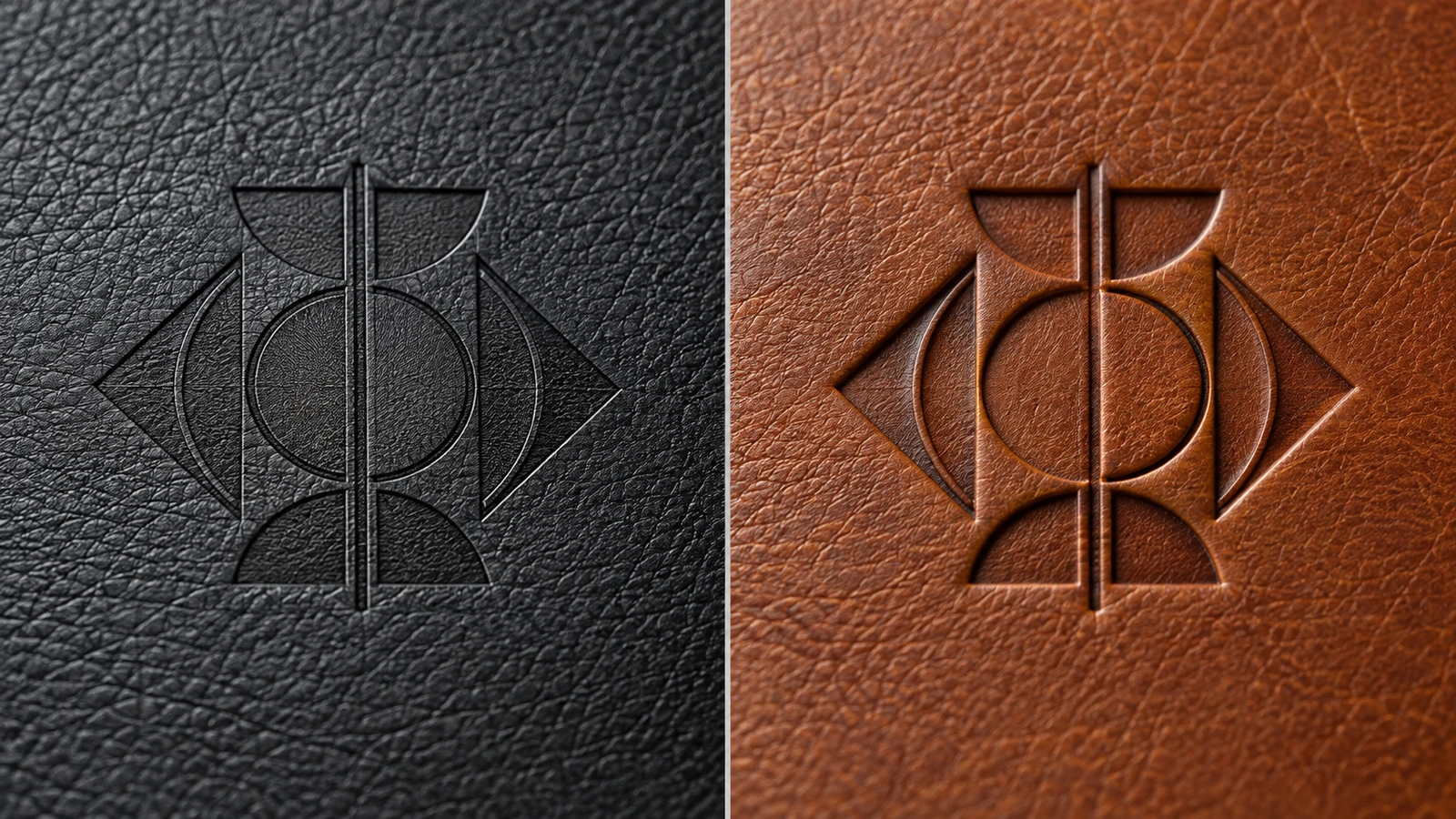
Dark and light PU respond differently to a laser, so a mark that reads clearly on black may look faint on tan. What a general product sample should confirm, such as paper, binding and closure, is covered on the PU leather notebook product page. Here, the test pieces exist only to prove the text.
Step 5: Engrave in a controlled sequence
Ask the supplier to sort the engraving queue by destination group and then by recipient ID, not alphabetically by name. This keeps each shipment's journals together as they come off the machine. Run a first-piece check at the start of each cover colour and after any machine setting change. Any piece that fails inspection should be set aside, logged against its ID and re-engraved on a fresh cover. Never sand or "touch up" a PU surface, because the damage will show.
Step 6: Keep each journal matched to its recipient through packing
Mix-ups are most likely during packing, after engraving. Most of them can be prevented:
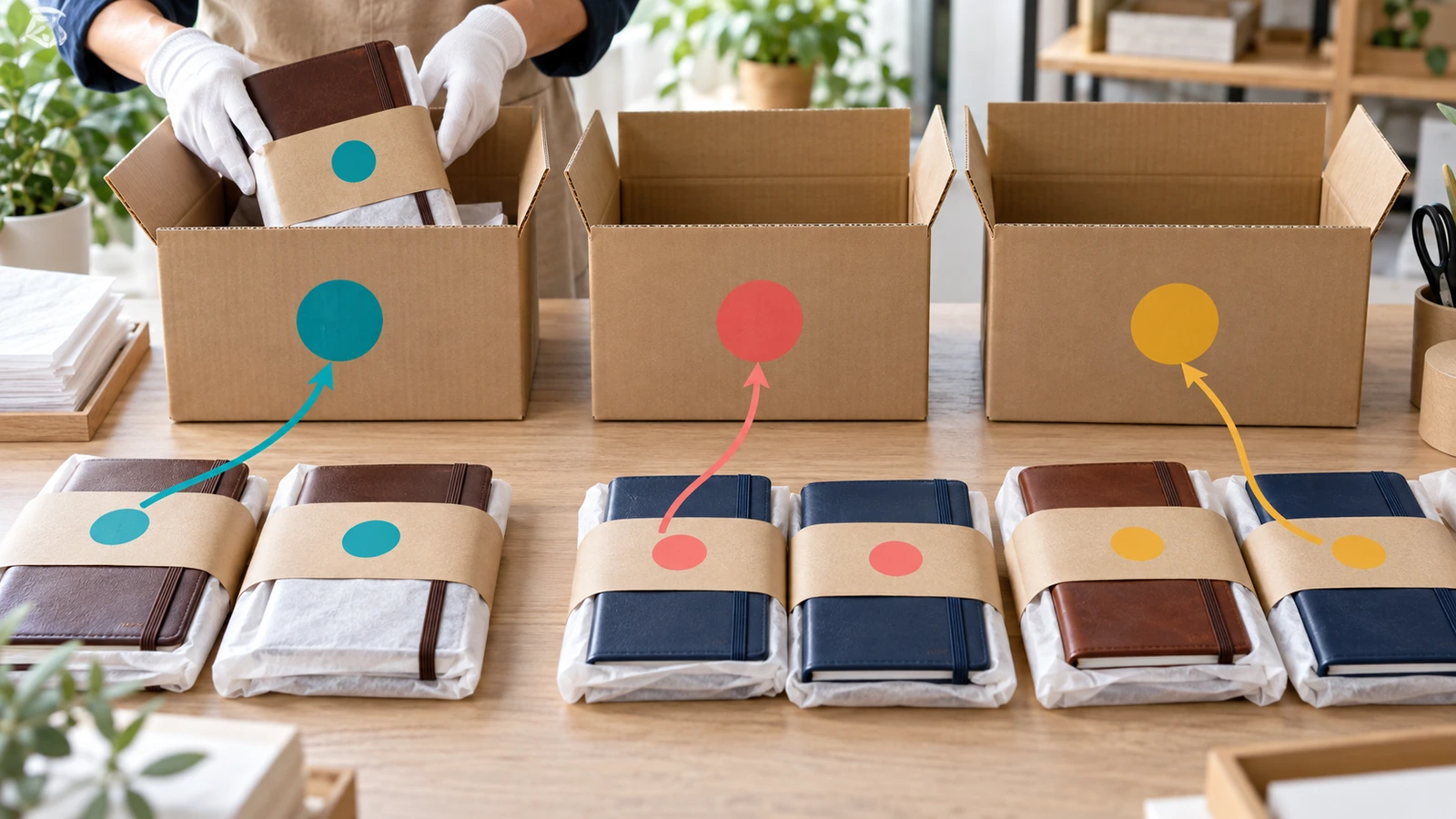
Label by ID, not only by name. Put the recipient ID on the sleeve, belly band or gift-box label. Packers match the ID to the packing list, which also avoids exposing full names on outer cartons.
Protect the engraved area. Place tissue or a paper interleaf over the cover, and keep elastic closures away from the name. One reviewer found a tight elastic band "left a mark on the cover where it dug into the material"[9]. Pressure marks on PU can last as long as the engraving.
One packing list per carton. List every recipient ID in the carton so the receiving office can check contents before distributing them.
Photograph before sealing. A top-down photo of each open carton gives you evidence if a piece is later reported missing or wrong.
Step 7: Plan for late changes and new joiners
Names will keep changing after the list is frozen. People join, leave or ask for a correction. Decide in advance how these are handled:
Change cut-off: set a date after which edits go into a separate top-up batch.
Spare blanks: keep a small reserve of unengraved journals in each colour.
Archived settings: store the final engraving file and font settings so a later piece matches the original exactly.
Because laser engraving needs no new tooling, a top-up of a few names is practical in a way a debossed run is not. For the delivery logistics of the main order, a one-line reference to the product page's packaging and reorder guidance is usually enough for internal planning.
Laser engraving vs debossing: which suits individual names on a leather journal?
Factor
Laser engraving
Blind debossing
Foil debossing / hot-foil stamping
How each name is created
Digital file per row; no tooling
Needs a die or set type for each name
Needs a die or set type for each name, plus foil
Fit for fully variable full names
Strong
Weak: setup repeats for every name
Moderate: common for small runs using hand-set type
Readability on dark PU
Depends on the PU formulation; test it
Subtle tone-on-tone, best viewed at an angle
High contrast
Readability on light PU
Depends on the PU formulation; test it
Subtle; may nearly disappear
High contrast if foil colour is chosen well
Feel
Mostly flat, slight texture change
Recessed, tactile
Recessed with a metallic or coloured fill
Late additions
Simple: rerun the file
Each new name needs new setup
Each new name needs new setup
Best use
Full names, names plus titles, mixed lists
Shared logo on every cover
Logo plus monogram, or small premium name runs
Many corporate programmes combine methods. The company logo is debossed or foil stamped on every cover as a fixed run, and each recipient's name is laser engraved afterwards as a variable run. This keeps the tooling cost on the part that does not change and puts the flexibility where you need it. If the name must be gold, ask whether the supplier can foil stamp variable names and how they handle setup. Do not assume "gold engraving" is a laser process.
FAQ
FAQ: Can PU leather be laser engraved as well as genuine leather?
Yes. The result is different, though. Genuine leather usually darkens where the laser hits, while PU reacts according to its top coat and base colour, so contrast varies by product. Always ask for a test piece on the exact cover colour you are ordering.
FAQ: Should we engrave full names or monograms?
Monograms fit the same space every time and rarely need layout exceptions, so they reduce proofing effort. Full names feel more personal but need a long-name rule and stricter checking. A monogrammed leather journal is the lower-risk choice for very large lists or tight deadlines.
FAQ: How do we handle names in non-Latin scripts?
Confirm before proofing that the chosen font includes the required characters. Export the list in UTF-8 so characters survive the file transfer. Then include at least one such name in the physical test pieces.
FAQ: What if someone's name changes after we approve the proof?
Log the change against the recipient ID and move that piece to a top-up batch rather than editing the approved list. This keeps your sign-off record accurate. Laser engraving makes single-name reruns straightforward if the original settings are archived.
FAQ: Is it possible to deboss individual names?
Yes, but every name needs its own setup. That makes it slower and more expensive per piece for long, varied lists. It works best for small premium runs or when a shared logo is debossed and only initials vary.
FAQ: What personal data should we share with the supplier?
Only what production needs: the recipient ID, the exact text to engrave, cover colour and destination group. Keep home addresses and other personal details in your own systems or with your fulfilment partner.
Key takeaways
Gift budgets are moving toward quality, which makes errors more costly — U.S. distributor promo sales reached $27.1 billion, up 1.3% (Source)
Personalised merchandise sits within a very large spending category — $174 billion in U.S. branded merchandise, about $50 billion of it promotional products (Source)
Online ordering means name lists arrive digitally and need cleaning — online channels accounted for 26.3% of distributor promo sales (Source)
Brand-conscious decision-makers notice personalisation quality — ASI identifies buyers aged 35–44 as especially focused on brand awareness (Source)
PU material compliance belongs in the same brief as engraving — DMF triggers REACH disclosure above 0.1% (w/w) (Source)
Conclusion
A successful engraved leather journal programme depends on process more than on the engraving machine. Freeze a clean list with recipient IDs, set text rules before design, choose laser engraving for truly variable names, proof every row and test the extreme cases physically. Then let the ID, not the name, drive packing and delivery. Teams that follow that sequence usually end up with every recipient receiving their own journal, spelled correctly, and still in good condition months later. If you are ready to scope covers, colours and quantities for your own list, start from our custom PU leather notebook options and send the brief for a quotation.
Footnotes
PPAI, "2025 U.S. Distributor Sales Volume Estimate," published 2026-01-12, accessed 2026-09-30. ppai.org↩
Hi there! I'm Bruce, proud dad to my amazing son. I'm the founder of Zigpac, a printing and packaging company empowering small and medium-sized businesses with custom solutions. Let's create something great together!



 Blog PDF for offline reading






The information below is required for social login
Sign In
Create New Account