


 Blog PDF for offline reading
Quick answer: In the US, children's foam stickers need CPSIA lead and phthalate compliance, ASTM F963 testing when sold as toys, small-parts checks, and a Children's Product Certificate. In the EU, they need EN71 parts 1–3, formamide limits for foam, REACH and CE marking. Size and age grading decide which rules apply.
If you import, distribute or brand foam sticker sets for classrooms, party bags or craft kits, foam sticker safety standards for kids decide whether your shipment clears customs, gets listed by a retailer, or ends up in a recall notice. These rules are not one certificate. They are a set of overlapping tests that depend on three decisions you make before production: the age you print on the pack, the size of the smallest piece, and the chemistry of every layer in the sticker. This guide explains which rules apply in the US and EU, which documents to request from a manufacturer, and how those three decisions change both compliance and cost.
Why "Non-Toxic EVA" on a Supplier Quote Is Not Enough
The problem. Most foam sticker quotes include phrases like "non-toxic EVA", "EN71 passed" or "phthalate-free". Those claims describe a material at some point in time. They do not describe your sticker: your foam colors, your printing inks, your face film, your adhesive and your release liner, tested as one product for one target age.
The pain. The gap shows up late. A US retailer asks for a Children's Product Certificate (CPC) and the supplier only has a generic foam report from another customer. An EU distributor asks whether the foam was checked for formamide, and nobody knows. EVA foam has a documented history here: in 2010, French and Belgian authorities suspended sales of some EVA foam puzzle mats after formamide was detected, according to a review by McGill University's Office for Science and Society[1]. A 2025 non-targeted screening of 34 children's floor mats still listed formamide among the characteristic volatiles emitted by EVA samples, as reported in Ecotoxicology and Environmental Safety[2]. Stickers are thinner than mats, but they are the same material family, and regulators treat them that way.
The solution. Treat compliance as a specification, not a claim. Decide age and size first, list every material component, then match each component to the tests your markets require. The sections below follow that order.
What Counts as a Children's Foam Sticker Under the Rules?
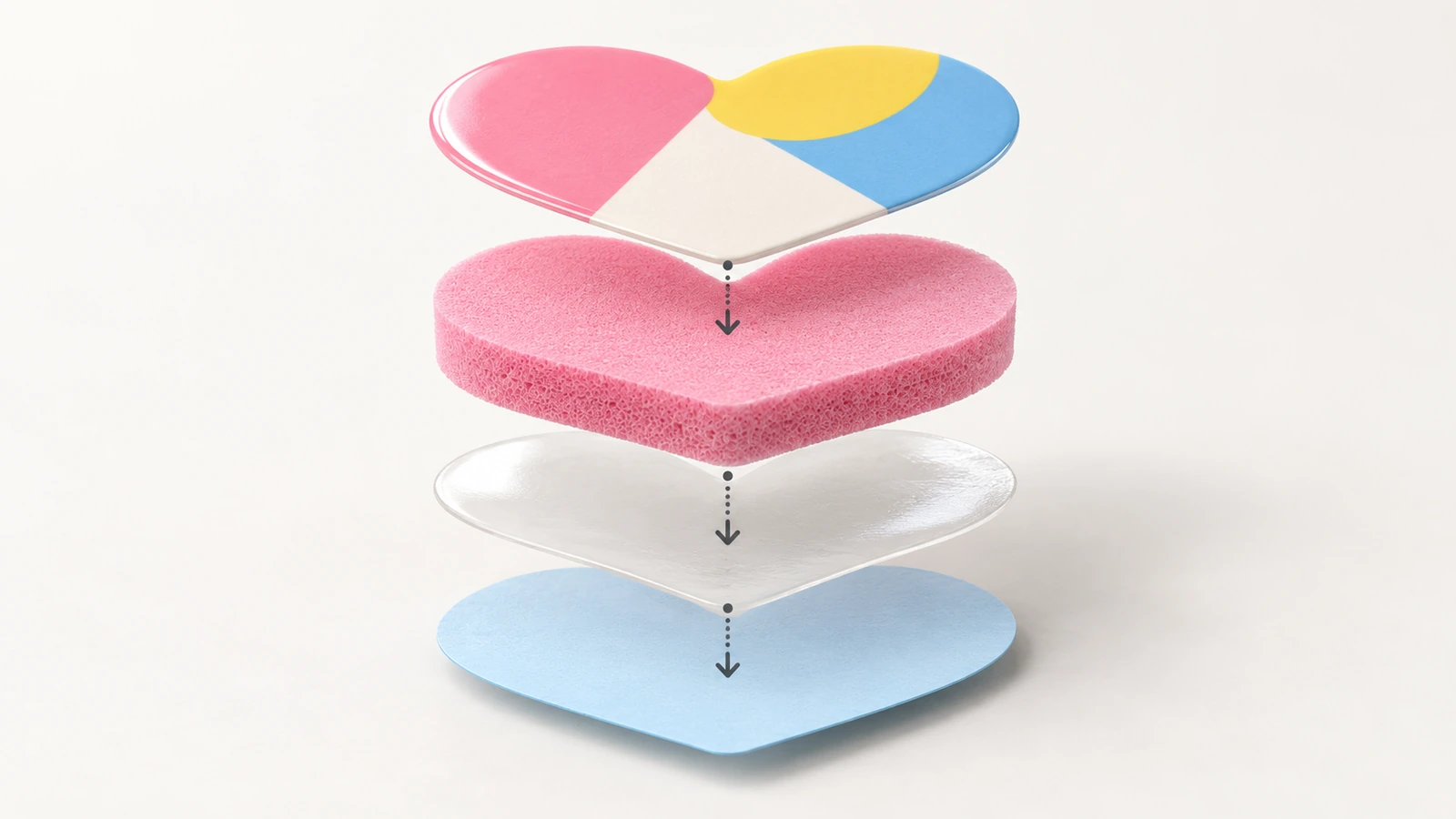
A self-adhesive EVA foam sticker is a layered product: an EVA foam core, often a printed face film or direct print on the foam, a pressure-sensitive adhesive, and a release liner. Regulators do not classify it by material. They classify it by who it is intended for and how it is used.
In the US, a children's product is one designed or intended primarily for children 12 years old or younger. That classification alone triggers lead limits, third-party testing and a CPC. If the sticker set is also a toy (a sticker activity book, a craft kit, a reward sticker sheet marketed for play), ASTM F963 and the phthalate limits apply as well. The US Consumer Product Safety Commission[3] looks at your packaging, marketing, age grade and how children actually use the product, not only what the label says. A plain logo sticker sold to adults for laptops is generally outside this scope; the same sticker printed with cartoon animals and packed in a classroom reward kit is not.
In the EU, the test is whether the product is designed or intended for use in play by children under 14. A foam sticker sheet sold as a children's activity item is usually a toy, which brings EN71 testing, a technical file, an EU Declaration of Conformity and CE marking.
One common mistake: foam datasheets often cite ASTM D3575[4] results for density, compression set and water absorption. Those are physical property test methods for closed-cell olefin foams. They say nothing about lead, phthalates, formamide or choking hazards, and they cannot replace a toy safety report.
US Requirements: CPSIA Compliance for EVA Foam Stickers, ASTM F963 and Small Parts
CPSIA lead limits
Every accessible component of a children's product must meet two lead limits: 100 ppm total lead in the substrate (the foam, the film, the adhesive, the liner) and 90 ppm in paint and surface coatings (printing inks and varnishes). Adhesive under a liner is not "inaccessible" once a child peels the sticker, so it belongs in the test plan.
Phthalates
For children's toys and child care articles, eight phthalates (DEHP, DBP, BBP, DINP, DIBP, DPENP, DHEXP, DCHP) are each limited to 0.1% in accessible plasticized components. EVA foam is not usually plasticized, but PVC face films and some soft coatings can be. If your sticker uses a vinyl top layer, that layer is the one to watch.
ASTM F963 testing for stickers
ASTM F963 is mandatory for toys through 16 CFR part 1250; the version currently incorporated is ASTM F963-23, and CPSC updates the reference when new editions are adopted. For foam stickers, the relevant sections are typically soluble heavy elements in surface coatings and substrates, the small-parts and use-and-abuse provisions, sharp points and edges (rarely an issue for soft foam, but checked), and labeling. Use-and-abuse testing matters for foam: a lab may bite, twist or tear test samples, and a soft sticker that sheds a fragment small enough to fit the test cylinder can fail even if the intact sticker is large.
Small parts choking hazard rules for stickers
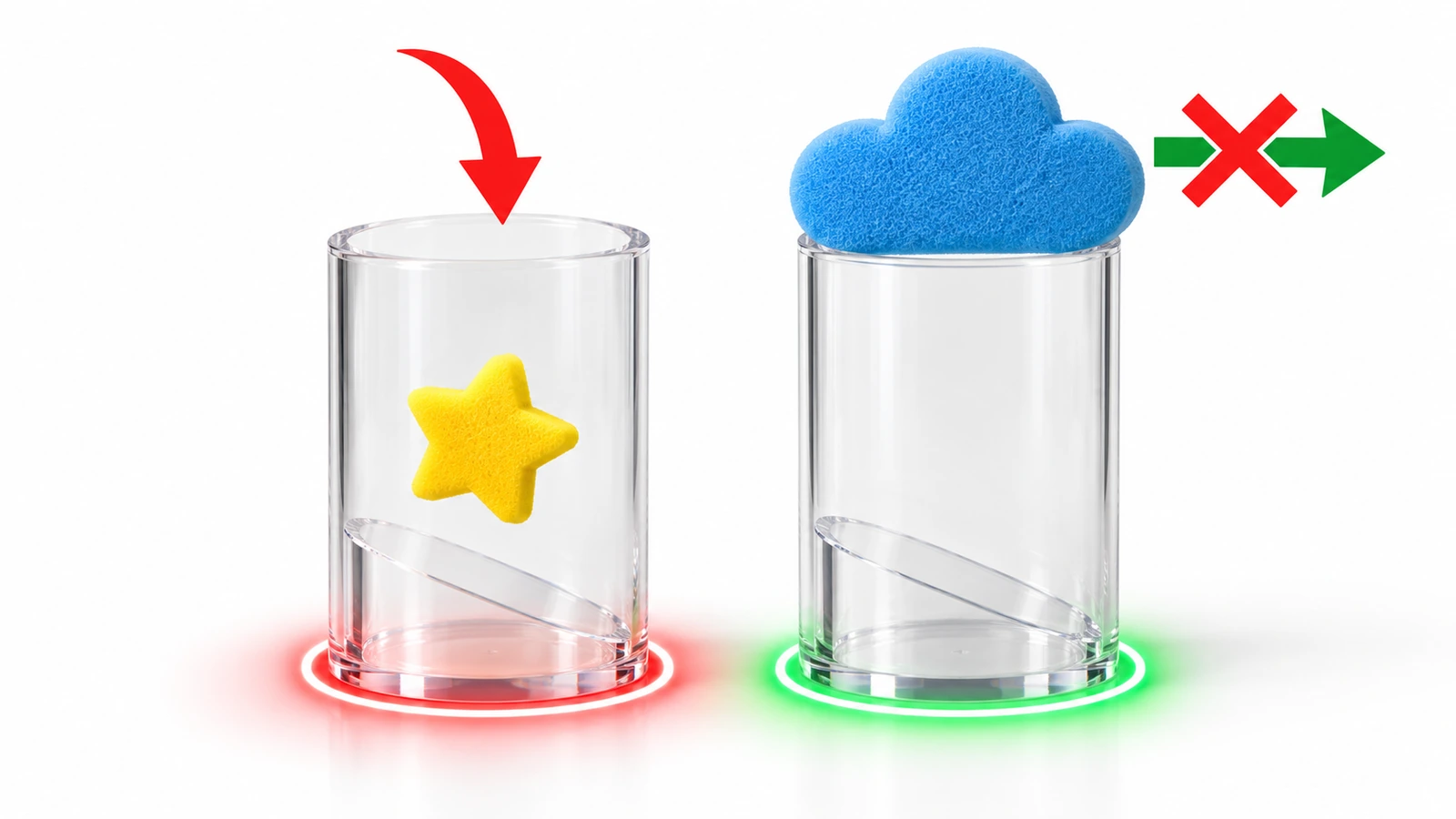
Under 16 CFR part 1501, any toy or article intended for children under 3 years old cannot have a part that fits completely inside the small parts test cylinder: 1.25 in (31.7 mm) in diameter, with a slanted base 1.0 to 2.25 in deep. Many die-cut foam stickers (stars, hearts, letters) are smaller than that. Toys for children aged 3 to under 6 that contain small parts must carry the statutory warning, "WARNING: CHOKING HAZARD — Small parts. Not for children under 3 yrs.", on the package under 16 CFR 1500.19.
Certification and tracking
Testing must be done by a CPSC-accepted third-party laboratory. The importer (or US manufacturer) then issues a CPC listing each applicable rule, the lab, test dates and the production lot. CPSIA also requires permanent tracking information on the product and its packaging where practicable, so a batch can be traced if a problem appears.
EU Requirements: EN71 Certification for Foam Stickers, Formamide and the New Toy Regulation
"EN71 certification" is a shorthand. EN71 is a family of test standards, not a certificate. Passing it supports the manufacturer's Declaration of Conformity and CE marking. For foam stickers, three parts matter most:
- EN71-1 (mechanical and physical): includes a small parts test similar to the US cylinder, banning detachable small parts in toys for children under 36 months and requiring an age warning on toys that are unsuitable for that group.
- EN71-2 (flammability): foam is combustible, so sticker sets intended for play are usually checked.
- EN71-3 (migration of certain elements): sets limits for elements that can migrate from accessible materials. Stickers are often assessed as "scraped-off" material, the strictest of the three material categories, because children can pick ink and foam off with fingernails or teeth.
Formamide in foam
Commission Directive (EU) 2015/2115[5] sets a content cut-off of 200 mg/kg for formamide in foam toy materials. Above that, the foam must pass an emission test of no more than 20 µg/m³ within 28 days. The rule applies to toys for children under 36 months and toys intended to be placed in the mouth, and the limit is mirrored in ECHA's restricted-substances-in-toys list[6]. The content test method is EN 71-15:2025[7], which became a harmonised standard with presumption of conformity on 14 September 2026 through Implementing Decision (EU) 2026/2032[8].
The new Toy Safety Regulation
Regulation (EU) 2025/2509[9], published on 12 December 2025, will replace the Toy Safety Directive, which is repealed on 1 August 2030. According to an analysis published by HKTDC Research[10], specific substance restrictions that mainly covered toys for under-3s, including formamide and formaldehyde, will extend to toys for all ages, and each toy model will need a Digital Product Passport. If your sticker sets are sold for ages 3 to 8, formamide control will move from "nice to have" to mandatory during the transition. Separately, REACH Annex XVII entry 77 (Regulation (EU) 2023/1464) has applied a 0.080 mg/m³ indoor formaldehyde emission limit to articles other than furniture since 6 August 2026.
How to Build a Compliant Foam Sticker Order, Step by Step
This sequence covers compliance only. If you are still choosing thickness, shapes and adhesive strength, the custom EVA foam sticker specification guide walks through that part of the order.
- Fix the age grade first. Decide whether the set is for under 3, 3+, or a higher age band, and make sure artwork, packaging and marketing match. A "3+" label on a pack covered in baby imagery may be reassessed as an under-3 product.
- Measure the smallest piece against the cylinder. List every die-cut shape. Any shape that fits inside 1.25 in (31.7 mm) makes the set unsuitable for under-3s and triggers the choking warning for ages 3 to under 6 in the US and the 36-month warning in the EU.
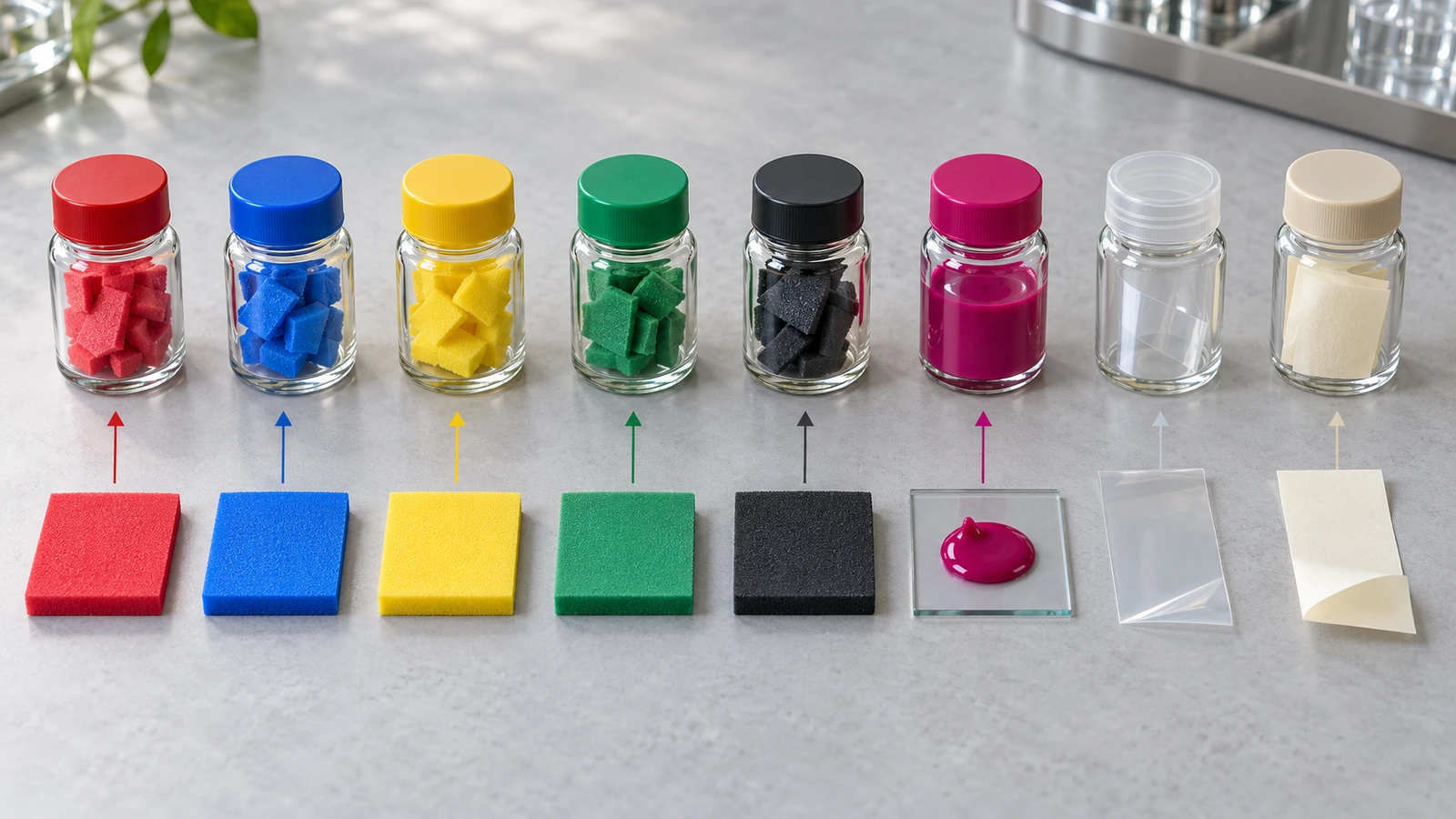
- Write a bill of materials. One line per foam color, ink system, face film, adhesive and liner. This list becomes the test plan.
- Map tests to markets. US: lead (substrate and coatings), phthalates for plasticized parts if the set is a toy, ASTM F963 relevant clauses, small parts. EU: EN71-1, EN71-2, EN71-3, formamide content per EN 71-15 for foam, REACH SVHC screening.
- Use an accredited lab and match the samples. US testing must be at a CPSC-accepted lab. Samples should come from production materials, not a sales sample shelf.
- Issue your own documents. The importer issues the CPC in the US; the manufacturer or EU importer holds the technical file and Declaration of Conformity in the EU. Add tracking marks and warnings to the packaging artwork before print approval.
What to request from the manufacturer
Ask for reports that carry a report number, lab name and accreditation, test method, sample description (color and material), test date and the age group tested. A report for "EVA foam, assorted colors" from two years ago, for another customer, does not cover your order. Ask for a declaration of the adhesive type (for example, water-based acrylic versus solvent-based rubber) and of any PVC components, because those decide whether phthalate testing is needed. Finally, confirm that a retest happens when a material supplier or foam color changes.
How Do Foam Sticker Safety Standards for Kids Differ Between the US and EU?
Both markets ask the same core questions (toxic elements, choking risk, flammability) but answer them with different documents and limits.
| Topic | United States | European Union | What it means for a foam sticker order |
|---|---|---|---|
| Scope trigger | Children's product: ages 12 and under | Toy: intended for play by children under 14 | Age grade and marketing decide scope, not material |
| Core standard | CPSIA + ASTM F963 (16 CFR 1250) | Toy Safety Directive 2009/48/EC, moving to Regulation (EU) 2025/2509; EN71 series | Separate test reports are usually needed per market |
| Heavy metals | Total lead: 100 ppm substrate, 90 ppm coatings; soluble heavy elements under ASTM F963 | EN71-3 migration limits; stickers often treated as scraped-off material | Each foam color and ink is tested |
| Phthalates | 8 phthalates, 0.1% each, in plasticized toy components | REACH Annex XVII restrictions | Matters most when a PVC face film is used |
| Foam-specific chemistry | No formamide-specific federal limit | Formamide 200 mg/kg content cut-off, 20 µg/m³ emission; EN 71-15 method | EU-bound foam should be screened for formamide |
| Small parts | 16 CFR 1501 cylinder; banned under 3; warning for 3 to under 6 | EN71-1 small parts test; banned under 36 months; age warning | Shapes under 1.25 in drive packaging warnings |
| Proof of compliance | CPC issued by importer; CPSC-accepted lab; tracking label | Technical file, Declaration of Conformity, CE mark; Digital Product Passport under the new regulation | Plan artwork space for marks and warnings early |
How Do Size, Adhesive Chemistry and Age Grading Affect Compliance Cost?
Size. Making every shape larger than the small parts cylinder can open the under-3 market and remove choking warnings, but it uses more foam per sheet and limits the designs that look good at that scale. Many brands accept the 3+ grade and the warning instead. Either choice is valid; mixing them on the same sheet is what causes problems.
Number of materials. Lab costs scale with the number of distinct components tested, because each foam color and each ink is a separate sample. US rules (16 CFR part 1109) allow component part testing, so reusing the same tested foam colors, inks and adhesive across several designs lets one set of results support multiple products. A twelve-color assortment costs more to verify than a five-color one.
Adhesive chemistry. The adhesive is a full component in lead and EN71-3 testing. Changing adhesive mid-program, for example to a stronger system for textured surfaces, means retesting. Picking one adhesive that meets both performance and compliance needs keeps the test plan stable. Note also that a liner too hard for small hands to peel is a usability issue, not a compliance issue, but it shows up in classroom complaints.
Age grading. A higher age grade reduces some obligations (small parts warnings, under-3 formamide scope today) but does not remove lead testing, which applies to all children's products up to age 12. Under the new EU regulation, the formamide advantage of grading 3+ will disappear.
Because test scope depends on your exact colors, shapes and markets, the most accurate way to budget is to share your artwork, target age and destination markets when you request a quote, so the test plan can be priced alongside production.
Frequently Asked Questions
FAQ: Do foam stickers count as toys?
It depends on intended use. Sticker sets marketed for children's play, crafts or rewards are usually treated as toys in both the US and EU. Promotional stickers aimed at adults generally are not. In the US, any product intended primarily for children 12 and under is a children's product and needs lead testing and a CPC even if it is not classed as a toy.
FAQ: Is a supplier's EN71 report enough to sell in the US?
No. The US requires testing to CPSIA and ASTM F963 by a CPSC-accepted laboratory and a CPC issued by the importer. EN71 results can overlap in subject but are not accepted as a substitute.
FAQ: Are tiny foam stickers banned for toddlers?
Any sticker that fits completely inside the small parts cylinder, 1.25 in (31.7 mm) in diameter, cannot be in a product intended for children under 3 in the US, and the EU applies an equivalent rule for under 36 months. For ages 3 to under 6, the US requires a choking hazard warning on the package.
FAQ: Do I need formamide testing for foam stickers?
For EU toys aimed at children under 36 months or meant to go in the mouth, yes: foam above 200 mg/kg formamide must meet a 20 µg/m³ emission limit. Under Regulation (EU) 2025/2509 the restriction extends to toys for all ages, so screening EVA foam with EN 71-15 is a sensible default for EU-bound sets.
FAQ: Does one test report cover every color and design?
Only if every material in the new design was in the tested samples. Component testing lets you reuse results for the same foam colors, inks and adhesive, but a new color, ink or adhesive needs its own test.
FAQ: Are physical foam datasheets proof of safety?
No. Properties tested under methods such as ASTM D3575 (density, compression set, water absorption) describe performance. Safety compliance requires chemical and mechanical toy testing against the standards above.
Key Takeaways
- Any foam sticker that fits inside the small parts cylinder cannot go in an under-3 product — 1.25 in (31.7 mm) diameter test cylinder (Source)
- US lead limits apply to every accessible layer, including adhesive — 100 ppm substrate, 90 ppm coatings, for products for ages 12 and under (Source)
- EU foam toys face a formamide cut-off and emission limit — 200 mg/kg content, 20 µg/m³ within 28 days (Source)
- The formamide test method is now harmonised — EN 71-15:2025, presumption of conformity from 14 September 2026 (Source)
- The EU Toy Safety Directive is being replaced — Regulation (EU) 2025/2509, directive repealed 1 August 2030 (Source)
- Foam safety history is real, not theoretical — 34 children's mats screened in 2025, formamide among EVA volatiles (Source)
Conclusion: Specify Compliance Before You Approve Artwork
Foam sticker safety standards for kids are manageable when they are decided at the start of an order instead of discovered at customs. Set the age grade, check every shape against the small parts cylinder, list each material layer, and match those layers to CPSIA, ASTM F963, EN71 parts 1–3 and formamide limits for the markets you sell into. Then insist on reports that name your materials, not someone else's. If you share your artwork, target age and destination markets when you request a quote, the production plan and the test plan can be built together.
References
- McGill University, Office for Science and Society. "You Asked: Are Foam Puzzle Mats Toxic for Children?" (2017-03-20). mcgill.ca. Accessed October 2026. ↩
- Ecotoxicology and Environmental Safety (2025). Non-targeted screening of volatile compounds from children's floor mats. sciencedirect.com. Accessed October 2026. ↩
- US Consumer Product Safety Commission. "Toy Safety" business guidance. cpsc.gov. Accessed October 2026. ↩
- ASTM International. ASTM D3575-20, Standard Test Methods for Flexible Cellular Materials Made from Olefin Polymers. astm.org. Accessed October 2026. ↩
- European Commission. Commission Directive (EU) 2015/2115 amending Annex II to Directive 2009/48/EC as regards formamide (2015-11-23). eur-lex.europa.eu. Accessed October 2026. ↩
- European Chemicals Agency. Substances restricted in toys: formamide (EC 200-842-0, CAS 75-12-7). echa.europa.eu. Accessed October 2026. ↩
- CEN. EN 71-15:2025, Safety of toys – Part 15: Formamide in foam toy materials (content), available 2025-02-26. standards.cencenelec.eu. Accessed October 2026. ↩
- European Commission. Implementing Decision (EU) 2026/2032 on harmonised standards for toys (OJ 2026-09-14). eur-lex.europa.eu. Accessed October 2026. ↩
- European Parliament and Council. Regulation (EU) 2025/2509 on the safety of toys (OJ 2025-12-12). eur-lex.europa.eu. Accessed October 2026. ↩
- HKTDC Research. Summary of the new EU Toy Safety Regulation (2026-01-05). research.hktdc.com. Accessed October 2026. ↩












The information below is required for social login
Sign In
Create New Account