


 Blog PDF for offline reading
Quick answer: A leather lanyard keyring is the better choice when a key has to stay on the person, be spotted at a glance, or change hands many times a day. Typical cases are staff master keys, valet and venue keys, and shared fleet keys. A short leather fob keychain works better when the key lives in a pocket or is given once as a gift. Choose the carry position first, then the strap length, then the hardware that suits how the key is handed over.
Most corporate key programs start with the same order: "branded leather key holders, one per person." The trouble shows up a few weeks later. Housekeeping staff dig through apron pockets for the floor master. Event crew leave the loading-dock key on a table because a small fob slipped off a belt loop. Front-desk teams hand out keys that look identical and cannot be told apart from across the counter. In each case the leather was fine. The format was wrong. A leather lanyard keyring solves a different problem than a pocket fob. This guide explains when each format earns its place, so the budget goes to keys that stay attached, visible and accounted for.
This article covers the carry decision only. If you already know you need a classic short fob and want to brief branding, sizes and attachments, go straight to our page on custom leather key fobs for branded gifts and everyday carry.
What a leather lanyard keyring actually is
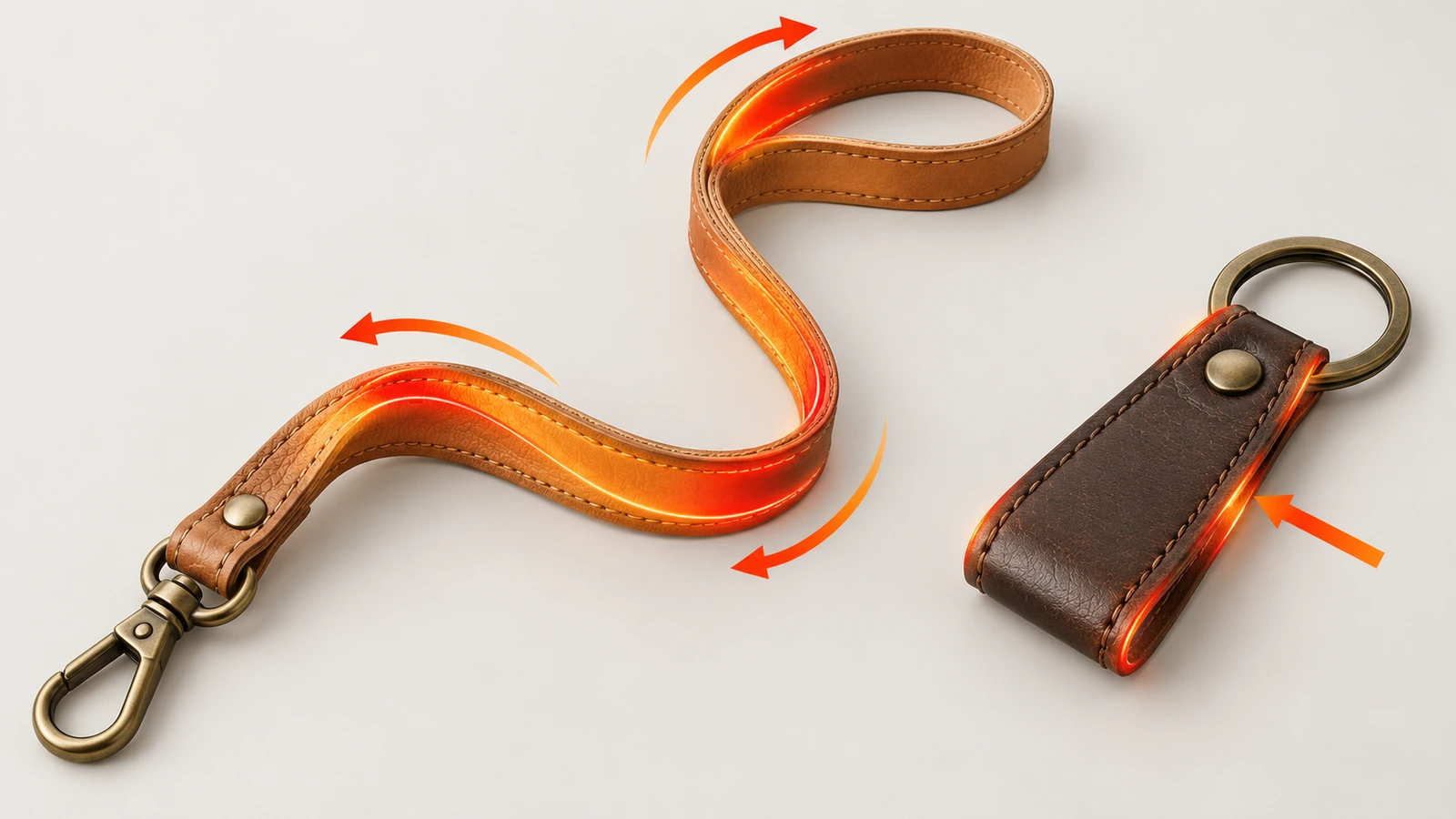
A leather lanyard keyring is a leather strap long enough to be worn or looped over something: around the neck, over the wrist, or through a belt or bag strap. A key ring or clip sits at the working end. A standard leather fob keychain is short and usually folded or flat. It is meant to ride in a pocket, sit in a palm, or hang from a car key. Both use the same material. What separates them is where the key spends its day and how often it leaves the hand.
The two formats fail in different ways, which is why the difference matters to a buyer. A pocket fob fails by getting lost, pressed or buried. An independent 2024 review of a leather fob cover reported that a car fob carried in a pocket kept triggering its buttons and slipping out[1], and the cover added noticeable bulk. A lanyard format fails by snagging, getting tangled, or wearing out along the strap. Picking a format means picking which of these risks your staff can live with.
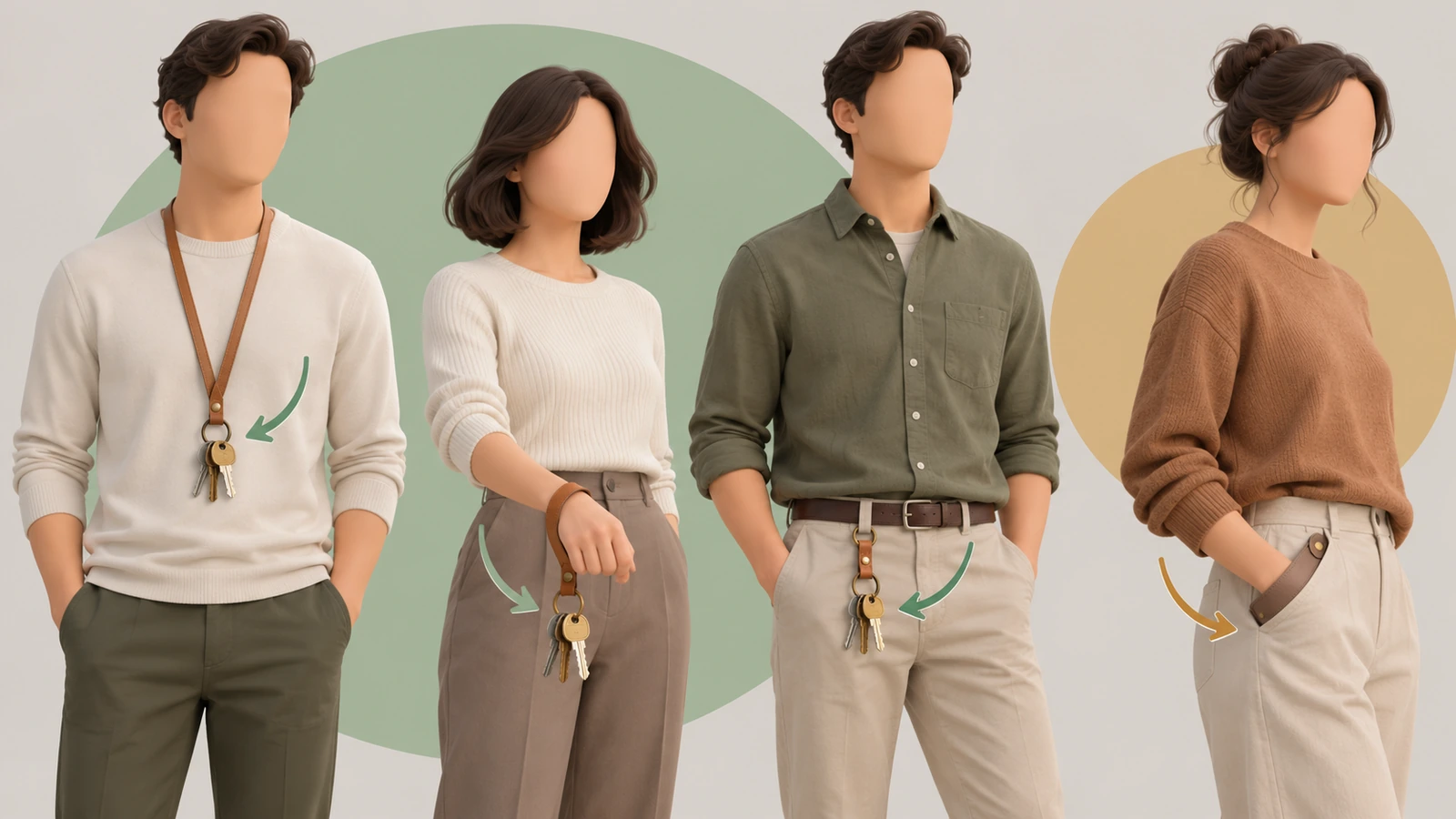
Where a leather lanyard keyring beats a pocket fob
Staff who need both hands free. Housekeeping, maintenance, warehouse leads, school custodians and retail key-holders unlock things all shift, often while carrying something. A wrist loop or neck strap keeps the key out of the pocket and ready to use. It also makes a missing key obvious: a lanyard missing from a neck is noticed at once, while an empty pocket is not. A fob only works for these roles if it clips to the uniform.
Events and venues. Production crew, stage managers and venue staff pass storeroom, gate and vehicle keys around constantly, often in poor light. A longer strap in a high-contrast leather color is easier to find on a dark workbench and harder to pocket by accident and take home. For sponsor or VIP gifts at the same event, the short fob is usually the better fit, because a guest wants a keepsake that suits their own keys at home.
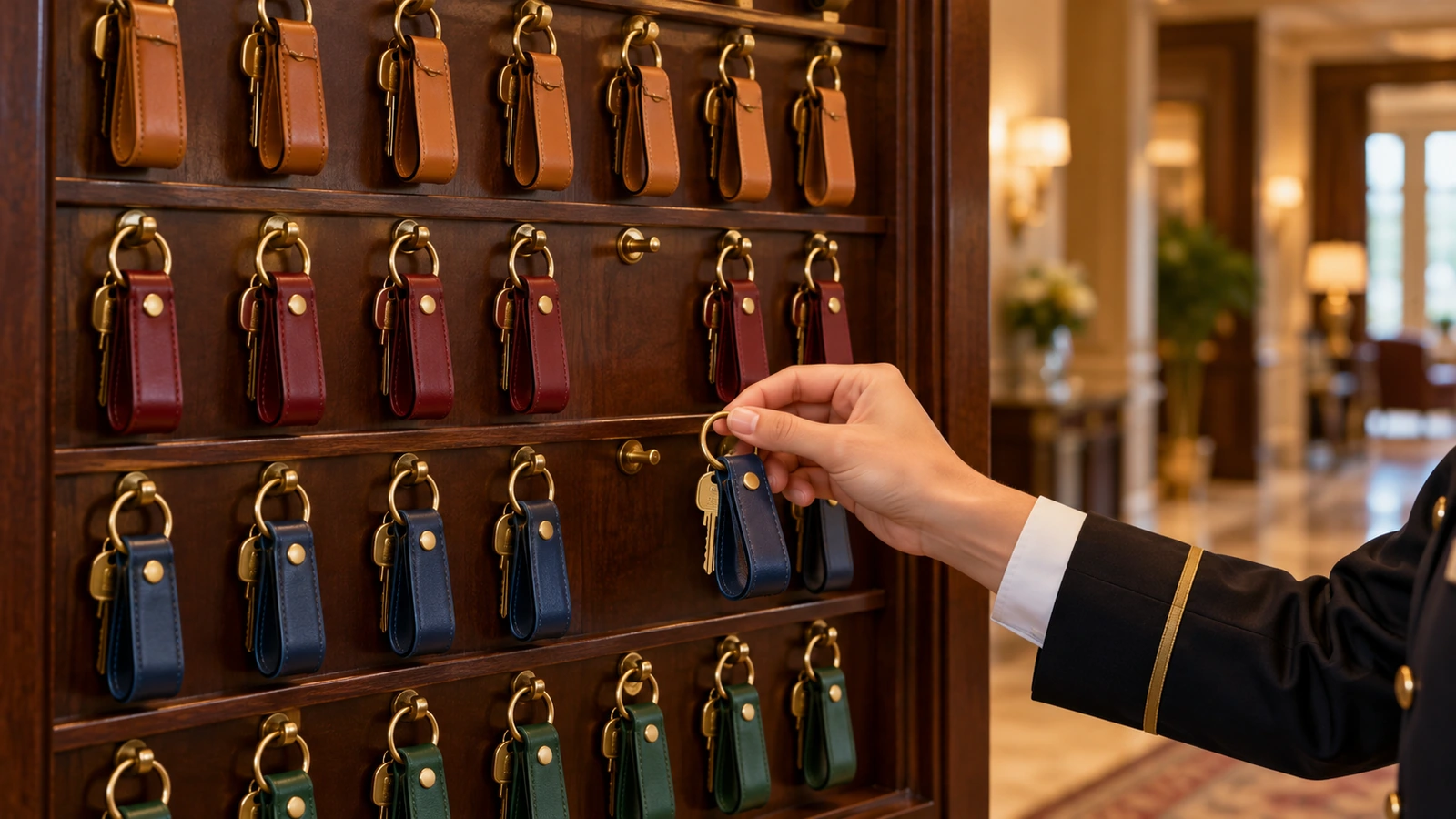
Hospitality. Most guest rooms now use cards, but physical keys are still common for staff master keys, valet parking, boutique and heritage properties, vacation rentals and back-of-house areas. A leather lanyard keyring hangs neatly on a key board, can be colour-coded by floor or department, and slips over the valet's wrist while they drive. For guest-facing keys at small properties, a substantial fob is the traditional answer because its size discourages guests from walking off with it. Many hotels use both formats for different jobs.
Access-key and fleet programs. Shared vehicles, equipment cages and master-key systems depend on sign-out and return. A strap long enough to hang on a numbered hook, and distinct enough to be recognised from the doorway, speeds up the end-of-day check. Leather also carries a deboss permanently, so a department mark cannot rub off the way a printed sticker or tag can.
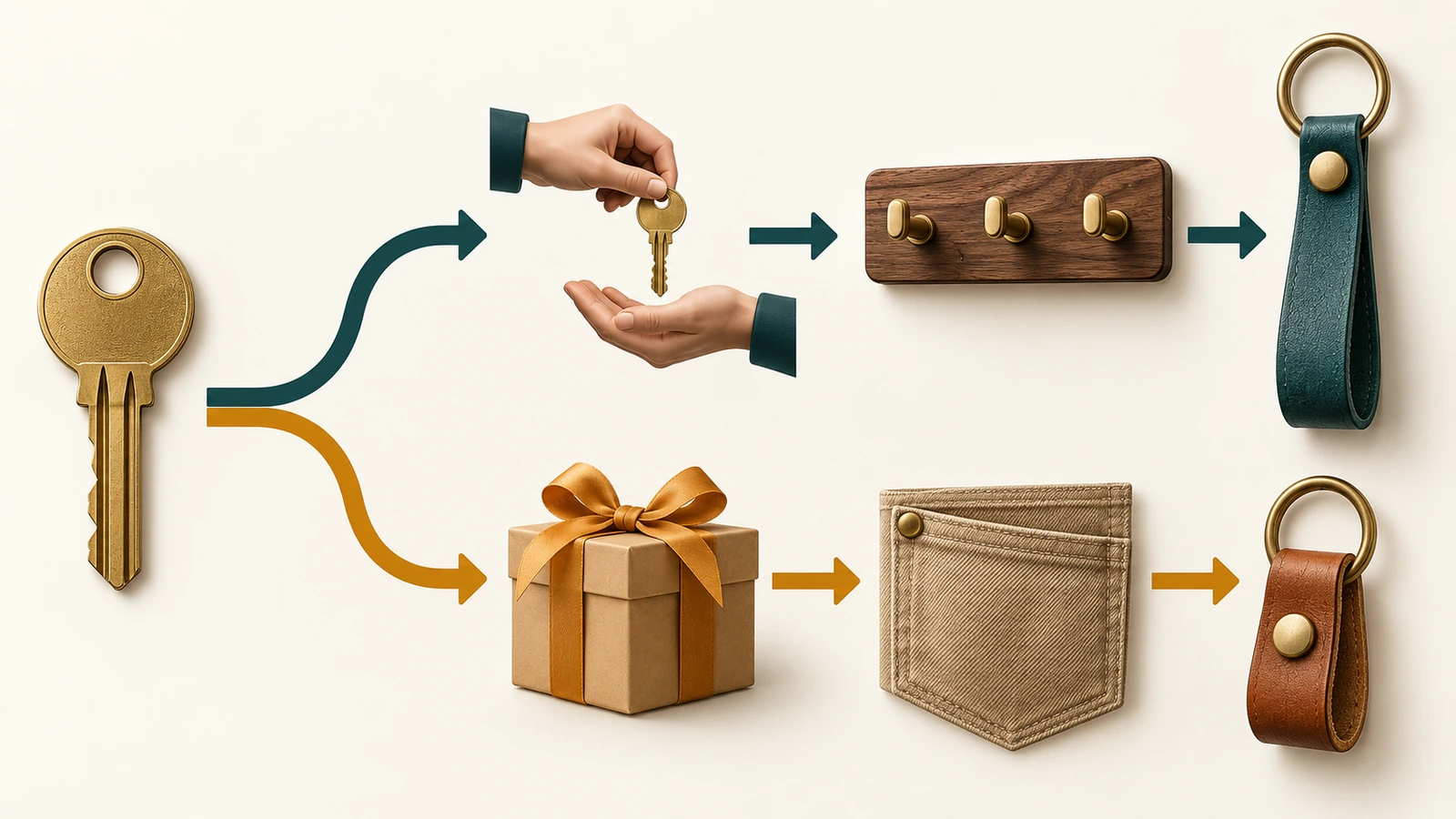
Ceremonial handovers. New-hire welcome kits, property keys for new homeowners and dealership vehicle handovers are single, memorable moments, and the short leather fob keychain usually wins here. The key goes into a personal pocket afterward, and a lanyard would feel like a work tool rather than a gift.
How to choose carry style, strap length and hardware for a leather lanyard keyring program
Work through these steps in order. Each answer narrows the next one, and doing them in sequence keeps a program from ending up with mixed formats nobody actually uses.
- Map who holds the key and for how long. List each key type and note whether one person carries it all shift, it rotates between people, or it is handed over once and kept. Keys held all shift and keys that rotate are lanyard candidates. Keys handed over once are fob candidates.
- Pick the carry position before the product. Neck carry suits front-of-house roles where the key also acts as a visual signal of authority. Wrist carry suits drivers, valets and anyone climbing or lifting. Belt-loop or bag-strap carry suits technicians who already wear tool belts. Pocket carry is the fob's territory.
- Choose a length category, not a number. There are three practical classes: short (fob), wrist loop (fits over a closed hand), and neck strap (hangs to mid-chest). Ask a few real staff members to try mock-ups in uniform before you commit. A strap that suits a desk worker can catch on a cleaning trolley.
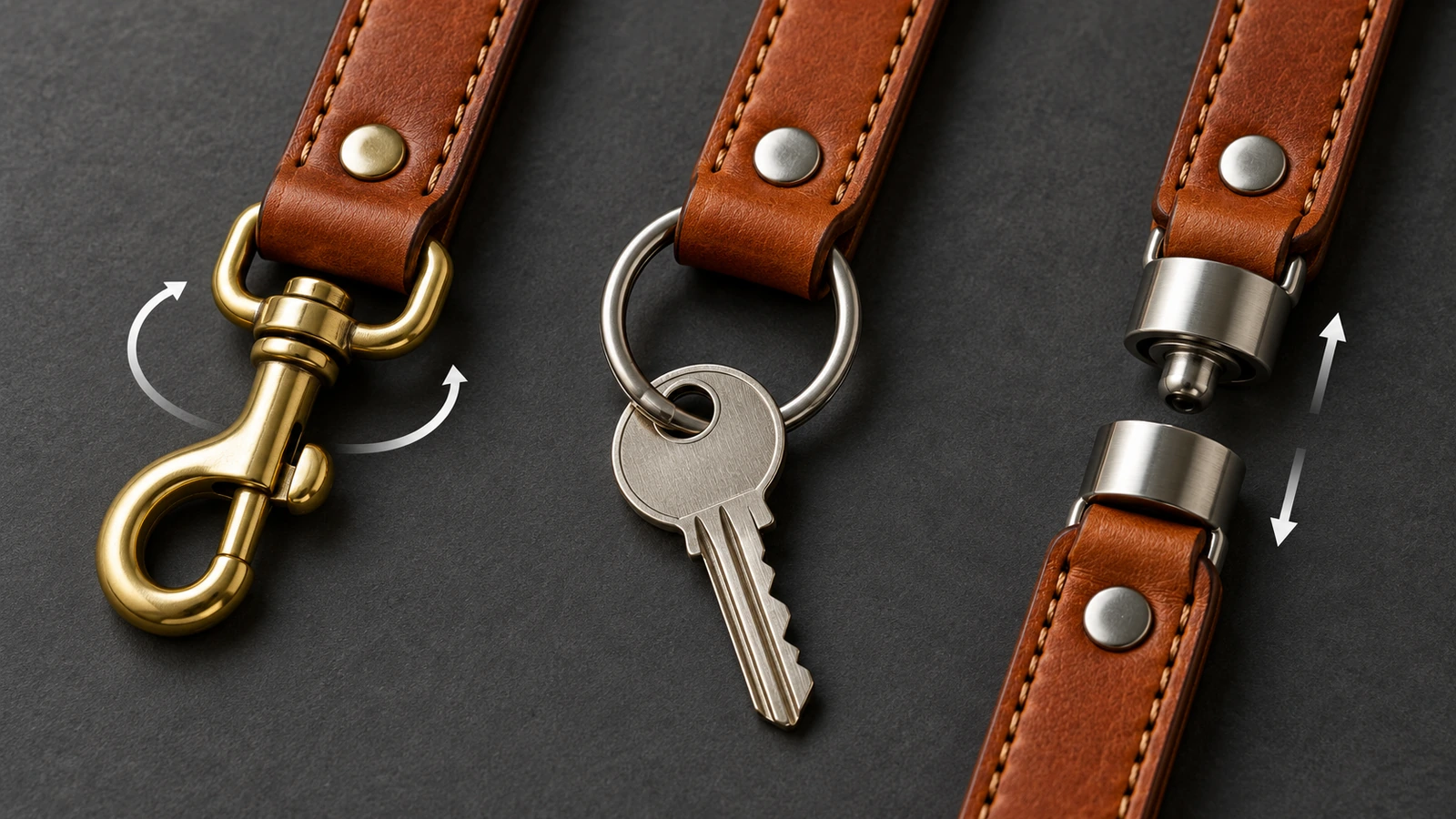
- Match the hardware to the handover pattern. Keys that change hands often need a quick-release clip or swivel snap so the key can come off without removing the strap. Keys that must never be separated from their tag need a closed ring. Neck straps for people working near moving machinery or crowds should use a breakaway connector, and you should check this against your own site safety rules.
- Build in identification. Plan leather colours by department or access level, and add a debossed mark for each zone. Keep any key number off the strap if losing that key would compromise security.
- Verify the material claim. Ask the supplier to name the leather type in writing and supply chemical test documentation (see the materials section below). Our product page covers which QC checks belong in a leather key fob purchase agreement, so they are not repeated here.
- Pilot with one team. Run a short trial with a single department, then check which straps came back worn, tangled or unused before ordering for the whole site.
Leather lanyard keyring vs. leather fob keychain: side-by-side
| Factor | Leather lanyard keyring | Leather fob keychain | Fabric lanyard + plain ring |
|---|---|---|---|
| Where the key lives | On the body: neck, wrist or belt | Pocket, bag or palm | On the body |
| Visibility across a room | High; strap colour can code access | Low once pocketed | High, but looks like a lanyard for an ID badge |
| Hands-free use | Yes | No | Yes |
| Frequent staff-to-staff handover | Strong with quick-release hardware | Moderate; easy to misplace | Strong, but frays and gets dirty |
| Pocket bulk and button pressing | Avoided | Common complaint with car fobs | Avoided |
| Permanent branding | Deboss along the strap | Deboss on the face | Usually printed; wears over time |
| Gift or keepsake value | Moderate; reads as a work tool | High | Low |
| Main failure mode | Snagging, flex wear along the strap | Loss, burial, accidental presses | Fraying, soiling |
The middle column is why many programs end up using both formats: lanyards for working keys and fobs for keys given to customers. Branded items are kept because they are useful. The ASI 2026 Ad Impressions Study[2] found that 78% of consumers keep a promotional item because it is useful, and that a promotional product averages about 3,300 impressions over its lifetime. A strap that suits the job will stay in use. One that does not will end up in a drawer.
The budget context matters as well. PPAI estimated U.S. promotional products distributor sales at $26.8 billion[3] for 2024, and its industry classification places keychains in the "personal" category alongside wallets. Because so much is spent on items that end up unused, a format choice that fits the job is the cheapest way to make the spend count.
What changes in material risk when the strap gets longer
A short fob mostly sees abrasion at its edges and stress where it meets the ring. A lanyard bends along its whole length every time someone walks, bends or loops it over a hand. That makes the surface finish and the edges more important than they are on a fob. Finish adhesion on leather is measured by a dedicated method, ISO 11644:2022[4]. Heavily coated or split leathers are the ones most likely to peel under constant flexing, so ask whether the strap leather has been tested this way.
Labeling claims carry legal weight in the U.S. The FTC Guides for Select Leather and Imitation Leather Products (16 CFR Part 24)[5] warn against misrepresenting the type or origin of leather. They apply to small leather goods such as key cases. In Europe, CEN/TC 289 maintains EN 17651:2022 on describing and labeling leather goods[6]. If your staff gift list goes to several countries, put the leather description in writing at the quote stage.
Skin contact is the other issue that grows with length. A neck strap touches skin all day, while a fob mostly touches fabric. EU rules restrict hexavalent chromium in leather that contacts the skin to below 3 mg/kg of total dry weight[7], tested by EN ISO 17075. For a wider screening scope, ISO 20137:2023[8] gives guidance on which critical chemicals to test for in leather. Ask for the relevant reports rather than accepting a general statement that the leather is "compliant".
Sourcing claims have become easier to check. The Leather Working Group[9] reports that more than a third of global finished leather production is assessed against its audit standard. It is moving from Protocol 7 to a new sustainability system with chain-of-custody rules. Separately, finishing chemistry is changing: Vogue reported in 2024[10] on PFAS-free leather finishes, with some supply-chain leathers up to 75% bio-based. If your corporate gifting policy includes environmental criteria, these are reasonable questions to put to a supplier.
One honest limitation: no published ISO performance standard exists specifically for leather keyrings or lanyards. The closest work in progress is ISO/AWI 17188[11], which is drafting classification and performance guidelines for leather portfolios and wallets. Until there is a keyring standard, a wear trial with your own staff remains the most reliable test for a strap format.
FAQ
FAQ: Is a leather lanyard keyring the same as an ID badge lanyard?
No. A badge lanyard is designed to display a card at chest height and usually uses fabric with a badge clip. A leather lanyard keyring is designed to carry the weight of metal keys or a car fob, so its connection points and hardware take more strain. Some programs combine the two, but heavy keys hanging next to a badge make the strap swing and add wear at the clip.
FAQ: Should hotel guest keys use a lanyard or a fob?
For guest-facing physical keys, a substantial short fob is usually the better choice. It is pleasant to hand over, easy to recognise as the property's key, and its size discourages guests from taking it home. Lanyard keyrings work better for staff masters, valet keys and back-of-house access, where colour coding and wrist or neck carry help daily operations.
FAQ: Will a leather fob keychain stop my car fob from being pressed in my pocket?
Only partly. Independent reviewers have found that pocket-carried covers can still trigger buttons depending on orientation and where the snaps sit, and that they add bulk. If accidental presses are the real problem, moving the key out of the pocket with a wrist loop or belt-loop lanyard deals with the cause rather than the symptom.
FAQ: How do I stop shared keys from going home with staff?
Make the key hard to carry casually and easy to notice when it is missing. A distinctive leather strap colour for each zone, a hook board with an obvious gap when a strap is out, and a debossed department mark all help. A long strap is awkward in a personal pocket, which nudges people to hang it back up at the end of the shift.
FAQ: Can one order cover both lanyard keyrings and short fobs?
Usually, yes. Many buyers use the same leather colour and branding across both formats so they read as one program. For short fob options, see our custom leather key fobs page. For lanyard lengths and quantities, send us your use case and we will reply with a quote rather than guessing at figures here.
FAQ: What should I ask a supplier about the leather on a strap that touches skin?
Ask for the leather type stated in writing, chemical test documentation that covers chromium VI and other restricted substances relevant to your markets, and whether the finish has been tested for adhesion. Wording such as "genuine leather" on its own does not answer any of these questions.
Key takeaways
- Pick the format by where the key spends its day, not by price. — 78% of consumers keep a promotional item because it is useful (Source)
- Branded item spend is large, so unused items waste real money. — $26.8 billion in U.S. promotional products distributor sales in 2024 (Source)
- Straps worn against the skin raise the bar on chemical testing. — EU limit for chromium VI in skin-contact leather: below 3 mg/kg dry weight (Source)
- Leather claims are regulated, so get the leather type in writing. — FTC guidance codified at 16 CFR Part 24 (Source)
- Traceable sourcing is now a normal question to ask. — More than one third of global finished leather production is assessed under the LWG standard (Source)
Conclusion
Choose a leather lanyard keyring when the key is a working tool: held all shift, passed between staff, hung on a board or used hands-free. Choose a short leather fob when the key is personal, pocketed or presented once as a gift. Many well-run programs use both, linked by one leather colour and one brand mark. Map your key types, test the carry positions with real staff, then brief the hardware. When you are ready to specify the short-fob side of the program, start from our custom leather key fobs page, and send us your lanyard use cases so we can quote them alongside.
Footnotes
- The Brooks Review (2024). Independent hands-on review of a leather key fob cover: accidental button presses and added bulk. ↩
- ASI (2026). Ad Impressions Study: lifetime impressions and retention reasons for promotional products. ↩
- PPAI. Sales Volume Estimate: U.S. promotional products distributor sales, 2024. ↩
- ISO 11644:2022. Leather — Test for adhesion of finish. ↩
- eCFR. 16 CFR Part 24: Guides for Select Leather and Imitation Leather Products (U.S. Federal Trade Commission). ↩
- CEN/TC 289 Leather. Work programme including EN 17651:2022 (description, labelling and marking of leather goods). ↩
- Commission Regulation (EU) No 301/2014, amending REACH Annex XVII Entry 47: chromium VI in leather articles. ↩
- ISO 20137:2023. Leather — Chemical tests — Guidelines for testing critical chemicals in leather. ↩
- Leather Working Group. Audit standard coverage and transition to the LWG Sustainability System. ↩
- Vogue (2024). The leather industry's latest move towards sustainability: replacing PFAS finishes. ↩
- ISO/AWI 17188 (under development). Classification and performance guidelines for leather portfolios and wallets. ↩












The information below is required for social login
Sign In
Create New Account