


 Blog PDF for offline reading
Quick answer: Personalized notebook pages are inner pages printed to your own layout, such as logo headers or footers, ruled, dot or grid formats, meeting or planner templates, and optional numbering or perforation. The fewer unique page designs, ink colors and finishing steps you specify, the lower your print cost and minimum order quantity tend to be.
Last updated: October 21, 2026 · Reading time: about 11 minutes
Most corporate notebook projects start with the cover and treat the inside as an afterthought. That gets the priorities backwards. The cover gets seen once. Personalized notebook pages get seen every time someone writes. This guide covers how to design those inner pages for onboarding kits, conferences, training programs and client gifts, and explains how each layout decision changes the quote you receive.
Why inner pages decide whether a branded notebook gets used
The problem: a notebook can have a well-printed cover and still fail because its pages do not suit the job. A logo printed across every page reduces writing space. A planner grid with dates already printed goes out of date. A meeting template with fields nobody fills in leaves pages that look half-used. In each case the notebook ends up in a drawer, and the brand impression disappears with it.
The pain: this matters more now because buyers expect more from promotional items. PPAI research reports that 65% of distributors and 64% of suppliers saw consumer interest in eco-friendly products rise significantly, and the association states that eco-friendly products and customization are set to dominate[1] new product offerings. Younger recipients set a high bar. In a PPAI consumer study, 68% of Gen Z respondents said branded merchandise positively affects how they see a brand, and 89% said sustainability matters (Why Promo Clicks With Gen Z[2]). A notebook nobody uses does nothing for that impression.
The solution: treat the inner page as a functional surface first and a brand surface second. A joint PPAI–ASI study summarized the principle: "When an item earns a place in someone's daily life, it stops feeling like advertising and starts functioning more like a utility" (PPAI–ASI joint study[3]). The sections below explain how to build pages that work that way and what each choice costs.
What counts as personalized notebook pages?
Personalized notebook pages are the interior sheets, often called the text block, printed to a buyer-defined layout instead of a stock pattern. It helps to think of every inner page as four layers, because each layer adds its own production step:
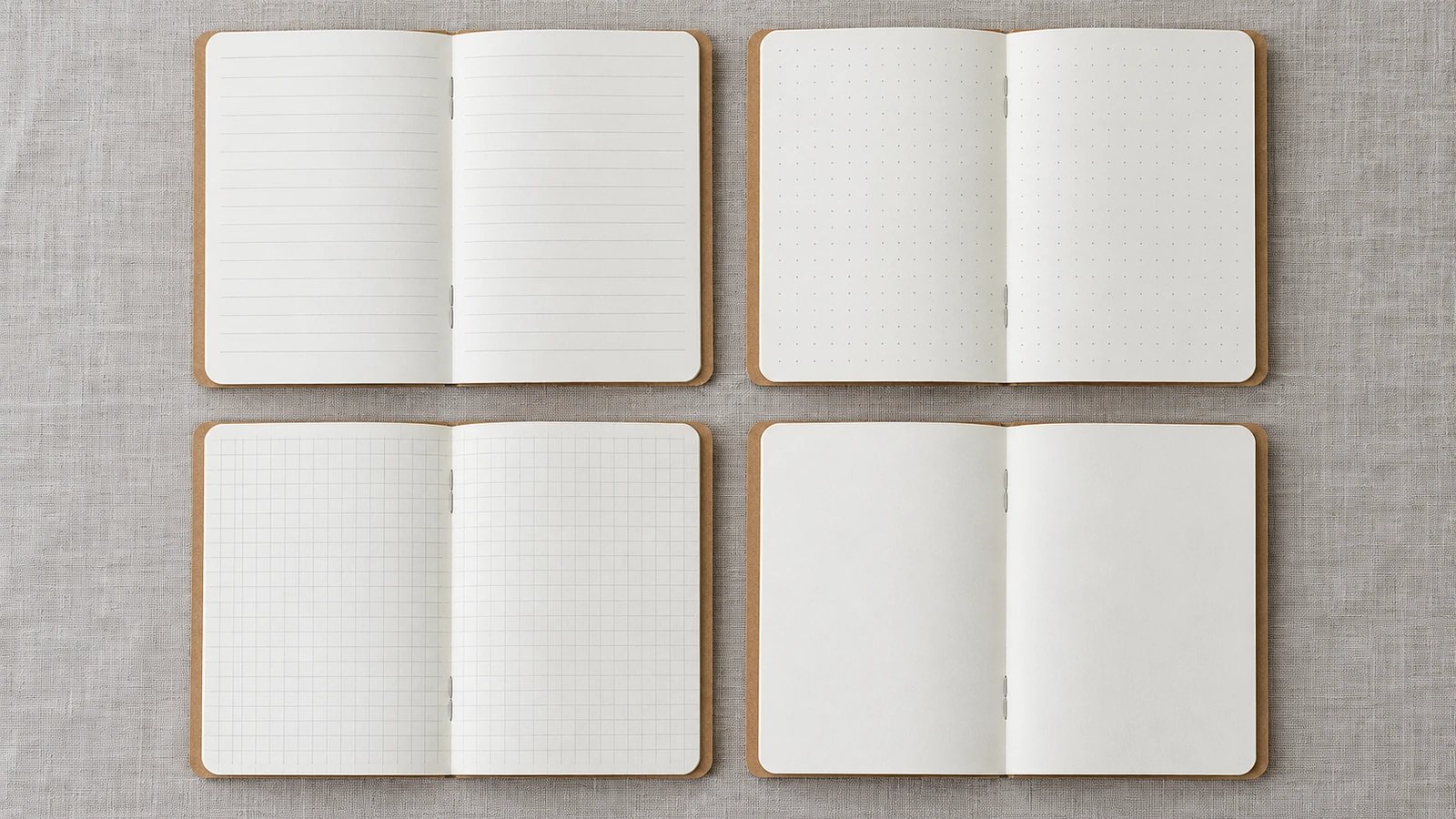
- Page ground: the writing pattern, which can be ruled lines, a dot grid, a square grid or blank.
- Brand layer: a logo header, footer, corner mark, tagline or light tint.
- Structure layer: templates such as meeting notes, weekly planners, checklists or event agendas.
- Function layer: page numbers, perforated tear-out lines or variable data such as a recipient's name.
The binding method shapes how these layers can be arranged. In a saddle-stitched notebook, folded sheets are nested and stapled through the spine fold. Each folded sheet produces four pages, so the page count increases in multiples of four. Because of this, page 2 and the second-to-last page are printed on the same physical sheet. If you want a section change, such as ten ruled sheets followed by a block of meeting templates, plan it around whole folded sheets. Otherwise the printer has to reshuffle the imposition, which is the arrangement of pages on the press sheet. Our kraft paperboard notebooks with saddle-stitched binding follow this structure, and the product page covers size, paper and cover specifications. This article focuses only on the page layout.
The market is large enough that inner-page planning deserves its own brief. U.S. promotional product sales reached about $26.09 billion in 2023, and sustainable products accounted for about $3.09 billion, or 12.2%, according to the PPAI 2023 Industry Sales Report[4]. These figures cover all promotional products, not notebooks alone.
How to design customizable notebook pages in six steps
Step 1: Define the job the pages must do
Start with who writes in the notebook, where they write and how long they will use it. A conference attendee needs a few days of session notes. A new hire may use the notebook for months of one-on-ones. A field team may need pages they can tear out and hand over. Stationery also competes with other merchandise for attention. A PPAI survey of more than 3,000 U.S. consumers aged 16–60 found that apparel ranked first in every age group, and stationery did not (PPAI end-buyer deep dive[5]). A notebook earns its place through usefulness, so write down the main use case in one sentence before you choose any format.
Step 2: Choose the page ground
Match the pattern to the work. Ruled pages suit prose, meeting minutes and training notes. Dot grids suit mixed content such as lists, sketches and simple diagrams, because the dots guide writing without forcing it into lines. Square grids suit engineering, design and data-heavy teams. Blank pages suit creative workshops and sketching. If your recipients have mixed roles, a dot grid is the most neutral single choice.
Step 3: Place the brand layer where it does not get in the way
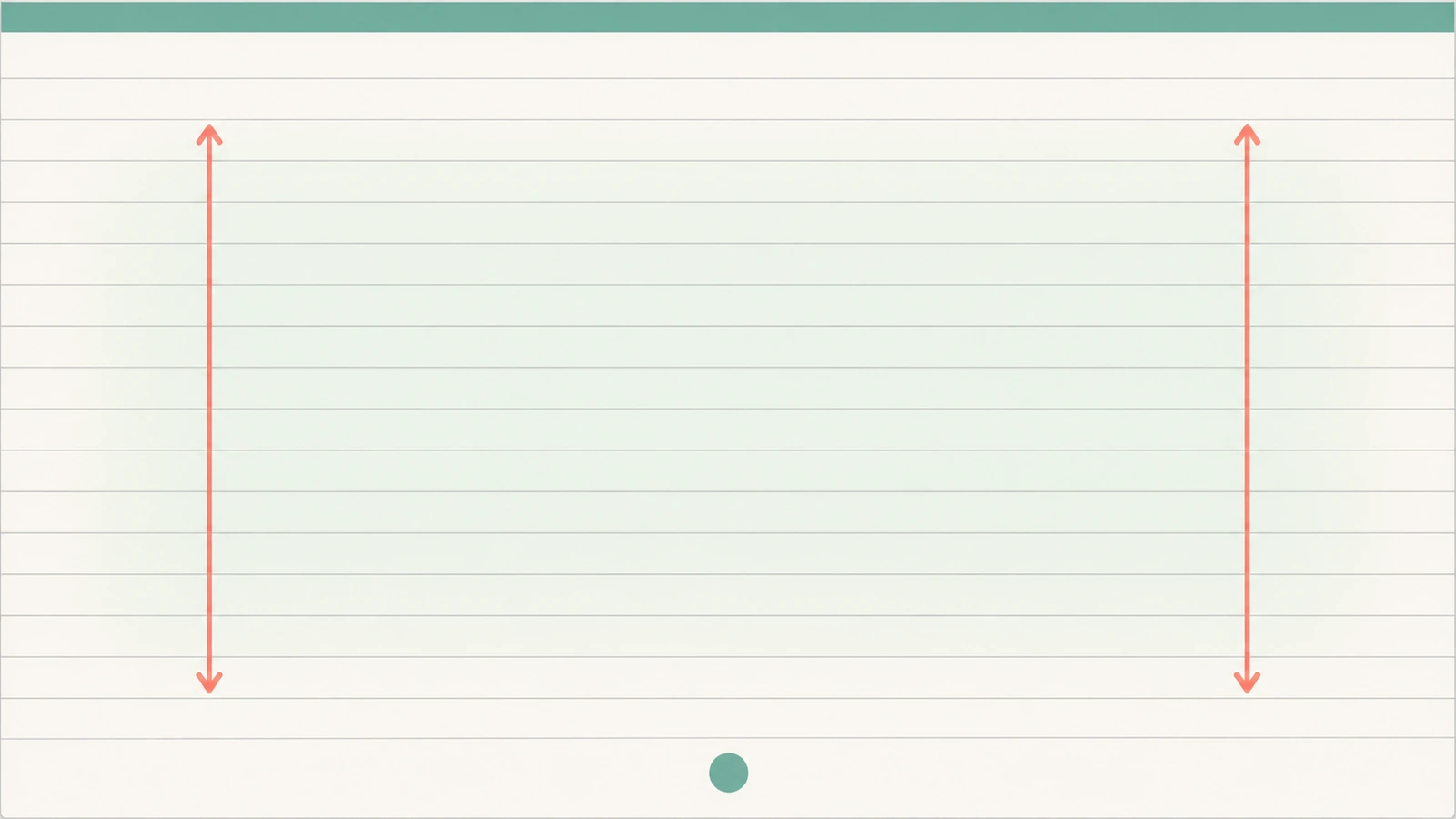
Put the logo in the margin, not in the writing area. A header band at the top or a small footer mark at the bottom keeps the brand visible without taking writing space. Print it in one light color or a tint so that pen ink stays readable when someone writes close to it. A full-strength logo on every page makes notes look cluttered. Many teams also print the full logo on the first and last pages only and use a small mark on the pages in between. Before you approve artwork, check how the brand layer looks on proof. The product page explains the artwork check and sampling stages.
Step 4: Decide on templates and how to mix them
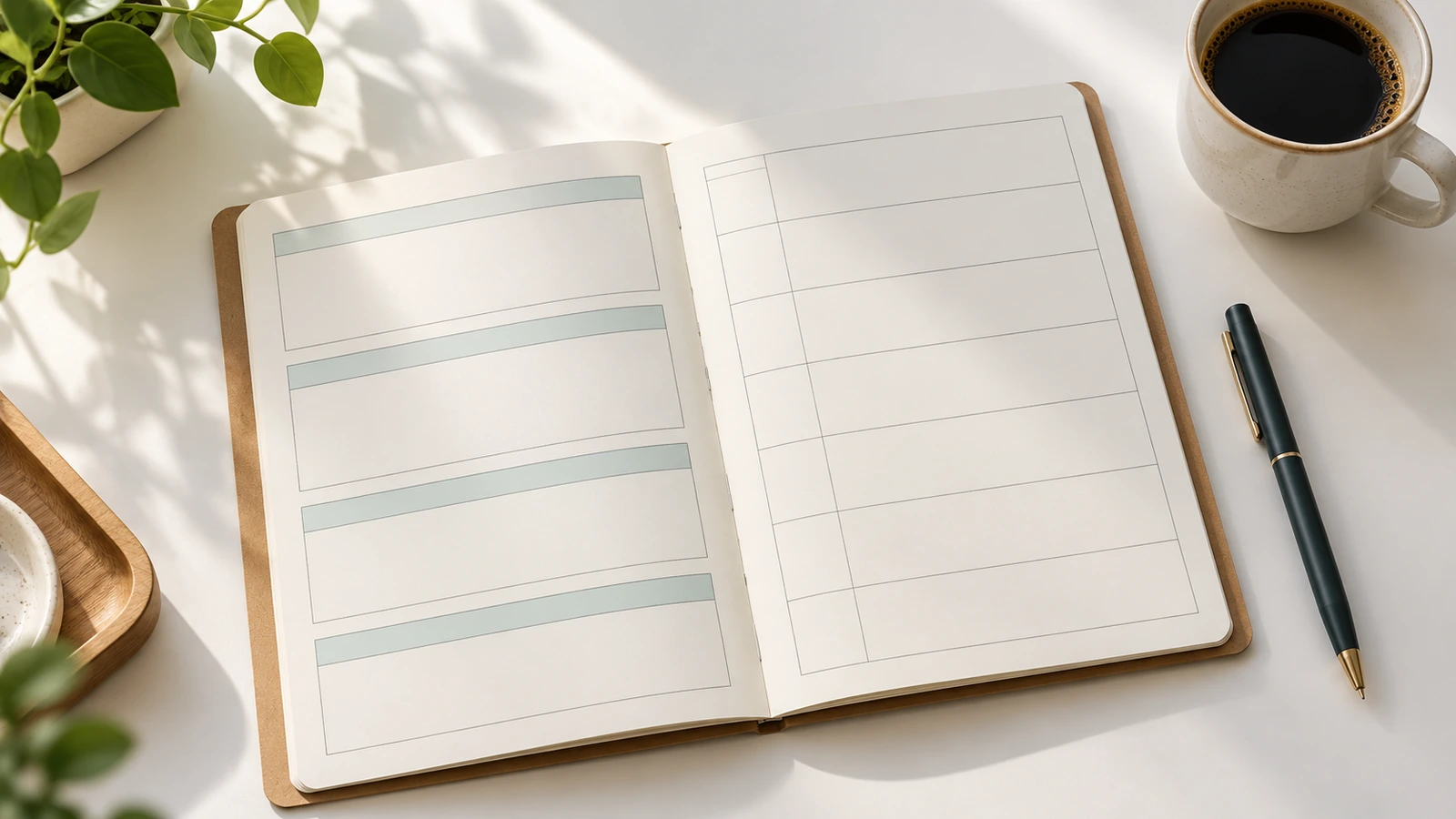
A template only helps if recipients will fill it in. Meeting templates work best with three or four fields: date, attendees, notes and action items. Planner pages should stay undated, with blank date fields, so the notebook stays useful whenever it is handed out. Event notebooks can include an agenda spread or venue map at the front, followed by plain pages. Each additional template is a separate design to set up, so most programs use one repeated design or two designs arranged in blocks of whole folded sheets, as described in the definition above.
Step 5: Add numbering or perforation only for a specific workflow
Page numbers are useful when entries must be traceable, for example in lab notes, compliance logs, audit trails or a meeting record that people cite. They add a sequential printing step. Perforation is useful when pages leave the notebook, such as tear-off feedback forms, handouts or reply cards. It adds a finishing pass. Perforated pages leave a stub when removed, and in a saddle-stitched book the opposite leaf on the same folded sheet stays attached at the fold. Ask the supplier where the perforation line will sit in relation to the staples. Both options add cost, so include them only when you can name the workflow they support.
Step 6: Write a page map for the quote
Send a page map instead of a general description. List each page design, how many pages use it, its position in the sequence, the number of ink colors and any numbering, perforation or variable data. A line such as "Pages 1–2 welcome spread, 2 colors; pages 3–30 dot grid with footer mark, 1 color; pages 31–32 contact page" lets a supplier quote accurately the first time. The other parts of the brief, including size, paper, cover finish and packing, are covered in the custom cardboard notebook specification guide.
Ruled vs. dot vs. grid vs. template pages
The table below compares the common custom notebook paper formats by use and by how they affect production. "Relative setup" describes how much prepress and press work a format adds compared with a single-color repeating page. It is not a price.
| Format | Best for | Ink coverage | Relative setup | Watch-out |
|---|---|---|---|---|
| Blank | Workshops, sketching, creative brands | None or brand mark only | Lowest | Can feel generic without a brand layer |
| Ruled | Training, minutes, general office notes | Light | Low | Line weight that is too dark competes with handwriting |
| Dot grid | Mixed teams, lists, diagrams | Very light | Low | Very faint dots may disappear on tinted paper |
| Square grid | Engineering, design, data work | Moderate | Low to moderate | Dense grids make written notes harder to scan |
| Meeting template | Client teams, project leads | Moderate | Moderate (one more design) | Too many fields leave half-empty pages |
| Undated planner | Onboarding, long programs | Moderate to heavy | Moderate to higher | Dated versions go out of date before distribution |
| Mixed sections | Event kits combining agenda and notes | Varies | Higher (multiple designs) | Section breaks must align with folded sheets |
Pattern density and paper quality interact. Independent reviewers have found that a well-made budget notebook can handle heavy ink use. One fountain-pen reviewer reported "hardly any show-through and no bleedthrough at all" on a handmade personalized notebook (UK Fountain Pens review[6]). Notebook Stories[7] found that a 97-cent journal resisted bleed-through almost completely. Paper performance depends on the stock, not the price, so test your chosen pattern on the actual paper during sampling.
How each personalized notebook pages choice affects cost and MOQ
Inner-page cost depends mostly on setup, not on the amount of ink. Every design, color and finishing step must be prepared before the first good sheet comes off the press. That fixed work is spread across the order, which is why added complexity usually raises the minimum quantity at which a job makes sense.

| Cost driver | Why it adds cost | Effect on minimum quantity | How to control it |
|---|---|---|---|
| Number of unique page designs | Each design needs its own prepress and, on offset presses, its own plates | Rises with each design | Repeat one design; limit sections to two |
| Ink colors per page | One spot color is a single run; full color (CMYK) uses four process inks | Higher with full color on offset | Print the inside in one brand color and keep full color for the cover |
| Variable data (names, IDs) | Each notebook differs, which requires digital printing | Can be lower for short runs, but unit cost is higher | Print names on one page instead of every page |
| Page numbering | Sequential numbers need a numbering-capable pass | Moderate increase | Number only the sections that need traceability |
| Perforation | Extra finishing step and tooling | Moderate increase | Perforate one section instead of every page |
| Heavy coverage (tints, full bleeds) | More ink, more drying time, more risk of show-through | Slight increase | Use line art and light tints |
This page does not list quantities or prices, because those depend on the full specification. The most useful step is to request a quote for two versions: a baseline with one design in one color, and your preferred layout. The difference shows exactly what each upgrade costs. You can request a quote for both scenarios from the product page.
One regulatory point applies to page footers. If you plan to print "made with recycled paper" or a similar claim, the U.S. Federal Trade Commission's Green Guides treat it as deceptive to claim recycled content unless the material was recovered from the waste stream (16 CFR 260.13[8]). Print the claim only when the supplier can document it. Demand for such claims keeps growing: PPAI cites SAGE data showing distributor searches for "eco-friendly" rose 390% from 2017 to 2024 (Promo's Sustainability Journey[9]).
FAQ
FAQ: Can I customize notebook pages differently within the same order?
Yes. Most printers can combine several page designs in one notebook, for example an agenda spread followed by dot-grid pages. In saddle-stitched notebooks, plan each section in whole folded sheets of four pages to keep imposition simple. Each additional design adds setup, so specify the exact page map when you ask for a quote.
FAQ: Should the logo appear on every inner page?
Usually not at full size. A small footer mark or a slim header band in one light color keeps the brand visible without taking writing space. Many programs reserve the full logo for the first and last pages, where it reads as a welcome and sign-off.
FAQ: Are custom printed journal pages with recipient names possible?
Yes, through variable-data digital printing, which allows every copy to differ. Printing the name on a single dedicated page, such as a "this notebook belongs to" page, usually costs less than personalizing every page. Ask for the per-unit difference in your quote.
FAQ: Which page format works best for a mixed corporate audience?
A dot grid. It supports writing, lists and sketches equally well and uses very little ink, so it suits roles that range from sales to engineering. Choose ruled pages if most users take long-form meeting notes.
FAQ: Do numbered or perforated pages raise the minimum order quantity?
They typically add setup and finishing work, which can raise the quantity at which an order is economical. The impact depends on the full specification, so request a quote with and without these options to see the difference.
FAQ: Can I print sustainability claims on the inner pages?
Only if the supplier can document them. In the U.S., 16 CFR 260.13 restricts recycled-content claims to materials actually recovered from the waste stream. A neutral footer, such as your logo or a short tagline, carries no compliance risk.
Key takeaways
- Customization and eco-friendly positioning are driving promotional products. — 65% of distributors and 64% of suppliers report rising eco interest (Source)
- Usable pages protect the brand impression. — 68% of Gen Z say branded merchandise positively affects brand perception (Source)
- Sustainable merchandise is a measurable share of the market. — $3.09 billion, or 12.2% of 2023 U.S. promotional sales (Source)
- Stationery has to earn attention. — apparel ranked first across a 3,000+ consumer survey (Source)
- Paper quality, not price, decides bleed-through. — a 97-cent journal resisted bleed-through almost completely (Source)
- Printed recycled-content claims need documentation. — governed by 16 CFR 260.13 (Source)
- Buyers increasingly ask for eco options. — "eco-friendly" searches rose 390% from 2017 to 2024 (Source)
Conclusion
Good inner pages come from a few decisions made in order. Define the job, choose a page ground that suits it, keep the brand in the margins, use templates only where people will fill them in, and add numbering or perforation only for a named workflow. Then put everything into a page map. That map controls cost, because each additional design, color or finishing step adds setup that the order has to absorb. When your layout is ready, combine it with the cover and paper specification for our custom cardboard notebooks with kraft paperboard covers and request a quote for both a baseline and your preferred version.
Footnotes
- PPAI, "PPAI Research: Eco-Friendly, Customization 'Dominate' Promo's New Product Offerings," July 3, 2024. https://www.ppai.org/media-hub/ppai-research-eco-friendly-customization-dominate-promos-new-product-offerings/ ↩
- PPAI, "Why Promo Clicks With Gen Z," March 1, 2024. https://www.ppai.org/media-hub/ppai-consumer-study-why-promo-clicks-with-gen-z/ ↩
- PPAI, "Joint PPAI–ASI Study Finds Promo Among the Lowest Carbon-Impact Advertising Channels," February 4, 2026. https://www.ppai.org/media-hub/joint-ppai-asi-study-finds-promo-among-the-lowest-carbon-impact-advertising-channels/ ↩
- PPAI Magazine, April 2024, 2023 Industry Sales Report. https://flipbook.ppai.org/2024-04-01 ↩
- PPAI, "Understanding End Buyers: 2024 Industry Deep Dives," July 30, 2024. https://www.ppai.org/media-hub/understanding-end-buyers-2024-industry-deep-dives/ ↩
- UK Fountain Pens, "Review: Hand Made Notebooks by Personalised Stationery Co. UK," April 8, 2017. https://ukfountainpens.com/2017/04/08/review-hand-made-notebooks-by-personalised-stationery-co-uk/ ↩
- Notebook Stories, "Notebook Review: Pen Gear Memo Book and Journal," September 24, 2024. https://www.notebookstories.com/2024/09/24/notebook-review-pen-gear-memo-book-and-journal/ ↩
- Electronic Code of Federal Regulations, 16 CFR 260.13, "Recycled content claims." https://www.ecfr.gov/current/title-16/chapter-I/subchapter-B/part-260/section-260.13 ↩
- PPAI, "Promo's Sustainability Journey," October 1, 2025. https://www.ppai.org/media-hub/promos-sustainability-journey/ ↩












The information below is required for social login
Sign In
Create New Account