


 Blog PDF for offline reading
Quick answer: Refrigerator magnets personalized with a recipient's name, a location-specific design or an event date give a promotional item a reason to stay on the fridge. Businesses plan these runs by separating a shared base design from a variable print layer, cleaning recipient data before artwork starts, proofing the extreme cases, and packing by recipient or destination.
Why generic branded magnets get ignored
The magnet is one of the most kept promotional items, but it is also one of the least loved. In the ASI 2026 Ad Impressions Study[1], branded magnets scored a 59% favorable impression rate, the lowest of any category measured. The same study found that 67% of recipients keep a promotional magnet for at least a year and 63% are more likely to do business with the advertiser who gave it. People keep magnets, but they do not feel much about them.
The reason is saturation. A typical household fridge already carries logos from a pizza place, a dentist and a plumber, and one more logo competes for space it cannot win on looks alone. A generic magnet ordered in bulk ends up in a kitchen drawer, along with whatever the program spent on it. The spend at stake is large. PPAI's economic impact study with Oxford Economics[2] puts U.S. spending on promotional products at about $50 billion in 2025, and PPAI's 2025 distributor sales volume estimate[3] puts promo channel sales at a record $27.1 billion the same year.
Personalization changes what the magnet is. A magnet that carries the recipient's own name, the town where they bought their home, or the date of the event they attended is no longer advertising. It becomes a keepsake, and keepsakes keep their place on the fridge. Market researchers are tracking the shift. HTF Market Intelligence sizes the custom fridge magnet segment[4] at roughly US$450 million, growing about 6.5% a year toward US$700 million by 2033, with North America the largest market. This guide covers how to plan personalization when the order runs to hundreds or thousands of pieces, not one.
What counts as a personalized refrigerator magnet?
In business programs, "personalized" covers four levels of variation. Each level brings its own cost driver and planning risk.
- Recipient-level: each piece carries a different name, initials or short message. This is the most personal level and the hardest to manage, because every unit is unique and a single misspelling becomes a visible mistake.
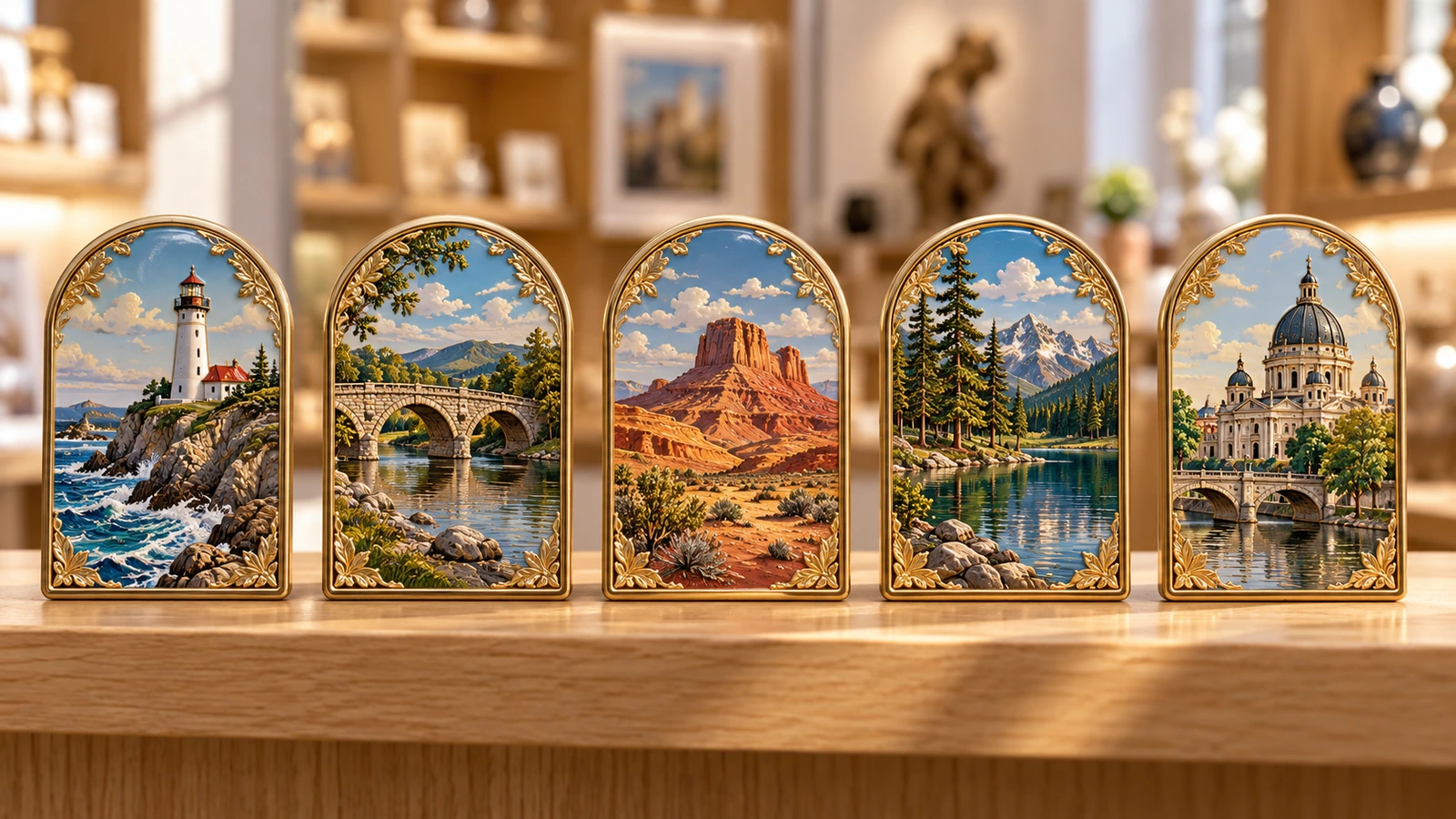
- Segment-level: one version per branch office, city, sales territory or attraction. A destination program might run one landmark per site on a shared frame.
- Date-level: an event date, closing date, graduation year or anniversary. The date fixes the moment the gift refers to and turns it into a record.
- Variable-data run: any combination of the three above, driven from a spreadsheet and output as a single production job.
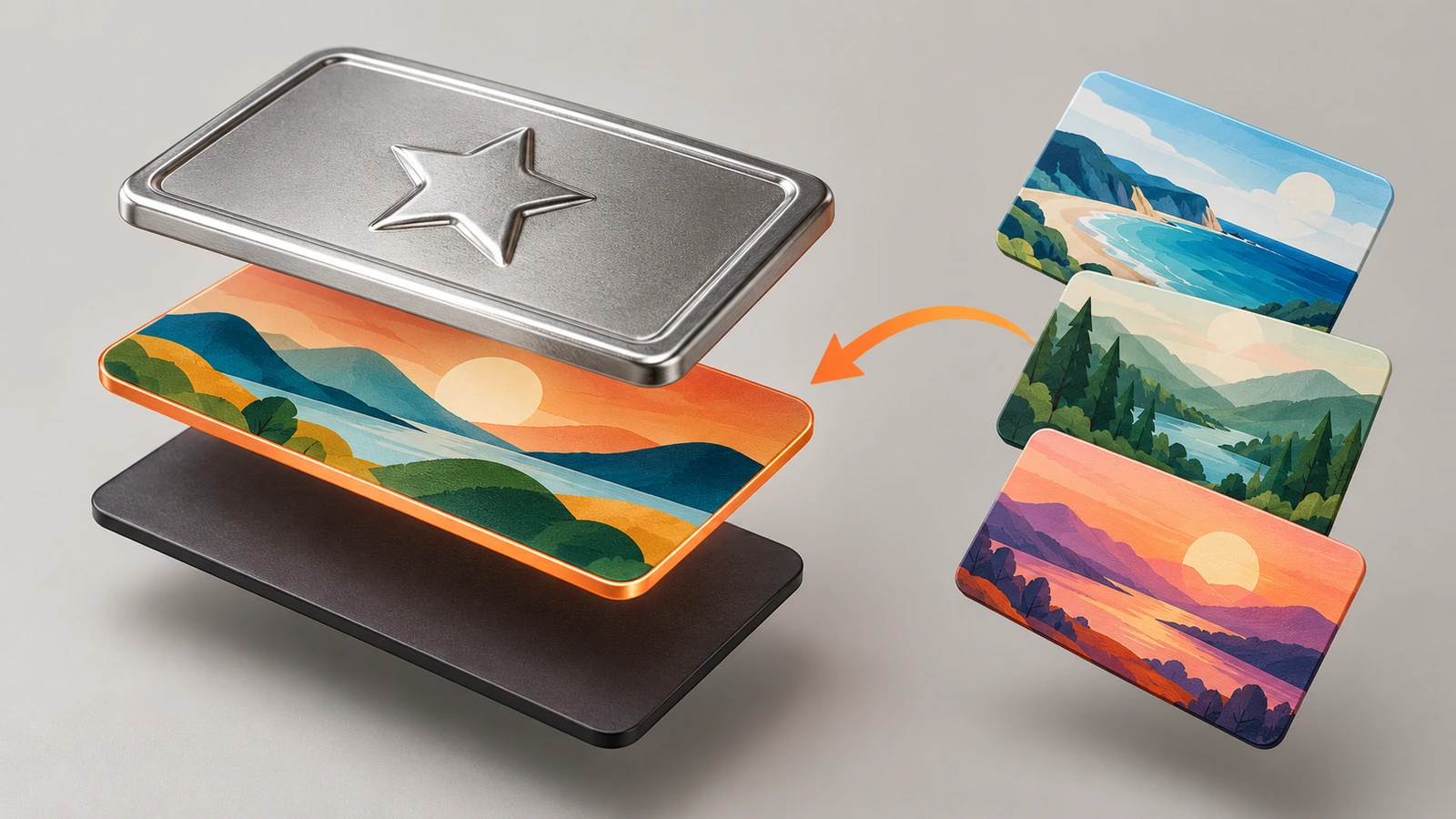
The base material affects which parts can vary. Tinplate is thin steel with a tin coating. Its tin mill properties are standardized by ASTM International under A623[5]. The steel core is what makes a tin face rigid enough to carry a stamped outline or raised embossed detail. That relief is formed by tooling, so in most constructions it stays identical across the run. The printed layer is where names, places and dates can change. The practical rule: put the brand, shape and premium relief in the shared layer, and put the personal details in print.
Where personalization pays off for businesses
Corporate gifting
Holiday and milestone gifts work best when the recipient can tell the item was made for them. A magnet with the client's name and a shared embossed company emblem fits in a card envelope or gift box and costs far less per piece than most hard goods. It also stays on display at home, where a desk gift would not. Teams that customize magnets for employee anniversaries often add the start year, so the same template serves every milestone with only the data changing.
Client retention
Service businesses with a defining moment in the customer relationship get the most from date-level personalization. Examples include real estate closings, a first year of lawn service, and a completed renovation. A magnet showing the property's street or neighborhood and the closing date gives the homeowner a memento. It also keeps the agent's contact details in the room where household decisions are made. Because the ASI data link magnet gifts to a 63% higher willingness to do business with the giver, the date gives the client a reason to keep the magnet, and keeping it is what puts the brand in front of them again.
Destination souvenir programs
Museums, parks, tourism boards and multi-site attractions run segment-level programs. They use one frame design and finish across the network, with a location-specific scene for each site. Visitors who see the shared frame recognize a series and buy more than one. Operators stock each shop with its own version without commissioning a new design from scratch. Seasonal or anniversary editions can add a year without disturbing the core artwork.
Events and conferences
Attendee-name magnets in a welcome kit, or a dated edition sold at the venue, turn a short event into something that stays in the home afterward. The event date matters most here. It limits the item to one moment, which is why attendees keep it.
How to plan refrigerator magnets personalized at bulk-order scale
The physical construction is rarely what breaks a personalized run. Data errors, rigid templates and packing mix-ups are. The steps below cover the planning that happens before artwork reaches a supplier. Specification, artwork preparation and sample inspection are covered on our custom tin fridge magnets with stamped and embossed detail page, so they are only referenced here.
Step 1: Match the personalization level to the program goal
Start from the outcome, not the feature. Retention programs need recipient- or date-level detail, because the gift has to point to that client's moment. Destination programs need segment-level variation, because the buyer is choosing a place, not their own name. Brand-awareness giveaways at trade shows rarely justify per-person data. Picking the lowest level that still gives the recipient a reason to keep the magnet keeps proofing and packing manageable.
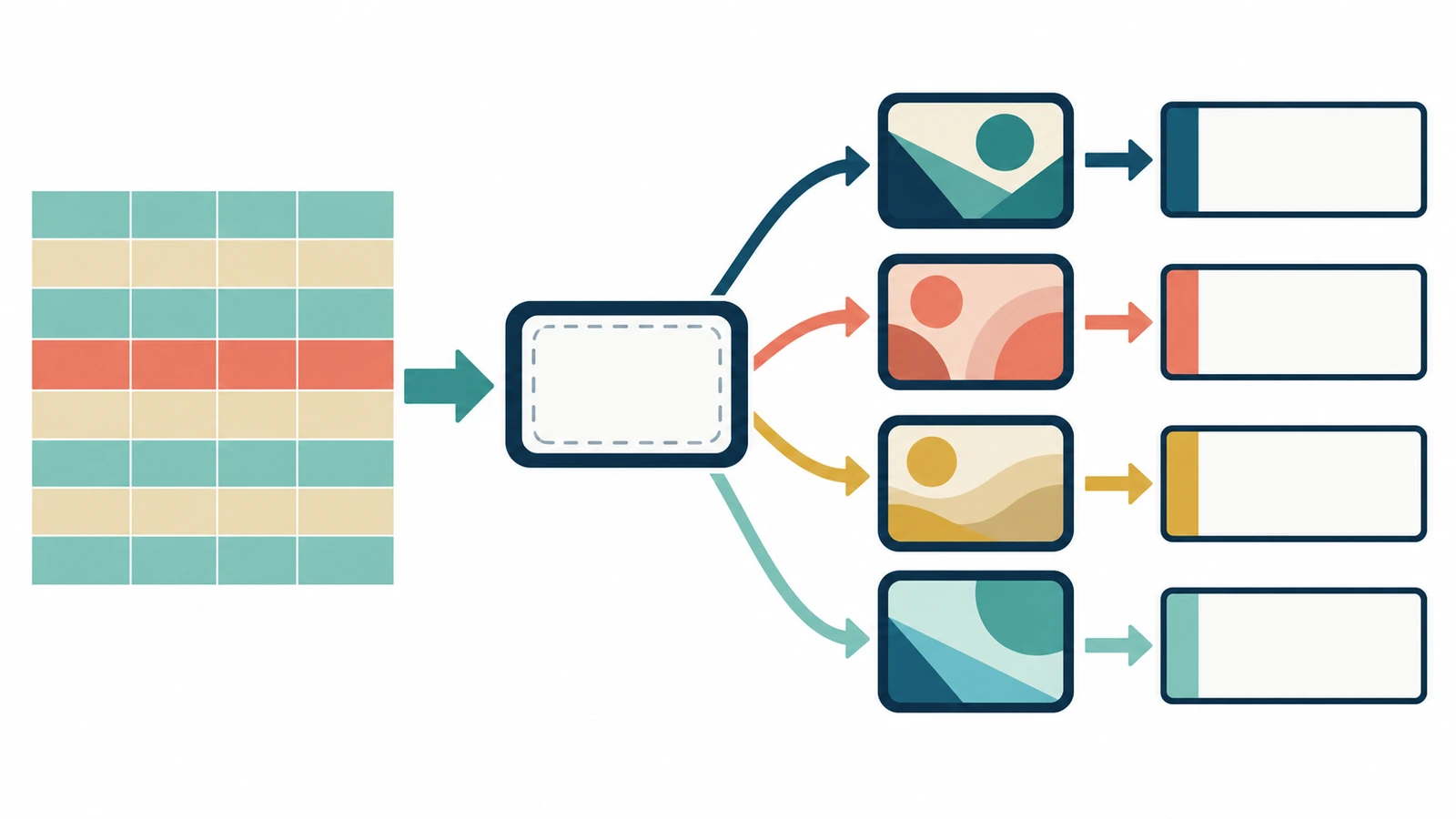
Step 2: Split the design into a shared layer and a variable layer
Decide which elements will never change, such as outline shape, embossed emblem, border, brand colors and backing. Then decide exactly which fields will change. Write the variable fields down as named slots, for example first name, city and event date. Every other element is locked. This split lets the tooling be built once while the print run carries the variation. It also stops late requests to "just tweak the logo on the Chicago version" from turning one job into several.
Step 3: Clean the data before anyone designs
Export the recipient or location list into one spreadsheet with a column for each variable slot. Remove duplicates, standardize capitalization, and choose one date format (for example, day-month versus month-day for international recipients). Check every character the template font must render, including accents, apostrophes, hyphenated surnames and non-Latin scripts. Collect only the fields that will be printed. A magnet does not need a mailing address, and holding less personal data reduces privacy exposure. Have someone who knows the recipients sign off on the list, because the supplier will print exactly what it receives.
Step 4: Design for the extremes, not the average
A template that looks balanced with "Ana" can break with "Maximilian-Alexander". Set a character limit per slot, define how text scales or wraps, and decide what happens when a name exceeds the limit (initials, a shorter form, or a second line). Then build a stress set of proofs: the longest entry, the shortest, one with special characters, and one from each segment. Approving the stress set approves the rule, so you do not need to check thousands of individual pieces.
Step 5: Plan sorting, kitting and distribution with the data
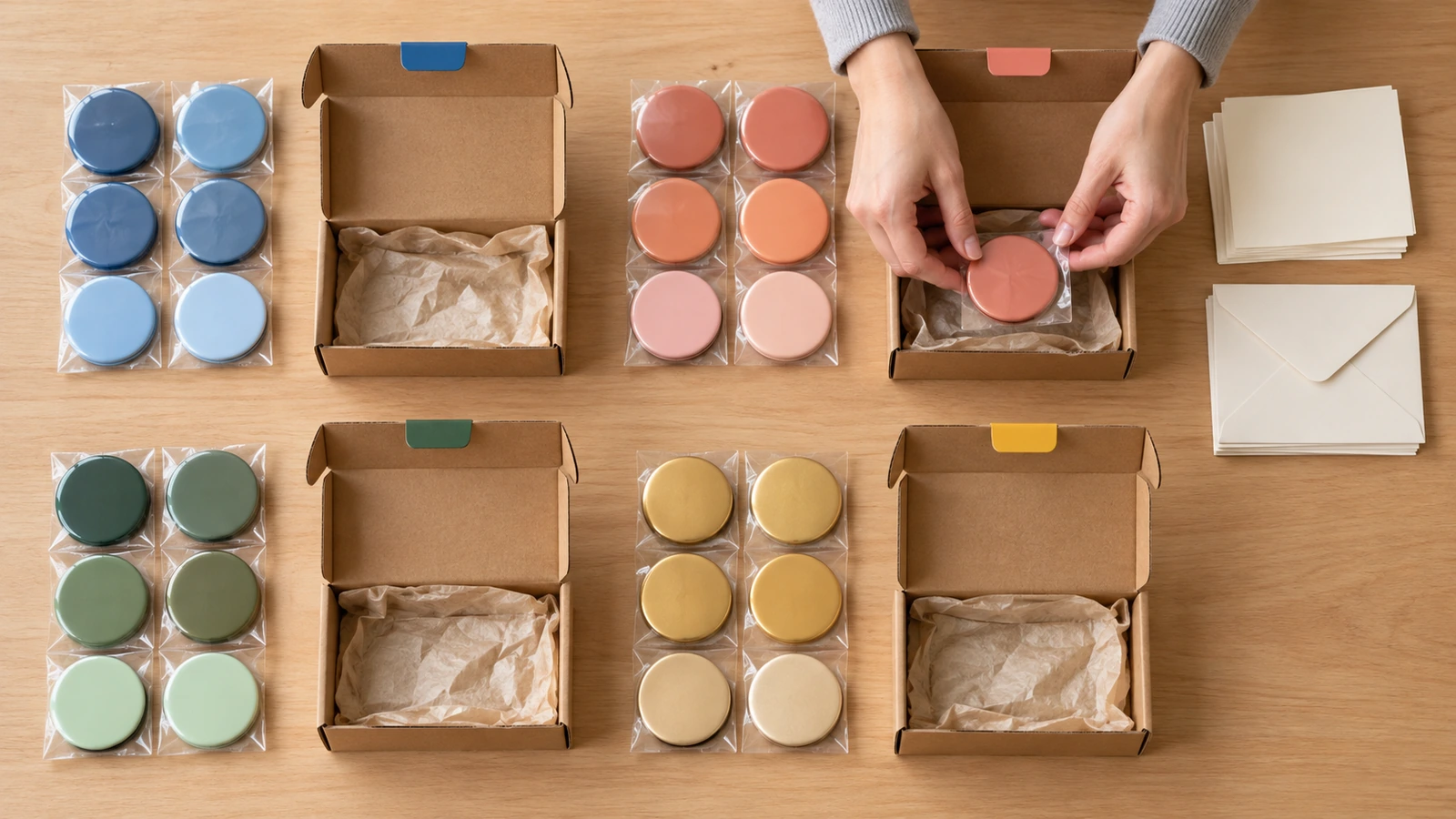
Per-recipient magnets are only useful if each one reaches the right person. Add a sequence number or group column to the spreadsheet and ask that output be packed in that order: by sales rep, by branch, by event check-in table or by shop. Destination programs should agree in advance how each location's version is bagged and labeled on the outer carton. If magnets go inside a greeting card or welcome kit, match the card list and the magnet list from the same file so the two never drift apart.
Step 6: Work backward from the distribution date
Dated programs cannot slip. A magnet printed with an event date has no value after the event. List the hard date, then work back through internal data sign-off, proof approval, the production and shipping window quoted by the supplier, and your own kitting time. Treat the quoted lead time as one input and confirm it in writing. Do not assume a timeline from a previous order or a different construction.
Step 7: Check the audience and the destination market
A flat magnet with a fully bonded backing is a very different product from loose, small, high-powered magnets. Still, the intended audience and the sales channel decide which rules apply. In the U.S., the CPSC's Safety Standard for Magnets[6], codified at 16 CFR Part 1262[7], requires that any loose or separable magnet small enough to fit the small-parts cylinder has a flux index below 50 kG² mm². It covers products intended for entertainment, jewelry, mental stimulation or stress relief made after October 21, 2022. Items designed for children fall under toy safety rules based on ASTM F963[8]. The CPSC's consumer safety guidance[9] explains why: two swallowed magnets can attract each other through intestinal tissue. California sales may also trigger Proposition 65 warning obligations[10], and Health Canada has published a notice on small, powerful magnets[11]. Tell your supplier who the audience is and where the magnets will be sold or mailed, and ask what documentation they can provide for that market.
Four personalization models compared
The right model depends on how much each recipient's version needs to differ and how much data work your team can absorb. Material choices are covered on the product page. This table compares only the personalization logic.
| Model | What changes per piece | Best fit | Data effort | Proofing approach | Main risk |
|---|---|---|---|---|---|
| Single shared design | Nothing | Trade-show giveaways, general brand awareness | None | One proof | Blends into a crowded fridge; lowest reason to keep |
| Segment-versioned | Scene, city or branch per version | Destination souvenirs, multi-location brands | Short version list | One proof per version | Version mix-ups at packing |
| Event-dated edition | Date or year, sometimes event name | Conferences, anniversaries, seasonal editions | One fixed field | One proof, date double-checked | Missed deadline makes stock obsolete |
| Full variable data | Name, message, place and/or date per recipient | Client retention, executive gifting, attendee kits | Full spreadsheet, cleaned and signed off | Stress set of extreme entries | Typos and misrouted pieces |
Many successful programs combine models. A real estate brokerage might use a segment-versioned neighborhood scene with a variable closing date. A park network might sell its standard landmark series alongside a dated anniversary edition. Combining models adds data fields but rarely adds tooling, as long as the shared layer stays locked.
FAQ
FAQ: Can every magnet in one bulk order carry a different name?
Yes, in principle. Variable names are handled in the printed layer from a data file, while the stamped shape and embossed relief stay shared. Confirm with your supplier how variable data is supplied, proofed and sequenced, and send the stress-set proofs described above before approving the full run.
FAQ: Can the embossed detail change between recipients?
Usually not economically, because raised relief comes from tooling built for the run. Keep embossing for elements every piece shares, such as an emblem, border or landmark outline, and use print for the personal details. If segments truly need different relief, plan them as separate versions and discuss the tooling impact in your quote.
FAQ: Will personalized magnets stick to a stainless steel refrigerator?
It depends on the fridge, not the magnet's artwork. Many stainless doors use grades that are weakly magnetic or not magnetic at all. If your recipients' appliances are unknown, mention in the gift card that the magnet also works on filing cabinets or metal boards, and ask your supplier about backing options suited to how the magnet will be used.
FAQ: Does printing a date make the gift feel outdated?
For promotions with an end date, yes. A sale date on a magnet is stale the next week. For milestones such as a home purchase, a wedding, a founding year or a visit to a landmark, the date is the point. It records the moment, which is why people keep it. Use dates for milestones and leave them off offers.
FAQ: Are personalized fridge magnets suitable for households with children?
Flat magnets with a fully bonded backing are a different category from loose, small, high-powered magnets regulated under 16 CFR Part 1262. If your program targets children or families, say so at the quote stage so the construction and documentation match the applicable rules, and avoid small separable parts.
FAQ: How do I get pricing and timing for a personalized run?
Pricing and lead time depend on quantity, how many versions or data fields you need, and the finish. Share your program type, approximate recipient count, number of versions and your hard distribution date through the tin fridge magnet quote page, and request a quote based on that brief.
Key takeaways
- Generic magnets start at a disadvantage on a crowded fridge. — 59% favorable impression rate, the lowest category measured (Source)
- Magnets that earn their place stay there. — 67% of recipients keep a promotional magnet for at least a year (Source)
- Personal gifts carry over into the business relationship. — 63% are more likely to do business with the giver (Source)
- Custom magnets are a growing segment, not a niche. — about US$450 million, growing roughly 6.5% a year toward US$700 million by 2033 (Source)
- The promo channel these programs compete in reached a new high. — $27.1 billion in U.S. distributor sales in 2025 (Source)
- Audience decides compliance scope. — loose small magnets in scope must stay below a 50 kG² mm² flux index (Source)
Conclusion
Personalization does more than decorate a magnet. It fixes the main weakness of promotional magnets, which is that recipients have no reason to care about one more logo. A name, a place or a date gives them that reason. At bulk scale the work is mostly operational: pick the lowest personalization level that still gives the gift meaning, lock the shared design, clean and approve the data, proof the extremes, and pack in the order the pieces will be distributed. When the plan is ready, review the construction, sampling and inspection guidance on our custom tin fridge magnets page and send a brief for a quote.
Sources
- Advertising Specialty Institute (ASI), Ad Impressions Study 2026 (PDF), magnet category figures. Accessed October 2026. ↩
- PPAI / Oxford Economics, Global Economic Impact Study: branded merch's $472 billion footprint, published September 8, 2026. ↩
- PPAI, PPAI Sales Volume Estimate: promo reaches new height but hampered by external volatility, January 2026. ↩
- HTF Market Intelligence, Global Custom Fridge Magnets Market Comprehensive Study 2026–2033, updated February 26, 2026. ↩
- ASTM International, ASTM A623 Standard Specification for Tin Mill Products, General Requirements (A623-22). Accessed October 2026. ↩
- U.S. Consumer Product Safety Commission, Business Guidance: Magnets. Accessed October 2026. ↩
- eCFR, 16 CFR Part 1262 – Safety Standard for Magnets (87 FR 57756, September 2022). ↩
- U.S. Consumer Product Safety Commission, Business Guidance: Toy Safety (ASTM F963). Accessed October 2026. ↩
- U.S. Consumer Product Safety Commission, Magnets Safety Education Center. Accessed October 2026. ↩
- American Cancer Society, Cancer Warning Labels Based on California's Proposition 65. Accessed October 2026. ↩
- Health Canada, Notice: products containing small, powerful magnets. Accessed October 2026. ↩












The information below is required for social login
Sign In
Create New Account