We use cookies to enable our websites to remember information, to help some website functionalities to work properly, to understand how you interact with and use our websites and to display you content and ads that are relevant and engaging for you.
By clicking Accept All you consent to the use of these cookie.
The store will not work correctly when cookies are disabled.
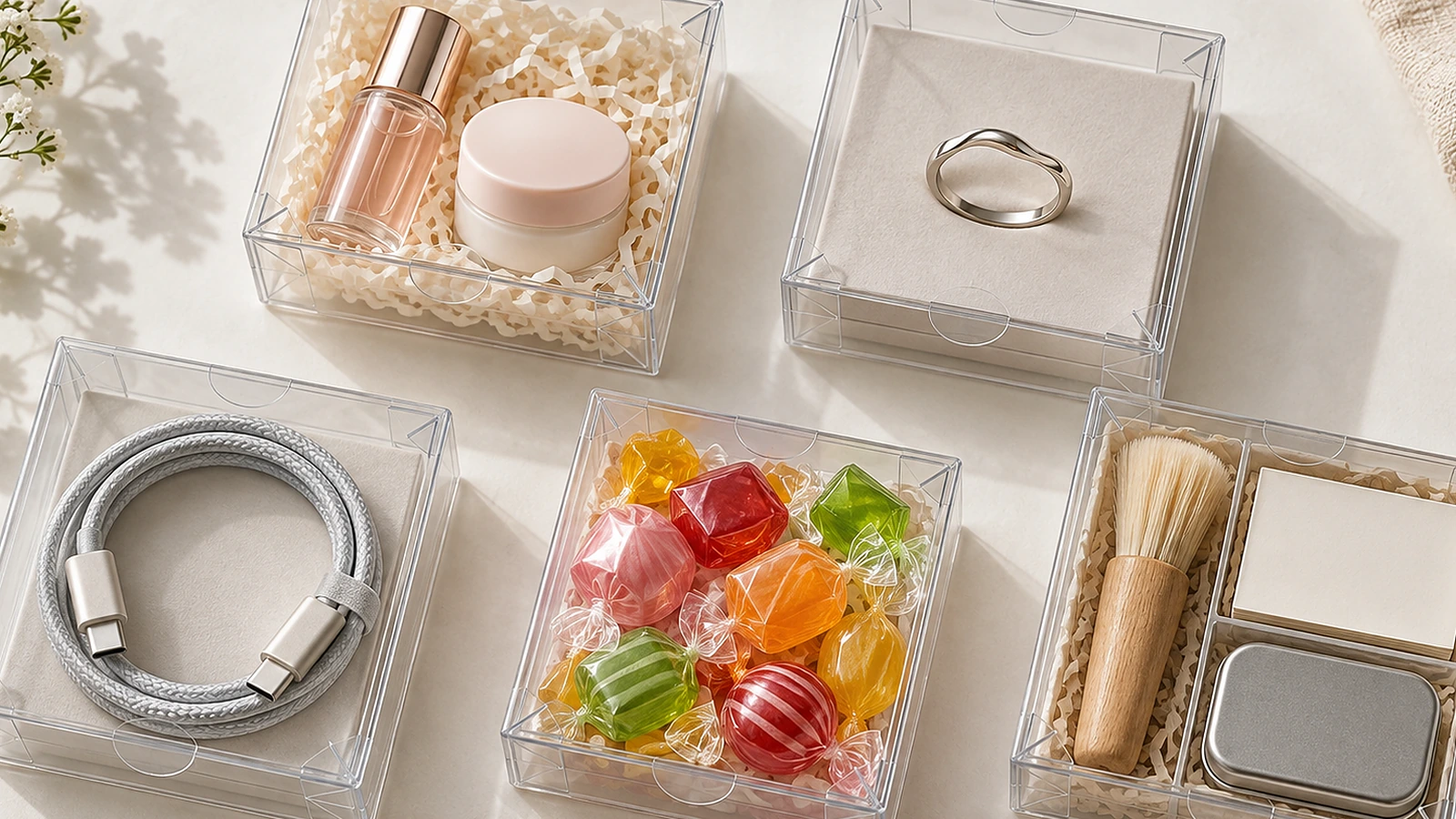
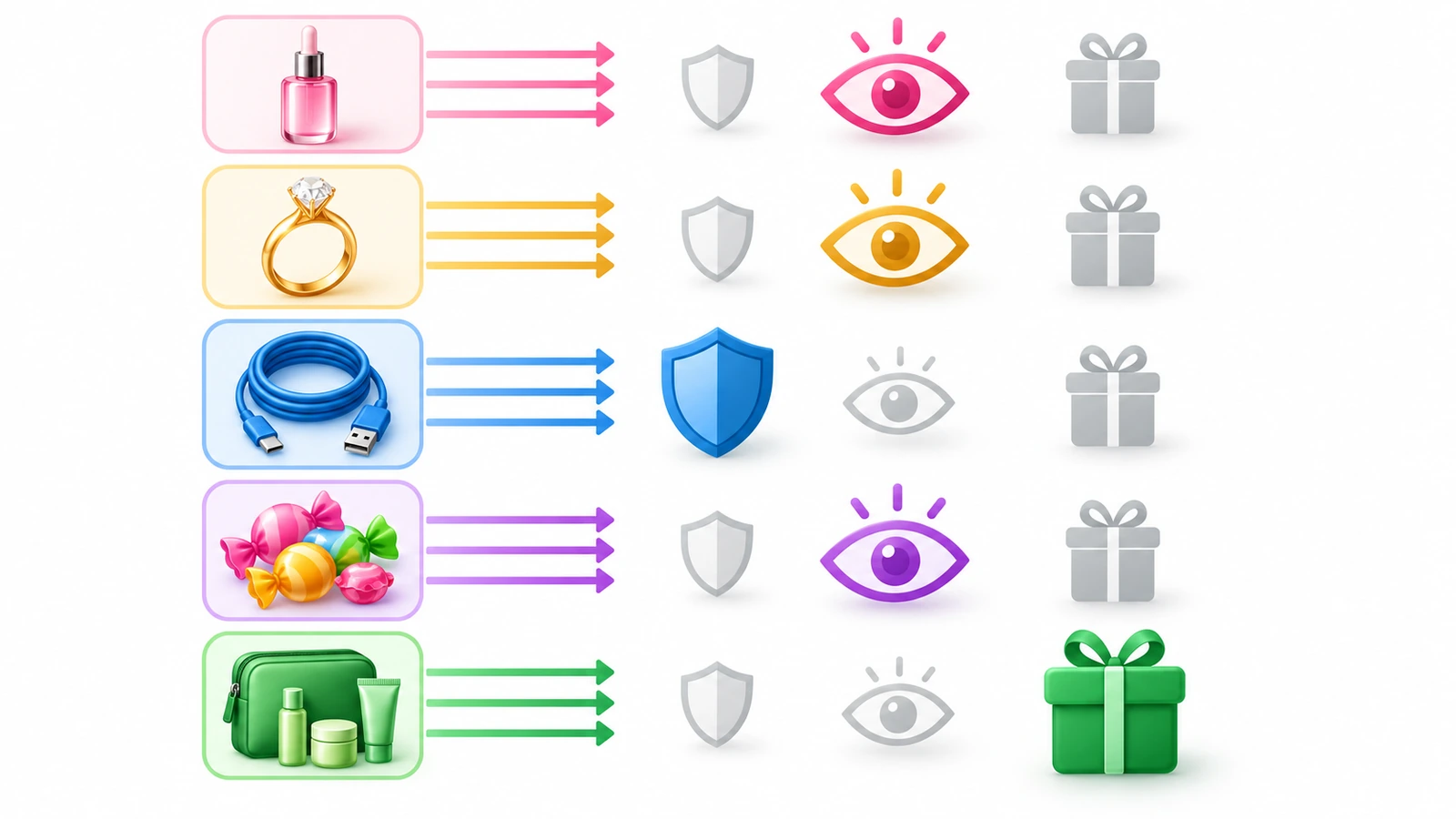
Quick answer: A small plastic box earns its place when the product's appearance does the selling. That applies to cosmetics samples, jewelry, electronics accessories, confectionery and promotional kits. Each category needs something different: samples need tamper evidence, jewelry needs anchoring, accessories need dust protection and peg display, sweets need food-appropriate material, and kits need organized layouts.
If your product is small, it competes for attention against hundreds of items within arm's reach. A small plastic box with clear walls lets the shopper check the shade, the stone, the connector or the candy color without opening anything. This guide is written for brand owners and distributors. It goes through five product categories and sets out what each one requires from clear display packaging in three areas: protection, shelf impact and unboxing.
The problem: opaque cartons hide the very detail that closes a sale on a small item. A paper box printed with a photo of a ring is a promise. A ring seen through a clear wall is proof. Reviewers of clear storage products keep mentioning the same benefit: the clear lid allows easy viewing of the contents[1]. That benefit carries over directly to retail.
The pain: when visibility is missing, shoppers open packs to look, which leads to damaged stock, shrinkage and returns from wrong-variant purchases. When protection is missing, the damage happens before the shelf. One buyer review in our research reported that 6 of 10 containers arrived smashed with lids that no longer fit. A verified purchase review of a clear storage product reported that 6 of 8 units were chipped or cracked. Both happened on arrival.
The solution: match the clear box to the job your category actually needs done. The sections below show how.
What is a small plastic box in retail display packaging?
In retail packaging, a small plastic box is a compact container with transparent walls that holds a single item or a small set. It presents the item on a shelf, a peg hook, a counter or inside a mailer. The most common format for brands is the folding carton made from clear PET. It ships flat, is erected at packing, and closes with tuck flaps or a lock. Rigid hinged clamshells and molded containers also exist. They are more common for storage and food-service than for branded retail display.
The format sits inside a large and growing market. Future Market Insights estimates the clear plastic boxes market[2] at USD 113.7 billion in 2025 and projects USD 174.9 billion by 2035, a 4.4% CAGR. PET accounts for 44.9% of material share, and single-hinged designs for 51.2% of the format mix. The report lists food items, jewelry, electrical parts, optics and cosmetics among the leading applications. That list closely matches the five categories in this guide.
The same research group's market share analysis[3] puts Tier 2 suppliers, the ones focused on mid-sized businesses and customized solutions, at roughly 33% of the market. It also notes continued investment in automation, AI-driven quality control and sustainable materials. For a brand ordering custom small clear boxes, this means plenty of suppliers can make custom runs. Quality consistency is what separates them.
How to match small clear plastic boxes to your product category
Work through the six steps below in order. Steps 1 and 3 to 6 apply to every product. Step 2 is where the categories diverge, and it gets the most space.
Step 1: Rank the three jobs the box must do
Every small display box does three jobs in some proportion: it protects, it sells on the shelf, and it creates an unboxing moment. Rank them before you look at any sample. A jewelry box for a boutique counter puts shelf impact first. A cable accessory shipped through e-commerce puts protection first. An influencer kit puts unboxing first. The ranking tells you where to spend budget and where an off-the-shelf choice is acceptable.
Step 2: Identify what your category demands
Cosmetics samples and travel minis
Protection: the clear box is secondary packaging. The vial, jar or tube inside does the leak containment. The box's job is to stop scuffing on the primary container and to show tampering. A sealed tuck flap or a seal across the opening tells a shopper that no tester has been opened. That matters a lot in cosmetics, where hygiene concerns stop people buying.
Shelf impact: the shade, texture and fill level are the purchase decision. A clear wall shows the actual product color, and printed swatches rarely match it exactly. Discovery sets of three to six minis benefit most, because the shopper compares the variants side by side through the box.
Unboxing: samples often travel as gift-with-purchase items or in subscription boxes. A small clear box keeps them looking deliberate rather than loose.
⚠️ Watch-point: if a formula is light-sensitive, a fully transparent outer box adds light exposure. Either the primary container must provide the protection, or the box artwork should cover more of the surface.
Jewelry and watch accessories
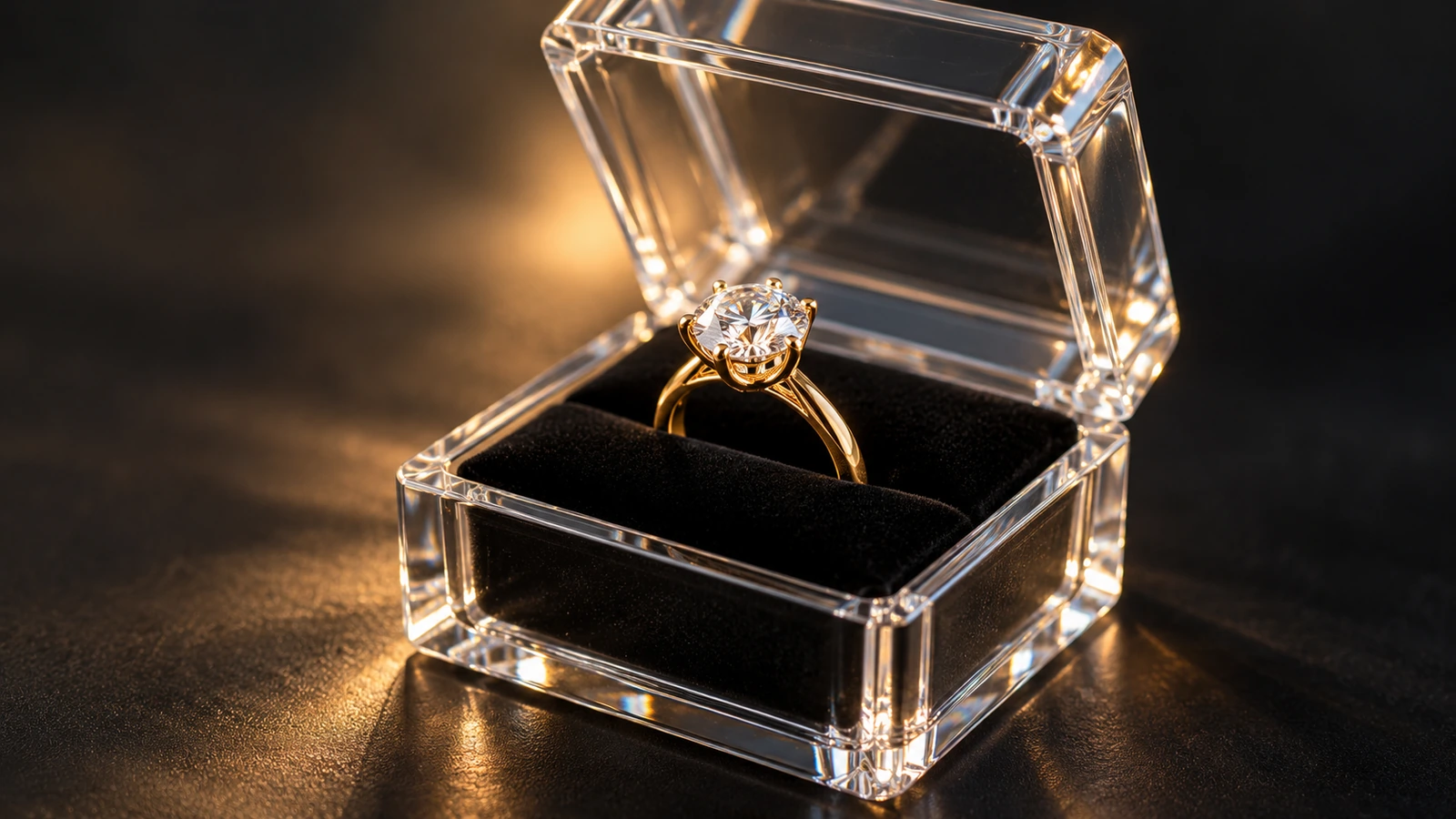
Protection: movement is the main risk. A ring or pendant that slides around scratches itself and the inside of the box wall. A slotted card, foam pad or shaped insert anchors the piece so that it faces forward every time the box is picked up.
Shelf impact: sparkle depends on light reaching the stone. Clear walls let store lighting through from several angles, and a solid paper box with a die-cut window cannot do that. Fingerprints and glare work against this, so think about how often staff will handle the display.
Unboxing: jewelry is frequently a gift, and recipients often keep the box for storage. A closure that opens and closes repeatedly without creasing extends the box's life, and with it the brand's exposure. For higher-value pieces, decide early whether the box will sit behind glass or on an open peg. Open display may call for a security tag position on the insert.
Electronics accessories
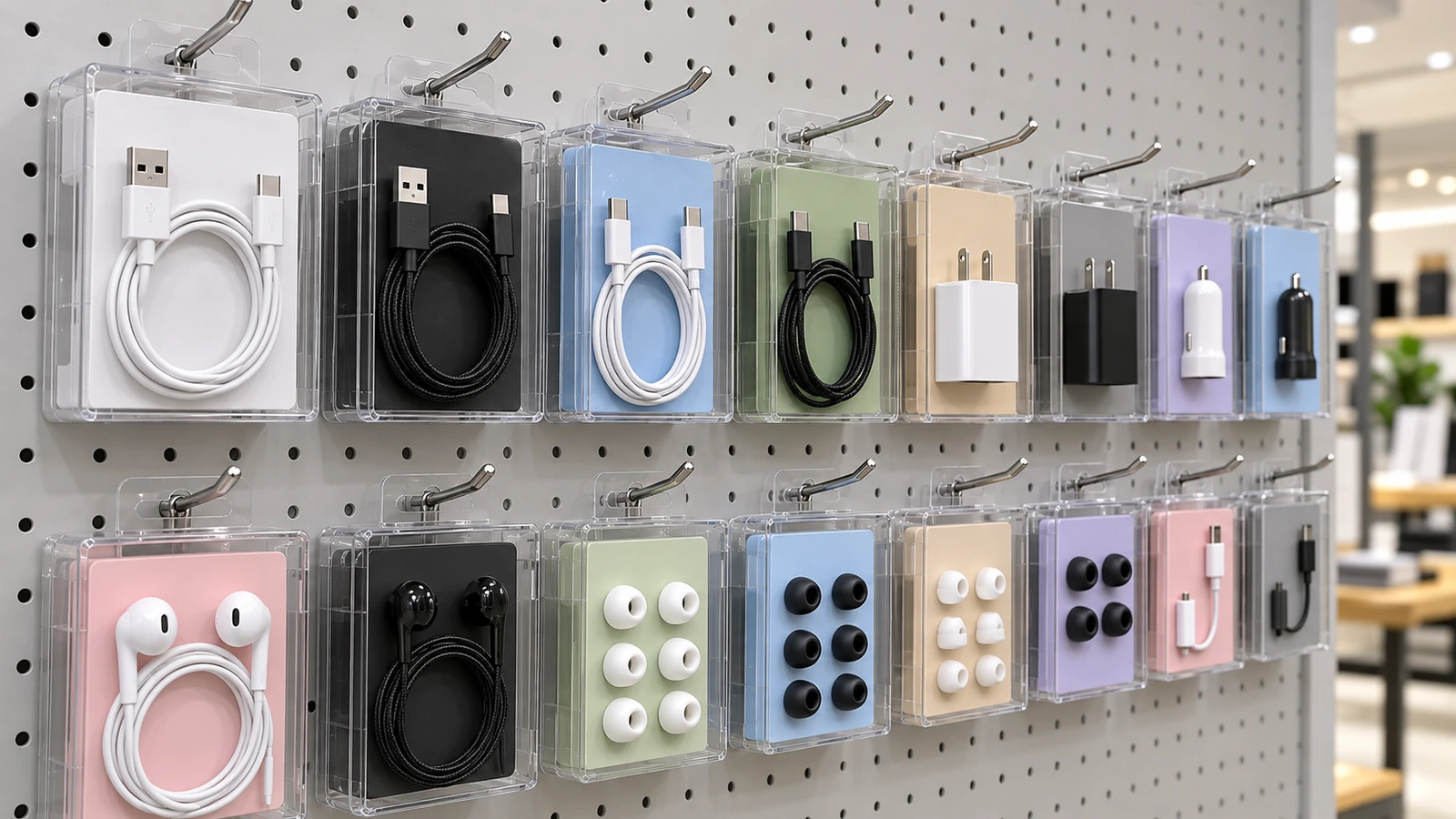
Protection: cables, adapters, earbud tips, memory cards and phone charms mainly need protection from dust and tangling. A box that keeps a cable coiled in its original loop makes the product look new when it is opened. If any component is static-sensitive, ask whether an anti-static inner bag belongs inside the clear box. The box alone does not do that job.
Shelf impact: wrong-variant purchases drive returns in this category. A shopper who can see the connector shape through the wall is less likely to buy the wrong one. Most accessory retail hangs on peg hooks, so plan for a hang tab and front-facing orientation from the start.
Unboxing: the opening should not need a blade. Hard-to-open blister packs are a well-known frustration, and a tuck-end clear box solves it while still showing the product.
Watch-point: transparent packaging leaves less room for compatibility and specification text. That information usually moves to a printed insert card or a back panel, which the step 4 section below covers.
Confectionery and gourmet treats
Protection: macarons, truffles, chocolates and decorated cookies are fragile and easy to crush. A box that holds its shape under light stacking pressure protects the product's appearance, and appearance is the product. A folding box is not an airtight container, so freshness still depends on an inner wrap, a liner or a sealed primary pack.
Material: the material question matters more here than in any other category. A peer-reviewed article indexed in PubMed Central reports that phthalates in PVC containers can migrate into food[4]. This is one reason food brands increasingly specify PET. Any food-contact claim still needs documentation from the supplier. The evidence to request is covered in the food-contact section of our clear PET folding box page, so it is not repeated here.
Shelf impact: candy color is the advertisement. Clear boxes do especially well at checkout counters, in seasonal displays and at bakery cases, where impulse purchases dominate.
Unboxing: wedding favors, corporate gifts and holiday assortments rely on the "small treasure" effect. Ribbon, a printed band or a sticker seal adds occasion without hiding the treats.
Watch-point: keep displays out of direct sun in shop windows. Chocolate will soften whatever it is packed in, and the clear wall makes any melting visible.
Promotional kits and sample sets
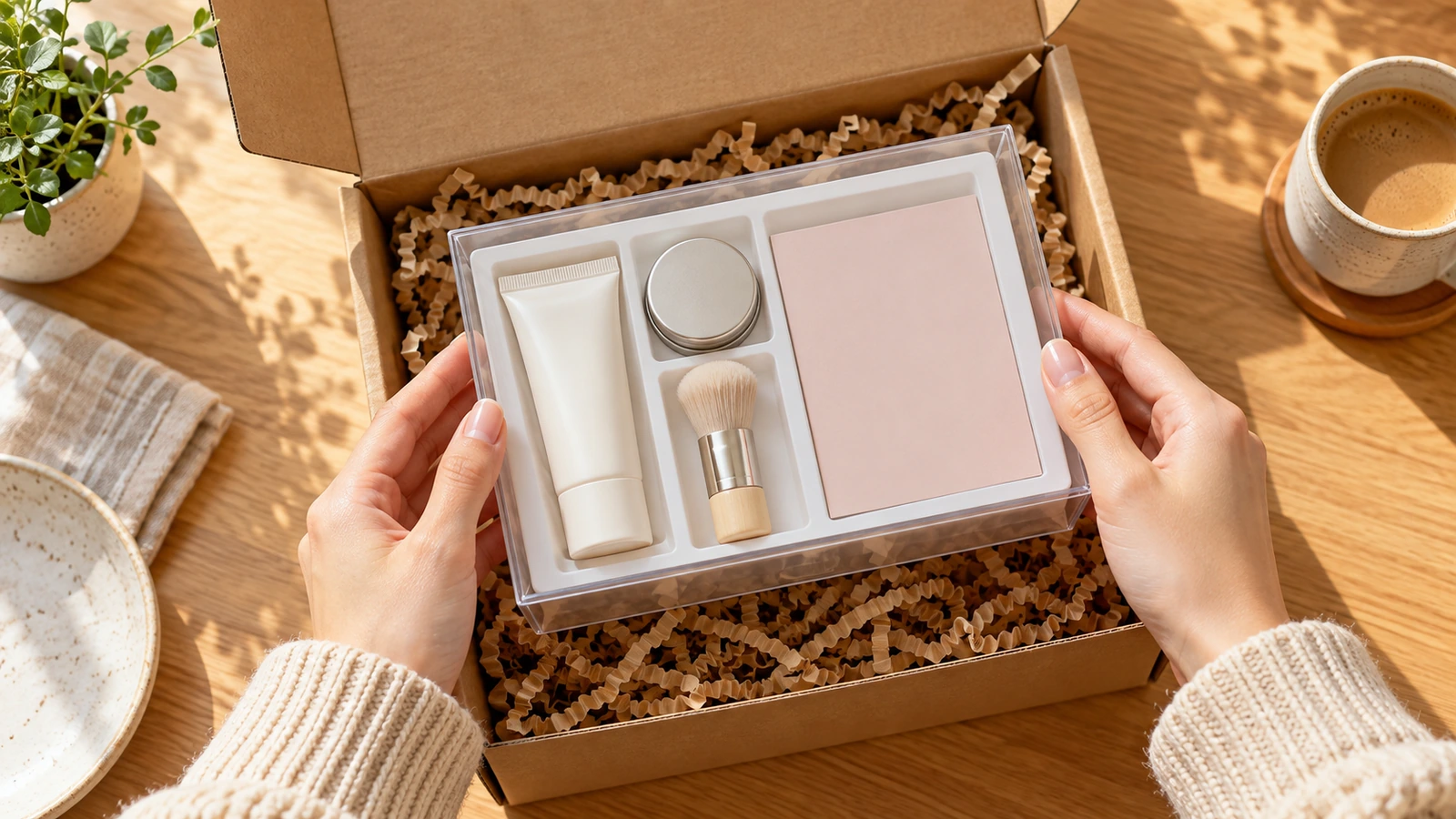
Protection: a kit with several items (a mini product, a card, a tool and a token, for example) fails when the items shift in transit and arrive jumbled. Compartments or a die-cut tray keep the arrangement intact.
Shelf impact becomes camera impact: PR mailers, influencer seeding kits and trade show giveaways are often seen first on a phone screen. A clear box that shows the whole arrangement at once photographs well from above. That is the angle most unboxing content uses.
Unboxing: kits that turn into desk organizers or storage after use keep the brand in view for months. Our research found small sellers adding clear boxes to custom orders, such as press-on nail sets bundled with a tool kit, specifically to raise perceived value.
Step 3: Choose the display context
The same product needs different box features depending on where it is sold:
Peg hooks need a hang tab and a box that hangs straight.
Shelf stacks need a flat, stable base and a lid that carries the box above.
Counters reward a box that looks good from all sides.
E-commerce mailers remove shelf concerns but add drop and crush risk. Here a clear box usually sits inside a shipper rather than replacing it.
Decide this before sizing anything. Retrofitting a hang tab after the dieline is approved costs a revision round.
Step 4: Separate what shoppers must see from what they must read
Transparency removes most of the printable "billboard" area a paper carton provides. List the information that has to appear on the pack: brand, variant, regulatory text, barcode, compatibility notes. Then decide where each item goes: printed on the clear surface, on an insert card, on a band, or on a label. The technical side of printing on clear film, such as white underlays and print positioning, is covered in our custom clear plastic box artwork guidance.
Step 5: Check the end-of-life story before you launch
Clear plastic packaging now raises sustainability questions with retailers and consumers. The U.S. EPA reports that in 2018 plastic containers and packaging recycling[5] reached almost 2 million tons, a 13.6% rate, while more than 69% went to landfill. Industry analysts name plastic waste concerns[6] as a major restraint on the transparent packaging market.
Regulation is also tightening. California's packaging extended producer responsibility program under SB 54, administered by CalRecycle[7], places obligations on producers. Advocacy group Safer States[8] tracks packaging bills in other states. Distributors selling into several states should know which markets their products reach. Mono-material construction, recycled content and reusability all help. Any environmental claim printed on the pack needs evidence behind it.
Step 6: Write a category-aware brief
Give your supplier more than dimensions. A useful brief also covers the ranking from step 1, the category demands from step 2, the display context and the information map. Specifying fit, sampling closures and setting acceptance checks are covered step by step on our custom clear plastic boxes page.
Use-case comparison: what each category demands from a small plastic box
The table condenses step 2 into a one-page reference. Use it to spot which demand dominates your category, then put that demand first in your brief.
Category
Dominant job
Main protection risk
Shelf-impact lever
Unboxing cue
Insert or extra component
Watch-point
Cosmetics samples
Shelf impact
Scuffing, tampering
True shade and texture visible
Curated sample set
Seal or tuck lock
Light-sensitive formulas
Jewelry
Shelf impact
Movement and scratching
Light reaching the stone
Gift box kept for storage
Slotted card or foam
Security on open display
Electronics accessories
Protection
Dust, tangling
Connector visible, fewer wrong buys
Blade-free opening
Hang tab, spec insert
Static-sensitive parts
Confectionery
Shelf impact
Crushing, freshness
Product color as advertising
Favor or gift ribbon
Inner wrap or tray
Food-contact documentation, heat
Promotional kits
Unboxing
Items shifting in transit
Top-down photo of the full set
Reusable organizer
Compartment tray
Transit protection via outer shipper
When a clear box is the wrong choice
Clear display packaging is not always the answer. Look elsewhere if the product looks unremarkable without its packaging, for example a plain gray adapter whose value is in its specifications. Look elsewhere if the product is heavy enough to stress thin walls, or if it degrades under light and has no protective primary pack. A paperboard carton with a small window can also be the better choice when the brand needs a large printed story panel more than full visibility. For a structured look at those trade-offs, see the buying-route comparison on our PET folding box page.
FAQ
FAQ: What products are best suited to a small plastic box for retail?
Products that sell on appearance and fit in the hand. Cosmetics minis, jewelry, electronics accessories, confectionery and promotional kits are the strongest fits. They match the leading applications in Future Market Insights' segment data: food items, jewelry, electrical parts, optics and cosmetics.
FAQ: Are small clear plastic boxes safe for candy and baked goods?
That depends on the material and the documentation. Research indexed in PubMed Central links PVC food containers to phthalate migration, which is why PET is the more common choice for food. Ask your supplier for food-contact evidence that applies to your market before packing unwrapped food.
FAQ: Why do some clear boxes look cloudy or scratched?
Buyer feedback in our research points mostly to low-grade material. Cheap clear plastics can scratch easily, yellow over time, look hazy or deform under light pressure. Handling and transit packing also matter: units should travel with their surfaces protected. Judge clarity on a physical sample, not from a photo.
FAQ: Are small plastic boxes recyclable?
Many PET boxes are technically recyclable, but actual recovery is low. The EPA put the recycling rate for plastic containers and packaging at 13.6% in 2018. Mono-material designs, recycled content and a reusable second life make the story stronger. Back any claim you print with evidence.
FAQ: How small can a custom clear box be made, and what is the minimum order?
Achievable dimensions, order quantities and lead times depend on your product and construction. Share your product dimensions and display context through our custom clear plastic boxes page for a specific quote.
FAQ: Should I use a clear box or a windowed paper carton?
Choose a clear box when seeing the product from several angles drives the sale, as with jewelry sparkle, candy color or cosmetic shade. Choose a windowed carton when you need large print areas or more opacity for light-sensitive contents.
Key takeaways
Clear boxes serve a large, steadily growing market. — USD 113.7 billion in 2025, projected USD 174.9 billion by 2035 at 4.4% CAGR (Source)
PET is the leading material for clear boxes. — 44.9% material share (Source)
Mid-sized, customization-focused suppliers make up a large part of the market. — Tier 2 players hold about 33% share (Source)
End-of-life is a real weak point to plan for. — 13.6% of plastic containers and packaging recycled in 2018, over 69% landfilled (Source)
Each category has one dominant job: shelf impact, protection or unboxing. — 5 categories with 5 different priorities, so put that priority first in your brief (Source)
Conclusion
A small plastic box is not a generic container. It works when it is matched to the category it serves:
Cosmetics samples need tamper evidence and true color.
Jewelry needs an anchoring insert and light.
Electronics accessories need dust protection and peg-ready orientation.
Confectionery needs crush resistance and documented food-contact material.
Promotional kits need compartments that survive transit and photograph well.
Rank the three jobs, map your information, check your end-of-life exposure, and then brief a supplier. When you are ready to turn your use case into a specification, start with our custom clear plastic boxes. Send your product, display context and quantities for a tailored quote.
Hi there! I'm Bruce, proud dad to my amazing son. I'm the founder of Zigpac, a printing and packaging company empowering small and medium-sized businesses with custom solutions. Let's create something great together!



 Blog PDF for offline reading












The information below is required for social login
Sign In
Create New Account