We use cookies to enable our websites to remember information, to help some website functionalities to work properly, to understand how you interact with and use our websites and to display you content and ads that are relevant and engaging for you.
By clicking Accept All you consent to the use of these cookie.
The store will not work correctly when cookies are disabled.
Quick answer: A snap lock bottom box is a folding carton whose four bottom flaps interlock by hand in three folds, with no glue or tape. It holds moderate, dense products better than a tuck bottom and costs less than a pre-glued crash-lock, but each carton must be locked manually.
The bottom of a retail carton carries the product's entire weight every time the box is lifted, tilted, or dropped into a parcel. On a plain tuck-bottom carton, that weight rests on one friction-fit tab. A candle jar, a glass serum bottle, or a tin of supplements can work that tab loose. When it slips, the product falls through.
The risk keeps growing because more product boxes now travel through parcel networks instead of sitting on a shelf. The U.S. Census Bureau's quarterly retail e-commerce report[1] puts online sales at roughly one in every six US retail dollars. Many of those orders are packed by small teams. The U.S. Chamber of Commerce counts small firms as 99.9% of US businesses[2], and these teams rarely have a carton-erecting machine. A failed bottom costs a product, a refund, and a review.
The snap lock (1-2-3) bottom was designed for this gap. It gives you a mechanically locked base without the gluing step that makes crash-lock cartons cost more. This guide covers how the flaps work, how to fold them correctly, which products suit the style, and when another bottom is the better choice.
What Is a Snap Lock Bottom Box?
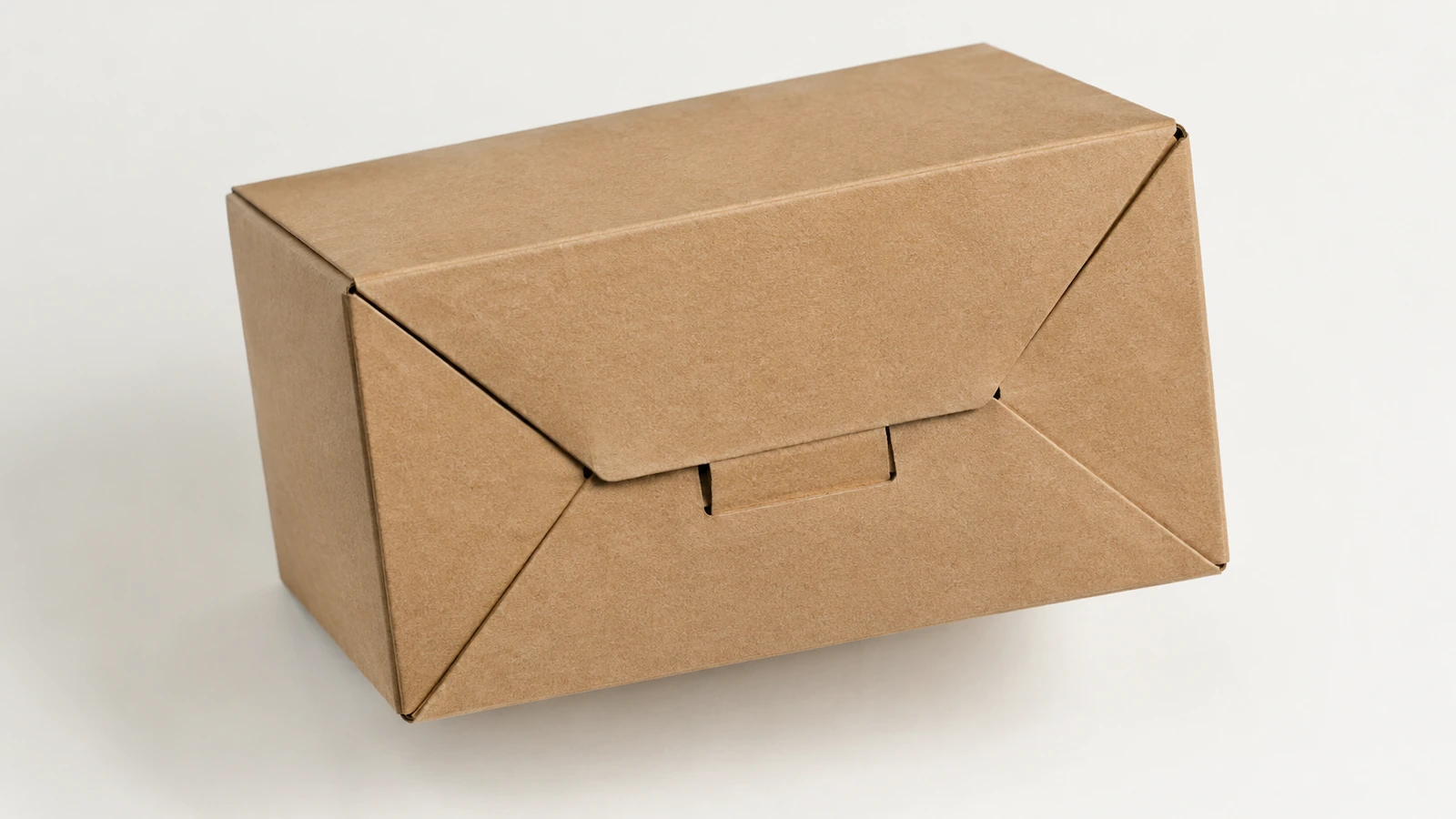
A snap lock bottom box is a folding carton in which four bottom flaps are cut so that they hook into each other. Two are smaller side flaps and two are larger front and back flaps. Folded in sequence, they form a closed base held together by geometry rather than adhesive. The trade uses several names for the same structure:
1-2-3 bottom, after the three folding moves
Lock bottom
Snap bottom
Most versions pair it with a tuck top, so the customer opens the box from above while the base stays locked.
The only factory glue on a snap lock carton is the side seam, also called the manufacturer's joint, which turns the flat blank into a tube. The bottom flaps arrive unglued and flat. That is the defining difference from an auto-lock, or crash-lock, bottom. On a crash-lock carton, the bottom flaps are pre-glued at the factory so the base unfolds into position when the tube is squared.
The FEFCO Code[3], the industry reference for corrugated case styles, groups pre-glued auto-bottom designs in its 07 "ready-glued" family. A snap lock bottom carton belongs outside that family because the packer completes it.
Both styles fall under the broader label "self locking box," meaning any carton whose closure holds without tape. Buyers often use "self-locking" and "auto-lock" as if they were the same thing. In quotes they are not: one is assembled by your packer, and the other is partly assembled by the converter. Confirm which one a supplier means before comparing prices.
How to Assemble a 1-2-3 Bottom by Hand
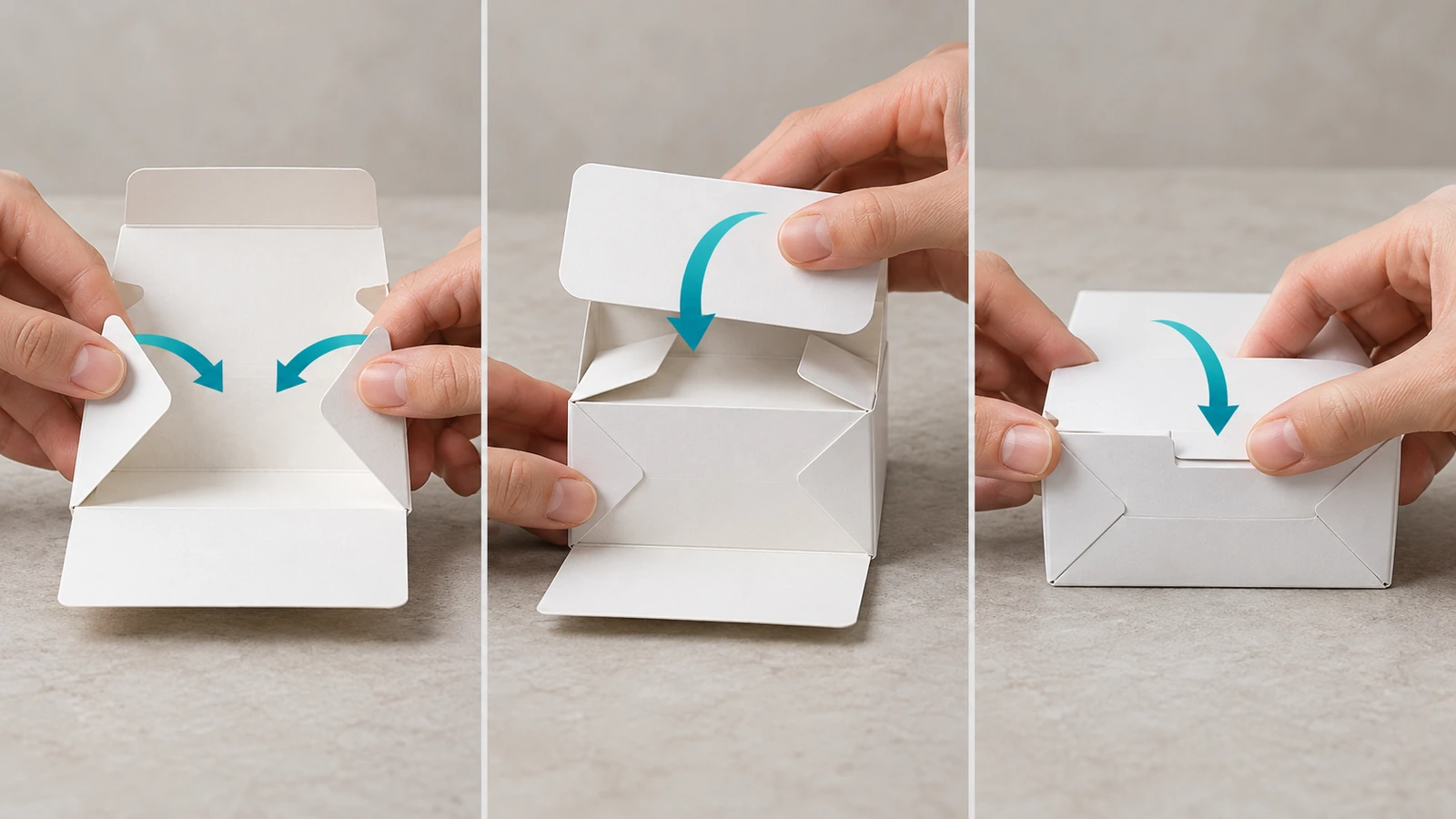
A 1-2-3 bottom folds in a fixed order. Changing the order is the most common reason a base looks closed but is not locked. The sequence below describes the standard die-cut. If your dieline uses a different tab arrangement, follow the converter's folding sheet.
Square the tube. Pinch the flat carton at its glued side seam and open it into a rectangle. Stand it upside down on a flat, firm table so the bottom flaps point up.
Fold the two side flaps in (move 1). These are the smaller flaps, usually with a notch or angled shoulder. Fold both inward along their creases until they sit flat over the opening.
Fold the back flap down (move 2). The larger flap with the slot or cut-out folds over the side flaps. Its edges should catch under the notches on the side flaps.
Fold the front flap and seat the tab (move 3). Fold the remaining large flap over and push its locking tab through, or under, the back flap's slot. Press along the full seam until the tab sits flush. Partial engagement on one corner is the failure to watch for.
Verify from the inside. Turn the carton upright and press the base from inside with a flat hand. A properly locked bottom stays flat and does not flex open at any corner.
Two packing-line habits prevent most failures:
Lock the base before loading anything. Do not drop the product in first and fold around it. Product weight helps a correctly seated lock stay closed, but it pulls a half-seated tab apart.
Keep each operator on the same fold order. Mixed habits produce mixed results.
Industry write-ups on fulfillment report that pre-glued auto-lock bottoms erect in about 2–5 seconds, against 10–20 seconds for a folded-and-taped slotted carton. No comparable figure is widely published for the 1-2-3 bottom, which sits between the two because it needs three folds but no tape. Rather than rely on a generic number, time your own team. Have two packers each erect 20 sample cartons, record the average seconds per box, and count how many fail the inside-press check. That gives you a labor cost and a mis-lock rate you can plug into the comparison later in this guide.
Which Loads and Products the Snap Lock Suits
No single weight limit applies to every 1-2-3 bottom. Capacity depends on three variables you can specify:
Board. Paperboard caliper for retail cartons, or flute and grade for corrugated versions.
Flap overlap. How far the front and back flaps overlap.
Load shape. Whether the product presses on the whole base or on one point.
Treat any supplier's weight rating as a starting point and test it against your actual product.
The style performs best with these products:
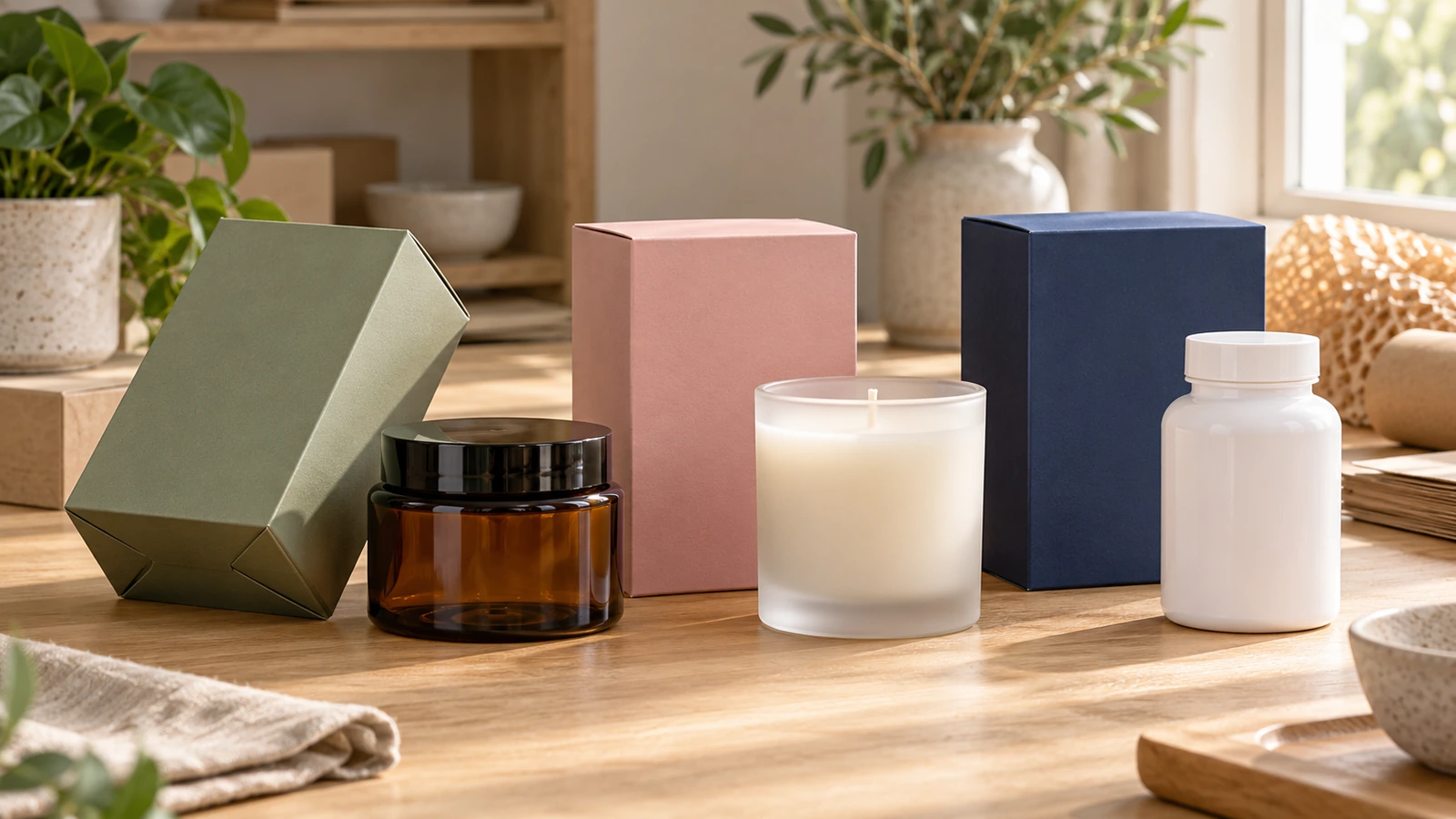
Dense items with a small footprint. Glass jars, candle vessels, bottles, tins, and boxed supplements concentrate weight in the center of the base. That is exactly the load that pops a tuck tab. Public discussion among packaging practitioners routinely steers small heavy bottles away from tuck bottoms for this reason.
Retail cartons that also ship. A locked base survives being carried, tilted, and placed inside a parcel better than a friction tuck.
Low to moderate packing volumes. Workloads where a few extra seconds per carton do not justify the higher unit price of pre-gluing.
Frequent SKU or size changes. Several product sizes in short runs, where the cost of a crash-lock gluing setup is spread over fewer units.
It is a weaker fit in four situations:
Very high daily volumes. Hand-folding time adds up quickly.
Tall, narrow, unstable products. Overlapping flaps leave a slightly stepped interior floor, so add a flat pad or insert for these.
Very small cartons. Flaps can become too short to interlock reliably, so confirm minimum dimensions with your converter.
Heavy multi-unit packs. At that point the job usually needs a corrugated shipper rather than a retail carton.
For corrugated versions, fabrication practices for fiberboard boxes are covered in ASTM D5118[4]. To check that a bottom survives real distribution, ASTM D4169[5] provides drop, vibration, and compression sequences at three assurance levels. A practical approach is to run filled samples through the sequence that matches your channel, then inspect the bottom corners specifically, since that is where an incomplete lock or overload first tears.
Demand for these decisions is broad. Market research on custom packaging[6] ties the category's growth to e-commerce and brand differentiation. Cosmetics, candles, food, and supplement brands, the core users of lock-bottom cartons, sit squarely in that growth.
Snap Lock vs Crash-Lock vs Tuck Bottom: Which Self Locking Box Fits?
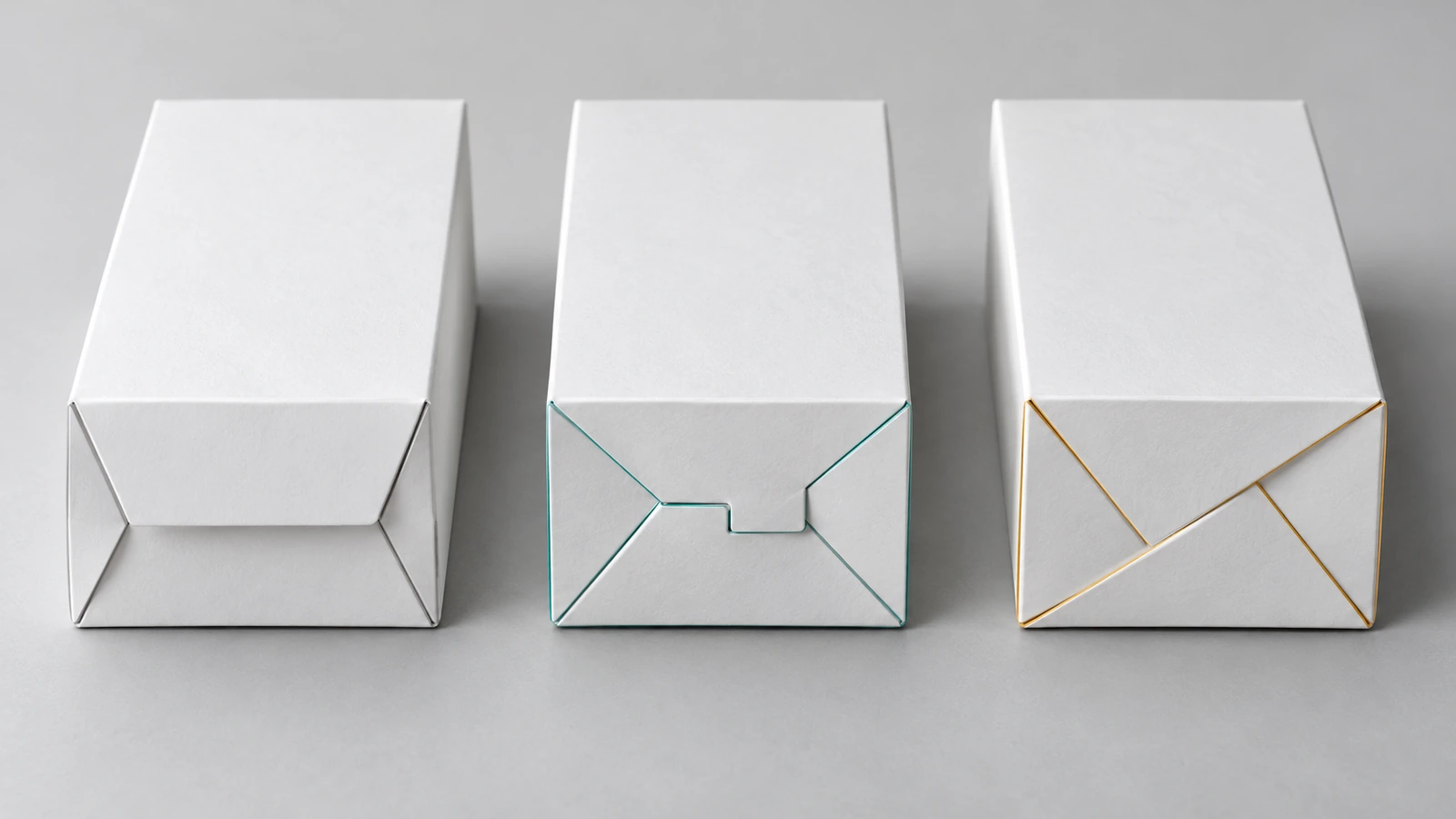
All three styles can carry the same artwork and finishes. What differs is who completes the bottom, how secure it is, and what each carton costs you to buy and to fold.
Factor
Tuck bottom
Snap lock (1-2-3) bottom
Crash-lock / auto-lock bottom
How the base closes
One flap tucks in by friction
Four flaps interlock by hand
Pre-glued flaps unfold and lock when the tube is squared
Factory gluing of the bottom
None
None (side seam only)
Yes, an extra folder-gluer step
Packer effort
One fold
Three folds plus a lock check
One push; the bottom forms itself
Relative unit price
Lowest
Middle
Highest
Bottom security
Light products only
Good for dense, moderate loads when fully seated
Good for moderate to heavier loads within the board's rating
Typical failure mode
Tab slips under load
Tab not fully seated during hand assembly
Weak glue joint, mis-lock from loose tolerances, or overload
Best fit
Light retail items, low budgets
Heavier small items, low-to-mid volume, many SKUs
High-volume packing lines, uniform SKUs
Published comparisons disagree on which locked bottom is stronger. Some describe the 1-2-3 base as the sturdier option, while others rate a well-made crash-lock as comparable to a taped carton. The practical reading is that structural strength depends more on board choice and flap design than on the bottom style's name. The real trade-off is between unit price and labor: the snap lock is cheaper to buy, and the crash-lock is cheaper to fold.
A simple way to decide
Use the numbers from your timing test:
Multiply the extra seconds per snap lock carton by your monthly carton count and your loaded labor rate.
Compare that labor figure with the per-unit price difference quoted for a crash-lock version of the same carton.
If the labor figure is larger, or if your mis-lock rate keeps producing damaged shipments, the pre-glued style pays for itself. If the price difference is larger, and your team seats the lock reliably, stay with the snap lock.
Three operational signals usually push brands toward the switch:
Packing moves from a founder's table to a dedicated fulfillment team.
One SKU starts dominating volume.
Seasonal peaks make every second per order visible.
At that stage, custom auto-lock bottom folding cartons keep the same printed look while removing the hand fold. That page also covers specification, approval testing, and quoting, so those steps are not repeated here.
Going the other way is just as valid. A brand that launched in crash-lock cartons at higher volume and later split into many low-volume variants can move those variants to a 1-2-3 bottom and lower its unit price.
FAQ
FAQ: Is a snap lock bottom the same as an auto-lock bottom?
No. Both lock mechanically without tape, but a snap lock bottom ships with unglued flaps that your packer folds in three moves. An auto-lock (crash-lock) bottom is pre-glued at the factory and forms itself when the carton is squared. The extra gluing step is why auto-lock cartons cost more per unit.
FAQ: Do I need tape or glue to close a 1-2-3 bottom?
No. A correctly seated 1-2-3 bottom holds through flap geometry alone. Tape is only worth adding if your own transit testing shows corners opening, which usually points to a seating problem or an undersized board rather than a missing adhesive.
FAQ: How much weight can a snap lock bottom carton hold?
There is no universal rating. Capacity depends on board caliper or flute grade, flap overlap, and whether the product presses on a small point or across the whole base. Ask for samples in your intended board, fill them with your actual product, and run them through an ASTM D4169 sequence suited to your shipping channel before committing.
FAQ: Can a snap lock carton ship through parcel carriers on its own?
Paperboard lock-bottom cartons are generally retail packaging and travel inside a corrugated shipper or mailer. Corrugated versions of the 1-2-3 bottom can ship alone if the board grade suits the load and the box passes distribution testing.
FAQ: If I switch from snap lock to crash-lock, can I reuse my artwork?
Usually not as-is. The two bottoms use different dielines, so bottom-panel artwork, glue zones, and bleed have to be re-laid even if the front and side panels stay the same. Budget a proof round for the new die.
FAQ: Why does my snap lock bottom look closed but sag when filled?
Almost always because the front flap's tab caught on only one side, or because the flaps were folded out of order. Re-fold in the 1-2-3 sequence on a flat surface and press along the full seam. If sagging continues with correct folding, the board is too light for the load.
Key Takeaways
A snap lock bottom is completed by your packer; a crash-lock bottom is pre-glued by the converter. — FEFCO groups pre-glued auto-bottom cases in its 07 ready-glued family (Source)
Parcel travel puts more strain on carton bottoms, so locked bases matter more each year. — e-commerce is roughly 1 in 6 US retail dollars (Source)
The style suits small teams that pack by hand and cannot justify gluing premiums. — small firms are 99.9% of US businesses (Source)
Validate any lock bottom with filled samples under simulated distribution, not with a spec sheet. — ASTM D4169 defines test sequences at 3 assurance levels (Source)
Choose by labor versus unit price: time 20 cartons per packer and compare the result with the crash-lock price difference. — corrugated versions should follow the ASTM D5118 fabrication practice (Source)
Conclusion
The snap lock bottom fills the middle ground of carton construction. It gives a dense product a mechanically locked base for less than a pre-glued carton, at the cost of a three-move fold your team must get right every time. It fits best with heavier small products, moderate volumes, and SKU ranges that change often.
Test it with your real product and your real packers. Coverage of carton design trends in independent trade publications such as Packaging Digest[7] and broader e-commerce statistics[8] both point the same way: as volume grows, packing seconds turn into real money.
When your timing data shows that hand-folding costs more than the gluing premium, compare a pre-glued auto-lock bottom carton for the same product and request a quote based on your dimensions and volumes.
ASTM International, ASTM D4169, Standard Practice for Performance Testing of Shipping Containers and Systems. https://www.astm.org/Standards/D4169.htm (accessed 2026-10-20) ↩
Hi there! I'm Bruce, proud dad to my amazing son. I'm the founder of Zigpac, a printing and packaging company empowering small and medium-sized businesses with custom solutions. Let's create something great together!



 Blog PDF for offline reading







The information below is required for social login
Sign In
Create New Account