We use cookies to enable our websites to remember information, to help some website functionalities to work properly, to understand how you interact with and use our websites and to display you content and ads that are relevant and engaging for you.
By clicking Accept All you consent to the use of these cookie.
The store will not work correctly when cookies are disabled.
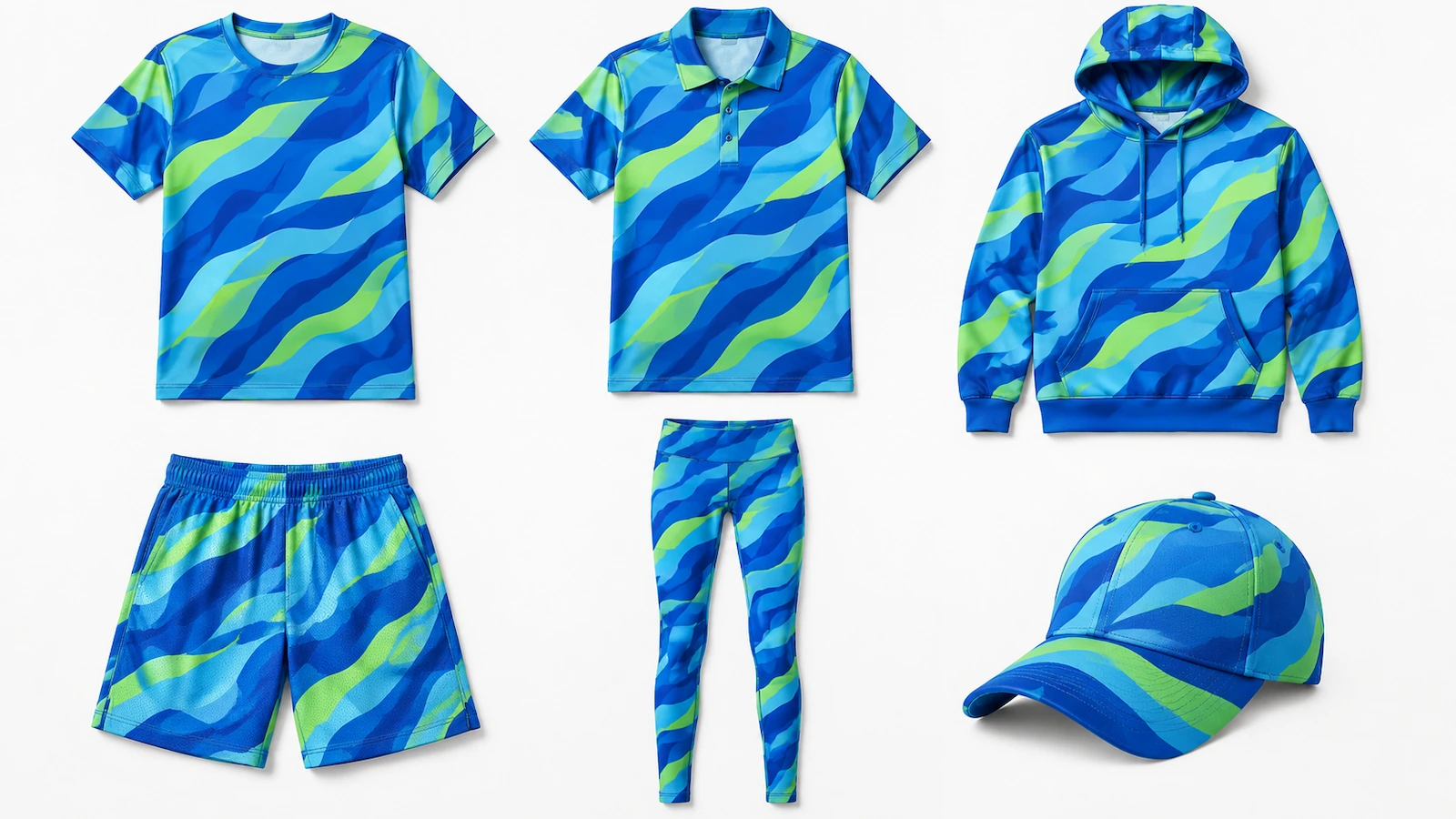
Quick answer: Sublimation apparel can go well past the tee. Jerseys, polos, hoodies, shorts, leggings and caps all work if each piece uses white or light polyester, dark colorways come from the artwork rather than the base fabric, and you confirm minimums style by style before committing to a full range.
Most coordinated programs start with one approved shirt. The trouble begins when someone asks for "the same look" on a hoodie, a coach's polo, warm-up shorts and a cap. This guide covers sublimation apparel from a range-planning angle. It explains which garments can carry the same dye-sublimated design, what fabric and construction each one needs, and where minimum order quantities usually tighten, so a team, school or event program arrives as one family instead of six near-matches.
Why Coordinated Ranges Break Down After the Tee Is Approved
The usual failure goes like this. A school approves a full-color spirit tee. Then the athletic director adds a hoodie, and the hoodie the supplier normally stocks is a cotton-face fleece. The polo the staff wants exists only in navy. The cap comes from a separate vendor using a different print method. Every item carries the same logo, yet the reds no longer match. The hoodie's colors look washed out after a few laundry cycles. The polo's design disappears into the dark base. The cap's patch is a third shade of red.
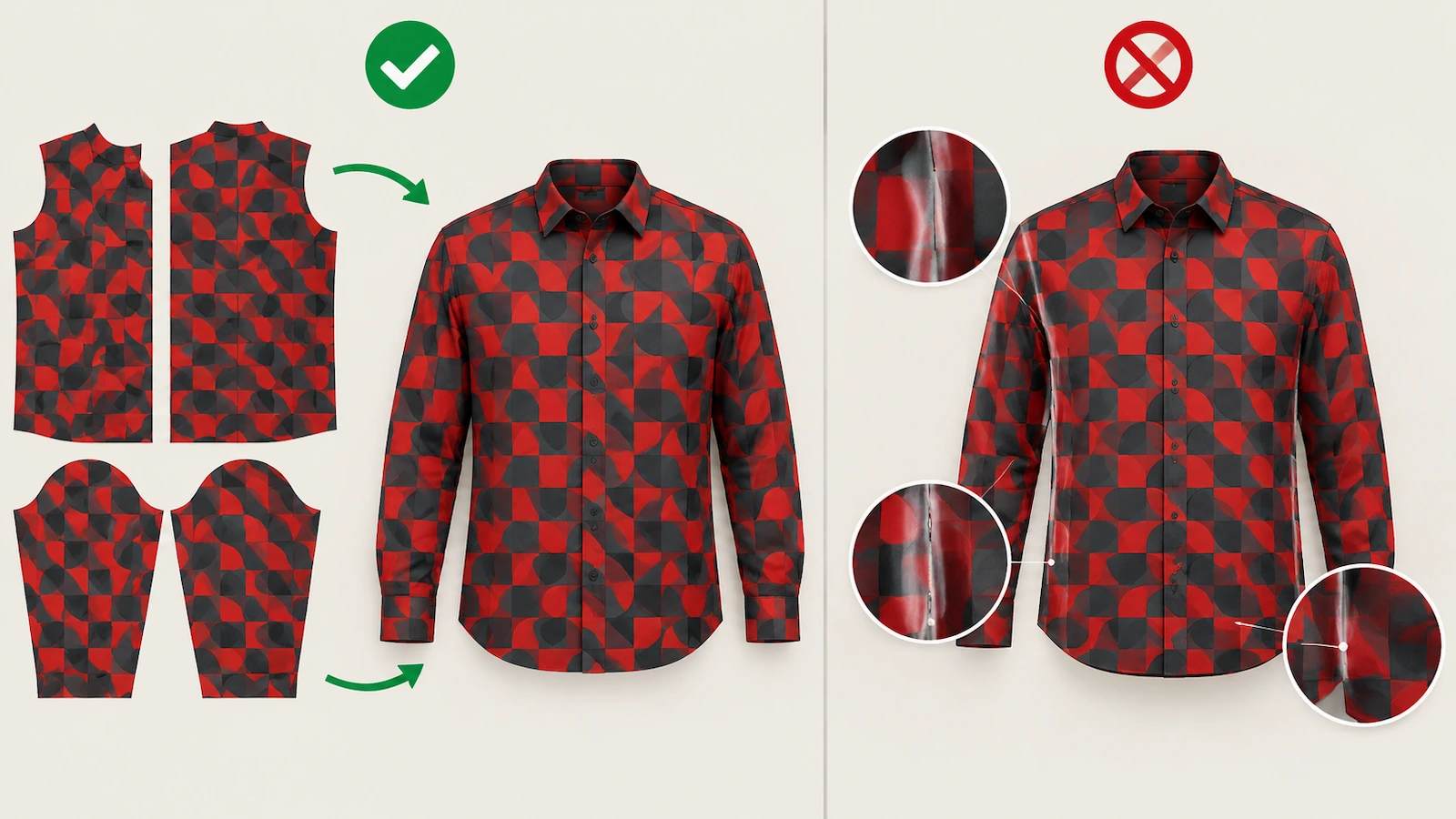
The cost appears late. Underarm areas and side seams show white streaks where pre-sewn garments never touched the transfer paper. Each extra style adds its own minimum, so a program that looked affordable at the tee stage needs several separate production runs. Replacing a mismatched item mid-season usually means reprinting the whole batch, because sublimated dye cannot be stripped out of polyester.
The fix is to plan the range by fabric and construction before artwork. Once every garment sits on a sublimation-ready polyester base and has a defined build route, color, minimums and reorders become predictable.
What Counts as Sublimation Apparel?
Sublimation apparel is any garment decorated by turning disperse dye from a printed transfer into a gas under heat and pressure, so the dye enters polyester fibers instead of sitting on top as an ink layer. Because the color is inside the fiber, there is no film to crack or peel. The same chemistry sets three hard limits that apply to every garment in a range. The fabric has to be polyester or a high-polyester blend. The base has to be white or very light, because the dye is transparent. And no white ink exists, so any white in the design is simply unprinted fabric.
The method has moved firmly into mainstream textile production. A Grand View Research figure reported by The Cannata Report[1] valued the dye sublimation printing market at about USD 16.4 billion in 2025, with textile and apparel printing as the largest segment. That scale matters to buyers, because it means polyester knits, meshes, piqués and fleeces built for sublimation are widely available across garment types.
For range planning, sublimated clothing comes from three build routes, and each garment in your program will use one of them:
Cut-and-sew (full sublimation): The design is printed onto fabric panels or rolls, and the garment is sewn afterward. Color runs seam to seam with no white gaps, and names or numbers can be built into each panel.
Pressed finished garment (spot or near-full): A ready-made polyester blank is pressed after sewing. This is faster for small placements, but seams, collars and folds can block the dye and leave white creases.
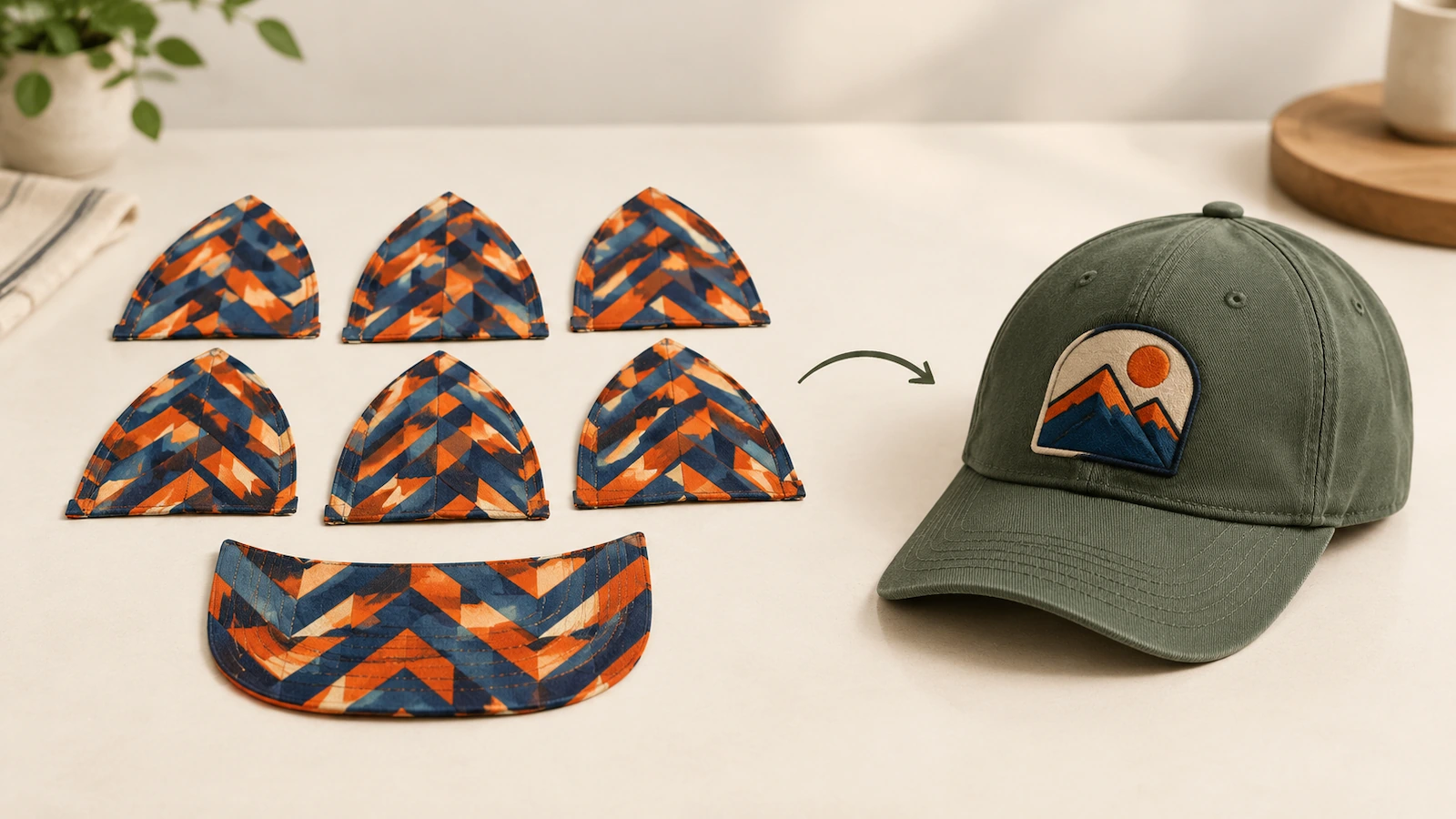
Sublimated patch or appliqué: A small polyester piece is sublimated and then sewn or heat-applied onto a garment or cap that could not otherwise take the dye.
Spot sublimation on finished blanks is growing in on-demand production. In March 2026 the PRINTING United Alliance reported[2] a fulfillment network adding spot sublimation for 100% polyester performance garments. Equipment makers are also targeting team uniforms directly. A dye-sublimation printer launched at ITMA Asia 2025[3] listed jerseys and sportswear as its target applications. The practical upshot is that you will be offered both routes, and the right one depends on the garment.
How to Plan a Coordinated Sublimation Apparel Range
The steps below follow the order in which decisions lock each other in. Fabric decides what color is possible. Construction decides how the design can wrap. Color standards and minimums then decide cost and reorder speed.
Step 1: Anchor the range on one core garment
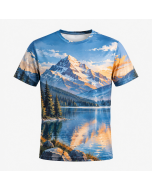
Choose the item with the highest volume, usually the tee, and treat its artwork and approved color as the master standard. Fabric, artwork-to-bulk workflow and quote checks for that core item are covered in detail on our page for all-over-print polyester sublimation tees. Everything else in the range is measured against that approved sample.
Step 2: Map every garment to a polyester fabric family
Write down the fabric each item will use before anyone opens a design file. The widely used rule of thumb is that sublimation needs roughly 65% polyester or more, and 100% polyester gives the strongest saturation. Below that level, cotton fibers stay undyed and the print looks gray. The catch in a coordinated range is that each garment type has a retail default that often fails this test. Hoodies default to cotton-blend fleece, polos to cotton piqué, and caps to cotton twill. If a garment cannot be sourced in a sublimation-ready polyester, move it to the patch route or to another decoration method instead of accepting a faded match.
Step 3: Choose the construction route per garment
Use cut-and-sew wherever the design wraps around the body, crosses seams or carries individual names and numbers. Use pressed finished blanks for small chest or sleeve placements where white seams don't matter. Mixing routes in one program is normal. A jersey can be cut-and-sew while the matching warm-up tee carries a spot print. The design brief, however, should say which route each item uses so nobody expects edge-to-edge color on a pressed garment.
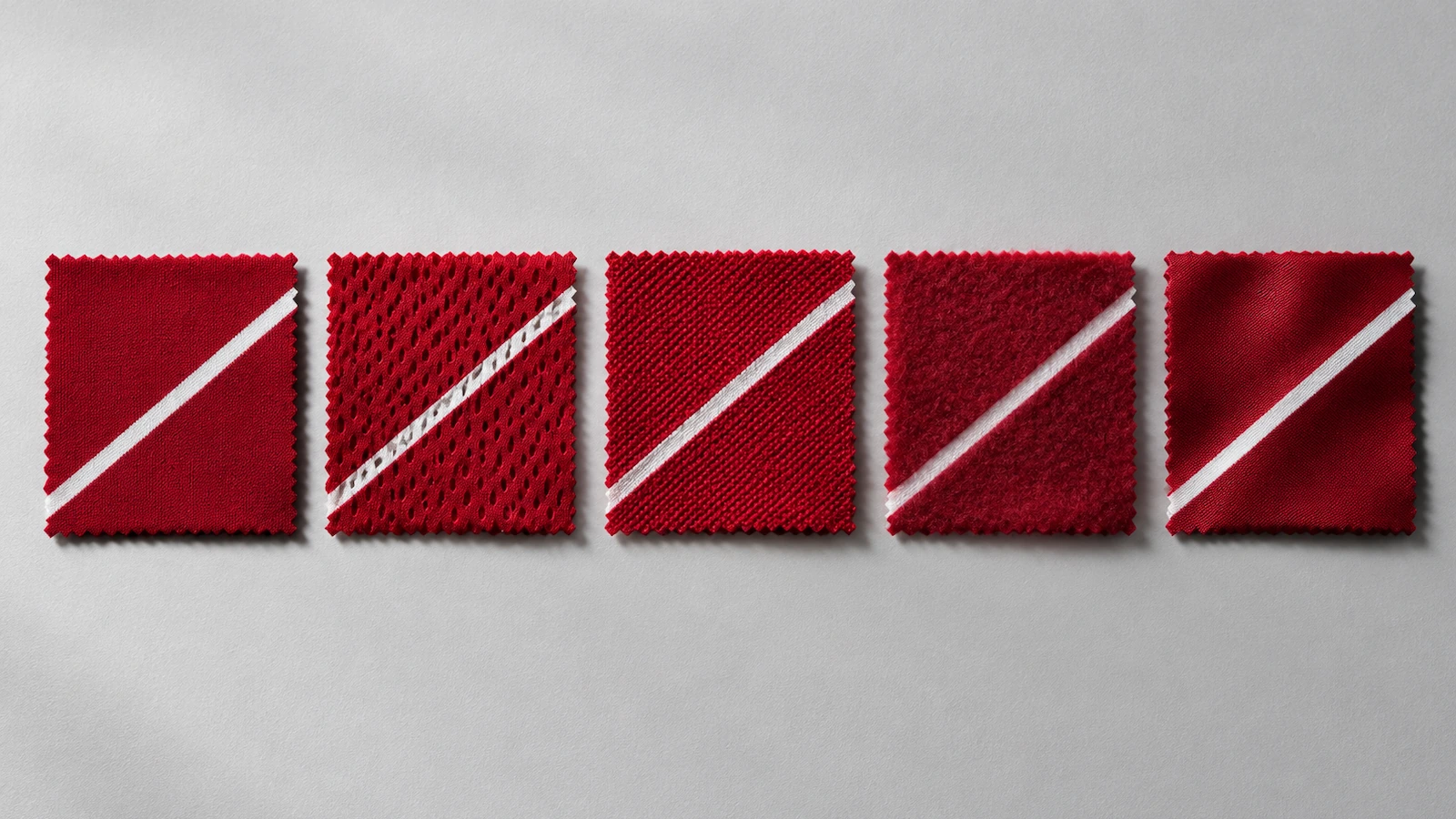
Step 4: Lock color across fabrics with per-fabric strike-offs
The same dye file looks different on different polyester constructions. Open mesh shows less color per square inch because of the holes. Brushed fleece softens edges and can read slightly lighter. Textured piqué breaks up fine lines. Smooth interlock gives the sharpest result. Ask for a pressed strike-off on every fabric in the range, judge them side by side under the same light, and approve one physical standard per fabric. An independent troubleshooting guide from Impressions Magazine[4] lists dull color and ghosting among the most common sublimation faults. It points to under-pressing, damp fabric and paper movement as typical causes, with common polyester settings around 380–400°F for 45–60 seconds. That is why strike-offs should be pressed on the production fabric with production settings, not on a generic swatch.
Step 5: Plan minimums and size runs style by style
Minimums in a coordinated range are set per style and often per design, not per program. Cut-and-sew items carry setup work in pattern grading, panel layout and marker making, so suppliers usually want enough units in each style to justify that work. Pressed blanks are more flexible but depend on stock in each size and color. Before finalizing the range, list each style with its expected quantity and size spread, including youth sizes. Then ask the supplier which styles fall below their minimum. Low-volume pieces such as coach polos are often better merged into a shared design or moved to the patch route than produced as a separate run. Exact minimums vary by supplier and garment, so request them in writing with the quote.
Step 6: Write compliance into the specification
A multi-garment range multiplies labeling work. Every piece sold in the US needs a fiber-content label that lists each fiber at 5% or more by weight in order of predominance under 16 CFR 303.16[5]. It also needs a permanent care label under the FTC Care Labeling Rule (16 CFR Part 423). Clothing textiles fall under the federal flammability standard, 16 CFR Part 1610[6]. Plain-surface fabrics of 2.6 oz/yd² or more are exempt from testing, and the rule also lists exemptions for fabrics made entirely of certain synthetic fibers, including polyester. Raised-surface blends such as fleece containing cotton or rayon deserve a separate check against the current text. Youth sizes for school and junior-league programs are children's products, which need a permanent tracking label[7] identifying the manufacturer, production date and batch.
For skin-contact pieces such as leggings and jerseys, many institutional buyers also ask for a verifiable OEKO-TEX STANDARD 100[8] certificate number covering the actual fabric and print process, not just a factory claim. For wash and dimensional performance, specify recognized test methods. The current AATCC technical manual[9], issued for 2026, includes updated home-laundering dimensional-change methods for garments (TM150-2025) and fabrics (TM135-2025). Colorfastness is typically covered by methods such as TM61 accelerated laundering and TM16.3 xenon lightfastness, which AATCC also runs in its proficiency testing program[10]. International suppliers may report to ISO 105-C06[11] instead. Its conditions differ from AATCC TM61, so results should not be treated as interchangeable.
Step 7: Archive files and standards for fill-ins
Teams add players and schools add staff mid-season. For cut-and-sew items, a fill-in means reprinting panels, so keep the final print files, the roster spreadsheet and the approved physical strike-off for each fabric in one place. Ask the supplier whether fill-ins are accepted below the original minimum, and whether they will reprint from the same fabric lot. Lot changes can shift shade slightly.
Garment by Garment: Fabric, Construction and MOQ Limits
The table summarizes how each garment behaves in a coordinated program. Details and watch-outs follow below. If you are still deciding whether sublimation is the right method at all, the method comparison on the custom sublimation tee page covers that question.
Garment
Sublimation-ready fabric
Best construction route
Main technical limit
Minimum-order pressure
Jerseys
Polyester interlock, mesh or dimple knit
Cut-and-sew
Mesh lowers color density; dark jerseys need white elements left unprinted
Per design; personalization adds roster handling
Polos
Polyester piqué or jersey knit
Cut-and-sew for all-over; pressed blank for small marks
Collar and placket areas block a pressed print
Often low volume; may need merging with another style
Hoodies and quarter-zips
100% polyester fleece (not cotton-face fleece)
Cut-and-sew
Pile can crush or shine; pattern must align across pocket and zipper
Higher setup per style because of multiple components
Shorts
Polyester mesh or microfiber woven/knit
Cut-and-sew
Waistband elastic and drawcords usually stay unprinted
Usually paired with jerseys in one order
Leggings and compression
Polyester/spandex knit
Cut-and-sew
Spandex is heat-sensitive; stretch reveals white base
Size spread is wide, which raises effective minimums
Caps
Polyester front panels or crown; any cap with a sublimated patch
Panel-printed before assembly, or patch
Structured fronts and mesh backs are hard to press after assembly
Per design, because panels are cut and sewn as a set
Jerseys
Jerseys are where sublimation is most at home, because cut-and-sew lets stripes, gradients, sponsor graphics, names and numbers sit inside the fabric with no extra charge per color. Smooth interlock gives the crispest numbers. Mesh and dimple knits breathe better but show less color, so approve strike-offs on the exact knit. The commonly misunderstood point is white: you cannot print white, but on a white base you can leave numbers unprinted inside a navy or black field. On cut-and-sew garments, white numbers on a dark jersey work. On a dyed dark blank, they don't. Reversible jerseys need two printed layers, so treat them as two garments when you plan cost.
Polos
Staff, coaches and event volunteers often want polos that match the team look without looking like a uniform. Polyester piqué takes sublimation well, though its texture slightly softens fine lines and small type. Collars and button plackets are the tricky parts. On a pressed finished polo, the collar fold and placket stop the transfer from reaching the fabric underneath. A cut-and-sew polo avoids this, but it is a separate pattern with its own setup. A practical compromise is a tonal all-over pattern printed through the body, with the crest embroidered on the chest. Because polo quantities are usually small, ask early whether they can share a print run or design with another item.
Hoodies and quarter-zips
This is the garment most likely to break a coordinated range. Most retail hoodies are cotton or cotton-blend fleece, and sublimation colors on them fade quickly in the wash. A sublimated hoodie needs 100% polyester fleece, which feels different from the cotton hoodies many students expect, so show a physical sample before the order. Construction is more involved too. The hood, hood lining, kangaroo pocket, cuffs and zipper all interrupt the design, and an all-over pattern has to be laid out so it lines up across the pocket opening and both sides of a zipper. Brushed pile can flatten or turn shiny under too much pressure, which is a strike-off check item. Ribbed cuffs and waistbands are often a solid knit dyed to the nearest shade instead of printed.
Shorts
Shorts usually ride along with jerseys, which helps with minimums because they share the same artwork family and fabric. Mesh suits basketball and training. Lighter woven or knit microfiber suits soccer and running. Expect the elastic waistband, drawcord and any inner liner to stay unprinted. Side panels and leg hems are where a jersey design typically continues, so check that stripe placement on the shorts matches the jersey sides when both are worn.
Leggings and compression wear
Polyester/spandex knits sublimate well, but spandex is the heat-sensitive part of the blend. Suppliers generally press these fabrics at reduced temperature with adjusted dwell time, so ask whether that was used and approve the strike-off before bulk. Stretch is the second issue. When the knit opens over the knee or seat, the unprinted white base can show through, so busy patterns and mid-tone colors hide it better than large flat dark areas. Ask for an opacity check on a stretched sample. Leggings also run a wider size spread than tees, which raises the effective minimum per size.
Caps
Caps rarely take a full press after assembly. Structured fronts have a stiff backing, crowns are curved and trucker backs are open mesh. The reliable routes are panels printed flat before the cap is sewn, or a sublimated polyester patch attached to a cap of any fabric. The patch route is the easiest way to bring a cotton twill or dark cap into a range, because the patch carries the full-color artwork and the cap keeps its own color. Panel-printed caps are built as a set of cut pieces, so minimums are usually set per design. Confirm them before promising one cap design per team.
What does not belong in a sublimated range
Some requests should be redirected rather than forced. A 100% cotton heavyweight tee, a black cotton hoodie or a heather-gray blend cannot reproduce a sublimated design at matching brightness. Coating sprays sold for sublimating cotton tend to wash out, crack or yellow, which is the opposite of what a program buyer wants. Use another decoration method or a sublimated patch for those pieces, and tell the program manager in advance that they will differ slightly from the core range.
FAQ
FAQ: Can every garment in a team program be sublimated?
Only garments made from white or light polyester, or high-polyester blends, can carry a true sublimated print. Jerseys, shorts, leggings and polyester polos are straightforward. Hoodies need polyester fleece specifically. Caps usually need panels printed before assembly or a sublimated patch. Cotton or dark items should use another method or a patch.
FAQ: Why does the same color look different on my hoodie and my jersey?
Fabric construction changes how dye reads. Fleece pile, open mesh and textured piqué each show color differently from smooth interlock, even from the same print file and press settings. Approve a pressed strike-off on each fabric and use those physical samples, not a screen, as the color standard.
FAQ: Can I get white names and numbers on a dark sublimated jersey?
Yes, on cut-and-sew jerseys made from white fabric. The dark color is printed around the numbers and the numbers stay unprinted white. This does not work on a jersey sewn from dark-dyed fabric, because sublimation cannot print white.
FAQ: Are minimum order quantities set per program or per style?
Usually per style and often per design. Each cut-and-sew garment needs its own pattern, panel layout and setup, so low-volume items like coach polos may fall below a supplier's minimum. List quantities by style and size and ask the supplier to confirm minimums in writing before you finalize the range.
FAQ: Do youth sizes in a school program need special labeling?
Children's apparel sold in the US needs a permanent tracking label identifying the manufacturer, production location, date and batch, plus standard fiber-content and care labels. Check whether any other children's product rules apply to your specific items.
FAQ: Why do some sublimated shirts have white lines at the sides and underarms?
Those shirts were pressed after sewing. Seams, folds and underarm creases kept the transfer paper from touching the fabric, so those spots never took the dye. Cut-and-sew construction prints the fabric flat before sewing and avoids the problem.
Key Takeaways
Sublimation is a mainstream apparel process, so sublimation-ready garment fabrics are widely available. — Dye sublimation printing was valued at about USD 16.4 billion in 2025, with textile and apparel the largest segment (Source)
Spot sublimation on finished blanks is expanding, but it is limited to polyester performance garments. — A fulfillment network launched spot sublimation on 100% polyester apparel on March 6, 2026 (Source)
Every garment in a range needs an accurate fiber-content label. — Fibers present at 5% or more by weight must be listed by percentage (Source)
Fabric weight and fiber type affect flammability testing obligations. — Plain-surface fabrics of 2.6 oz/yd² or more are exempt from 16 CFR 1610 testing (Source)
Harmful-substance certificates should be checked against the latest rules. — Updated OEKO-TEX STANDARD 100 requirements became mandatory from June 1, 2026 (Source)
Specify current test methods for shrinkage and wash performance. — The AATCC manual issued for 2026 includes TM150-2025 for garment dimensional change after home laundering (Source)
Next Steps: Build the Range Around a Proven Core
A coordinated program succeeds when each garment is chosen for its polyester fabric and build route first, color is approved fabric by fabric, and minimums are confirmed style by style before artwork is final. Jerseys and shorts usually cause the least trouble. Hoodies, leggings and caps need the most upfront checking. Polos are most often the item whose volume falls below a supplier minimum.
The simplest starting point is the garment you will order in the largest quantity. Review fabric, artwork and sampling for our custom sublimation t-shirts, then send us your planned range with expected quantities and size spreads for each style. We will confirm which items can share a color standard, which construction route suits each one, and what minimums and timing apply, so you can approve the whole program with full information.
Hi there! I'm Bruce, proud dad to my amazing son. I'm the founder of Zigpac, a printing and packaging company empowering small and medium-sized businesses with custom solutions. Let's create something great together!



 Blog PDF for offline reading





The information below is required for social login
Sign In
Create New Account