We use cookies to enable our websites to remember information, to help some website functionalities to work properly, to understand how you interact with and use our websites and to display you content and ads that are relevant and engaging for you.
By clicking Accept All you consent to the use of these cookie.
The store will not work correctly when cookies are disabled.
Quick answer: Decorative two-piece tin boxes are usually drawn from electrolytic tinplate about 0.18–0.30 mm thick. Thinner sheet reduces steel weight and cost. Thicker sheet resists denting and supports deeper embossing. Temper grade controls how well the sheet draws and how much the lid springs back, and tin coating weight sets the baseline corrosion protection. Specify all three before you request a quote.
Why Does Tinplate Thickness for Tin Boxes Decide So Much?
Many packaging buyers send a request for quotation that says "standard tinplate" and nothing more. Each supplier then quotes a different sheet: one prices 0.21 mm, another 0.25 mm, and a third quotes a harder temper because it suits their tooling. Those quotes cannot be compared, and the gap usually shows up later. Lids come back too loose or too tight, embossed logos look soft or crack at the edges, and tins dent in transit. In many cases nobody can say whether the problem is the material or the process.
Small differences in tinplate thickness for tin boxes have large effects. Moving from 0.23 mm to 0.28 mm adds about 22% more steel by weight, which raises material cost and freight weight. The same change makes a flat panel about 80% stiffer, because bending stiffness scales with the cube of thickness. A 0.05 mm change is thinner than a sheet of office paper, yet it changes cost, feel, and dent behavior together.
This guide explains the three base-material variables a buyer controls (thickness, temper grade, and tin coating weight) and how each one affects lid fit, dent resistance, embossing depth, print quality, and unit cost. The aim is to help you write a material line that every supplier quotes the same way.
What Is Electrolytic Tinplate, and How Is It Specified?
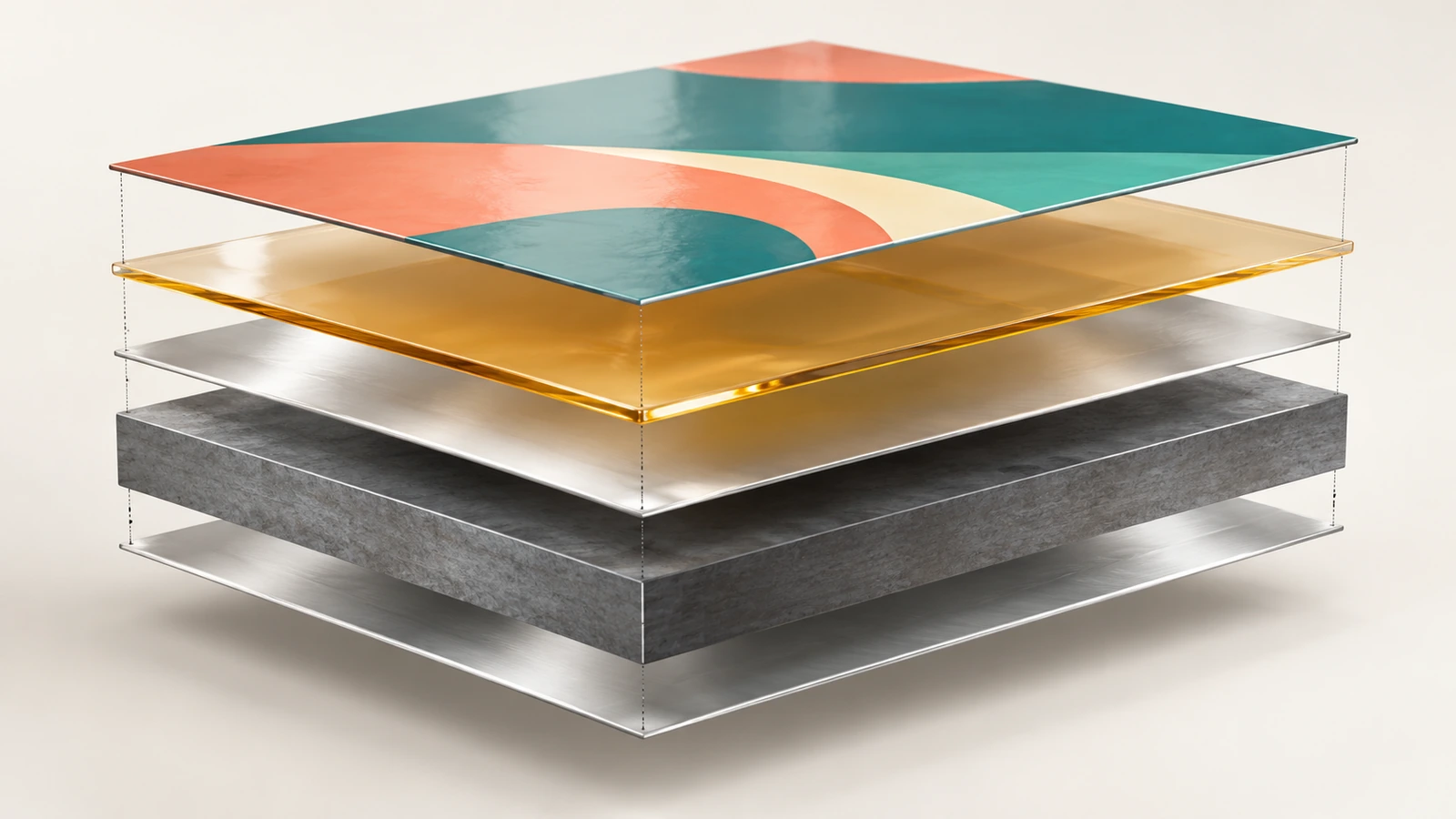
Electrolytic tinplate is low-carbon cold-rolled steel sheet with a very thin layer of tin electroplated onto both sides. A chemical passivation film and a light oil film go on top of the tin. For packaging, the sheet is then lacquered and printed. In Europe it is specified under EN 10202[1]. In North America the general requirements for tin mill products fall under ASTM A623[2], with companion specifications for single-reduced and double-reduced plate.
A complete tinplate specification has four parts.
Thickness: given in millimeters (for example, 0.23 mm). Older US documents use basis weight in pounds per base box, where a base box is 112 sheets of 14 × 20 in. Each pound per base box equals about 0.0028 mm, so 82 lb is roughly 0.23 mm and 100 lb is roughly 0.28 mm. This conversion is the usual source of confusion when someone asks about "tinplate gauge for packaging."
Temper grade: a measure of hardness and strength. ASTM grades run from T-1 (softest, with a Rockwell HR30Tm aim of about 49) to T-6 (hardest, aim about 70). EN 10202 uses yield-strength designations such as TS230 or TH415 instead.
Reduction type: single-reduced (SR) plate is rolled once and anneals into a formable sheet. Double-reduced (DR) plate gets a second rolling pass, which makes it thinner and stronger but less formable.
Tin coating weight: stated per side in g/m², such as 2.8/2.8. A differential coating such as 5.6/2.8 puts more tin on one face. At 2.8 g/m², the tin layer is only about 0.38 µm thick, less than 0.2% of a 0.23 mm sheet. Thickness and temper come almost entirely from the steel.
A two-piece tin box (a drawn body plus a drawn slip lid) depends on all four parts, because each piece is pressed from a flat printed blank into a cup. If you need a refresher on the format itself, our custom two-piece tin boxes page covers the structure and closure options. This article stays focused on the sheet.
How to Specify Tinplate for a Two-Piece Tin Box in Six Steps
Step 1: Start from the contents and the handling load
Write down three numbers before you discuss metal: the filled weight, the footprint (small items such as mints and balms, mid-size gift boxes, or large hampers), and the toughest handling event the tin will face. That event might be single-parcel e-commerce shipping, pallet stacking, or display handling only. A 40 g balm tin shipped in a padded mailer and a 600 g cookie tin shipped loose in a carton need different steel, even when the artwork is identical.
Step 2: Choose a thickness band using cost and stiffness math
Steel is bought by weight. At a density of 7.85 g/cm³, one square meter of tinplate weighs about 1.57 kg at 0.20 mm, 1.81 kg at 0.23 mm, 1.96 kg at 0.25 mm, and 2.20 kg at 0.28 mm. Material cost and shipped weight rise roughly in step with thickness.
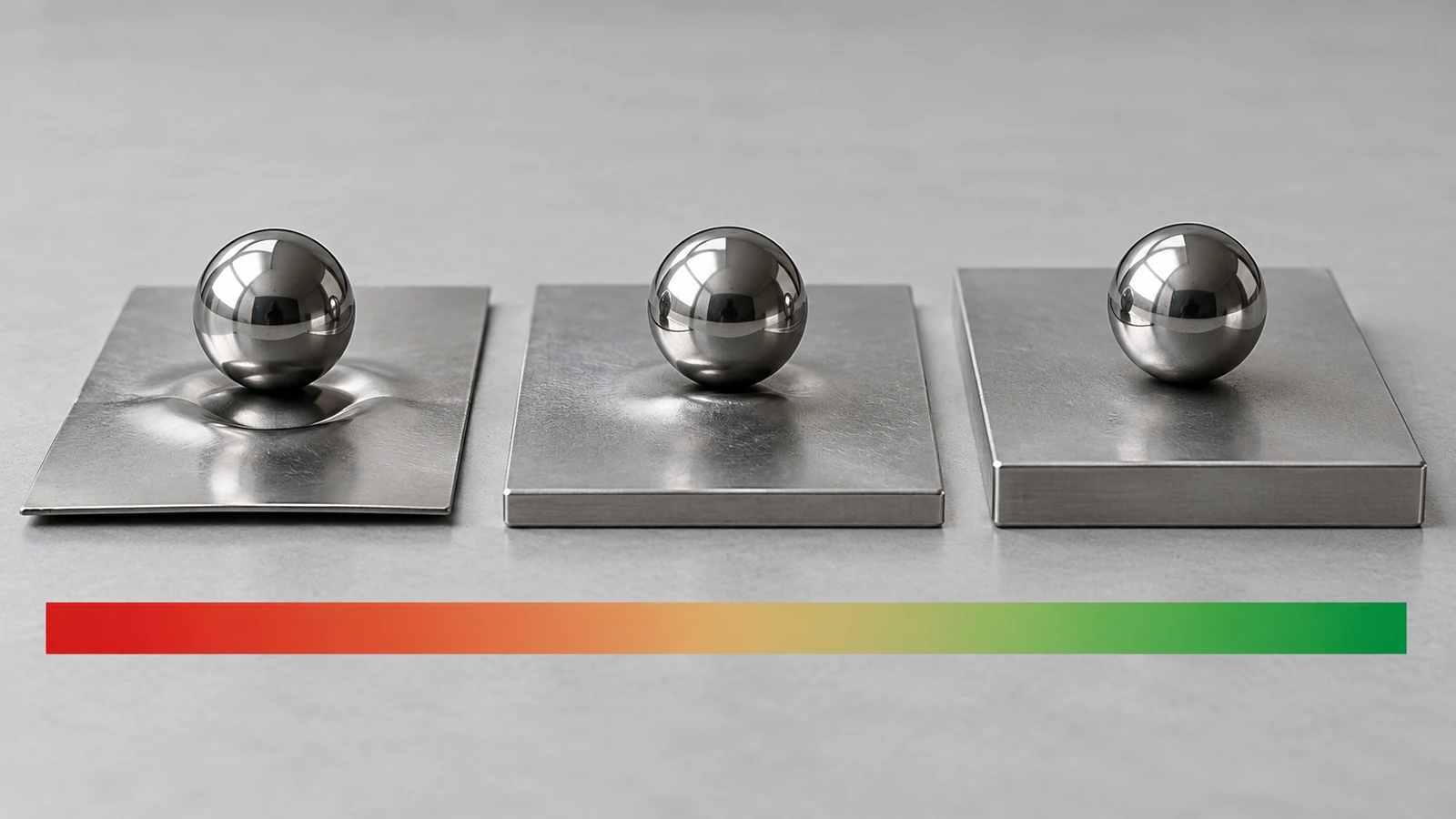
Dent resistance rises much faster. A flat lid panel's bending stiffness grows with thickness cubed, so going from 0.20 mm to 0.25 mm almost doubles stiffness (×1.95), and going from 0.23 mm to 0.28 mm raises it about 80%. Large flat lids benefit most from extra thickness, because a wide unsupported panel is where dents and "oil-canning" (a panel that pops in and out under finger pressure) appear first. Small round tins get much of their stiffness from their shape, so they can often use the thinner end of the range.
Step 3: Match temper grade to draw depth, embossing, and lid fit
Temper is the variable buyers most often leave to the supplier, and it affects three things you will notice.
Draw depth: softer tempers (T-1 to T-3) stretch more before they tear, so deep bodies and tall lids usually need them. Harder tempers resist forming and are more likely to wrinkle or split in deep corners.
Embossing depth: embossing stretches the metal locally. Soft temper takes a crisp, deep relief. Hard temper springs back, which softens the edges of the design and raises the risk of cracking the lacquer and print over the raised area. If your design depends on a deep logo, decide the temper and the emboss depth together and confirm them on a sample.
Lid fit: a slip lid holds by a small interference between the lid's inner wall and the body's outer wall. Harder sheet springs back more after forming, which shifts that interference. Thickness matters here too. The body wall counts twice across the diameter, so a 0.01 mm increase in sheet thickness adds about 0.02 mm to the body's outside diameter. That is enough to turn a smooth lid into a stiff one.
⚠️ Fit tooling is cut for a specific thickness and temper. Changing either one after the tooling is made usually means re-tuning the tooling, so fix both before the first sample.
DR grades give high strength at low thickness. That suits shallow, flat parts. They seldom suit deep-drawn decorative bodies or heavy embossing.
Step 4: Set tin coating weight and inner lacquer for the contents
Tin is a barrier, but the inner lacquer does most of the protective work in a decorative tin. For dry, non-aggressive contents behind a good lacquer, light coatings such as 2.8/2.8 g/m² are common. Heavier or differential coatings make sense when contents are humid, oily, or acidic, or when cut edges and scratches will be exposed. The coating weight also slightly changes the metallic brightness that shows through clear varnish.
For food contact, the lacquer chemistry matters more than the tin. Epoxy coatings based on bisphenol A were dominant in metal packaging for decades, as the Food Packaging Forum explains in its background on can coatings[3]. A peer-reviewed review of metal packaging safety[4] lists migration of BPA, lead, and cadmium among the main concerns. Three rules frame the current requirements:
In the US, resinous and polymeric food-contact coatings fall under FDA 21 CFR 175.300[5].
In the EU, the framework is Regulation (EC) No 1935/2004[6].
Regulation (EU) 2024/3190[7] bans BPA in food-contact materials, including metal coatings, with transition periods that depend on the product type.
Separately, the Toxics in Packaging model legislation that many US states adopted caps combined lead, cadmium, mercury, and hexavalent chromium at 100 ppm[8]. Ask for the lacquer type (for example, BPA-NI, meaning "BPA non-intent") and the compliance documents by name, rather than accepting "food grade" as a description.
Step 5: Specify the surface finish for print quality
Tin boxes are printed flat on sheets before forming, so the base steel's surface finish shows through clear areas and affects how inks sit.
A bright finish gives a mirror-like metallic effect under clear varnish.
A stone finish has a fine texture that hides handling marks.
A matte finish reduces glare on detailed graphics.
Where you want an opaque look, a white base coat covers the metal completely. Drawing then stretches the printed sheet. Artwork on walls and rounded corners has to be pre-distorted so it looks correct after forming, and deeper draws need more correction.
Print durability is measured, not described. ASTM D3359[9] rates tape-test adhesion from 0B (heavy removal) to 5B (no removal). Agreeing a minimum rating, commonly 4B or better on formed areas, gives you an objective way to accept or reject samples. Set your tolerance for color drift at the same time. As one experienced packaging discussion[10] puts it, the trouble point in almost all printing is "the complexity/level of detail in your design and your tolerance for deviations from the 'gold standard'."
Step 6: Lock the specification with sample measurements
When samples arrive, measure the following:
Bare-metal thickness with a micrometer at several points on the body and lid. Lacquer and print add microns, so state whether your specification refers to base metal or total thickness.
Lid removal feel across at least a handful of units.
Emboss definition.
Tape adhesion on the most-stretched corner.
Record the results next to the material line so the production lot can be checked against them. The full inspection checklist for fit, finish, coating, and safety is covered on our two-piece tin box product page, so it is not repeated here.
Thickness Bands, Temper Grades, and Tinplate vs Aluminum Packaging
The bands below are common starting points for tin box material thickness, not fixed rules. Box size, shape, and draw depth all shift the right choice, so confirm any band with a sample.
Thickness band
Approx. basis weight
Steel mass
Typical fit
Trade-off
0.18–0.21 mm
64–75 lb/bb
1.41–1.65 kg/m²
Small round or rectangular tins, light contents, protected shipping
Lowest steel cost; large flat lids may oil-can
0.23–0.25 mm
82–89 lb/bb
1.81–1.96 kg/m²
General retail and gift tins, moderate embossing
Balanced cost and stiffness; the most widely tooled range
0.28–0.30 mm
100–107 lb/bb
2.20–2.36 kg/m²
Large footprints, heavy contents, deep emboss, parcel shipping
About 80% stiffer than 0.23 mm, but 20–30% more steel by weight
ASTM temper
HR30Tm aim
Forming behavior
Typical two-piece tin use
T-1 / T-2
~49 / ~53
Very soft, high stretch
Deep bodies, tall lids, sharp deep embossing
T-3
~57
General-purpose drawing
Most shallow-to-medium drawn tins and lids
T-4 / T-5
~61 / ~65
Stiffer, more springback
Shallow parts that need flat, rigid panels
T-6 and DR grades
~70 and above
High strength, limited draw
Flat ends and shallow components; rarely deep decorative bodies
Tinplate vs aluminum packaging (and tin-free steel)
Aluminum is about 2.9 times lighter than steel by density (2.70 vs 7.85 g/cm³), but it is also about 3 times less stiff (elastic modulus around 70 GPa vs about 205 GPa). To match the panel stiffness of 0.23 mm tinplate, aluminum needs roughly 0.33 mm. At that thickness it still weighs about 50% less per square meter. Tin-free steel (ECCS, steel coated with chromium instead of tin) is another option. It shares tinplate's strength and is often used with full-coverage lacquer, but it has no bright tin surface to show through clear inks.
Property
Tinplate
Aluminum
Tin-free steel (ECCS)
Density
7.85 g/cm³
2.70 g/cm³
7.85 g/cm³
Thickness for equal panel stiffness
0.23 mm (reference)
~0.33 mm
0.23 mm
Mass at equal stiffness
~1.81 kg/m²
~0.89 kg/m²
~1.81 kg/m²
Embossing and dent behavior
Crisp relief, good dent resistance
Soft, deep relief, dents more easily
Similar to tinplate
Look through clear varnish
Bright metallic
Bright metallic
Duller; usually fully coated
Corrosion at cut edges
Needs lacquer protection
Forms its own oxide layer
Needs lacquer protection
Recycling separation
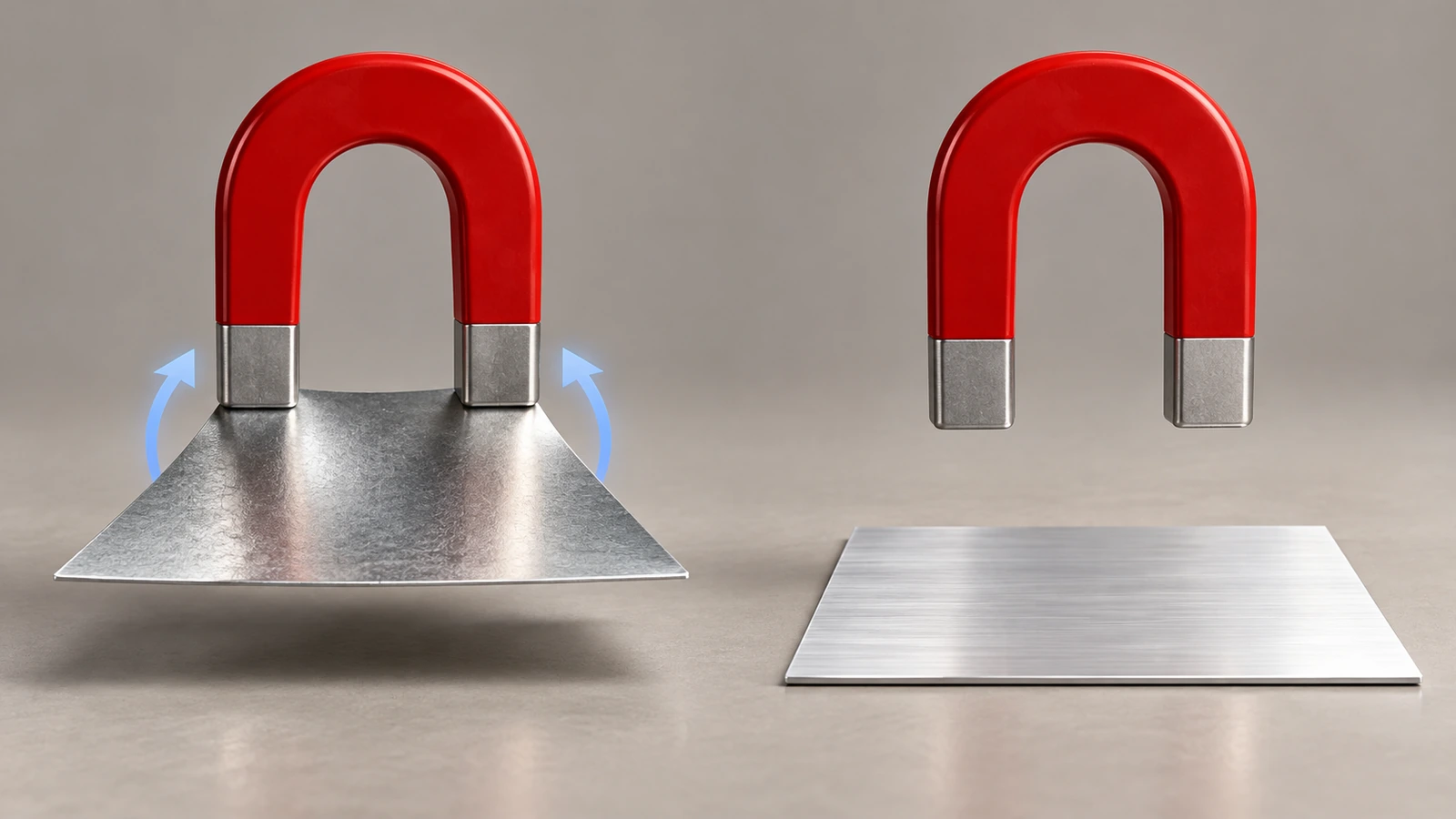
Magnetic
Eddy-current
Magnetic
Recyclability now affects material choice for brands that sell in Europe. The EU Packaging and Packaging Waste Regulation (EU) 2025/40, summarized on the European Commission's packaging waste page[11], has applied generally since 12 August 2026. It introduces recyclability performance grading and limits on unnecessary packaging weight. Both steel and aluminum are widely recycled. Steel's magnetic separation is a practical advantage, while aluminum's lower mass helps with weight-minimization arguments. For a comparison of tins against paper, plastic, and glass formats, see the format comparison on our tin box page.
FAQ
FAQ: What thickness is typical for a small balm or mint tin?
Small tins with light contents often use the 0.18–0.21 mm range, because their size and curved walls already provide stiffness. If the tin will ship loose in parcels or carries a deep emboss, test a 0.23 mm sample alongside the thinner one before you decide.
FAQ: Is thicker tinplate always better?
No. Thicker sheet adds steel cost and freight weight roughly in proportion to thickness, and it can be harder to draw into tight corners. Choose the thinnest sheet that passes your dent, fit, and emboss checks on samples.
FAQ: What does "T-3" mean on a tinplate specification?
It is an ASTM temper grade, with a Rockwell HR30Tm hardness aim of about 57. It is a general-purpose drawing grade, softer than T-4 to T-6 and harder than T-1 and T-2. EN 10202 expresses similar properties with yield-strength designations such as TS260.
FAQ: Can I change the thickness after the tooling is made?
Usually not without re-tuning. A 0.01 mm change shifts the body diameter by about 0.02 mm, which alters the slip-lid interference. Fix the thickness and temper before the first sample is produced.
FAQ: Does tin coating weight matter if the tin holds non-food items?
Yes, though it matters less. Candles, cosmetics, and humid storage can still corrode exposed edges or scratches. A light coating with good lacquer suits dry items. Ask for heavier or differential coatings when the contents are oily, moist, or acidic.
FAQ: How should I measure thickness on a finished sample?
Use a micrometer at several points on the body wall and the lid. Remember that lacquer and print add microns. State in your specification whether thickness refers to base metal or total coated thickness, so readings from suppliers can be compared.
Key Takeaways
Specify thickness in millimeters and convert legacy gauges explicitly. — 1 lb per base box ≈ 0.0028 mm, so 82 lb ≈ 0.23 mm (Source)
Name the temper grade, because it controls draw depth, emboss sharpness, and lid springback. — ASTM tempers range from an HR30Tm aim of about 49 (T-1) to about 70 (T-6) (Source)
Use the European designation system when sourcing under EU specifications. — EN 10202 grades such as TS230 and TH415 are named by yield strength in MPa (Source)
Accept print durability by a measured rating, not a description. — ASTM D3359 scale from 0B to 5B, with 4B or better a common target on formed areas (Source)
Check inner-lacquer chemistry for food contact. — the EU BPA ban for food-contact materials is Regulation (EU) 2024/3190 (Source)
Confirm heavy-metal limits for inks and coatings. — combined Pb, Cd, Hg, and Cr(VI) ≤ 100 ppm under the Toxics in Packaging model legislation (Source)
Plan for EU recyclability rules if you sell in Europe. — the PPWR has applied generally since 12 August 2026 (Source)
Conclusion
Tinplate thickness for tin boxes is one of three linked choices, together with temper grade and tin coating weight. Thickness sets cost and stiffness, temper sets how the sheet draws and how the lid fits, and coating plus lacquer set corrosion and food-contact performance.
Write all three into your request for quotation as numbers: millimeters, temper grade, g/m² per side, and lacquer type. Suppliers will then quote the same material, and sample results can be traced back to a specification. When your material line is ready, request a quote for custom two-piece tin boxes and ask for a sample built to that exact specification.
References
EN 10202, Cold reduced tinmill products — Electrolytic tinplate and electrolytic chromium/chromium oxide coated steel, European Committee for Standardization (CEN). ↩
ASTM A623/A623M, Standard Specification for Tin Mill Products, General Requirements, ASTM International (with companion specifications A624 and A626 for single-reduced and double-reduced electrolytic tin plate). ↩
Hi there! I'm Bruce, proud dad to my amazing son. I'm the founder of Zigpac, a printing and packaging company empowering small and medium-sized businesses with custom solutions. Let's create something great together!



 Blog PDF for offline reading













The information below is required for social login
Sign In
Create New Account