We use cookies to enable our websites to remember information, to help some website functionalities to work properly, to understand how you interact with and use our websites and to display you content and ads that are relevant and engaging for you.
By clicking Accept All you consent to the use of these cookie.
The store will not work correctly when cookies are disabled.
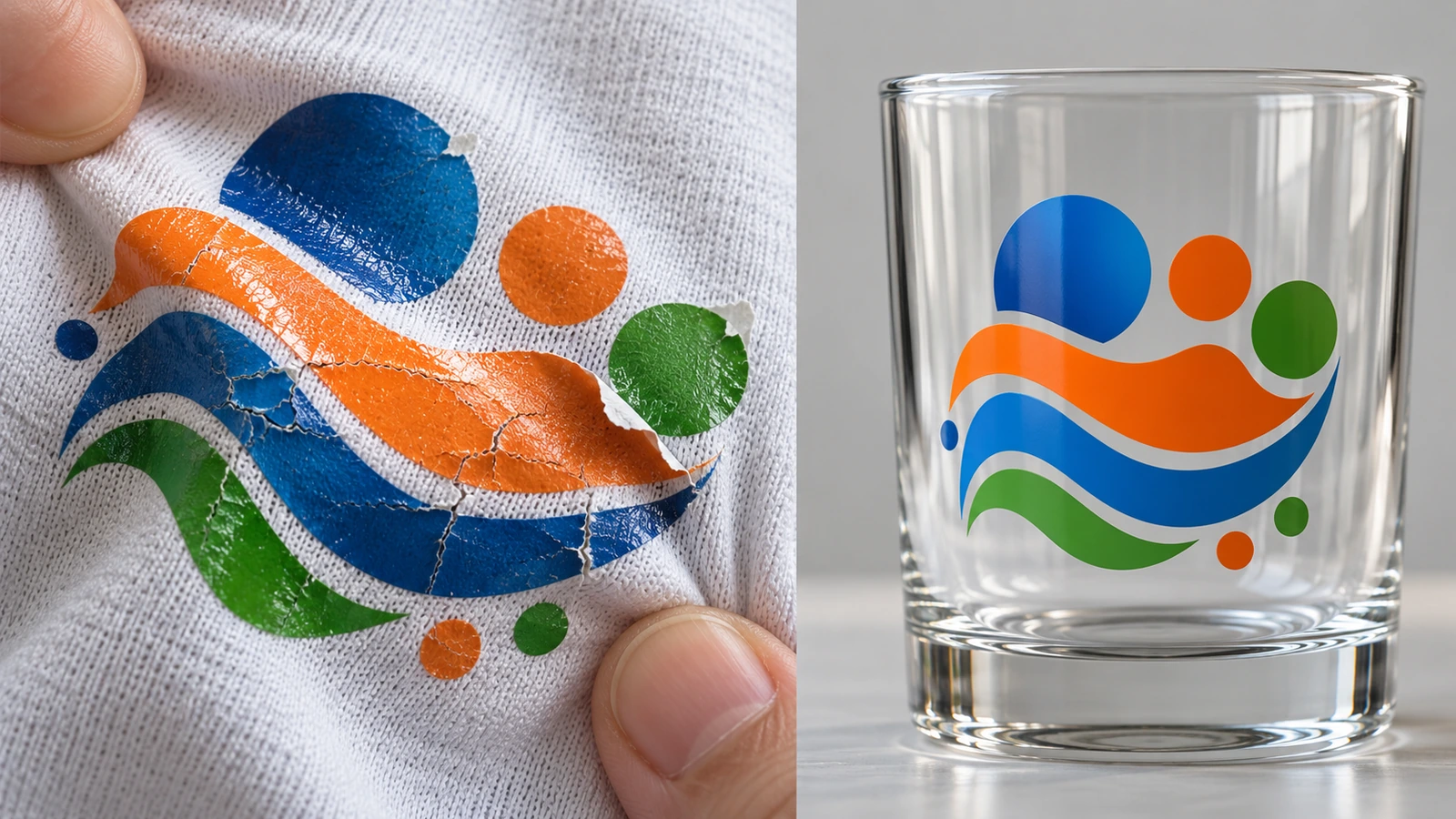
Quick answer: UV DTF is not a t-shirt process. Its UV-cured ink forms a stiff film, and that film is held by a cold pressure-sensitive adhesive designed for smooth, hard surfaces. On stretchy, porous, machine-washed fabric it tends to lift at the edges, crack or peel. For apparel, order standard textile DTF heat transfers. Keep UV DTF decals for the tumblers, glass, acrylic and other hard goods in the same merch kit.
People who search for UV DTF on t-shirts usually fall into one of two groups. Some are building a merch kit with shirts, tumblers and notebooks and hope one transfer type can cover everything. Others have a quote that lists "UV DTF" beside apparel line items and aren't sure that's right. The two processes share three letters and solve opposite problems. One is pressed into fabric with heat. The other is applied cold to hard, non-porous surfaces.
Ordering the wrong one rarely fails on day one. The print looks sharp when the box is opened. It fails after the first wear, the first stretch over a shoulder or the first wash cycle. By then the event has happened, the shirts have been handed out, and the reprint is on your budget. This guide explains why UV DTF struggles on textiles, which items in a promo order it genuinely suits, and how to write a split order so each item gets the right process.
What Is the Difference Between DTF and UV DTF?
On a supplier price list, DTF, UV DTF and "UV transfer" can look like versions of the same product. They aren't. Each uses its own ink chemistry, adhesive, application method and target surface. The table below shows the differences that matter when you're deciding where a logo will live.
Attribute
Textile DTF (apparel transfer)
UV DTF (hard-goods decal)
Ink
Water-based pigment ink printed on PET film
UV-curable ink (color, white and usually a varnish layer) cured by LED light during printing
Adhesive
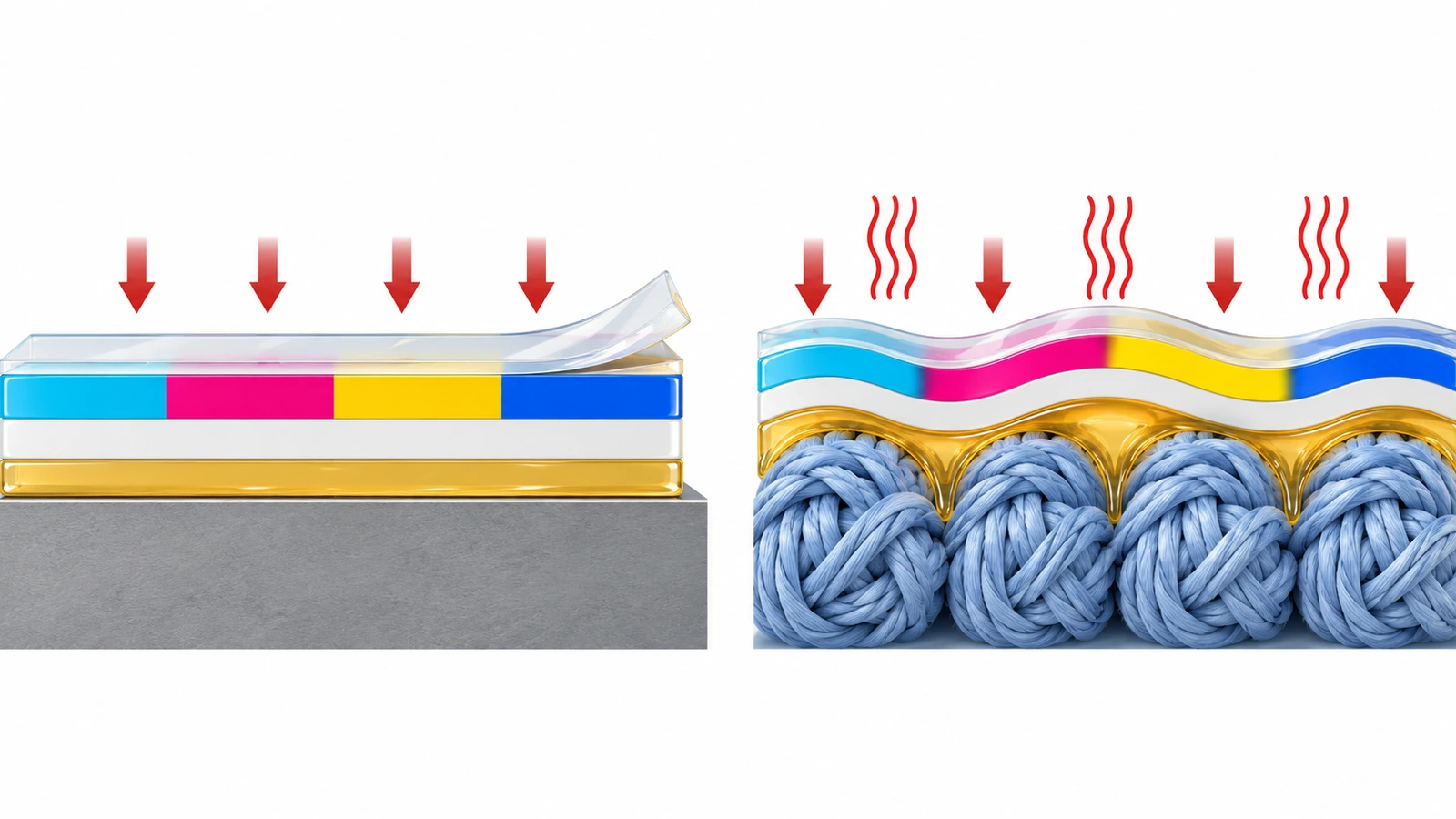
Hot-melt powder that melts under a heat press and flows into the fibers
A pressure-sensitive adhesive film (the "B film") laminated over the print
Application
Heat press: heat, pressure, time, then peel
Cold application: rub down by hand or with a squeegee, then peel the carrier
Target surface
Cotton, polyester, blends, canvas and other textiles
Glass, glazed ceramic, metal, acrylic, rigid plastic and sealed wood
Flexibility after application
Built to move with fabric
Cured ink is comparatively rigid, often with a raised, embossed feel
Typical care expectation
Machine laundering, following the decorator's care card
Hand washing is the usual recommendation, even on glass
The adhesive row is the one that settles the question. Textile DTF bonds because molten adhesive physically wraps around fibers under heat and pressure. UV DTF bonds because a tacky adhesive makes close contact with a smooth, sealed surface. A knit shirt doesn't offer that kind of surface. Producers who run both processes describe them as separate businesses with separate failure modes. In one shop-owner discussion comparing textile DTF with UV DTF for hard goods, the UV side's typical problems were listed as edge lifting after a few days and adhesion that varies with surface finish[1]. Those problems appear even on surfaces the process was designed for.
Can You Use UV DTF on T-Shirts? Why Fabric Defeats It
You can physically press a UV DTF decal onto a shirt, and for a few minutes it may look fine. Four properties of fabric work against it, and they add up quickly once the garment is worn and washed.
1. Fabric stretches; cured UV ink does not
A t-shirt stretches every time someone pulls it over their head, reaches forward or sits down. Cured UV ink behaves more like a thin rigid shell. Printers already see this stiffness cause trouble on rigid curved objects. One practitioner explained that on a mug, the stiff ink layer acts like a spring that pulls the edges up[2]. A mug holds a fixed curve. A shirt changes shape constantly, so the edge stress returns with every movement and eventually becomes cracks or lifted corners.
2. Knit fibers give the adhesive almost nothing to grip
Pressure-sensitive adhesive needs close, continuous contact. A knit is a field of looped yarns with air gaps and loose fiber ends. The adhesive touches only the tops of the loops. That's the same reason guides for hard goods warn against textured powder coat and porous surfaces, and a cotton jersey is far more open than either.
3. Laundry attacks the weakest point, the edge
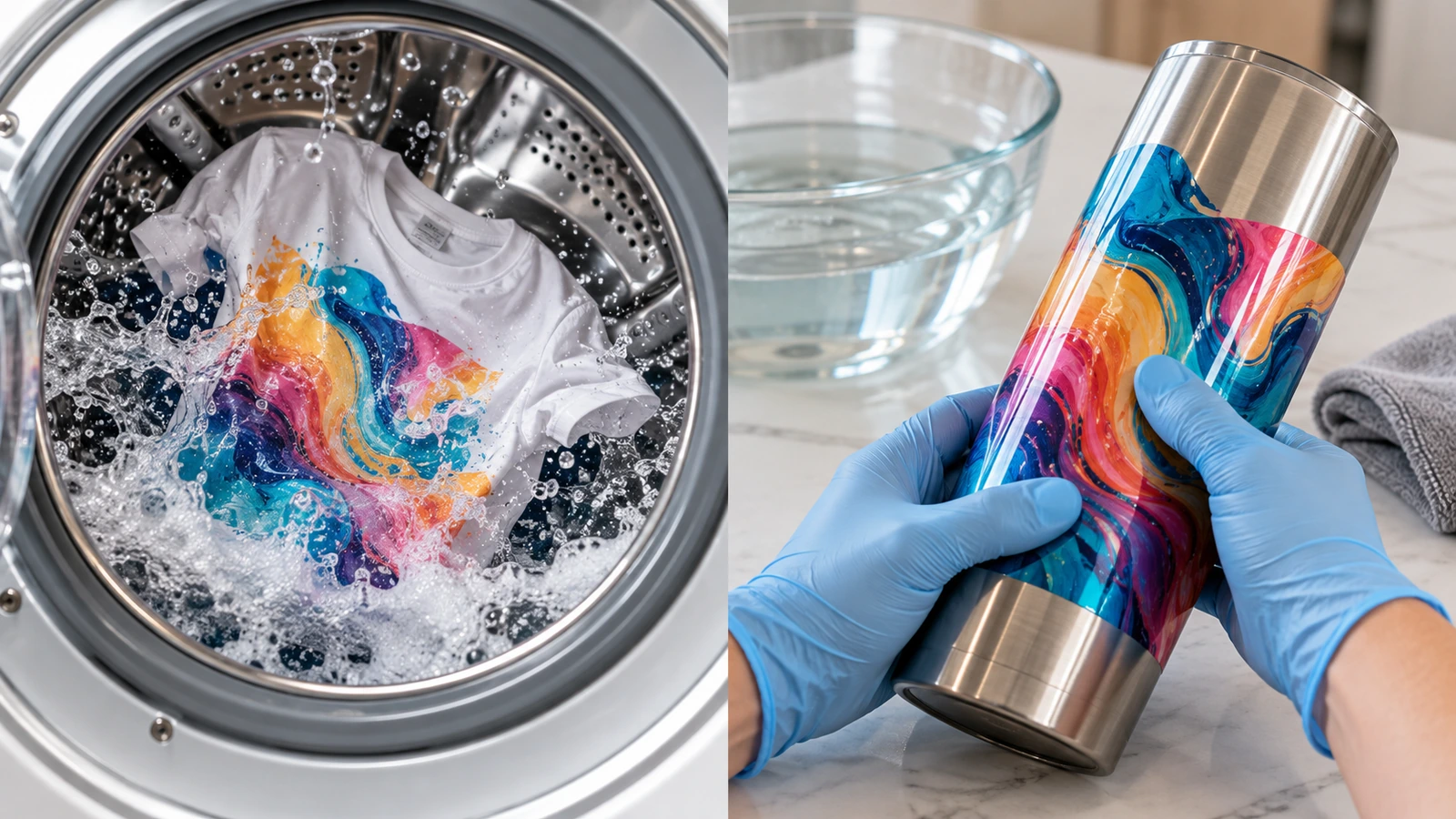
The usual UV DTF failure sequence starts at the edges. They lift, then water and detergent get underneath. A washing machine adds agitation, wet fiber swelling and, if the shirt goes in a dryer, heat. For scale: even on glass, the decal's ideal surface, one commercial printer reported getting 30+ washes before the transfer eventually cracked[3]. The same printer noted that most suppliers rate drinkware decals as hand-wash only. A garment in a washing machine is a much harsher test than a glass washed by hand.
4. Hand feel and breathability work against wearability
Even when a decal stays put, the wearer feels a plastic-like patch that doesn't breathe or drape. That raised, glossy texture is a selling point on a tumbler. On a chest print it reads as a sticker stuck to a shirt, which is the impression a branded garment is meant to avoid. The same printer observed that many customers dislike paying a custom-print premium for something that turns out to be "a sticker." The problem is sharper on clothing.
Adding heat doesn't solve this. A UV DTF adhesive is not a hot-melt textile adhesive, so pressing it on with an iron or heat press doesn't make it flow into the fibers. It can, however, distort the cured ink. Several users also report UV DTF decals wrinkling after being left in a hot car, which suggests a tumble dryer won't be kind to them either.
Hats, Totes, Jackets and Other Grey-Zone Merch
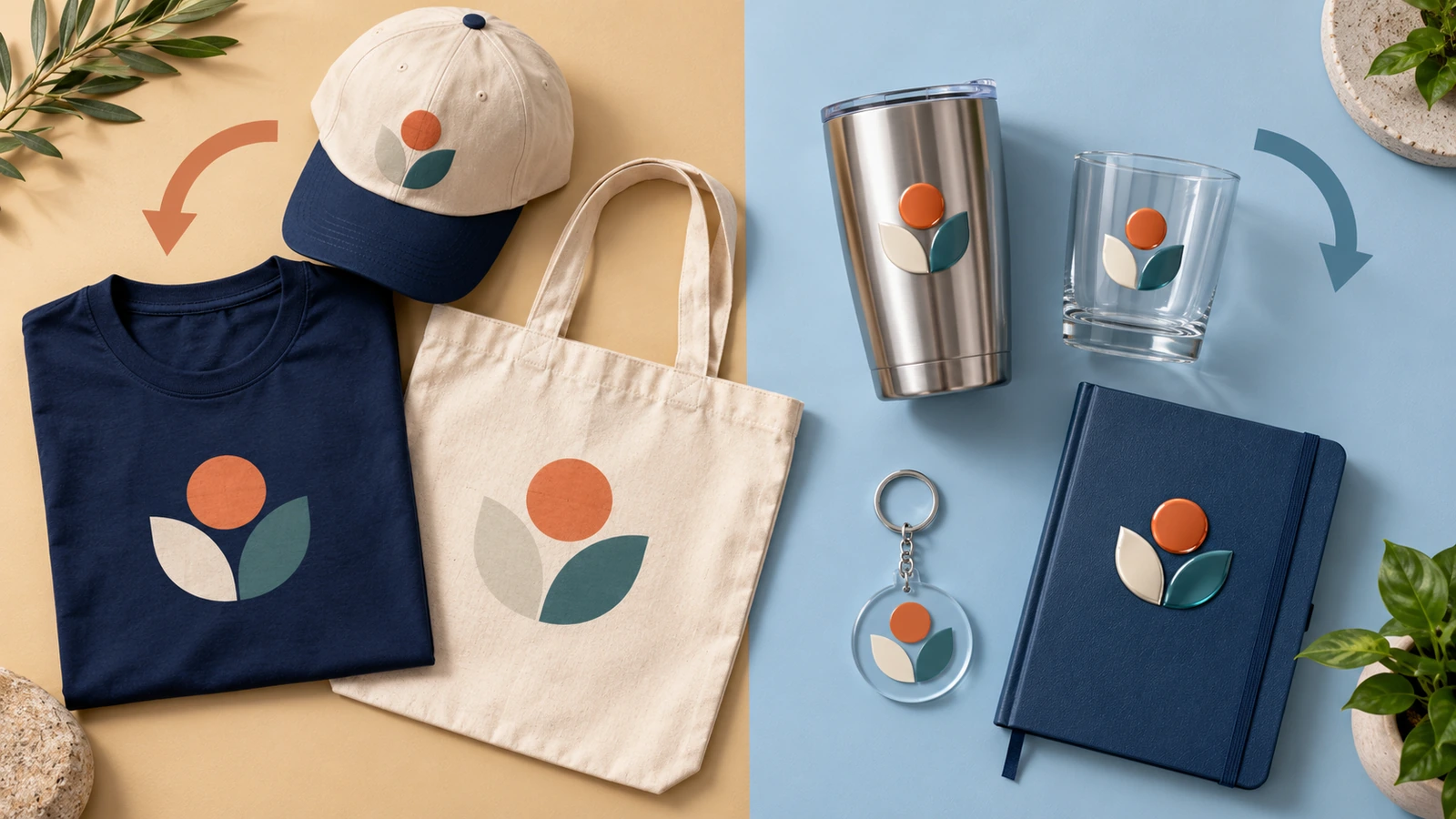
Most promo orders contain items that aren't obviously fabric or hard goods. A simple rule covers nearly all of them. If you can fold it, crumple it or put it in a washing machine, treat it as a textile. If it holds its own shape and has a smooth, sealed face, it's a UV DTF candidate.
Cotton or canvas totes, caps, hoodies, polyester jerseys, nylon drawstring bags: textile processes. Ask for DTF transfers, screen printing or embroidery.
Faux-leather patches and soft PVC: flexible and often textured. Treat as high risk for UV DTF and request a physical test before committing.
Hard-shell phone cases, acrylic keychains, metal bottles, glass, ceramic mugs, laptop lids, rigid notebook covers: the surfaces UV DTF was designed for.
Demand outside apparel is real and steady. In a thread about what has actually sold beyond shirts, one shop owner named candle jars as their most consistent non-apparel item, with small brands ordering the same logo across 50 or 100 jars at a time[4]. That is the pattern to follow. Shirts carry the brand on fabric, and UV DTF carries the same artwork onto the hard objects next to them. For the full list of surfaces and finishes that hold, see our page on custom UV DTF decals for tumblers, glass and acrylic.
How to Split a Mixed Merch Order Step by Step
The cleanest approach is one artwork master and two production specifications. Here's the order of operations we recommend to buyers who manage kits for events, onboarding boxes or retail drops.
Inventory every decorated item by surface, not by product name. Write "100% cotton jersey," "powder-coated steel," "clear acrylic" and so on. "Water bottle" alone doesn't tell a decorator whether the surface is smooth stainless or a textured coating.
Sort each line into textile or hard goods using the fold-or-hold rule above. Flag anything you're unsure about for a test instead of guessing.
Name the process explicitly in your RFQ. Write "textile DTF heat transfer" for apparel and "UV DTF cold-transfer decal" for hard goods. Writing "DTF" alone invites a supplier to quote whichever process they happen to run.
Prepare separate output files from the same master. Textile DTF and UV DTF handle white underbase, varnish and minimum line weight differently. Hard-goods file rules are covered on the UV DTF decal product page, so give each decorator the specs it asks for. A known UV DTF artifact is a white halo. One buyer found a white outline on the bottom and left edges of every design[5], which commenters traced to an un-choked white layer and high-speed print modes.
Test each process with the method that matches real use. For shirts, wear and machine-wash a sample garment several times. For hard goods, apply the decal to the actual item, let it cure for 24 hours, then hand-wash it and rub the edges. Even textile DTF draws shop-floor threads about prints after the first wash[6], so a wash test is worth doing on apparel samples too.
Ship two different care cards. The shirt card follows the textile decorator's laundering guidance. The hard-goods card says to hand-wash, avoid the dishwasher and abrasive pads, and wait 24 hours before the first wash. Putting one generic "waterproof" card in the box causes complaints on both sides.
UV DTF Decals vs Textile DTF vs Screen Printing for Apparel Buyers
This comparison is written for someone whose kit is mostly garments. The comparison of UV DTF with vinyl and direct print on hard goods is a separate decision, covered on the product page.
Question
UV DTF decal
Textile DTF transfer
Screen printing
Belongs on a t-shirt?
No. Rigid ink and cold adhesive aren't built for fabric.
Yes. Made for cotton, polyester and blends.
Yes. The long-standing apparel method.
Belongs on a tumbler or glass?
Yes. This is its core use.
No. Its heat-press adhesive is designed for fibers.
Only with specialty equipment and inks.
Full-color, multi-design small runs
Strong, often gang-sheeted
Strong, often gang-sheeted
Weaker. Setup per color favors fewer designs and larger runs.
If a supplier offers UV DTF products for your shirts, ask a few follow-up questions before you accept the quote:
The quote says "UV DTF" but asks for heat-press settings. This usually means the supplier means textile DTF and used the wrong label. Ask for the process name to be corrected in writing.
"Permanent, waterproof, works on any surface." No adhesive transfer works on every surface. The marketing claim to watch most closely is "dishwasher safe," and "machine washable on fabric" deserves the same scrutiny.
Problems blamed entirely on the end user. In one public case, a seller reported that 4 out of 10 customers on a die-cut transfer order needed refunds[7]. The backing was too sticky and the print appeared under-cured, yet the supplier's only advice was to clean the surface.
Carrier tape that pulls harder than the decal sticks. Etsy sellers have described UV DTF that wouldn't stick to glass no matter how hard they squeegeed[8], with transfer tape leaving heavy residue. If it fails on glass, it won't work on cotton.
Sticky residue presented as normal. A faint adhesive halo can appear when the adhesive layer extends slightly past the design edge[9]. On a shirt, that adhesive would collect lint and dye transfer in the wash.
Compliance Note for Youth Apparel and Gift Kits
Children's shirts and kits sold in the US fall under the Consumer Product Safety Improvement Act (CPSIA), which requires third-party testing and a certificate for the finished children's product. Ink makers increasingly publicize their own results. In January 2026 a trade publication reported that a UV LED ink series earned CPSIA certification and was described as phthalate-free[10]. That result covers the ink. It doesn't cover your decal, your adhesive or your garment. For youth apparel, ask the textile decorator for the finished-product documentation. For hard goods in the same kit, ask separately. Don't let one ink announcement stand in for both.
FAQ
FAQ: Can I heat press a UV DTF decal onto a shirt to make it stick better?
No. UV DTF uses a cold pressure-sensitive adhesive, not a hot-melt textile adhesive, so heat won't make it flow into the fibers the way textile DTF powder does. Heat can also warp or wrinkle the cured ink layer. If the item is fabric, order a textile DTF transfer instead.
FAQ: Will UV DTF survive on a t-shirt that is only hand-washed?
Hand washing reduces the abuse but doesn't remove the main problem. The shirt still stretches and flexes while worn, which works against the rigid ink and lifts the edges, and water then gets under those edges. Practitioners report eventual cracking even on hand-washed glass, which is a far gentler surface than knit cotton.
FAQ: Is it OK for a one-day costume or photo shoot?
A decal may hold for a short, low-movement use, but expect edge lift and an obvious sticker texture on camera. It's also very hard to remove cleanly and may leave adhesive on the fabric. A textile transfer or a fabric-specific temporary option is the safer choice.
FAQ: Is "UV DTF" the same as UV-reactive or glow-in-the-dark printing on shirts?
No. UV-reactive inks glow under blacklight and are printed with textile methods. UV-detection stickers that change color in sunlight are another unrelated product. "UV" in UV DTF refers only to how the ink is cured during printing.
FAQ: What about nylon jackets, polyester sports bags or canvas totes?
They're all flexible textiles, so treat them like t-shirts. Ask your apparel decorator which textile process suits the specific fabric and coating. Some technical fabrics need special adhesives or low-temperature transfers.
FAQ: Which UV DTF products make sense in an apparel-led merch kit?
The rigid companions: stainless or glass drinkware, ceramic mugs, acrylic badges and keychains, hard phone cases, laptop lids and rigid notebook covers. Using the same artwork across shirts and these items gives a consistent kit while each item gets the right process. You can request a quote for hard-goods UV DTF decals and list the exact surfaces you plan to decorate.
FAQ: Do the shirts and the decals need different care instructions?
Yes. Shirts follow the textile decorator's laundering guidance. UV DTF hard goods should be hand-washed, kept out of the dishwasher and away from abrasive pads, and left for 24 hours after application before the first wash.
Key Takeaways
UV DTF is a hard-goods process, and fabric is a harsher test than its best surface. — Even on glass, one printer reports cracking after 30+ washes, with most suppliers rating drinkware hand-wash only (Source)
Bulk demand for UV DTF sits outside apparel. — Small brands order the same logo across 50 or 100 candle jars at a time (Source)
Sample before you scale, whatever the process. — 4 out of 10 customers on one die-cut transfer order needed refunds over sticky backing and apparent under-curing (Source)
Check proofs for white-layer artifacts. — One buyer found a white outline on 2 edges of every design on a gang sheet (Source)
Ink certificates don't certify finished garments. — A CPSIA ink certification reported in January 2026 covers the ink series only (Source)
Conclusion: One Artwork, Two Processes
The question behind "UV DTF on t-shirts" is really how to brand a whole kit consistently. The answer is to use two processes: textile DTF, screen printing or embroidery on anything that folds and gets washed, and UV DTF on the smooth, rigid items that travel with it. Name each process in your RFQ, prepare output files for each, test each one the way it will actually be used, and ship separate care cards.
If your order includes drinkware, glass, acrylic or other hard goods, send us the item list and surface details. We'll confirm which pieces suit custom UV DTF transfer decals and flag any that belong with your apparel decorator. Quantities, sizes and timelines are quoted per project, so ask for a quote and a sample on your own item.
Hi there! I'm Bruce, proud dad to my amazing son. I'm the founder of Zigpac, a printing and packaging company empowering small and medium-sized businesses with custom solutions. Let's create something great together!



 Blog PDF for offline reading












The information below is required for social login
Sign In
Create New Account